

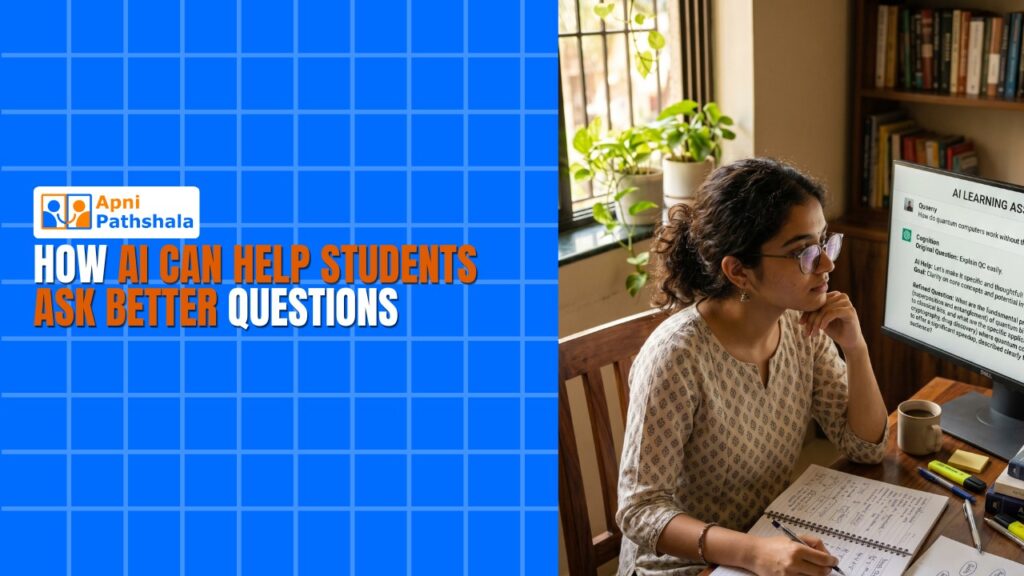
AI helps students ask better questions because they have to type exactly what confuses them before they get an answer. That forces them to turn vague confusion into a clear, specific question, and with practice the habit carries over to class, homework and self-study.
Many students stay silent when a teacher asks “Any questions?” Not because they understood everything, but because they do not know where their confusion starts.
Why do most students struggle to ask good questions?
Most Indian students are taught to listen, not to ask. The teacher speaks, the student takes notes, and if something is unclear they are expected to figure it out later. The classroom rewards compliance more than curiosity.
The result is students who can answer questions but cannot ask them. They solve textbook problems and pass exams, yet cannot identify their own knowledge gaps. This is not a knowledge problem. It is a skill problem, and like any skill, asking good questions can be learned.
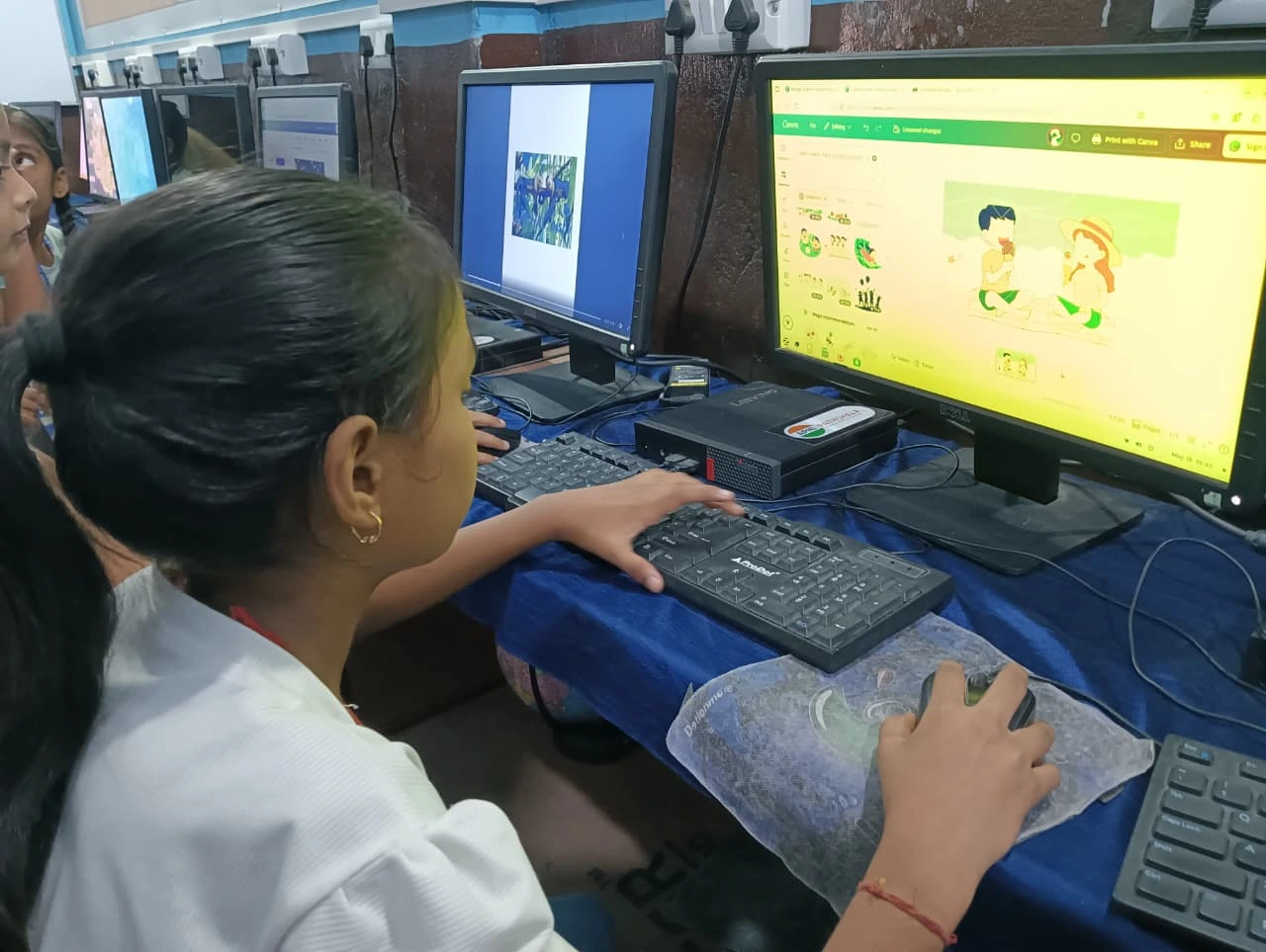
How does asking questions build critical thinking skills?
Critical thinking starts with the question. A student who asks “Why does this formula work?” is thinking more deeply than one who only memorises the formula.
A student who asks “What happens if I change this variable?” is exploring actively instead of just following the textbook. Educators, including UNESCO’s education work, have long encouraged inquiry-based learning, where students learn by asking rather than only listening.
How does an AI tool teach students to ask better questions?
An AI learning assistant rewards specific questions with useful answers, and it never judges. A student embarrassed to ask a “silly” question in class will type it freely, so they ask what they actually want to know.
The tool also pushes them to be precise. In class, a student might say “I don’t understand Chapter 3”, which is too vague for anyone to help with. With AI, they learn to type something like “Why do we use the quadratic formula instead of factoring?” and get a targeted explanation.
Why does iteration matter?
AI also teaches iteration. The student asks, reads the answer, notices a deeper question underneath and asks again, more precisely. Step by step, they find the real question they wanted to ask all along.
This matters because question-asking is about understanding what you do not know. A student who can name their gaps has a map of what to study. One who cannot ends up studying everything or nothing. Our guide on how students can use AI to understand explains how to keep this from turning into copying.
What makes a good question compared with a vague one?
A good question names the exact point of confusion. A vague one only says that something is confusing.
| Vague question | Better question |
|---|---|
| I don’t understand Chapter 3. | Why do we use the quadratic formula instead of factoring here? |
| What is this formula? | Why does this formula work, and when does it not apply? |
| Explain this topic. | What happens to the result if I change this variable? |
Practising this shift is how curiosity turns into learning, as we describe in turning curiosity into learning.
Why is a computer better than a phone for this habit?
A computer supports detailed, thoughtful questions, while a phone pushes students towards quick, shallow ones. On a phone, typing long questions is slow and long explanations are hard to read on a small screen.
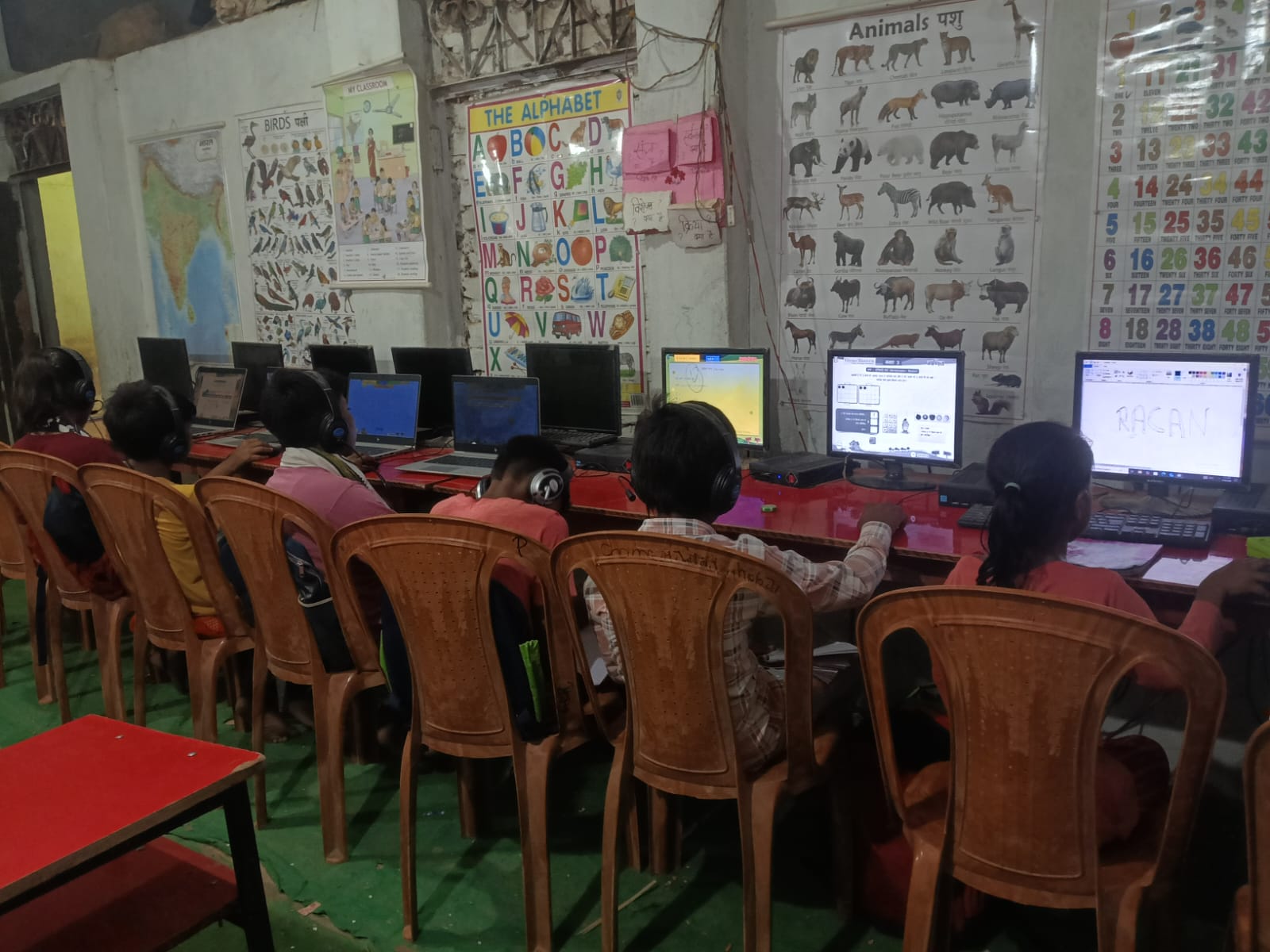
On a computer, the keyboard makes detailed questions easy and the screen is large enough to read and judge long responses. A student can keep a textbook in one window and the AI in another, asking about what they are reading as they go. The device shapes the behaviour.
A personal computer helps students learn beyond the school curriculum, and it also helps them learn how to ask the questions that lead to understanding.
What should parents do to build this skill?
Give your child a computer and an AI tool, and let them explore without supervising every exchange. Let them discover that the quality of the answer depends on the quality of the question.
That discovery is worth more than any single fact. There is also a hidden cost of not having a computer: a student who cannot ask good questions cannot learn independently and will always need someone to tell them what to study.
The Digital India initiative is building digital infrastructure across the country. Infrastructure without curiosity goes unused, so help your child build the habit of asking questions that matter.
Frequently Asked Questions
Will AI make my child lazy about thinking?
Not if it is used to ask questions rather than copy answers. When a child has to explain exactly what confuses them, they are thinking harder, not less. Encourage them to ask why and how questions, then check whether they can explain the answer back in their own words.
How can I tell if my child is asking better questions?
Listen to how they describe their doubts. Vague statements like “I don’t get this chapter” should slowly turn into specific ones that name a step, formula or idea. You can also glance at their typed questions to see whether they are getting more precise over time.
Should I sit with my child while they use AI?
Sit with them at first to agree on simple rules, such as asking for explanations instead of finished homework. After that, step back and let them explore. Children often ask more honest questions when no one is watching, which is part of how the skill develops.
Apna PC, priced at ₹30,000 (shipping and GST excluded), gives your child a keyboard for typing detailed questions, a screen for reading explanations and tools for exploring answers. Visit apnapc.com to learn more.