

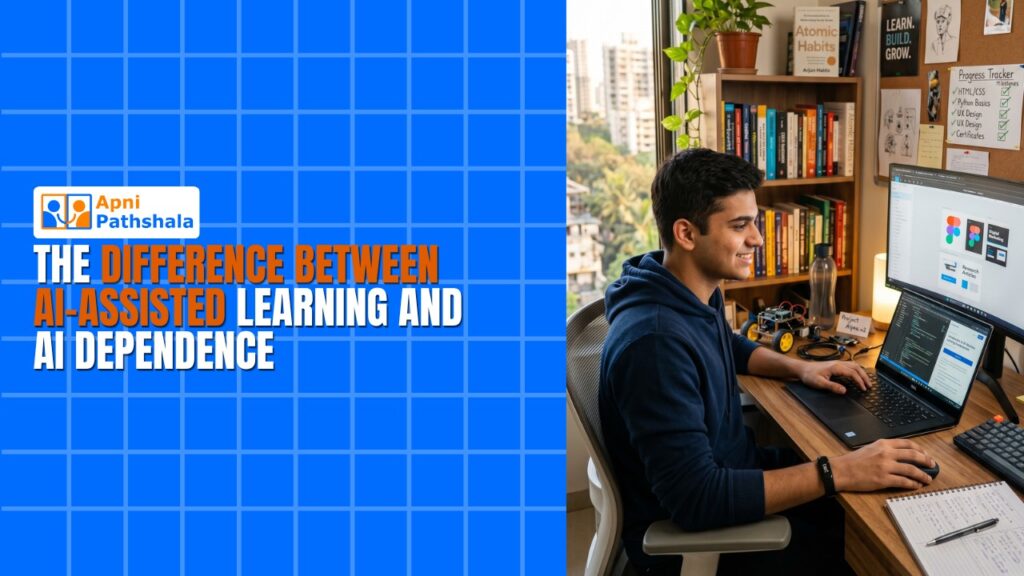
AI-assisted learning is when a student does the work first and then uses AI to check, explain and improve it. AI dependence is when a student cannot finish the task without AI because the AI did the thinking. The test is simple: remove the AI and see if the student can still do it.
For example, imagine two groups given the same assignment, one using AI freely and one using AI only after trying it alone. When AI is later removed, the second group can still do the work, because they understood the material first.
What does AI dependence look like?
AI dependence means the student asks first and thinks later. They use AI to write essays, solve problems, answer questions and generate ideas, so the AI becomes the brain and the student becomes the operator.
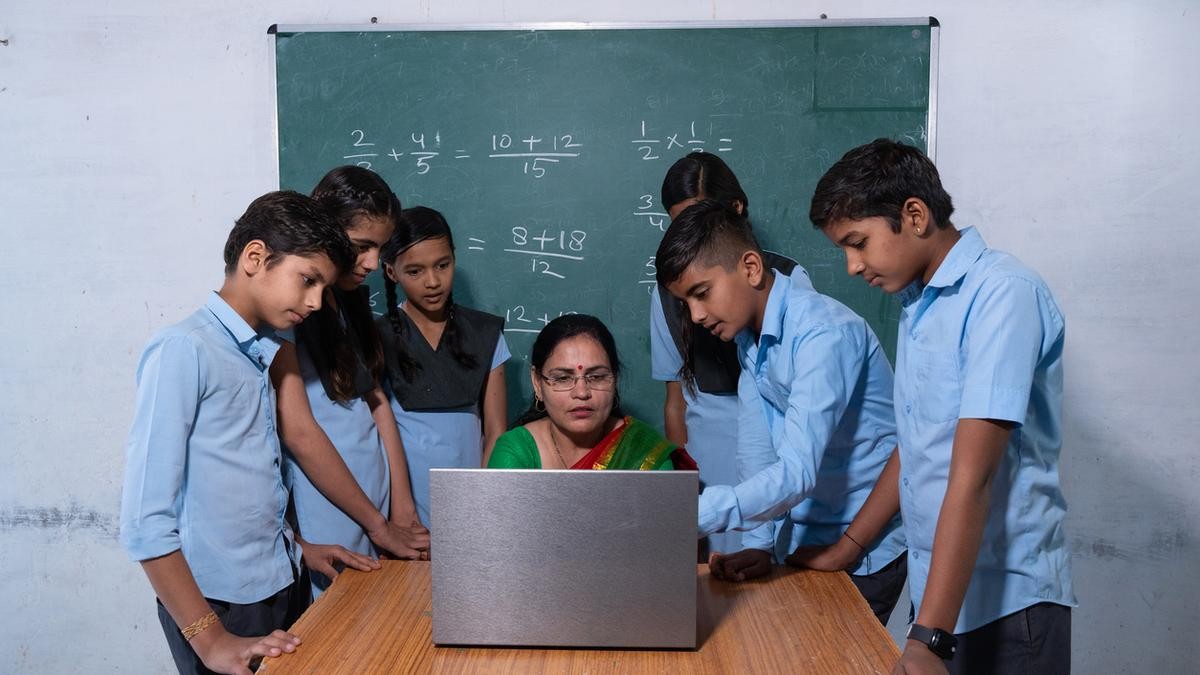
The signs are usually clear:
- The child answers questions in class but submits AI-written homework.
- The child gets high marks on assignments but struggles in exams.
- The child panics when the internet goes down during a project.
The danger is that dependence feels like learning. A student reads the AI’s explanation and thinks they understand. But reading an explanation is not the same as building understanding, which comes from doing the work, making mistakes and figuring things out.
What does AI-assisted learning look like?
AI-assisted learning means the student stays in charge and uses AI to go deeper. They read the chapter, attempt the problem or write the draft before asking AI anything.
A chemistry student who does not understand covalent bonds asks AI to explain them simply, tries the problems again, and asks about the ones they got wrong. A student writing an essay writes a rough draft, asks AI to point out weak arguments, revises them, and decides which suggested evidence is worth including.
Responsible AI use keeps the student in control. The AI suggests and the student decides. The AI explains and the student applies. The learning is always done by the student. Our guide on how students can use AI to understand instead of copy has more examples.
How can you tell AI help from AI dependence?
Remove the AI and watch what happens. If the student can still complete the task, AI was a tool. If they cannot, AI was a crutch.

| Task | AI-assisted learning | AI dependence |
|---|---|---|
| Maths homework | AI checks answers the student worked out | AI solves the problems |
| Essay | AI edits a draft the student wrote | AI writes the essay |
| Hard concept | AI explains, student practises again | AI explains, student moves on |
| Without AI | Student can still do the task | Student cannot do the task |
The difference is not how much AI a student uses. It is when they use it. Using AI after attempting the work builds learning, while using it before attempting the work builds dependence.
Why is AI dependence so costly for students?
A student who depends on AI can leave school without the ability to think, solve problems or create on their own. That gap shows up in exams first and in work later.
Access matters as well, as we explain in The Hidden Cost of Not Having a Computer in 2026. But the cost of AI dependence can be higher, because it hides a lack of understanding behind polished work.
UNESCO’s education work is good background on using technology with intention. AI learning tools are powerful, but only when they deepen understanding rather than bypass it.
What rules should parents set for AI use?
Do not ban AI. Teach your child to use it with one rule: work first, AI second.
- Always attempt the task yourself before asking AI for help.
- Write your own draft before asking AI to review it.
- Try to solve the problem before asking AI for a hint.
- After AI explains something, try the question again without it.
For more on building good habits, read how students can use AI the right way.
Why does the right device matter for responsible AI use?
A computer supports a proper AI workflow in a way a phone does not. A larger screen allows side-by-side work, and a physical keyboard makes it easier to write detailed questions and judge the answers.
Read how a personal computer helps students learn beyond the curriculum and use AI as a partner in learning, not a replacement for it. The Digital India initiative is pushing for digital and AI literacy across India, and real AI literacy includes knowing how to use AI without depending on it.
Frequently Asked Questions
Should I stop my child from using ChatGPT?
No. Banning AI usually pushes its use out of sight. It is better to teach the rule of work first, AI second. When your child attempts the task alone and then uses AI to check or explain, AI becomes a useful tutor rather than a shortcut that skips the learning.
How do I check if my child understands work done with AI?
Ask your child to explain the answer in their own words or redo a similar question without AI. If they can, they learned it. If they cannot, the AI did the thinking, and they need to go back to the chapter and try again first.
Is using AI to check homework cheating?
Not if your child did the work first. Using AI to check answers, spot mistakes or explain a confusing step is a form of learning. It becomes a problem only when AI produces the work that your child submits as their own without understanding it.
Apna PC, priced at ₹30,000 (shipping and GST excluded), gives your child a device to use AI responsibly, as a tool and not a crutch. Visit apnapc.com to learn more.