

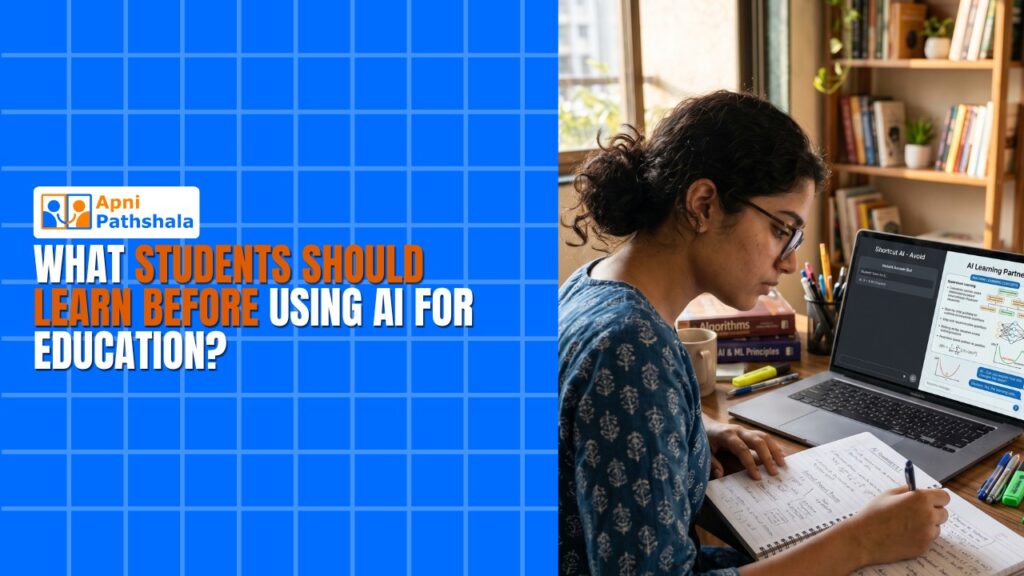
Before using AI for education, students should learn four basic digital skills: typing, searching, organising files and judging whether information is accurate. These skills make AI useful. Without them, AI becomes a crutch that students copy from rather than a tool they think with.
It is like giving a child a calculator before they understand numbers. The calculator is powerful, but the child cannot tell what to calculate or when the answer is wrong.
Why must digital literacy come before AI literacy?
Digital literacy is the foundation that AI literacy builds on. A student who cannot type writes prompts slowly, and a student who cannot evaluate information cannot judge whether an AI answer is right.
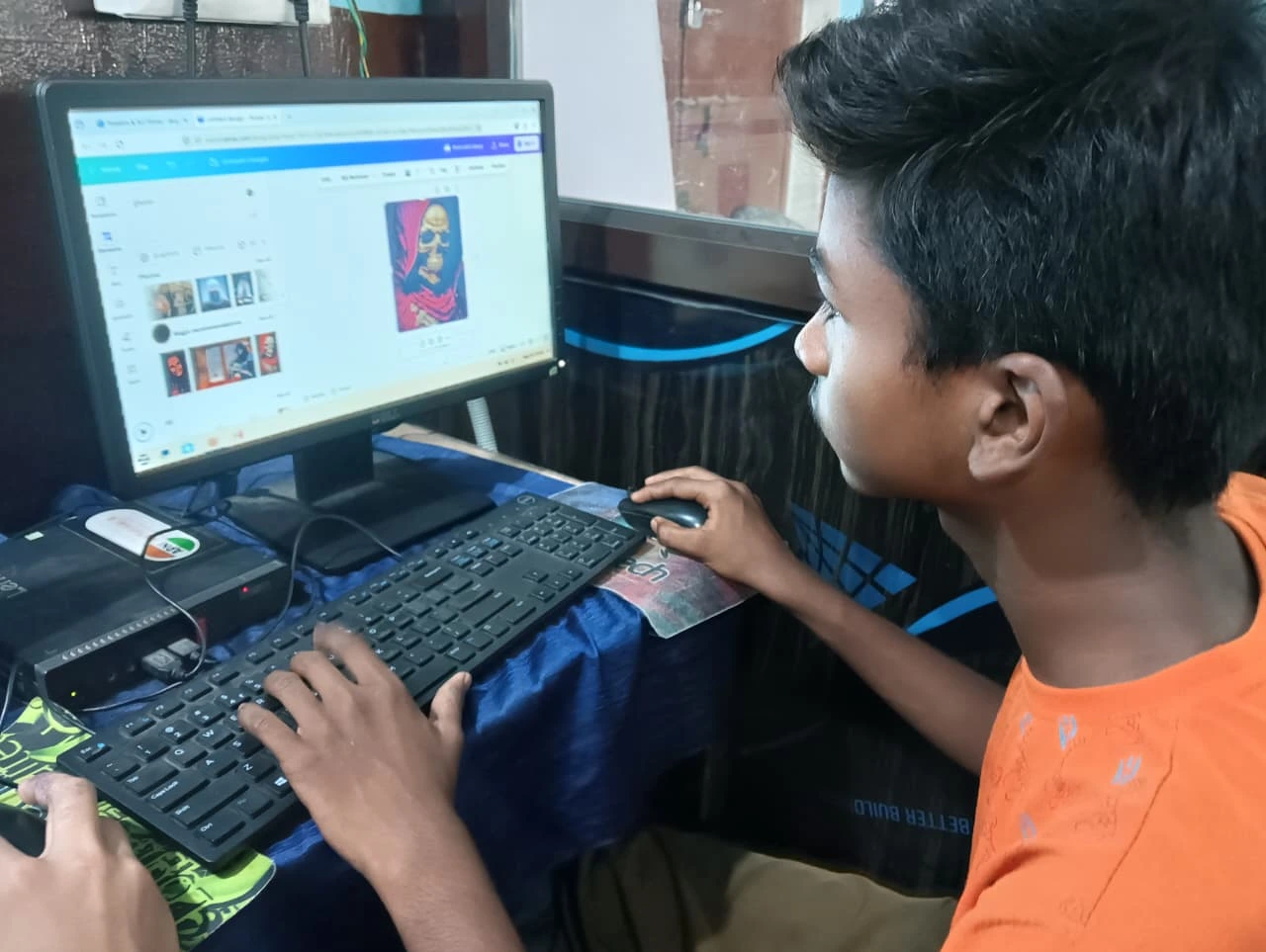
These are not advanced skills, yet many students skip them. They go from using a phone for WhatsApp straight to using AI for homework, so the AI sits on unstable ground.
Which basic skills should students learn first?
AI skills for students start with four basics. Each one supports a specific part of using AI well.
| Foundation skill | Why it matters for AI |
|---|---|
| Typing | A student who can type at 30 words per minute can write clear prompts quickly. |
| Searching | Knowing how to search helps a student find the right tool and check facts. |
| Organising files | Good file habits make it easy to manage the notes and drafts AI produces. |
| Evaluating information | Judging sources helps a student spot when an AI answer is wrong. |
DIKSHA, India’s national digital learning platform, is a useful place for students to practise learning online. For typing practice ideas, see our list of free typing websites for students.
What does AI literacy actually mean?
AI literacy means understanding what AI can and cannot do, not just knowing how to open ChatGPT. A literate AI user knows three things.
- AI can be wrong. AI models generate answers from patterns in data. They do not verify facts and sometimes give confident answers that are incorrect, so important claims need checking.
- Good questions get good answers. A vague prompt gets a vague answer. Writing clear, detailed prompts takes practice.
- Some tasks are not for AI. AI helps explain concepts, generate ideas and check work. Forming opinions and original thinking should stay with the student.
AI education for students is about thinking about AI critically, not mastering one tool. The tool will change, but the thinking will not. Our guide on AI-assisted learning vs AI dependence explains the difference.
What is the right order of learning?
Digital literacy first, AI literacy second. A student who skips the first step builds bad habits: copy-pasting instead of thinking, trusting instead of evaluating.
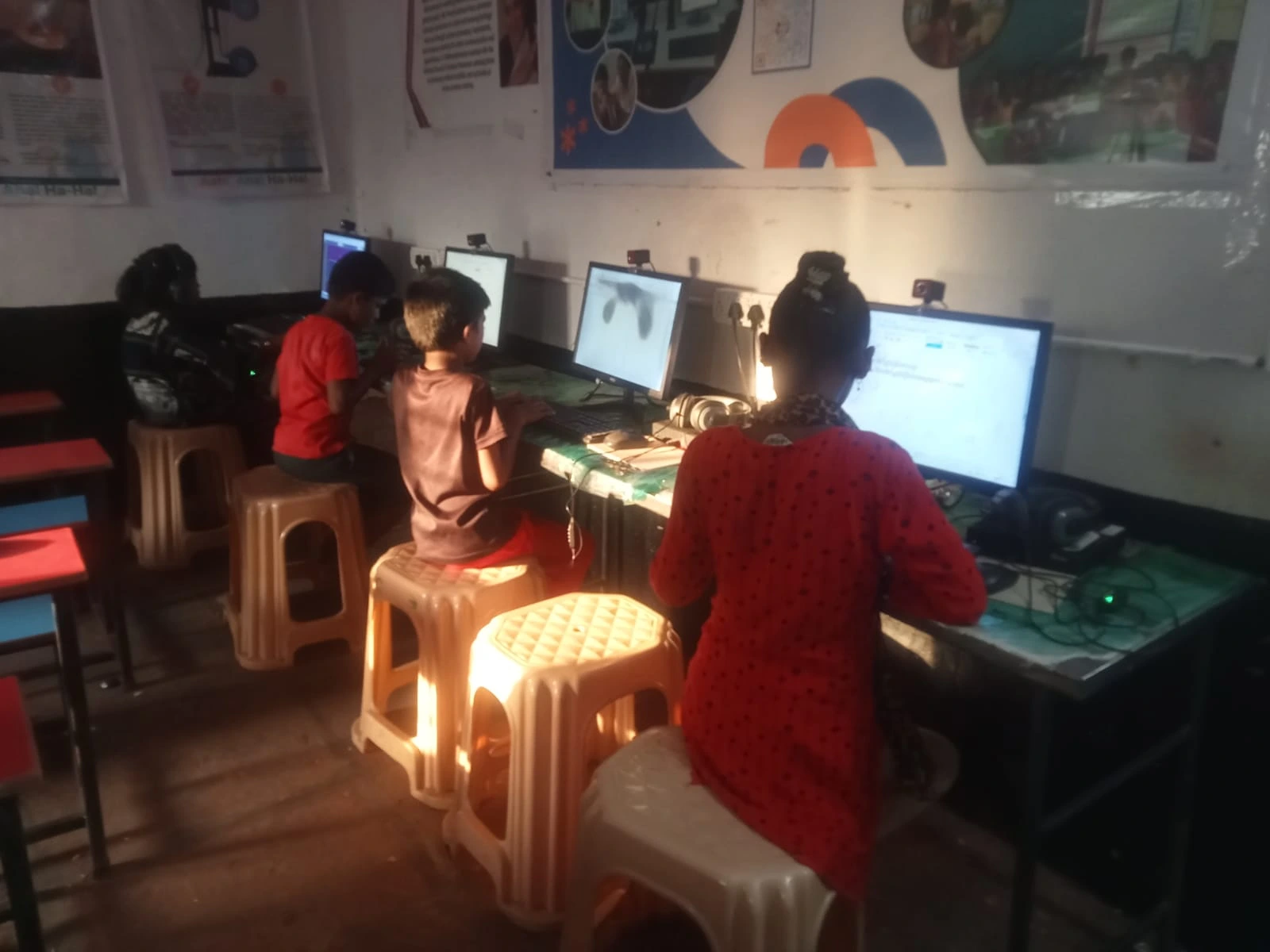
A student who builds digital literacy first approaches AI differently. They type prompts efficiently, search for the right tool and question AI responses because they already know how to evaluate information.
The foundation is not complicated. It is a computer with a keyboard for typing, a browser for searching and a file system for organising.
Does every student need a computer before using AI?
A computer makes the foundation much easier to build, because typing, file management and careful research are hard on a phone. The biggest advantage a student can have today is not only owning a computer, but having the skills that make every digital tool, including AI, more effective.
The Digital India initiative is pushing digital skills across the country. But AI literacy without digital literacy is a house without a foundation.
What should parents do before giving a child AI tools?
Do not rush. Start with the foundation: let your child learn to type, search, organise and evaluate, then bring in AI as a tool that builds on those skills.
Apna PC, priced at ₹30,000 (shipping and GST excluded), comes pre-loaded with tools that build digital literacy: LibreOffice for typing and organising, a browser for searching and Scratch for logical thinking. To see how AI fits in once the basics are ready, read using AI the right way on Apna PC.
Frequently Asked Questions
At what stage should my child start using AI for homework?
Start once your child can type comfortably, search for information and check whether an answer makes sense. Before that, AI tends to replace thinking. After that, it can explain topics, suggest ideas and check work while your child still does the real learning.
How can my child check if an AI answer is correct?
Teach them to compare the answer with their textbook or another trusted source. If two sources disagree, they should look deeper before accepting either. Asking the AI to explain its reasoning step by step also helps spot mistakes that a confident tone might hide.
Is using AI for homework the same as cheating?
Not if it is used to understand rather than copy. Asking AI to explain a concept or check a solution supports learning. Copying an AI answer as finished work skips the thinking that homework is meant to build, and teachers usually notice the difference.
Do children need coding skills before using AI?
No, coding is not required. Basic skills like typing, searching, organising and evaluating information matter more. Simple logic practice in a tool like Scratch can help children think clearly, but it is a bonus rather than a requirement for using AI well.
Give your child the foundation first, and AI becomes a real help instead of a shortcut. Visit Apna PC to learn more.