

When Aarav’s teacher asked the class to write a project on the water cycle, he opened Google and typed “water cycle.” He got 500 million results. He clicked the first link, copied three paragraphs, and submitted them. He did not learn anything. He did not evaluate the source. He did not check if the information was accurate. He searched. He copied. He submitted.
His classmate, Priya, typed the same query. But she did not click the first link. She looked at the source. She checked if it was a government site, an educational platform, or a random blog. She compared information from three different sources. She wrote the project in her own words, citing where she found each fact. She learned the water cycle, how to evaluate sources, and how to present information. Same search. Completely different outcome.
The difference between Aarav and Priya is not intelligence. It is information literacy. The ability to search for information, evaluate its credibility, and use it effectively is one of the most important skills a student can build. And it requires a computer to practise.
Why Can Most Students Not Search Properly?
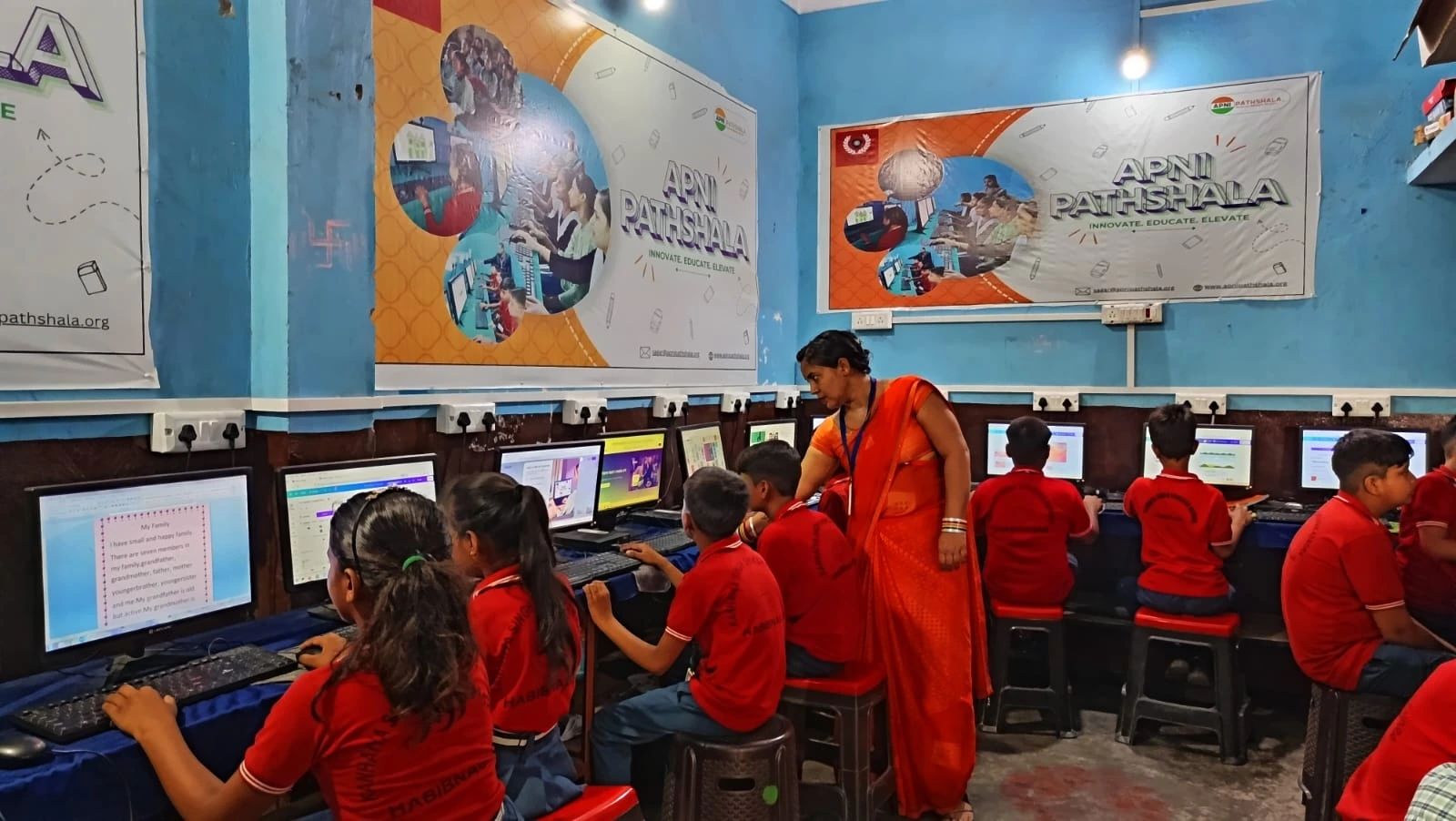
Most Indian students who use the internet treat it as a copy-paste machine. They search for a topic, click the first result, and copy whatever they find. They do not check the source. They do not compare multiple results. They do not evaluate whether the information is current, accurate, or biased.
This is not the student’s fault. Nobody teaches them how to search. Schools teach subjects. They do not teach research skills for students. The assumption is that if a student can type a query, they can search. But typing a query is not the same as finding information. Searching is easy. Finding is hard.
Online research skills include knowing which keywords to use, how to filter results, how to identify reliable sources, and how to cross-reference information. A student without these skills gets overwhelmed by search results and ends up copying the first thing they find. A student with these skills finds exactly what they need in minutes.
UNESCO global education research emphasises information literacy as a core competency for modern education. The ability to find, evaluate, and use information is as fundamental as reading and writing.
What Information Literacy Actually Looks Like?
Information literacy is not about knowing how to use Google. It is about knowing how to think about information. A literate searcher does three things differently from an illiterate one.
First, they choose keywords carefully. Instead of typing “water cycle,” they type “water cycle diagram for Class 8 science project, India.” The more specific the query, the more relevant the results. A student who learns to refine their search terms finds better information faster.
Second, they evaluate sources. A government site (.gov) is more reliable than a random blog. An educational institution (.edu) is more reliable than a commercial site. A recent article is more reliable than one from ten years ago. A student who learns to check sources avoids misinformation.
Third, they cross-reference. If three different reliable sources say the same thing, the information is probably accurate. If two sources contradict each other, the student needs to investigate further. A student who learns to cross-reference builds a more profound understanding of any topic.
Digital literacy skills are not optional in 2026. Every exam, every project, and every research assignment requires students to search for information online. The students who can do this effectively outperform those who cannot, regardless of their textbook knowledge.
How a Personal Computer Helps Students Learn Beyond the School Curriculum. But more importantly, it helps them learn how to think about the information they find.
Why a Computer Make a Difference?
A phone can search the internet. But a phone is not the right device for serious research. The screen is too small to compare multiple sources. The keyboard is too slow for refining search queries. The browser does not support the tabs and windows that effective research requires.
A computer makes research efficient. A student can open five tabs, compare sources side by side, and take notes in a separate window. They can search, evaluate, and organise information in a workflow that a phone cannot support.
The habits of information literacy require a computer. You cannot evaluate sources on a five-inch screen. You cannot cross-reference information when you can only see one page at a time. You cannot take organised notes while researching on a phone keyboard. The device determines the quality of the research.
The Hidden Cost of Not Having a Computer in 2026. But the cost of not having information literacy is higher. A student who cannot search effectively is a student who cannot learn independently.
What Parents Should Do?
Give your child a computer. Let them practise searching for information. Let them learn to evaluate sources, compare results, and write in their own words. Do not assume that because they know how to use Google, they know how to research. Searching is not the same as finding.
Apna PC, priced at ₹21,000 (shipping and GST excluded), gives your child the device to practise information literacy. A large screen for comparing sources. A keyboard for taking notes. A browser for opening multiple tabs. The tools that make effective research possible.
DIKSHA, India’s national digital learning platform offers digital resources for students across India. But resources without research skills are just noise. Give your child the skills to use those resources effectively. Visit apnapc.com to learn more.