

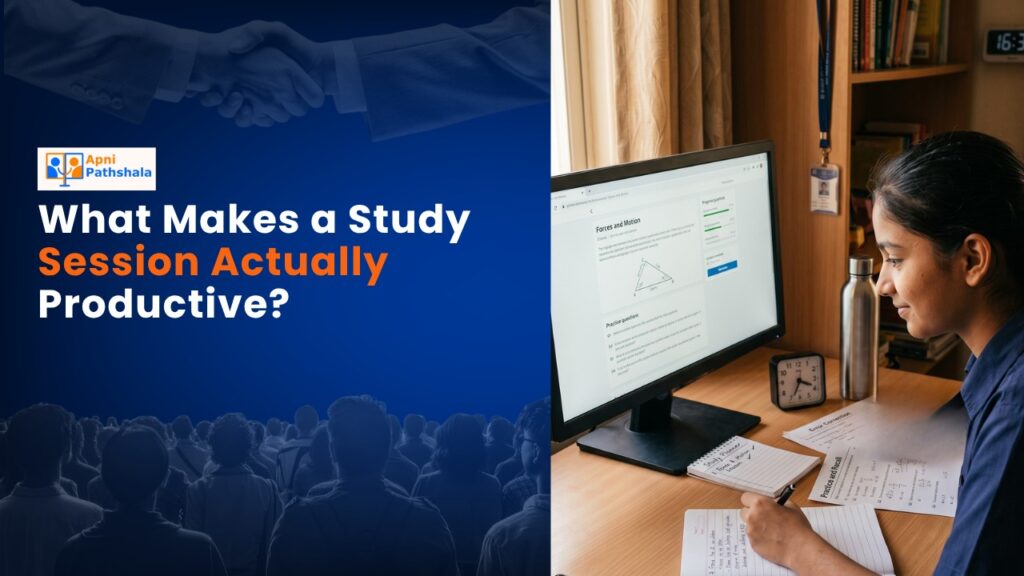
Ravi’s Story: When Study Time Became Wasted Time
Ravi’s mother, Priya, sat across from his desk last Tuesday evening. Her son had been “studying” for three hours, but his math test score had dropped from 78 to 62. She watched him flip between his phone, textbook, and a half-open notebook. His eyes glazed over the same page for fifteen minutes. Priya realized something wasn’t working. Ravi wasn’t lazy or unintelligent. He didn’t know how to have a productive study session.
This scene plays out in thousands of homes across Tier 2 and Tier 3 Indian cities every single day. Your child might be studying for hours, but are they actually learning? A productive study session isn’t about time spent. It’s about what your brain absorbs and retains. Let’s explore what truly makes study time count.
The Real Problem: Studying Isn’t the Same as Learning
Most students confuse busyness with productivity. You can sit with a book for four hours and learn almost nothing. Or you can focus for 45 minutes and absorb deeply. The difference lies in how you structure your study session.
Research from Education in India shows that students in our country often rely on rote memorisation without understanding concepts. This approach fails when exams test application and critical thinking. Your productive study session must balance memorisation with comprehension.
What’s missing in most homes? A clear strategy. A distraction-free space. The right tools. And yes, the right device.
Five Elements of a Truly Productive Study Session

Let’s break down what actually works when your child sits down to study.
- Clear Goals Before You Start: Don’t just open a textbook. Ask yourself: What will I learn in the next 45 minutes? What specific chapter or concept? Write it down. This focus transforms your study session from aimless to purposeful.
- A Distraction-Free Environment: Your phone isn’t studying with you. Neither is YouTube. Neither is your younger sibling’s noise. Create a dedicated study space in your home. It doesn’t need to be fancy. A corner of your room with a small desk works perfectly. Your brain learns to focus when the environment stays consistent.
- Active Learning, Not Passive Reading: Reading a chapter three times won’t help. Instead, take notes in your own words. Ask yourself questions. Try to explain concepts to an imaginary friend. This active engagement builds real understanding. Check out our guide on memory retention techniques to learn more about this approach.
- Time Blocks with Real Breaks: Study for 45 minutes, then take a 10-minute break. During breaks, don’t scroll on your phone. Walk around. Drink water. Stretch. This rhythm keeps your brain fresh. Learn why study breaks for better focus actually improve your learning.
- Tracking Your Progress: At the end of each study session, ask: What did I learn? What’s still unclear? Write this down. You’ll see patterns in what you struggle with and can adjust your approach.
Time Management: The Forgotten Skill
Your productive study session depends on smart time management. Don’t block eight hours and expect to stay focused. Your brain can’t do it. Instead, use the 45-10 method: 45 minutes of focused study, 10 minutes of a genuine break.
Plan your week on Sunday. Which subjects need more time? Which topics are harder? Allocate your study hours based on difficulty, not just what’s due first. This strategic approach saves you from last-minute panic and shallow learning.
Also, study your hardest subjects when your energy is highest. For most students, that’s morning or early afternoon. Save easier review for evening when you’re tired.
The Right Tools Make a Difference
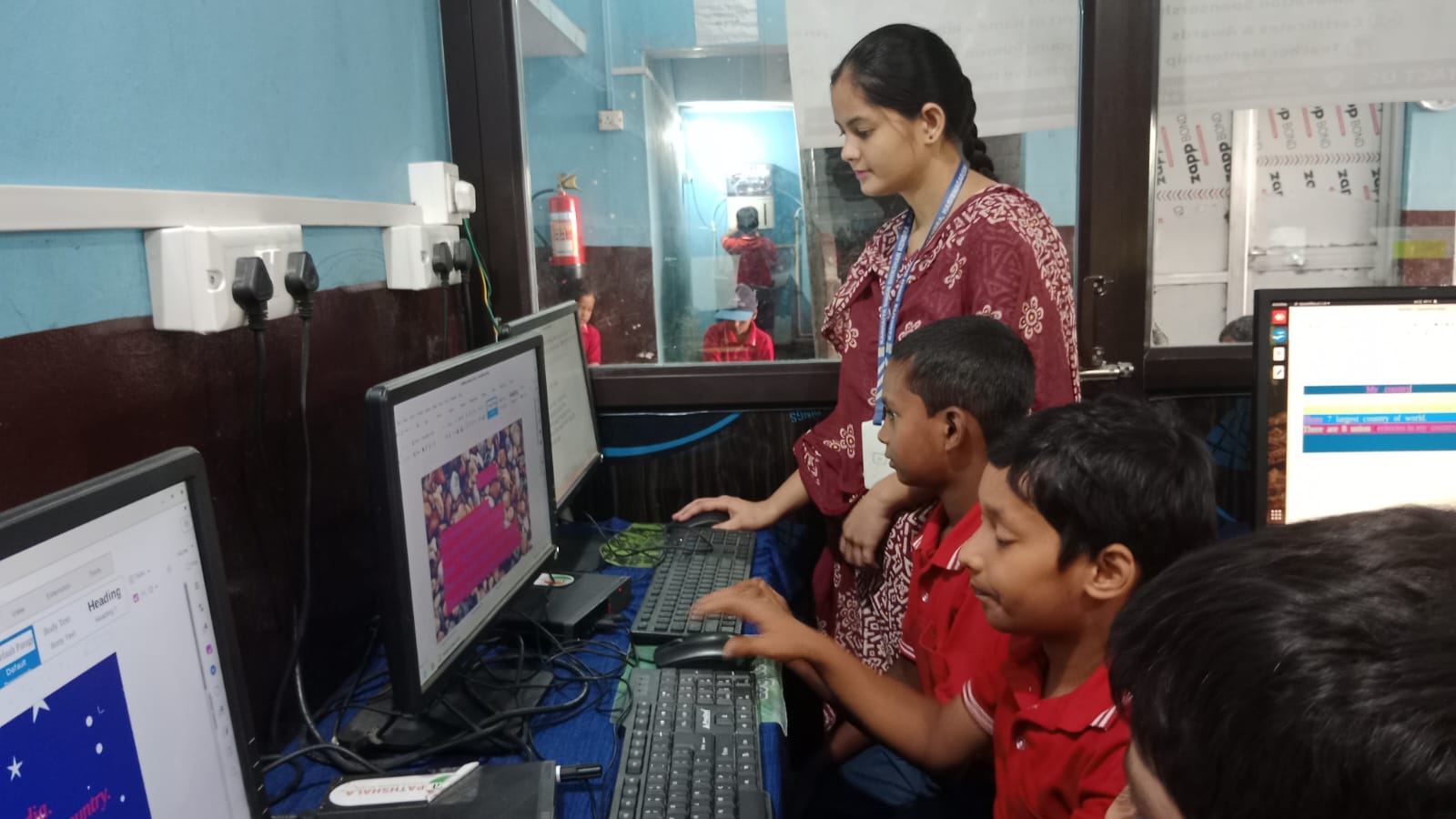
You can’t have a productive study session without the right setup. A reliable computer isn’t a luxury anymore. It’s essential. Your child needs to access online resources, create presentations, practice coding, and complete assignments.
This is where Apna PC comes in. Built specifically for students in India, Apna PC costs just Rs.30,000 and comes pre-loaded with everything your child needs. It runs Zorin OS, a smooth and fast operating system. It includes LibreOffice for documents and spreadsheets. Scratch is built in to help your child learn coding and logical thinking.
The 8GB RAM and 128GB SSD mean your child can switch between multiple applications without lag. No more frustration. No more wasted time waiting for programs to load. The Apni Prerna monitoring feature helps parents track study progress gently, without being intrusive.
What Your Child Learns From a Productive Study Session
When your child builds a productive study session routine, they’re learning more than just subjects. They’re learning discipline. They’re learning how to focus in a world full of distractions. They’re learning that quality beats quantity.
These skills will help them in college, in jobs, and in life. The ability to focus deeply is rare and valuable. You’re giving your child an advantage by helping them build this skill now.
The Indian Ministry of Education emphasises the importance of student-centred learning and self-regulation. A productive study session is exactly that: your child taking control of their own learning.
Start This Week
You don’t need to overhaul everything at once. This week, help your child pick one change. Maybe it’s removing their phone from the study desk. Maybe it’s using the 45-10 time block method. Maybe it’s setting a clear goal before studying.
One small change creates momentum. Next week, add another. In a month, your child’s entire approach to learning will transform. You’ll see better grades, sure. But you’ll also see more confidence and less frustration.
Priya did this with Ravi. She set up a dedicated study corner, got hian man Apna PC so he could access online resources without distraction, and taught him the 45-10 method. Three weeks later, his math score jumped to 85. More importantly, he stopped complaining about studying.
Your child can have that same transformation. A productive study session isn’t complicated. It just needs intention, structure, and the right environment. With Apna PC as your tool and these strategies as your guide, your child’s learning journey will shift. Visit apnapc.com to learn more.