

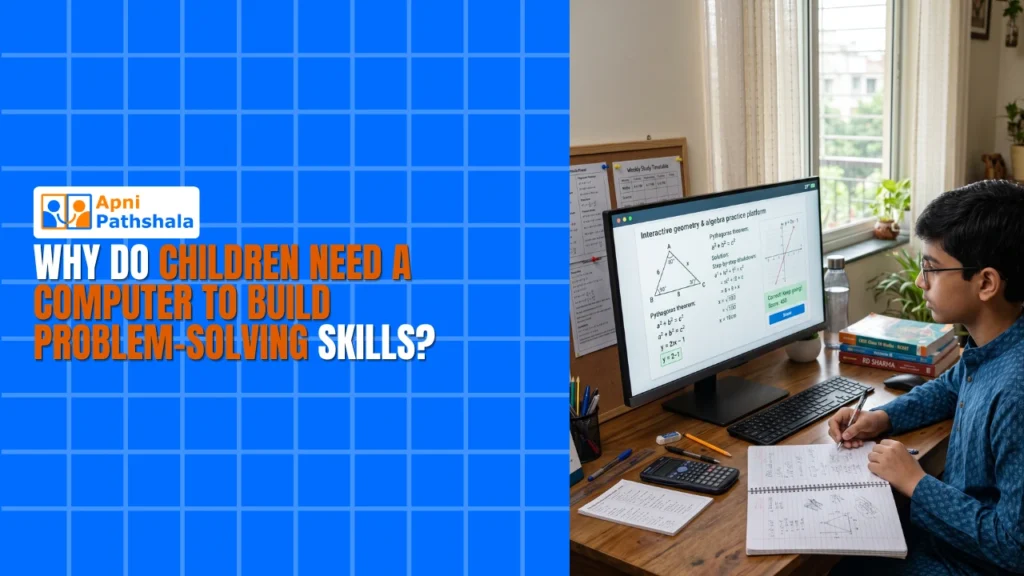
Children need a computer to build problem-solving skills because it lets them practise breaking a problem into steps, testing an idea, seeing it fail and trying again. Tools like Scratch, drawing programs and spreadsheets turn that cycle into daily practice, which lectures and worksheets alone cannot do.
For example, a child stuck on a maths word problem may solve it within minutes once they draw it out on a simple computer program. Seeing the problem differently is often all it takes.
Why do problem-solving skills matter so much?
Problem-solving matters because your child will face problems all their life, in school, at work and in unexpected situations. The students who do well are not always the ones with the best memory. They are the ones who can think through a challenge, try different approaches and find a way forward.
If you are a parent in a Tier 2 or Tier 3 city, you may wonder whether school teaches your child how to think, or only facts. A computer used well is one of the best tools for building the thinking skills they will need for life.
Which thinking skills does a computer help children build?
A computer helps children practise logical thinking: breaking tasks into steps, testing ideas and keeping going when something does not work. The overview of learning is useful background on how practice shapes skill. Specific skills include:
- Critical thinking: asking questions and analysing information rather than just accepting it.
- Creativity: experimenting with ideas without fear of permanent failure.
- Persistence: learning that mistakes are part of the process when coding or building something.
- Collaboration: working with others on digital projects.
Problem-solving cannot be taught through lectures alone. It needs to be practised, tested and refined, and a computer gives your child a safe space to do that. See also how coding teaches problem solving.
How does digital learning build these skills?
It depends on what the child does on the screen. Scrolling social media builds nothing, while learning tools build real skill.
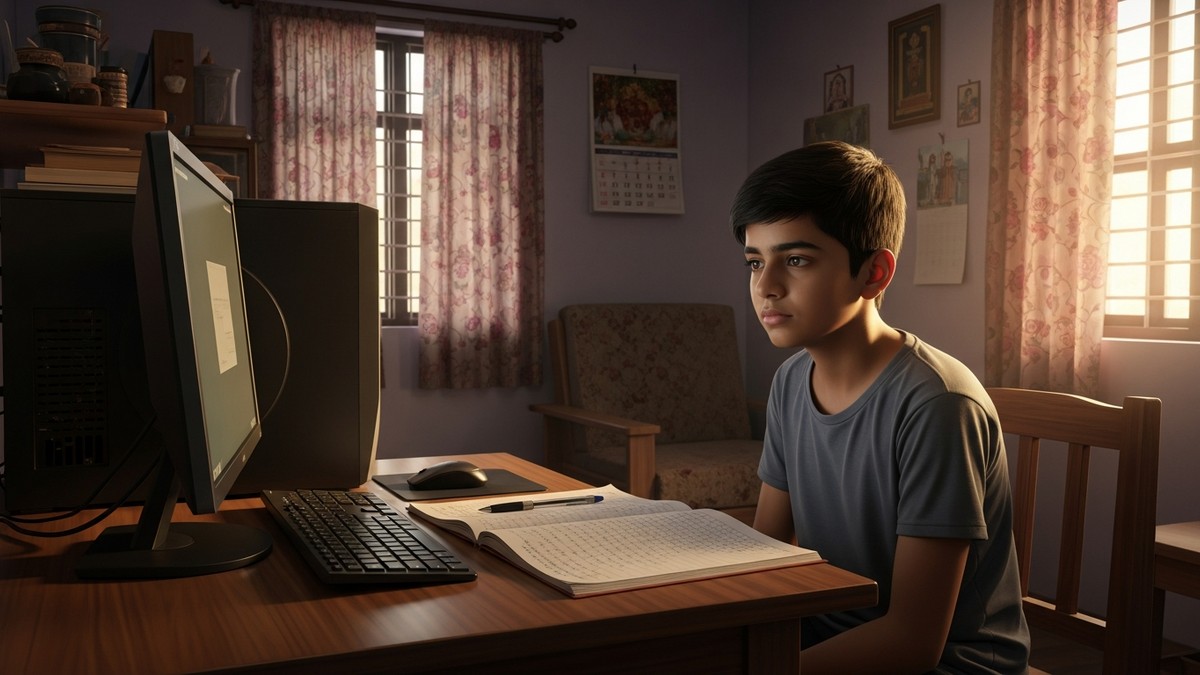
When your child uses Scratch, they write instructions, test them, fix them when they fail and try again. Every step involves problem-solving, and they start thinking like engineers, scientists and creators.
Compare this with mobile learning vs computer learning. A phone screen is small and built to grab attention. A computer gives your child room to focus, with tools made for creating and learning.
Your child can also work at their own pace. If they do not understand something, they can go back, try again and experiment, without worrying that the teacher has moved on.
What kind of computer setup helps children think better?
A computer designed for learning helps most, not one built for games or videos. Look for:
- A clean operating system that does not distract
- Tools for coding, writing and creating
- A way for parents to follow progress without being intrusive
- Enough power to run educational software without lag
Apna PC from Apni Pathshala is built for this. It runs Zorin OS, comes with Scratch for coding, LibreOffice for documents and presentations and Apni Prerna so you can see what your child is learning without hovering. With 8GB RAM and 128GB SSD, it runs smoothly. At Rs.30,000 (excluding shipping and GST), it is built for Indian families who want a real learning tool.
How does problem-solving connect to academic independence?
A child who solves problems on a computer slowly becomes an independent learner. They learn how computers build academic independence by exploring, making mistakes and finding solutions on their own.
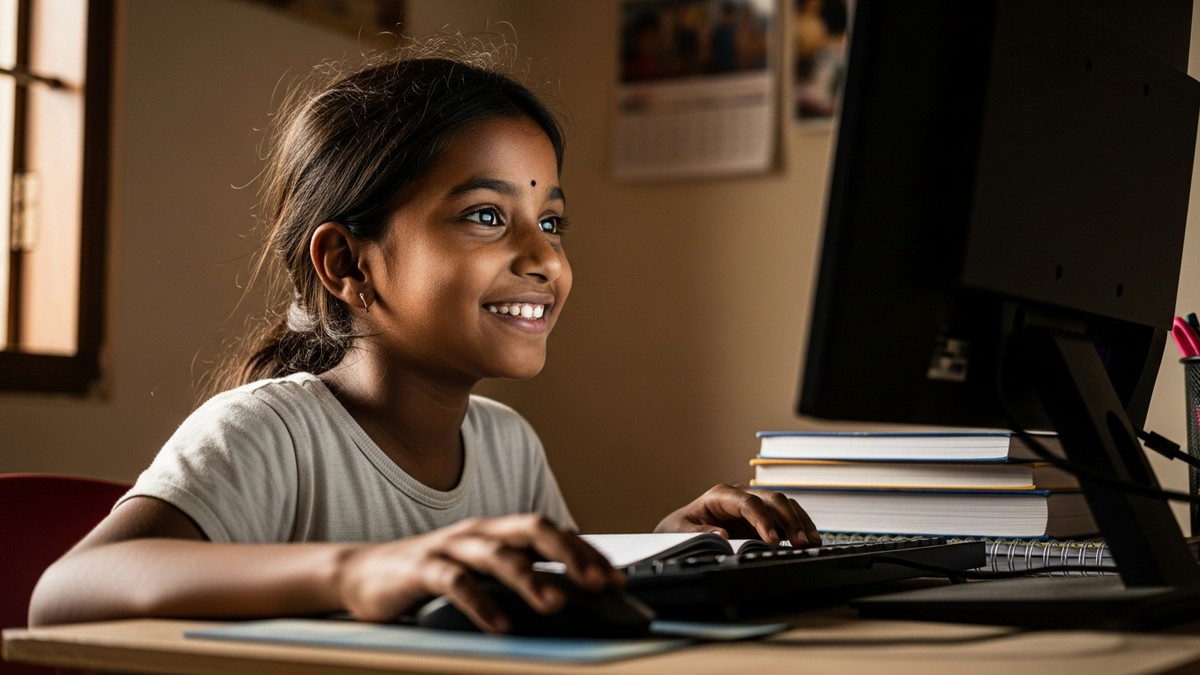
Instead of always asking you for help, your child learns to search for answers, test solutions and trust their own thinking. That independence carries into every subject.
Why do these skills matter for India’s digital future?
Digital skills are becoming essential, not optional. The Digital India initiative is expanding access to technology across the country.
Problem-solving skills built through digital learning help in engineering, medicine, business, design or any field your child chooses. By giving your child a computer now, you help with more than homework. You help prepare them for the future.
When should a child start building problem-solving skills?
Start now, while your child is still forming thinking habits. You do not need to wait for a special moment.
Every month spent solving problems on a computer builds skills that last a lifetime. For more ideas, read how students learn problem solving through computers.
Frequently Asked Questions
Is Scratch suitable for a child with no coding experience?
Yes, Scratch is made for complete beginners. Children drag and connect visual blocks instead of typing code, so they can focus on logic. They see results straight away, which makes it easy to spot mistakes, fix them and try again. Most children enjoy it from the first session.
How can I help my child solve problems without giving the answer?
Ask questions instead of explaining. Ask what the problem is asking, what they have tried and what they could try next. Encourage them to draw it, break it into smaller parts or test a guess. Step in only when they are truly stuck, and even then give a hint, not the answer.
Will games on a computer also build problem-solving?
Some puzzle games can, but most entertainment games are built to keep children playing rather than thinking. Learning tools like Scratch, spreadsheets and drawing programs give more steady practice. Keeping the study computer free of games also helps your child treat it as a place for real work.
Your child deserves more than schoolbooks and worksheets. They deserve a tool that lets them think, create and experiment. Visit Apna PC to learn more.