

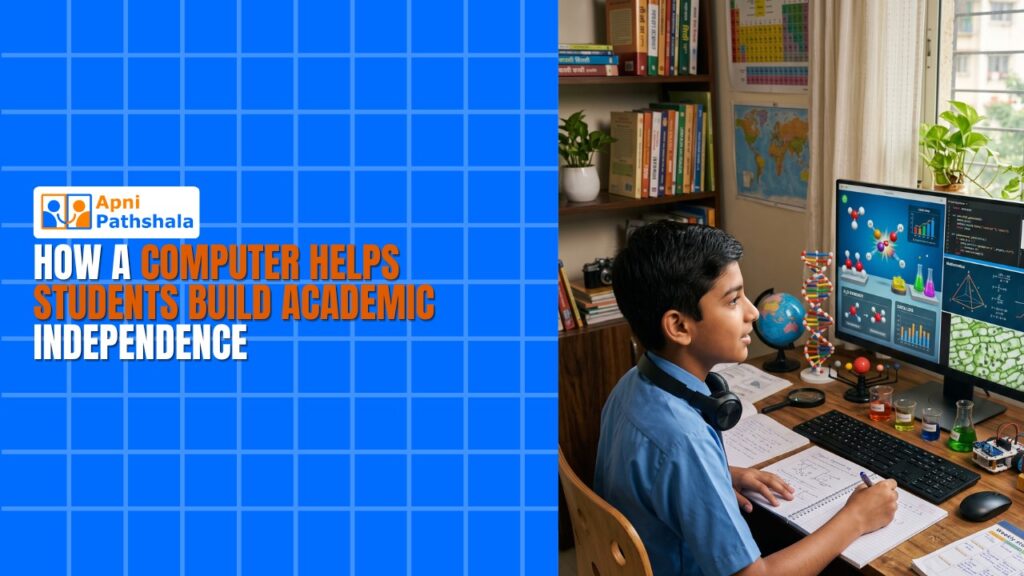
Ravi’s Turning Point: When a Computer Changed Everything
Ravi sat in his room in Indore, staring at his Class 9 mathematics notebook. His mother, Priya, stood outside his door, worried. For months, she’d watched him wait for tuition classes twice a week, then forget everything by the next lesson. He wasn’t lazy. He simply didn’t know how to learn on his own. That’s when Priya realised her son needed more than a tutor. He needed academic independence through the right tools. A computer became his answer.
In thousands of Indian homes across tier-2 and tier-3 cities, parents face Priya’s exact struggle. Your child sits through coaching classes, yet struggles to study alone. They don’t know where to start. They lack confidence. They depend on someone else to push them forward. But what if your child could develop the ability to learn on his own? What if a computer designed for students could help him develop this independence?
Why Academic Independence Matters for Your Child?
Academic independence isn’t about studying harder. It’s about studying smarter, on your own terms, at your own pace. When your child learns independently, he becomes responsible for his education. He stops waiting for the next class. He starts asking his own questions.
Research on learning shows that students who develop self-study habits perform better in exams. They retain knowledge longer. They feel more confident. They become problem-solvers instead of answer-seekers.
In your child’s future, whether in college or career, nobody will hold his hand. Employers won’t teach him. Professors won’t repeat lessons. The students who succeed are those who learned to teach themselves. Building this skill now, in Class 8 or 9, gives your child a massive advantage.
How a Computer Becomes Your Child’s Learning Partner
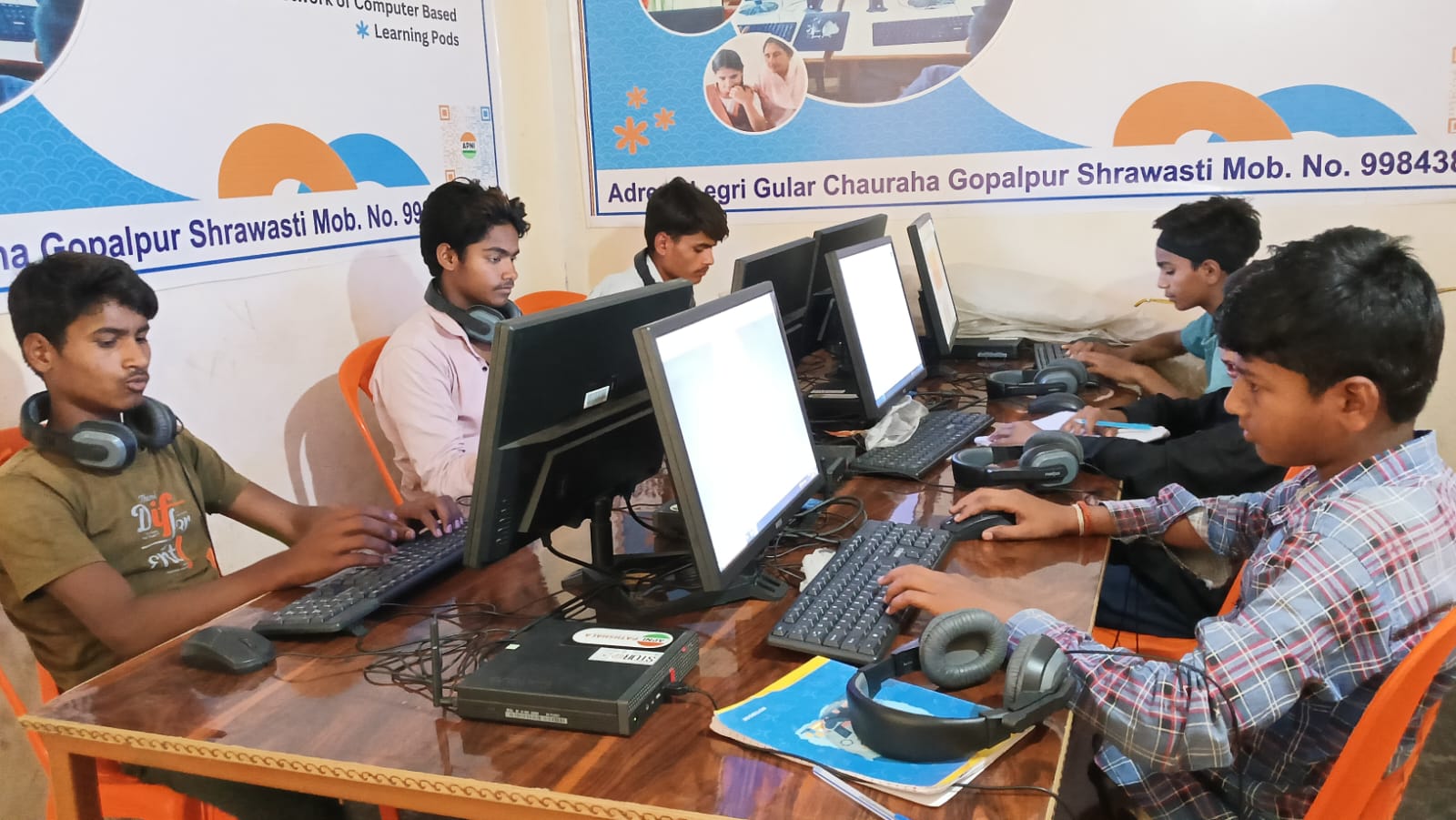
You might think a computer is just for playing games or watching videos. But the right computer, loaded with the right software, becomes a powerful learning device. It gives your child access to structured content, tools to create, and the freedom to explore subjects at his own pace.
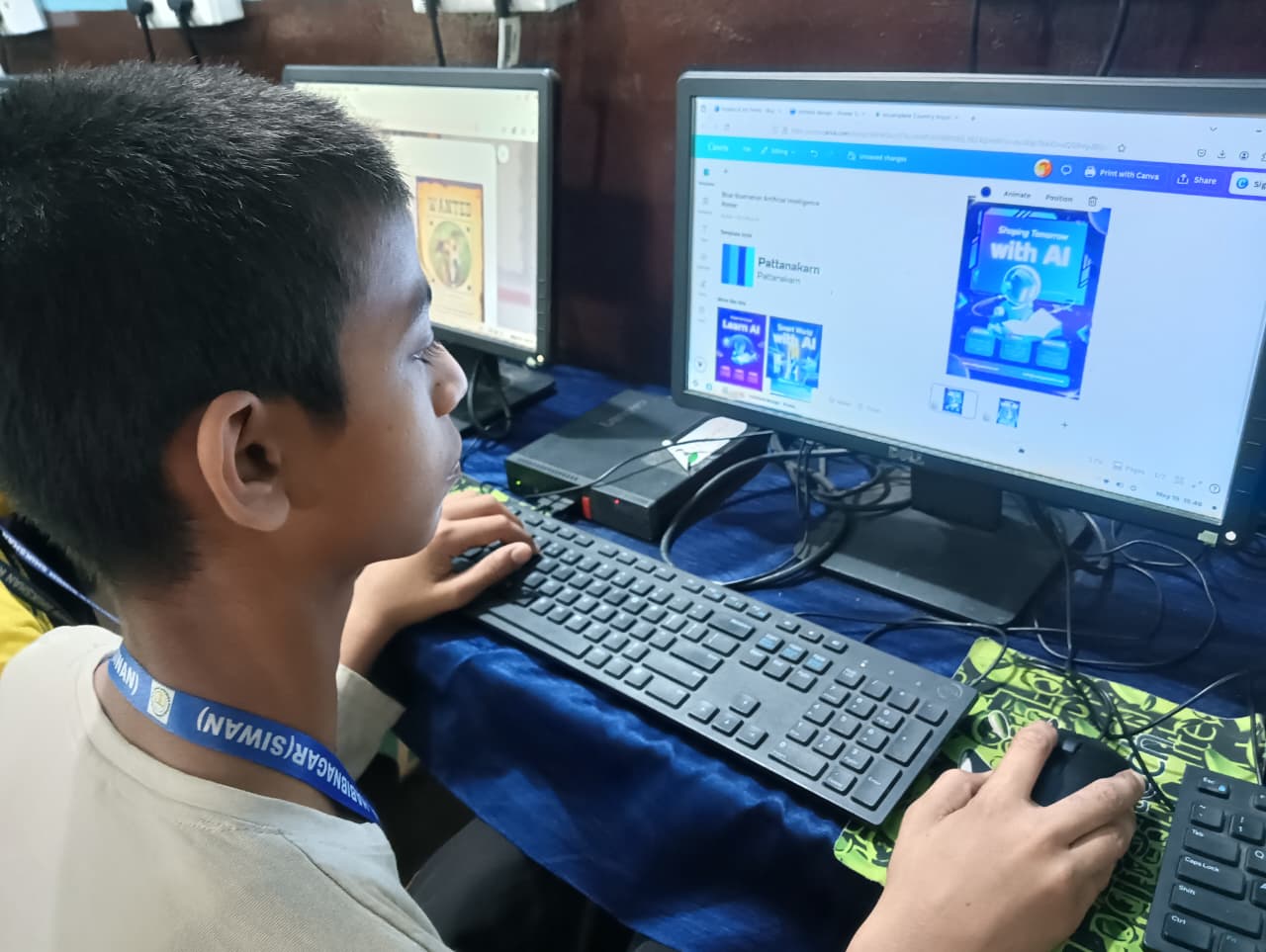
Apna PC is designed exactly for this purpose. It comes with Zorin OS, a clean, distraction-free operating system. It has LibreOffice for creating documents and presentations. It includes Scratch for learning coding through visual blocks. Your child can practice mathematics problems, write essays, create projects, and submit work without needing an internet cafe or relying on you to buy expensive laptops.
The key is this: when your child has his own computer, he develops a workspace. He builds a routine. He learns self-study discipline with a computer. He’s not borrowing your phone or waiting for your laptop. He has his own tool, his own space, his own responsibility.
Building Self-Study Habits That Last
Self-study isn’t something your child learns overnight. It’s a habit, like brushing teeth. It starts small and grows over time. With a computer, your child can begin with 30 minutes a day solving problems on the DIKSHA digital learning platform. Tomorrow, it becomes 45 minutes. Next week, he’s creating a project on his own.
Apna PC includes Apni Prerna, a student monitoring tool that helps you track progress without hovering over your child. You can see which topics he’s studying, how much time he’s spending, and where he needs help. This gives you peace of mind while giving him freedom.
The computer serves as a bridge between complete independence and healthy guidance. Your child learns to solve problems on his own, but you remain informed and supportive.
Why Apna PC at Rs.21,000 Makes Sense for Your Family?
You might hesitate at the price. But consider what you’re actually buying. You’re not buying a gaming machine or a status symbol. You’re investing in your child’s learning independence for the next 5-7 years.
Apna PC comes with 8GB RAM and 128GB SSD. This means your child can run multiple applications smoothly. He can work on documents, watch educational videos, and practice coding without lag. The pre-loaded software means you don’t need to spend extra money on licenses or subscriptions.
Compare this to three years of tuition classes. Most families in tier-2 cities spend Rs. 3,000 to Rs. 5,000 monthly on coaching. That’s Rs. 36,000 to Rs. 60,000 per year. Apna PC costs Rs. 21,000 one-time. It teaches your child to be independent instead of dependent on tutors. It’s an investment that pays dividends in confidence, skills, and exam scores.
Building Academic Independence: From Dependent to Independent Learning
The transition won’t be smooth at first. Your child might still feel lost. He might want your help immediately. This is normal. Patience is key. Start with subjects he enjoys. Let him explore. Celebrate small wins.
Within weeks, you’ll notice changes. He’ll ask smarter questions. He’ll solve problems before asking for help. He’ll feel proud of his work. This confidence spreads to other subjects and other areas of life.
This is what academic independence looks like. It’s not perfection. It’s your child taking ownership of his learning, using the right learning tool for self-paced study, and becoming a confident learner.
Your child’s future depends on skills like self-discipline, problem-solving, and independent thinking. These aren’t taught in classrooms. They’re built through practice, tools, and support. Apna PC provides the tool. You provide the support. Your child provides the effort. Together, you build academic independence that lasts a lifetime. Visit apnapc.com to learn more.