

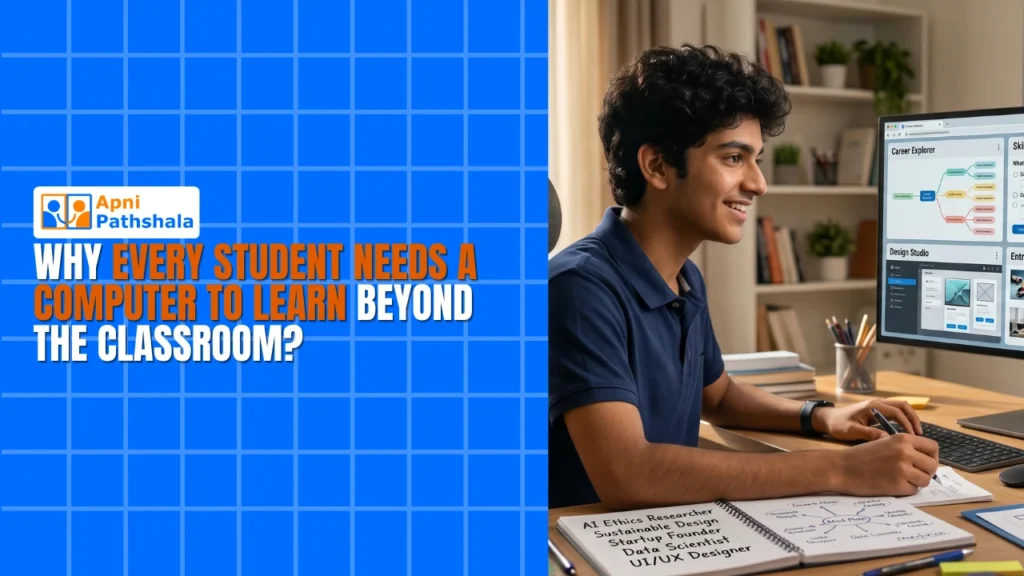
Rahul’s school teaches him mathematics, English, and science. But he’s learning coding, graphic design, and digital marketing on his own. How? He’s got a student computer at home that’s changed everything about the way he learns. While his classmates finish homework and close their books, Rahul’s real education is just beginning on his personal computer. This isn’t unusual anymore. Thousands of Indian students are discovering that the classroom isn’t where learning ends. It’s where it begins.
Your child’s textbooks cover the curriculum. They don’t cover the future. In a world where jobs are built around digital skills, screen time, and problem-solving, relying only on school isn’t enough. A student computer at home isn’t a luxury. It’s becoming a necessity.
The Problem: Learning Stops at the Classroom Door
Most Indian schools follow a fixed curriculum. Students learn what’s in the textbook. They memorize, they pass exams, and they move on. But the real world doesn’t work that way.
Consider what happens after school. Your child comes home, finishes homework, and has nothing but TV, mobile games, or YouTube. They’re not building skills. They’re consuming content. Meanwhile, students in other countries are learning programming, video editing, web design, and data analysis from home.
The gap widens every year. By the time your child reaches college, they’re competing with peers who’ve already spent hundreds of hours on practical skills. They’re behind before they even start.
Schools can’t fix this alone. Teachers are overloaded. Classrooms are crowded. Labs are expensive. The responsibility falls on parents to provide tools for learning beyond the classroom. Without a student computer at home, your child is missing opportunities that could shape their career.
Let’s be honest: not having access to digital learning at home isn’t just about missing out on extra skills. It’s about falling behind in a world that’s already digital.
The Opportunity: Digital Learning at Home Changes Everything
Here’s what changes when a student has a computer at home. They can learn anything, anytime. They’re not limited by school schedules or teacher availability.
Your daughter wants to learn animation? She can find tutorials on YouTube and practice immediately. Your son is curious about website building? Platforms like DIKSHA digital learning platform and countless others offer free or affordable courses. They can start today.
Digital learning at home means personalized education. Your child learns at their own pace. They replay lessons. They pause and think. They practice until they master something. This isn’t possible in a classroom of 40 students.
Research from UNESCO global education research shows that students with home computer access perform better academically and develop stronger problem-solving skills. They’re more confident. They’re more independent.
But here’s the real opportunity: your child isn’t just learning subjects. They’re learning how to learn. They’re discovering their interests. They’re building a portfolio of real work. When they apply for college or jobs, they don’t just have grades. They have projects. They have proof.
A personal computer for students isn’t just about academics. It’s about preparing them for a world where digital skills are survival skills.
The Solution: Affordable Computing for Indian Students
The barrier isn’t opportunity. It’s access. Many Indian families can’t afford expensive laptops or computers. ₹80,000 to ₹1,00,000 for a device feels impossible when you’re managing a household budget.
That’s where Apna PC comes in. It’s a computer built specifically for Indian students. It costs ₹21,000 (shipping and GST excluded). It’s not a toy. It’s not outdated. It’s a real, capable machine designed for learning.
Apna PC runs educational software smoothly. Your child can code, design, write, research, and create without lag or frustration. It comes with everything needed to start learning immediately. No hidden costs. No surprise expenses.
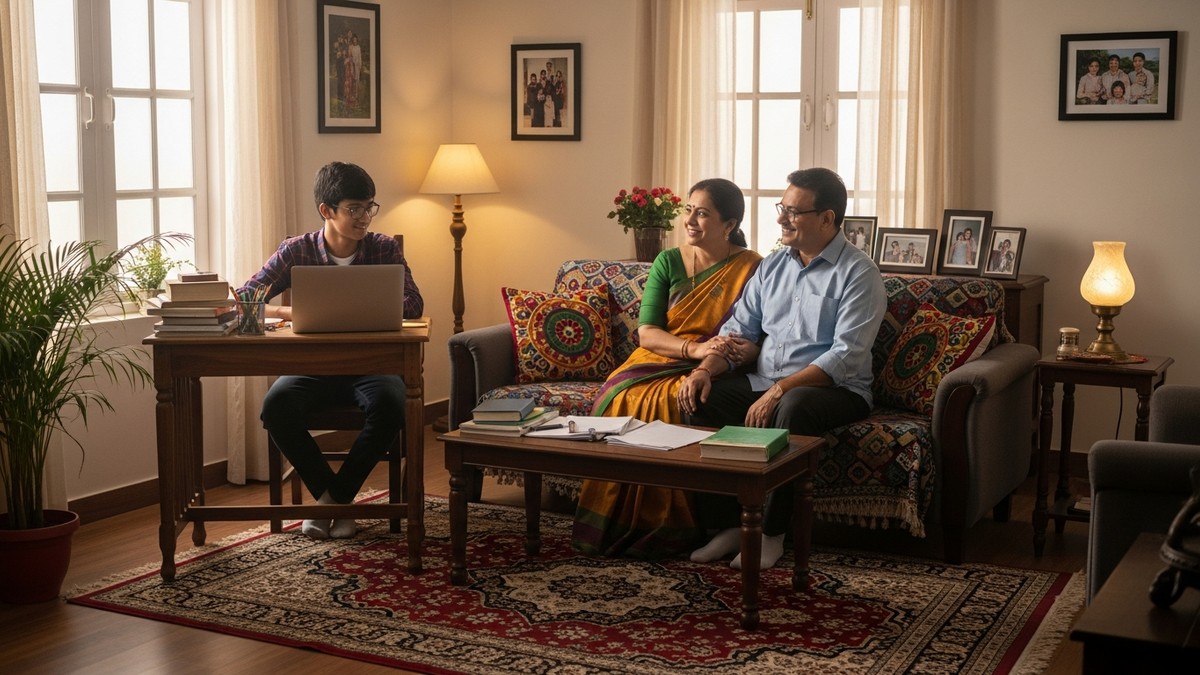
For the first time, affordability and quality aren’t opposites. A student computer at home doesn’t have to drain your savings. It can be a smart investment that pays off in your child’s skills and confidence.
Learn more about how Apna PC works for students by reading What Is Apna PC.
Steps to Get Your Child Started with Home Computing
Step 1: Assess Your Child’s Needs
What does your child want to learn? Coding? Design? Writing? Online courses? Different activities need different tools. Most require a basic, reliable computer. That’s what Apna PC provides.
Step 2: Set Up a Learning Space
A dedicated study area with a computer makes a difference. It signals that learning is important. It keeps your child focused. It separates schoolwork from entertainment.
Step 3: Choose Quality Learning Platforms
Free platforms like DIKSHA, Khan Academy, and Coursera offer thousands of courses. Paid options give more structure. Start with what interests your child most.
Step 4: Create a Routine
An hour of focused learning at home, five days a week, builds real skills over months. It’s not about spending all day on the computer. It’s about consistency.
Step 5: Monitor Progress Without Controlling
Let your child explore. Check in on projects. Ask what they’re learning. Celebrate small wins. Your involvement matters, but so does their independence.
The investment in a student computer at home isn’t just about the device. It’s about creating an environment where learning never stops. It’s about giving your child tools to build their future.
Don’t let another year pass with your child limited to classroom learning. The Hidden Cost of Not Having a Computer in 2026 is higher than you think. Visit apnapc.com to learn more about affordable computers built for Indian students and how Apna PC can transform the way your child learns beyond the classroom.