

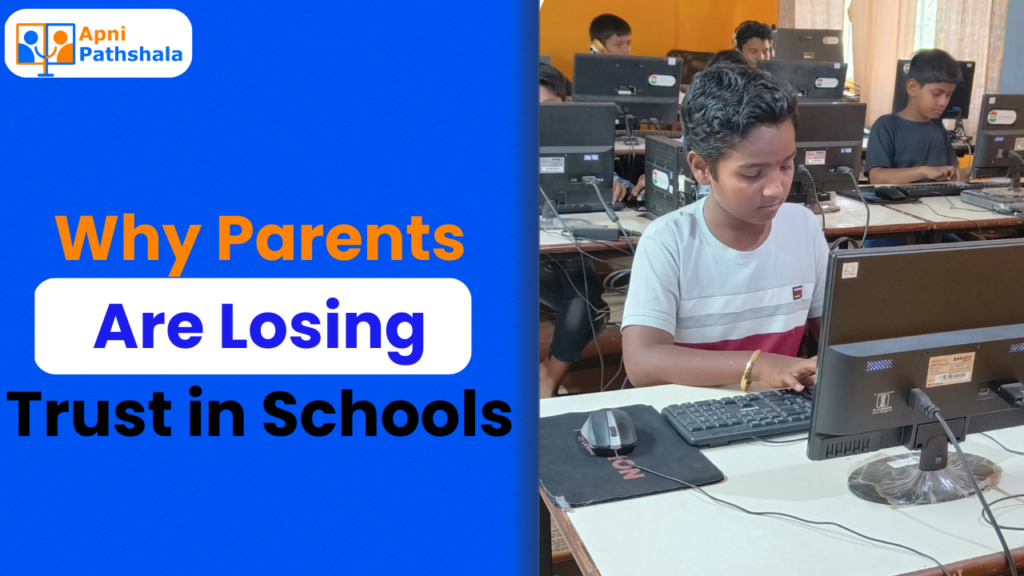
Introduction: A Question Parents Are Asking More Often
Across India, many parents are beginning to ask deeper questions about education.
It is no longer just about choosing a good school or scoring high marks.
Parents are noticing that despite long school hours, heavy homework, and rising fees, children often lack confidence, curiosity, and real-world skills. Learning feels stressful rather than meaningful.
This shift in thinking is not sudden.
It comes from everyday experiences at home children feeling anxious before exams, depending heavily on tuition, and losing interest in learning once the pressure increases.
Parents are not rejecting education.
They are searching for a model that prepares children not just for exams, but for life.
Why Marks Alone Are No Longer Enough
For decades, marks have been treated as the ultimate measure of success.
Good marks meant good colleges, good jobs, and a secure future.
However, today’s world works differently.
Careers are changing rapidly.
Skills matter as much as degrees.
Adaptability and confidence play a huge role in long-term success.
Many parents now realise that a child who scores well but struggles to communicate, think independently, or adapt to change may still feel unprepared for the future.
This is why parents are beginning to look beyond marks-focused education.
How Children Actually Learn Best
Children do not learn best through pressure and comparison.
They learn best when they feel safe, supported, and curious.
In traditional classrooms, learning often happens at one fixed pace.
Some children feel bored, while others feel left behind.
When learning environments are smaller and more flexible, children feel more comfortable asking questions and exploring ideas.
They begin to understand concepts deeply instead of memorising answers.
This is where community-led learning environments start to make sense for many parents.
What Is a Community-Based Digital Learning Environment?
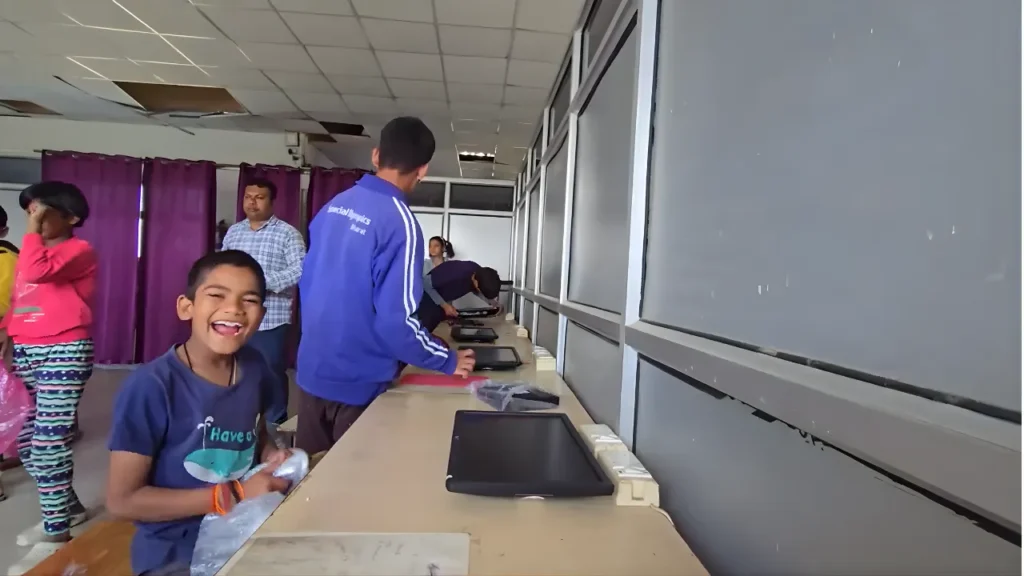
Community-based digital learning environments are designed around small groups of children.
Instead of large classrooms, children learn in small pods of 10–20 learners.
These groups are often mixed-age, allowing children to learn naturally from one another.
Older students reinforce learning by guiding younger ones, while younger students gain confidence by observing and participating.
Learning is supported by digital tools that allow each child to move at their own pace, ensuring that no child feels rushed or ignored.
What Do Children Actually Learn in Such Environments?
Parents often wonder whether academics are compromised in alternative learning models.
In reality, academics continue but without unnecessary pressure.
Children learn core subjects while also developing essential life skills, such as:
-
- Digital literacy, helping them use technology responsibly and effectively
-
- Communication skills, allowing them to express ideas clearly
-
- Problem-solving ability, encouraging logical and independent thinking
-
- Creativity, which helps them approach challenges in new ways
-
- Collaboration, preparing them to work well with others
-
- Basic financial understanding, which is rarely taught in schools
Most importantly, children learn how to learn independently, a skill that stays with them for life.
The Role of Digital Learning in a Child’s Growth
Digital learning plays a supportive role rather than replacing human guidance.
When structured properly, it allows learning to become personalised and transparent.
Children can revisit concepts they find difficult and move ahead in areas they understand well.
Parents can clearly see what their child is learning and how they are progressing.
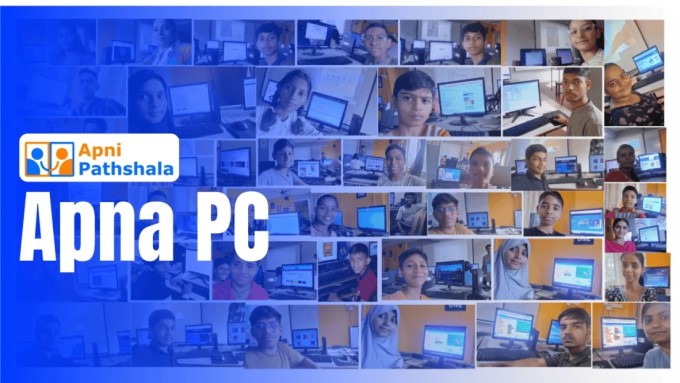
Devices like Apna PC support this structured digital learning by combining guided content with independent exploration.
This approach ensures that technology supports learning rather than becoming a distraction.
Why Mixed-Age Learning Builds Confidence
In real life, children interact with people of different ages all the time.
Mixed-age learning reflects this reality.
Younger children benefit from observing older peers.
Older children gain confidence and leadership skills by explaining concepts.
This environment reduces unhealthy competition and builds cooperation.
Children begin to focus on progress instead of comparison.
Parents often notice improved confidence and communication skills in such settings.
How Learning Adapts to Real-World Needs
One of the biggest limitations of traditional schooling is how slowly it adapts.
Introducing new skills or changing priorities often takes years.
Community-led learning environments are more flexible.
If children need better language skills, digital exposure, or life skills, learning plans can be updated quickly.
This ensures that education stays relevant to the child’s needs and the realities of the modern world.
Making Quality Learning More Accessible
Another major concern for parents is affordability.
High school fees often come from infrastructure costs and administrative overhead, not necessarily better learning outcomes.
Community-based digital learning removes much of this inefficiency.
Parents pay for learning quality rather than appearances.
This makes meaningful education more accessible to families without compromising on learning outcomes.
What Children Gain in the Long Run
Beyond academics, children develop qualities that shape their future:
-
- Confidence in their abilities
-
- Independence in learning
-
- Curiosity and critical thinking
-
- Adaptability to change
They grow into learners who are comfortable asking questions, exploring new ideas, and taking responsibility for their own growth.
For parents interested in alternative education in India and community-led learning models, this philosophy is explored further here:
Final Thoughts: A Shift in How Parents View Education
Parents today are not abandoning education.
They are redefining what good education looks like.
The focus is slowly shifting from marks to meaning, from pressure to purpose, and from rigid systems to flexible learning environments.
When learning is aligned with a child’s natural curiosity and supported by the right tools, education becomes empowering rather than exhausting.
A Gentle Next Step for Parents
If you are exploring digital learning for kids, skill-based education, or future-ready learning, start by learning more.
Observe your child’s interests.
Understand how they learn best.
Explore modern learning tools and community-driven approaches at your own pace.
Because education should prepare children not just for exams, but for life.