

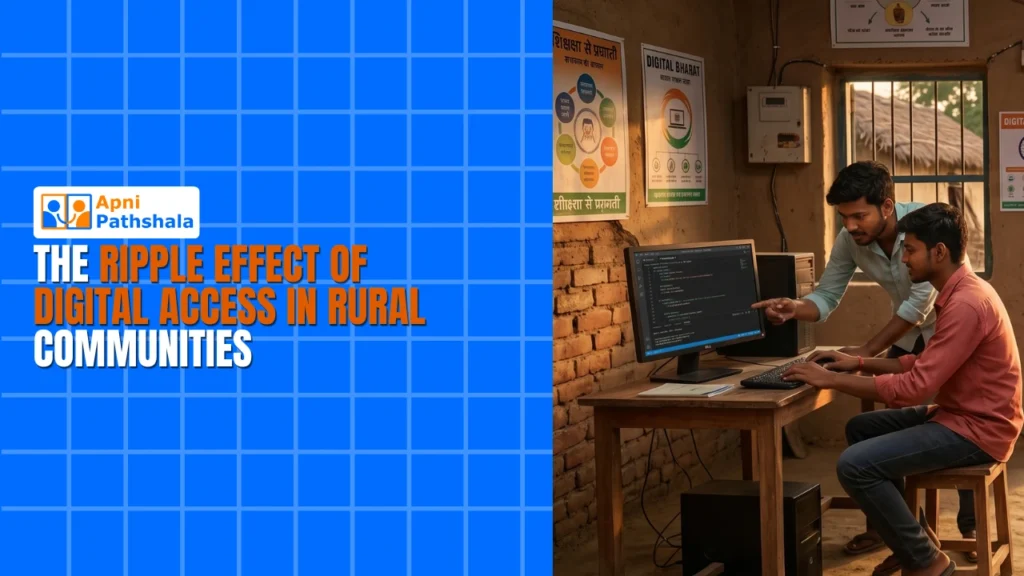
Digital access in rural communities creates a ripple effect: one computer first changes a student’s curiosity, confidence and ambition, then changes how the whole family sees technology. Rural students do not lack ability. What they often lack is the same starting line that city children take for granted.
For example, a bright village student who has never touched a computer may hide at the back of class during a digital lesson. Once a learning centre opens nearby, the same student can quickly become the one helping classmates.
What is the digital divide rural India rarely talks about?
The real digital divide is about what a child can do with technology, not only internet speed or phone ownership. City students use computers at home, school, tuition and friends’ houses, and become fluent without a formal course.
A rural student may finish school without touching a computer. They hear about coding, digital design and online learning, but these remain abstract. They have never seen a Scratch project, typed a document or searched on a screen larger than a phone.
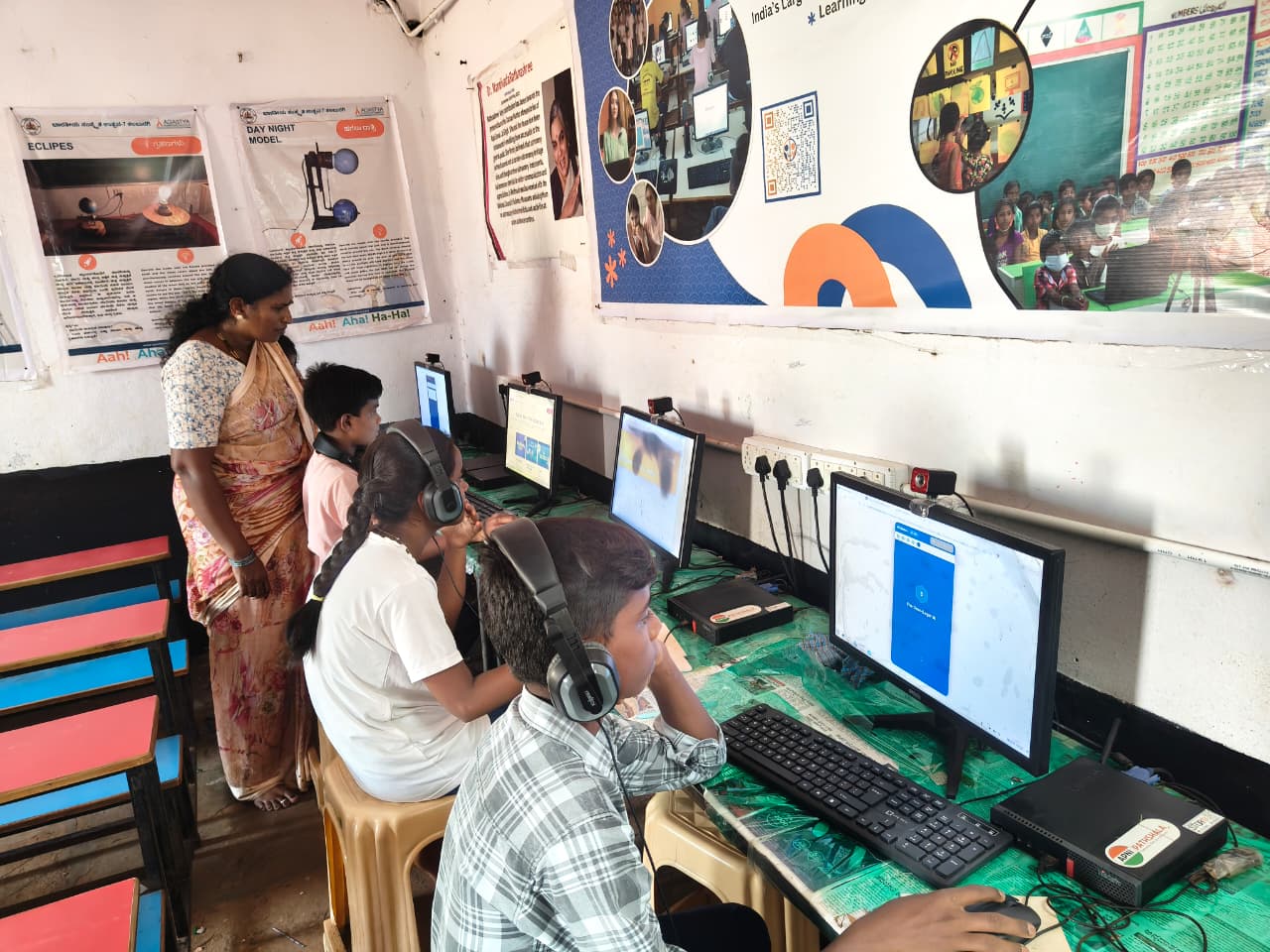
This gap is about access, not intelligence. Access can be fixed with a room, a few computers and a person willing to run the space.
DIKSHA, India’s national digital learning platform, offers courses for students across the country. But a student who has never used a computer cannot benefit from it. The platform exists. The access does not.
What happens when a village gets computers?
Three things change, usually in this order: curiosity, confidence and ambition. Each one builds on the one before.
- Curiosity. Children gather around the machine, touch the keyboard and ask questions. The most curious soon learn to open applications, search for videos and type their names.
- Confidence. A child who feared technology discovers that a computer responds to what you tell it. For a child who has never controlled any tool, that is powerful.
- Ambition. A student who learns coding starts to consider careers like software developer, data analyst or graphic designer. Once they build a first project, these jobs stop feeling out of reach.
A personal computer helps students learn beyond the school curriculum. In rural communities, it also helps them imagine beyond the village boundary.
How does technology access in rural areas change whole families?
When a computer enters a rural home, every family member benefits, not only the student. The fear of technology fades and curiosity grows across generations.
A parent who runs a small shop can learn to track expenses in a spreadsheet. Another family member can search for health information online. Younger siblings explore out of curiosity, and grandparents may make their first video call to relatives in another city.
This family-level change matters a great deal. When the whole family values digital access, they protect the computer, encourage the children to use it and talk about what they learned at dinner.
What does it take to bridge the rural education gap?
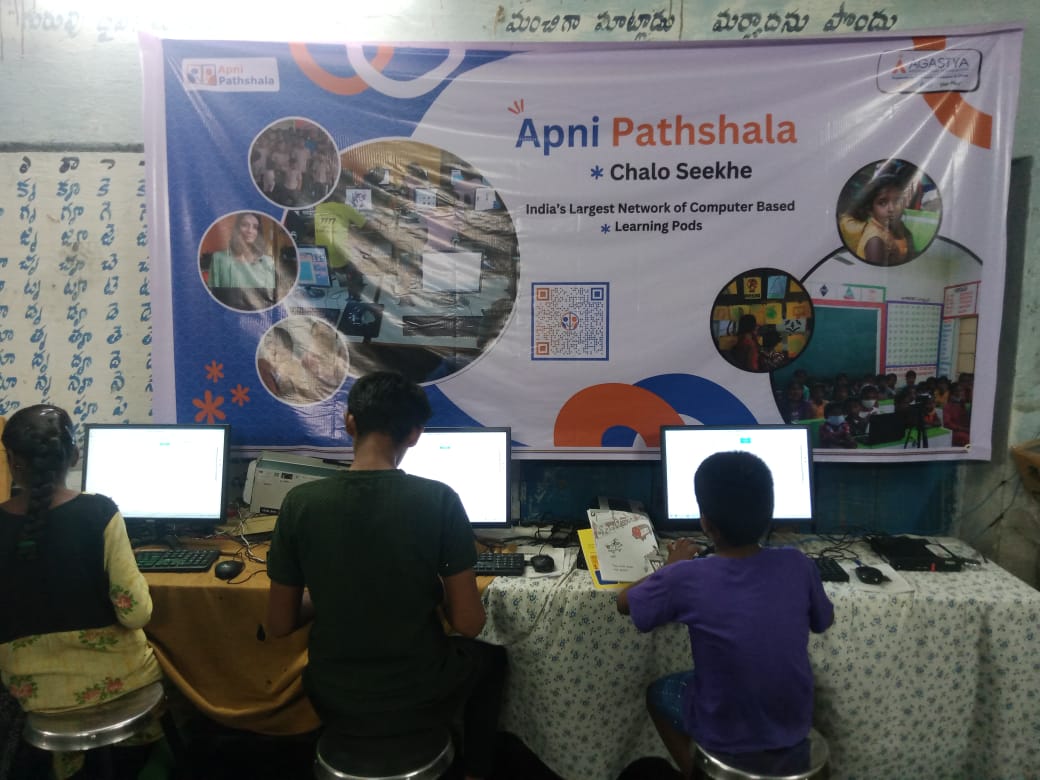
Bridging the gap does not need huge government programmes. It needs a room, 4-5 computers and a local person willing to run a learning centre.
In a community learning centre, children rotate through in batches while a local educator guides them through a structured curriculum. Over months, rural children start building projects, typing documents and exploring the internet with growing confidence. Read how community learning centres in small towns are already doing this.
Why is Apna PC suited to rural homes and centres?
Apna PC is designed for exactly this environment: simple to set up and ready for learning out of the box.
Priced at ₹30,000 (shipping and GST excluded), it comes complete with a monitor, keyboard, mouse and CPU, pre-loaded with educational software. A family plugs it in and starts using it, with no installation headaches or compatibility issues.
Why is digital confidence worth more than marks alone?
Digital confidence opens doors that marks alone cannot. It starts with regular access to a computer.
As our post on the biggest advantage a student can have explains, the ability to learn and explore independently carries a student much further than a single exam result.
Frequently Asked Questions
Can a rural child with no computer experience learn quickly?
Yes, children usually pick up the basics fast once they have regular access. Curiosity does most of the work at the start, and a guiding adult helps with structure. Opening programs, typing and searching become familiar within a short time when the computer is used daily.
Is internet necessary to benefit from a computer in a village?
Internet helps, but it is not required to start. A computer pre-loaded with educational software lets children practise typing, coding in Scratch and documents offline. Online platforms like DIKSHA add more when a connection is available, so families can begin with what they have.
Who can run a small learning centre in a village?
Any committed local person can run one, such as a teacher, a volunteer or an educated young adult. Their role is to guide children through a structured routine, keep the space organised and help when students get stuck. Deep technical knowledge is not needed to begin.
Digital confidence starts with access to a computer. Visit Apna PC to learn more about setting one up at home or in your community.