

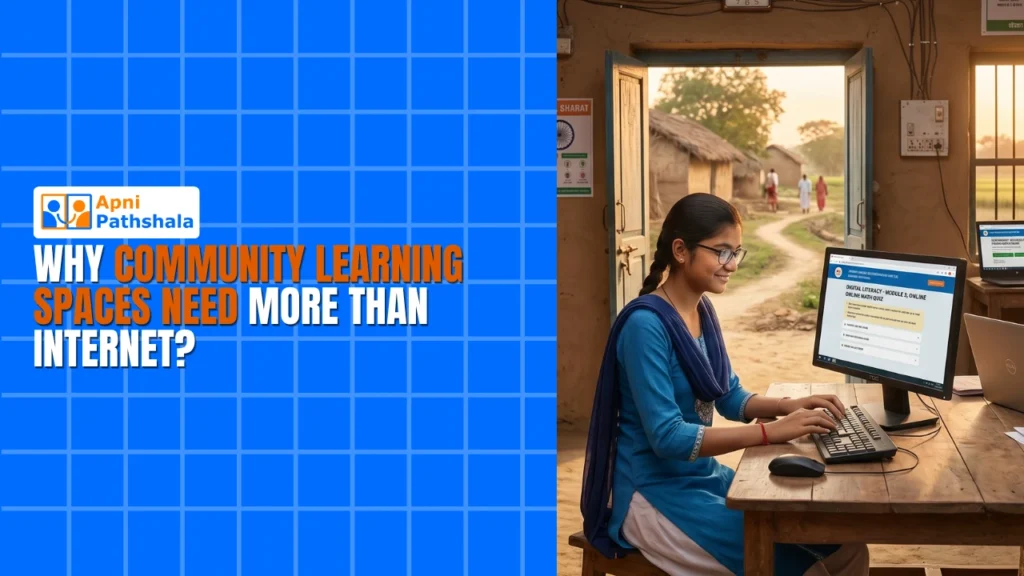
The government installed free Wi-Fi in a community hall in a village near Indore last year. The speed was decent. The connection was stable. Six months later, nobody uses it. The router blinks in the corner of an empty room. The children who were supposed to benefit from it are still going to the same coaching centre, still learning from the same textbook, and still memorizing the same answers.
Internet alone does not create learning. It never has. A child who has never used a computer is unsure what to search for. A student who has never typed a document does not know how to use Google Docs. A community that gets Wi-Fi but has no devices is like a community that gets a road but has no vehicles.
A community learning centre needs more than internet. It needs computers. It needs software. It needs a person who can guide the children. It needs structure. Without these, the internet is just a blinking light in an empty room.
Why Wi-Fi Without Computers Fail?
The assumption behind free internet programs is simple: give people access to information, and they will learn. But information access requires a device. A phone is not enough. A phone screen is too small for typing documents, building presentations, or coding. A phone keyboard is virtual. A phone operating system is designed for scrolling, not for creating.
A digital learning centre without computers is like a library without books. The building exists. The shelves are empty. Children walk in, look around, and walk out. The infrastructure without the tool is useless.
In rural India, this plays out repeatedly. Government schemes provide internet. NGOs provide tablets. But nobody provides the one thing that actually changes how a child learns: a computer with a keyboard, a mouse, and educational software pre-loaded.
DIKSHA, India’s national digital learning platform, offers thousands of courses. But try completing a structured course on a phone with a 5-inch screen. The experience is frustrating. Most children give up within a week. The platform works. The device does not.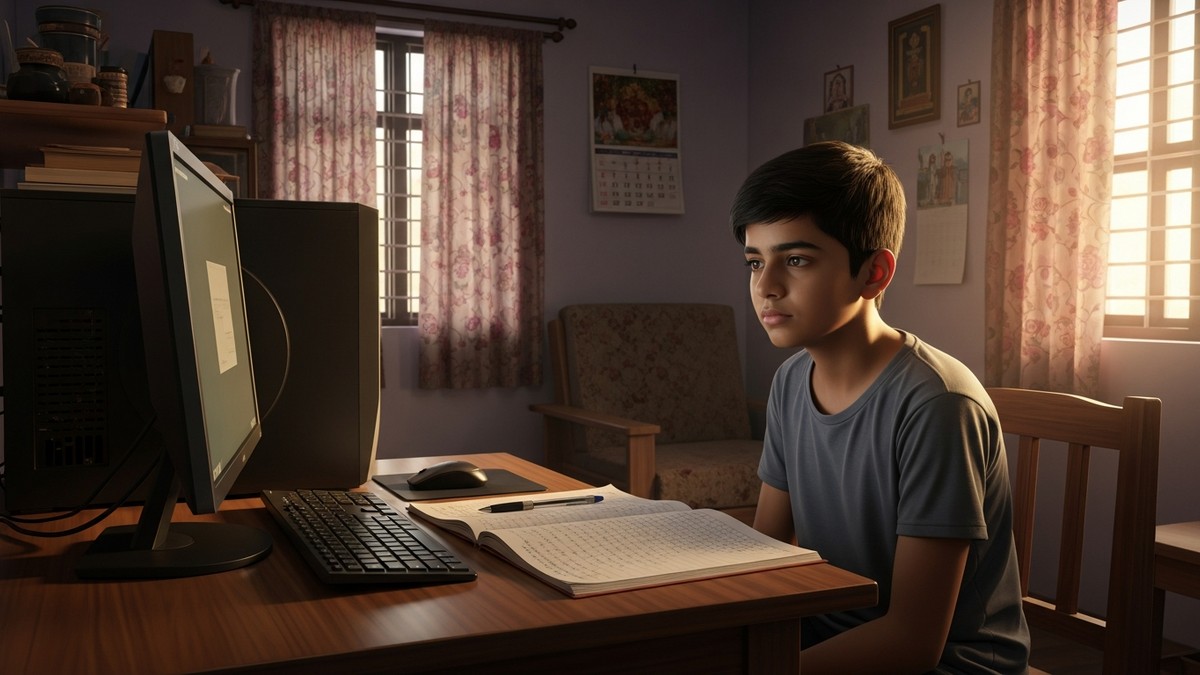
What a Real Community Learning Centre Looks Like?
A community learning centre is not a room with Wi-Fi. It is a room with purpose. It has 4-5 computer stations arranged so that children can work individually or in small groups. It has educational software pre-loaded on each machine. It has a local educator who knows how to guide students through the curriculum.
The computers are the core. Without them, the centre is just a room. With them, it becomes a place where children learn to type, code, create documents, build presentations, and explore the internet with purpose.
A rural learning centre does not need expensive equipment. It needs reliable equipment. An Intel Core i3 processor, 8GB RAM, and a 128GB SSD handle every task a school student needs. The machine boots in seconds. The software runs smoothly. The child sits down and starts working without waiting for anything.
The educator matters as much as the machine. A computer without guidance leads to YouTube and games. A computer with guidance leads to Scratch projects, document creation, and real learning. The educator does not need to be a tech expert. They need to be present, organized, and willing to learn alongside the students.
A personal computer helps students learn beyond the school curriculum. But this only happens when someone is there to guide the student in the right direction.
Why a Computer Lab for Students Changes Everything
A computer lab for students is not just about technology education. It is about changing how children think. A student who uses a computer daily develops habits that a student who only uses textbooks cannot replicate.
They learn to search for information instead of waiting for the teacher to provide it. They learn to organize their work digitally instead of losing papers in a bag. They learn to present their ideas in a format that looks professional. They learn to collaborate with others using shared documents and files.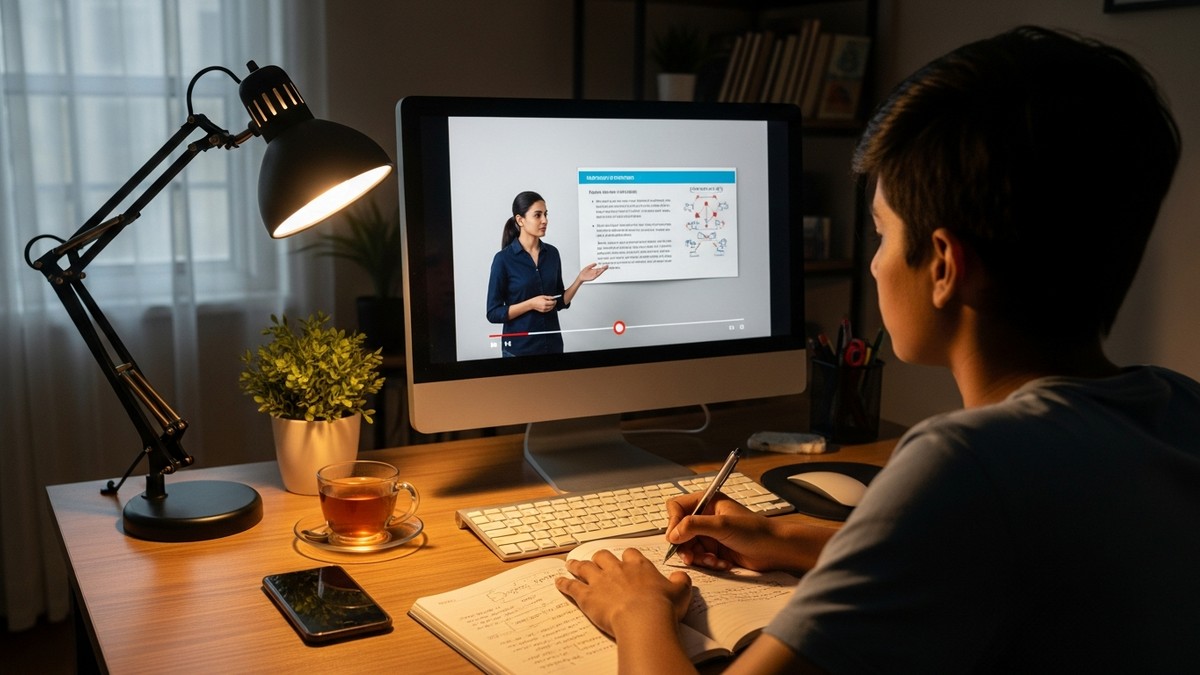
These habits are not computer skills. They are thinking skills expressed through a machine. The child who learns to search, organize, and present on a computer learns to do the same thing in every other area of their life.
A computer lab in a community centre also solves the access problem. Not every family can afford a computer. But every family can afford to send their child to a community centre for an hour a day. The shared model makes digital access available to children who would never have it otherwise.
The biggest advantage a student can have today is not marks. It is the ability to use digital tools confidently. A community centre with computers gives every child that advantage.
What It Actually Cost?
A community learning centre with 5 computer stations costs less than most people think. Each station needs a monitor, keyboard, mouse, and CPU. Apna PC, priced at ₹21,000 (shipping and GST excluded), provides a complete setup designed for Indian students.
Five setups cost ₹1,05,000. That is a one-time investment. The machines last for 3-5 years. The software is free. The only ongoing cost is electricity and internet, which most community centres already have.
Compare this to a coaching centre that charges ₹3,000 per student per month. Twenty students generate ₹60,000 a month. The computer lab investment is recovered in less than two months. After that, the centre runs on its own revenue.
The internet is not the solution. The computer is not the solution. The combination of computers, software, educators, and structure is the solution. The Internet is just the wire. The learning happens on the machine.
Visit apnapc.com to learn more.