

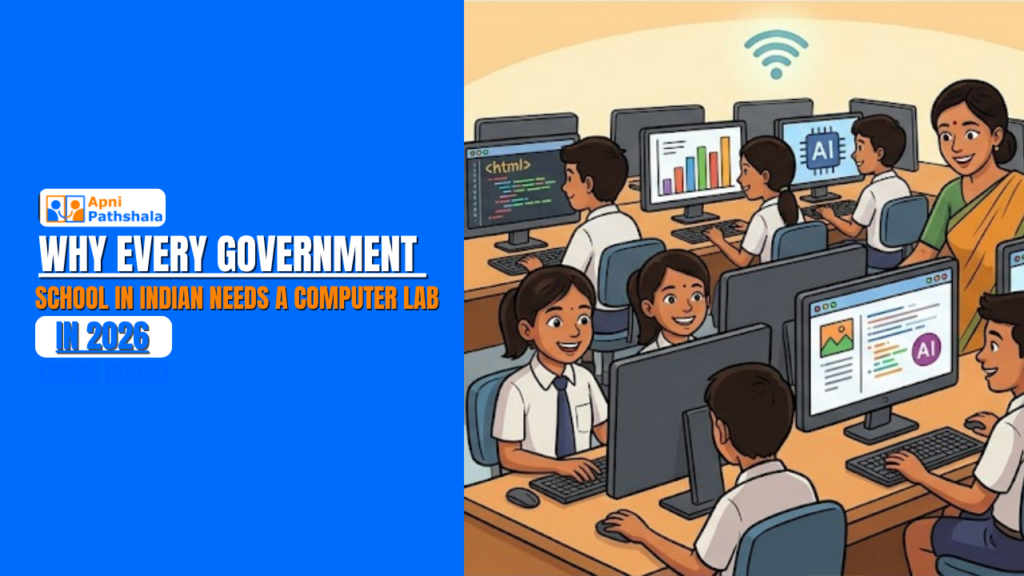
Two things define 2026: digital skills and those who don’t have them.
India has 1.48 million government schools. Millions of students walk into classrooms every day, eager to learn, ready to work. But in most of these schools, there is no computer lab. No screen. No keyboard. No practice.
Not because teachers don’t care. But because the system moves slowly while technology moves fast.
The result? A student who studies hard for 12 years and graduates without ever creating a document, sending an email, or navigating a spreadsheet. In 2026, that is not a small gap. That is a wall.
The Digital Divide in Government Schools
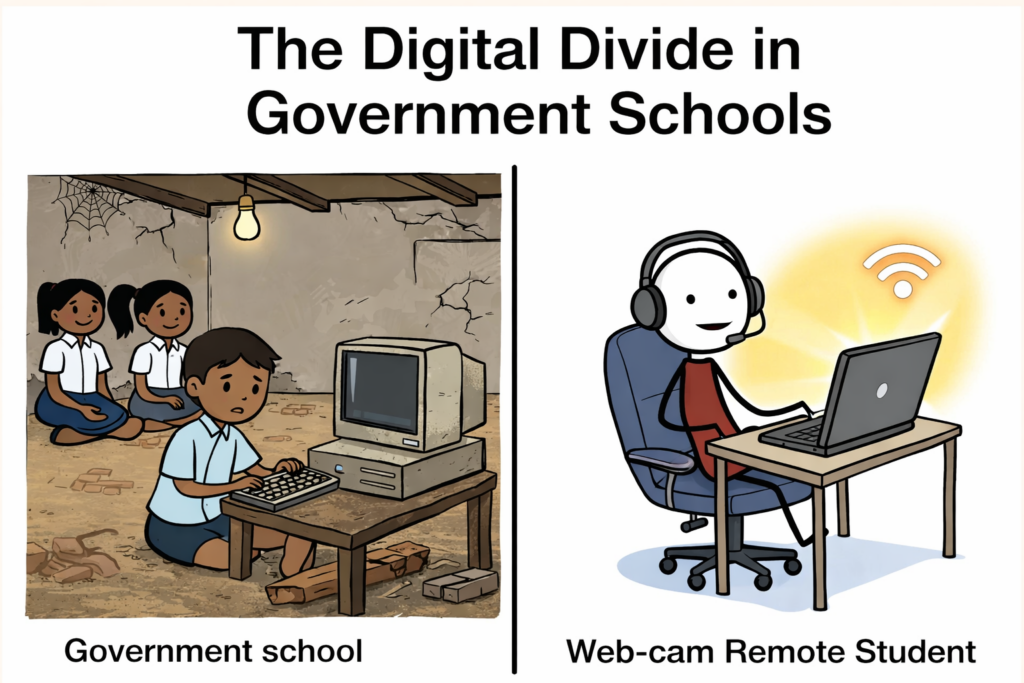
There is a silent moment where many government school students fall behind and nobody talks about it.
A student in Class 10 reads about computers in a textbook. They understand the theory. They know what a CPU is, what RAM does, what an operating system controls. They write it in their exam. They pass.
Then they step into the real world and cannot use a computer.
According to UDISE+ 2024 data, fewer than 40% of government schools in India have a functioning computer lab. The rest operate without one. NEP 2020 mandates digital literacy as a core learning outcome. But mandating something on paper does not build a lab.
This is the gap. Policy says yes. Infrastructure says no. And students are caught in between.
Private schools do not have this problem. They have labs, IT teachers, and scheduled computer periods. Students there practice daily. Government school students do not, through no fault of their own.
The gap between government and private schools is not about teachers. It is about tools.
Why a Government School Computer Lab in 2026 Is Not Optional
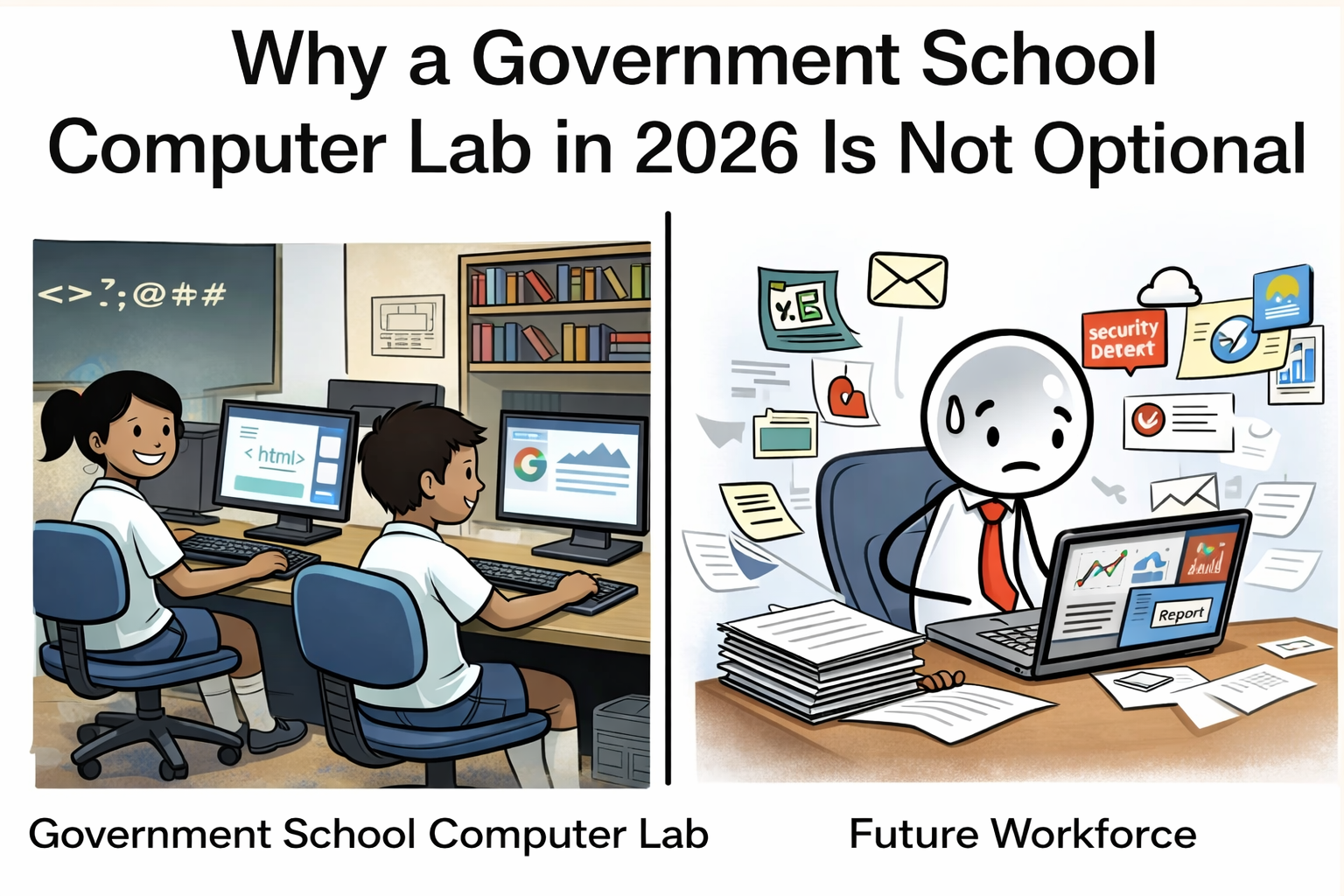
In 2026, you cannot get a job without digital skills.
Look at any job listing, from data entry clerk to government exam applicant. Computer proficiency is listed as a basic requirement. Banks ask for it. Hospitals need it. Government offices expect it.
A student who graduates without computer access is already behind before they start.
Without a government school computer lab, students are locked out of online learning platforms, digital government services, scholarship applications, and a world that no longer works on paper.
What Changes When a School Has a Computer Lab
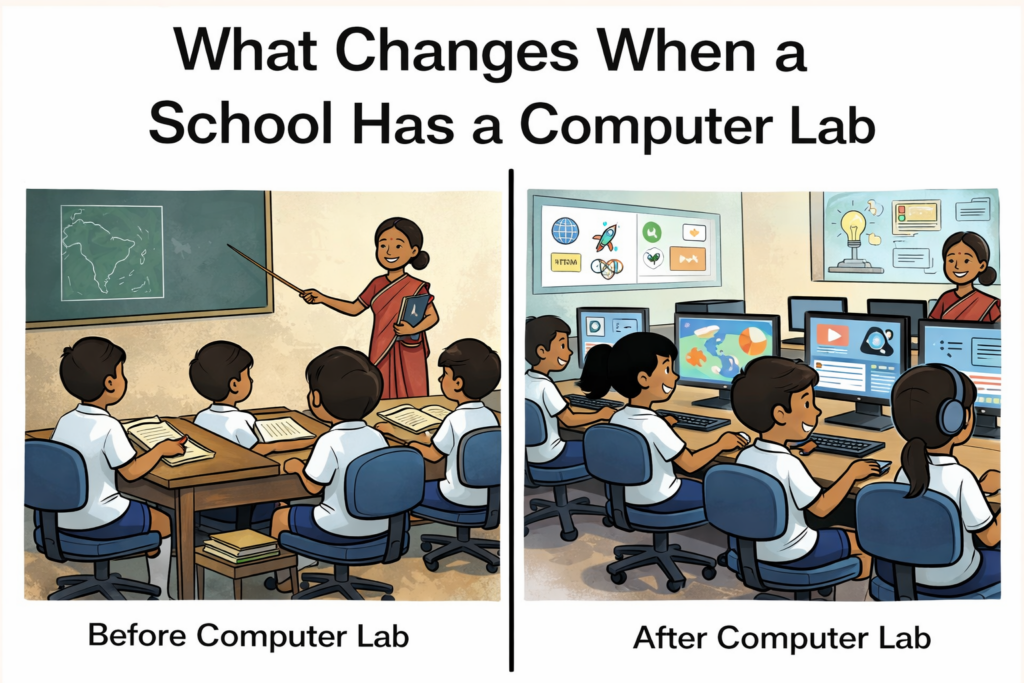
The difference is not small. It is total.
Without a computer lab:
- Students memorize computer theory with no practice
- Digital literacy exists in textbooks, not in hands
- Graduates enter the job market without basic proficiency
- The gap between rich and poor students grows wider each year
With a computer lab:
- Students practice typing, file management, and software daily
- Digital literacy becomes a real skill, not just a chapter
- Graduates compete on equal ground with private school peers
- The school becomes a center for community learning
That last point matters more than people realize. When a school has a lab, it does not just change students. Teachers start using computers for lesson planning. Parents visit after hours to learn basic digital tasks.
Organizations like Apni Pathshala have seen this ripple effect in communities across India. When students get digital access, families transform with them.
The Cost Myth That Stops Schools From Acting
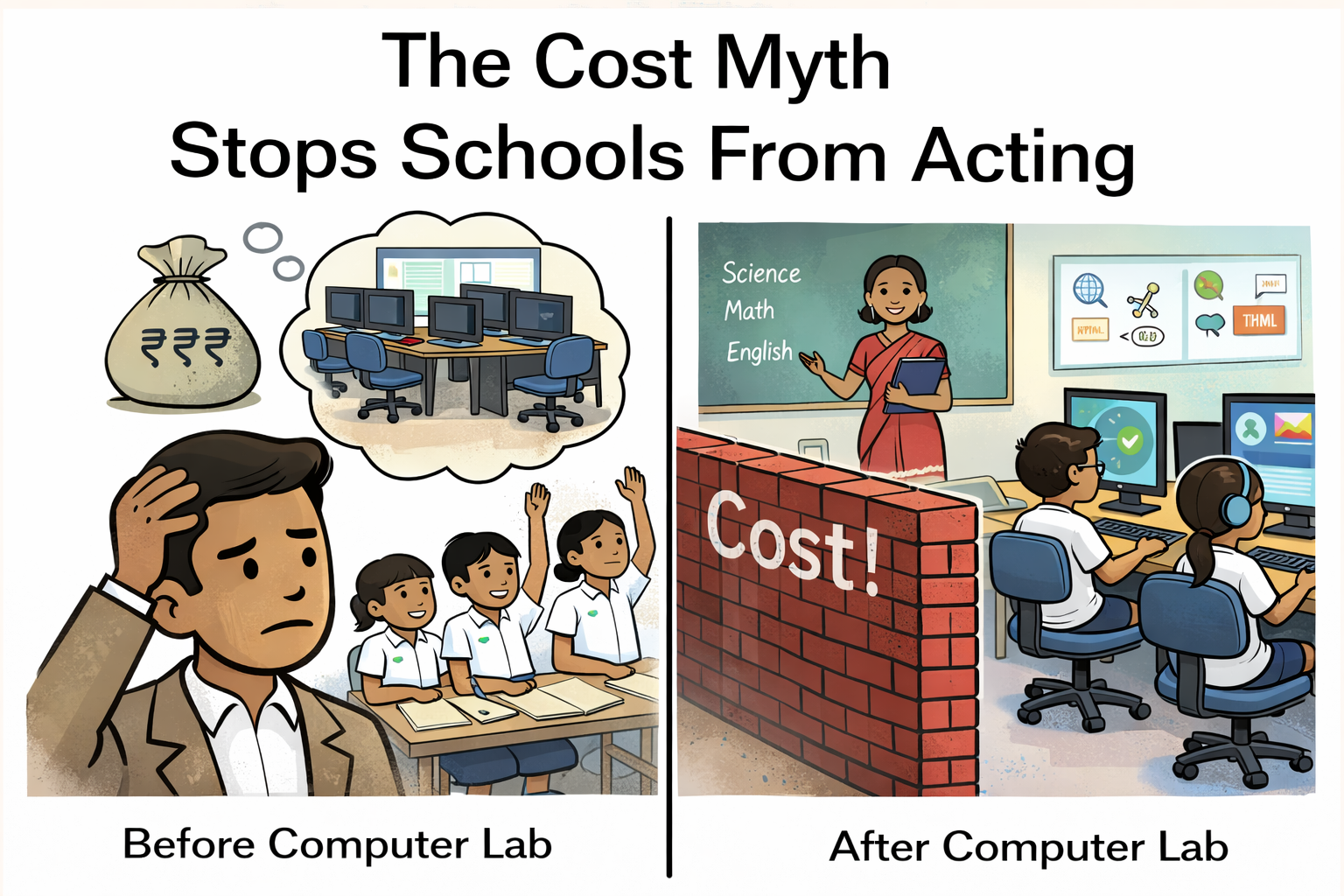
Most principals think a computer lab means ₹5 to ₹10 lakh minimum. New hardware, furniture, wiring, air conditioning, IT staff. The number feels impossible.
That number is a myth.
A functional government school computer lab in 2026 does not require brand new machines. Refurbished computers work. They boot. They run software. Students can type, browse, and learn on them.
Free operating systems like Zorin OS are built for education settings. They are lightweight, easy to use, and cost nothing. Free office software handles everything students need.
Add it up. Ten refurbished computers. Free software. Basic furniture already in the school. The real cost drops below ₹1 lakh for many schools. CSR funding, government schemes, and community donations often cover that.
The barrier is not money. The barrier is the belief that it costs more than it does.
If you want to understand why 2026 is the right time to act on affordable computer access, the answer is simple: the tools have never been cheaper, and the need has never been greater.
The Curriculum Has Already Moved Forward
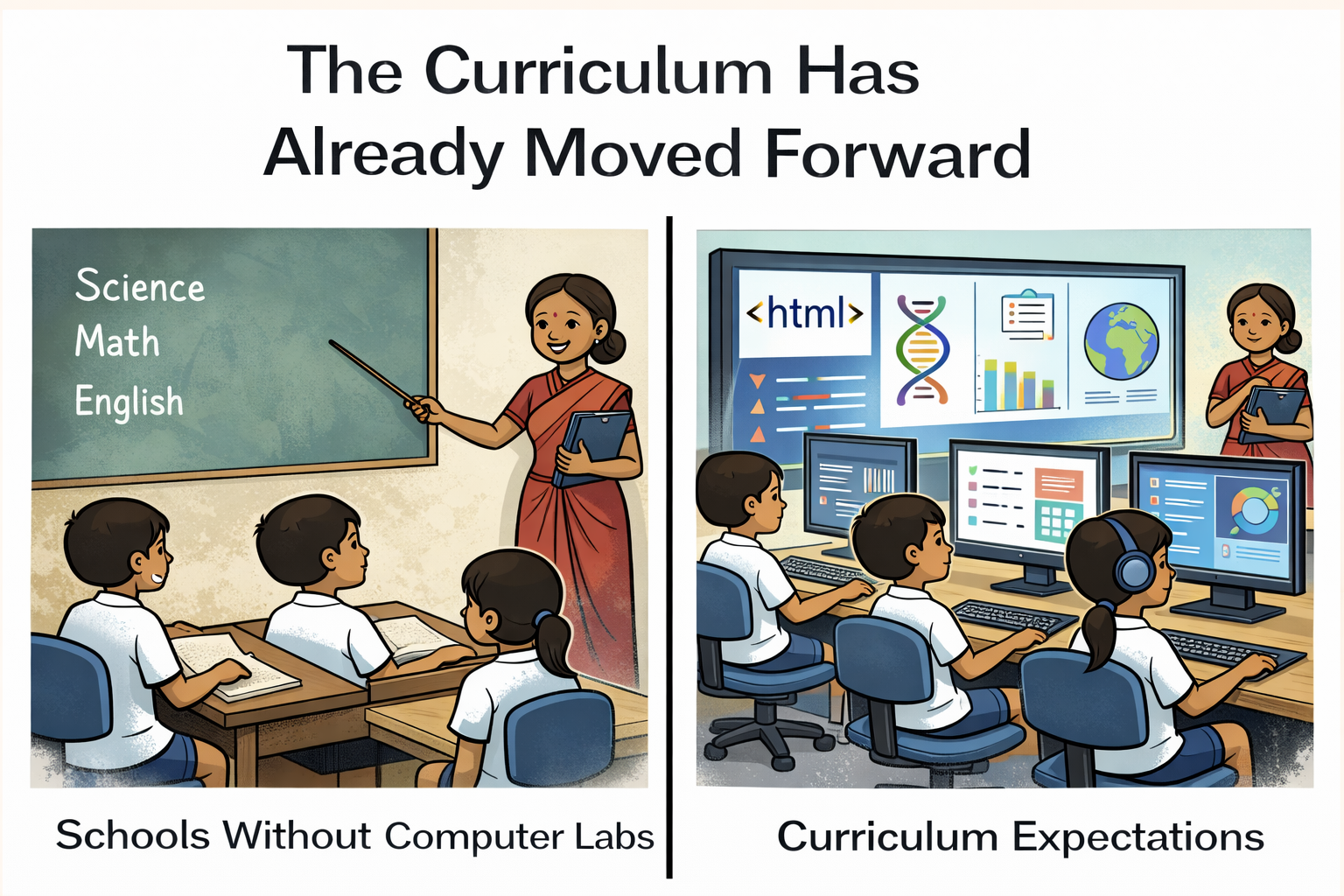
NEP 2020 is not a suggestion. It places digital literacy at the center of learning outcomes. CBSE updated its curriculum to expect computer proficiency from students. State boards are following.
Schools without a lab are not just failing their students. They are falling behind the curriculum itself.
A student cannot demonstrate digital literacy without ever practicing on a machine. Theory helps. Practice is what makes it real. And there is more that students can do once they have access. See what students can do with their own computer once they have the foundation.
The Ripple Effect on the Community
Something shifts when a school gets a working lab.
Students start helping their parents navigate government portals. Younger siblings watch and want to learn. Teachers use computers for lesson planning. The school becomes more than a classroom. It becomes a resource for the whole neighborhood.
You cannot be what you cannot see. When students see computers used daily, in their own school, by people who look like them, something changes. They start believing they belong in the digital world too.
Honest About the Challenges
A computer lab alone is not enough.
Teachers need training. Maintenance needs a basic budget. Internet connectivity in rural areas is still inconsistent. Integrating computer use into the daily curriculum takes effort from school leadership.
None of this is impossible. But a lab is a starting point, not a finish line. The schools that succeed treat it as an ongoing program, not a one-time installation.
Start the Government School Computer Lab Your School Needs in 2026
The students in your school deserve the same tools as students in any private school in the country. The skills they need are real. The gap is real. And the solution is more affordable than most people think.
A government school computer lab in 2026 does not have to be a distant goal. It can be this year.
Ready to set up your school’s computer lab? It does not have to cost ₹5 lakh. Explore Apna PC : affordable computers built for education, starting at ₹9,999. Give your students the tools they need to compete, learn, and grow.