

Priya’s Discovery: When a Desk Became a Portal
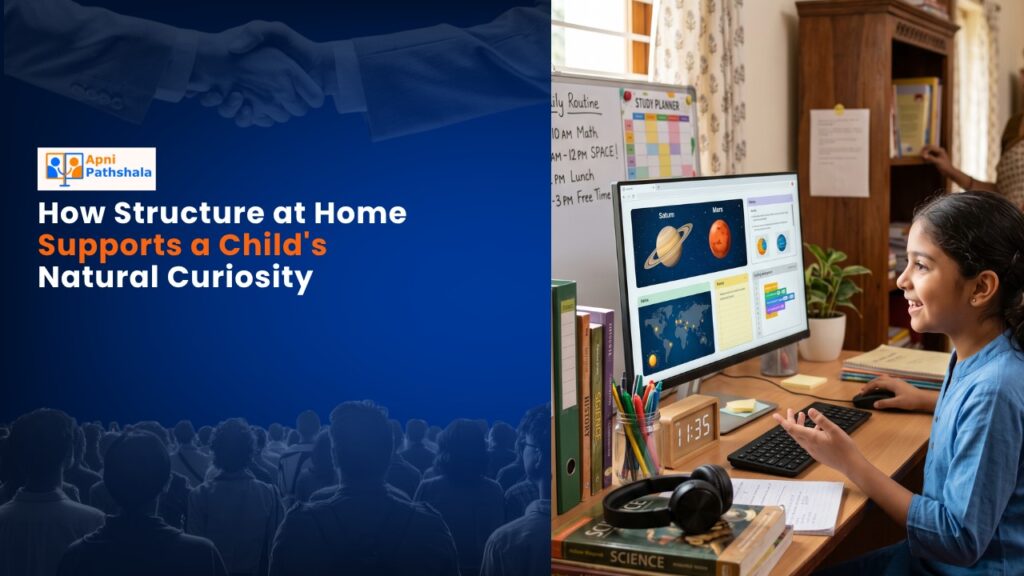
Priya sat cross-legged on her bed in Indore, staring at the blank wall above her study table. Her mother had just rearranged the room, moving her textbooks to a shelf and setting up a small desk by the window. Within days, something shifted. She started asking questions about the clouds outside, sketched them in her notebook, and began searching for “how rain forms” on her father’s old laptop. Her mother realised something important: structure at home wasn’t about rules. It was about giving curiosity a place to land. A proper learning environment transforms how your child engages with the world around them.
Structure and curiosity aren’t opposites. They’re partners. When your child knows where to study, what tools are available, and how much time they have, their mind relaxes. Instead of hunting for a pencil or wondering where to sit, they focus on the actual learning. This is where a dedicated space and the right tools create magic for child development at home.
Why Your Home’s Learning Environment Shapes Child Development
Your child’s brain works like a garden. Without boundaries, it grows wild and scattered. With gentle structure, it flourishes in specific directions. Research on learning shows that consistent environments help children retain information better and develop deeper focus.
In tier 2 and tier 3 Indian cities, many families don’t have separate rooms for each child. That’s okay. You don’t need a fancy study room. You need a corner—a small table. Good light. And most importantly, a device that supports learning without distractions.
- Consistency builds confidence. When your child studies in the same spot every day, their brain recognises it as “learning time.” Focus comes faster.
- Fewer distractions mean deeper thinking. A dedicated space keeps toys, TV, and chaos at a distance. Your child can actually think.
- Independence grows naturally. When everything has its place, your child learns to manage their own study materials and time.
The learning environment you create becomes the foundation for kids’ independence through study tools. Your child starts owning their education instead of waiting for you to push them.
Structure That Supports Natural Curiosity
Here’s what parents in Nagpur, Lucknow, and Bhopal often get wrong: they think structure means rigid rules and no fun. Actually, the best structure is invisible. It’s the setup that lets curiosity run wild safely.
Think of it this way. A river needs banks to flow powerfully. Without banks, water spreads thin and weak. Your home’s structure is those banks for your child’s curiosity.
- Set a specific study time each day. Not hours of drilling, but consistent time when learning happens.
- Keep learning materials in one accessible place. Keep books, notebooks, pens, and a good computer ready to use.
- Create a “question corner” where your child can explore topics they’re curious about, not just textbook subjects.
- Use tools designed for young learners. Scratch for coding, LibreOffice for projects, and educational software that keeps them engaged.
When structure is in place, your child’s natural questions get the space they need. “Why is the sky blue?” becomes a 20-minute exploration instead of a distracted moment.
The Right Tools Make Home Learning Easy
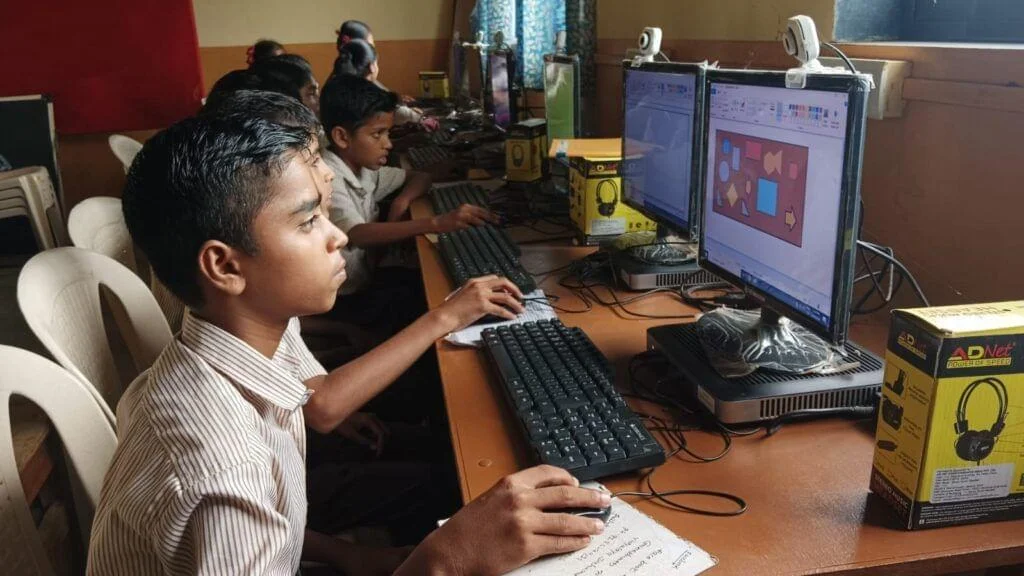
Your child needs a device that supports learning, not one that pulls them toward games and YouTube. This is where many families struggle. Old laptops are slow. Tablets feel too casual for real work. Phones are distracting.
Setting up focused learning at home doesn’t require expensive equipment. But it does require the right device.
Apna PC is built for this exact situation. At Rs. 30,000, it’s a real computer with 8GB RAM and 128GB SSD. It comes preloaded with Zorin OS, a clean, simple operating system. No bloatware. No constant updates interrupting study time. No ads.
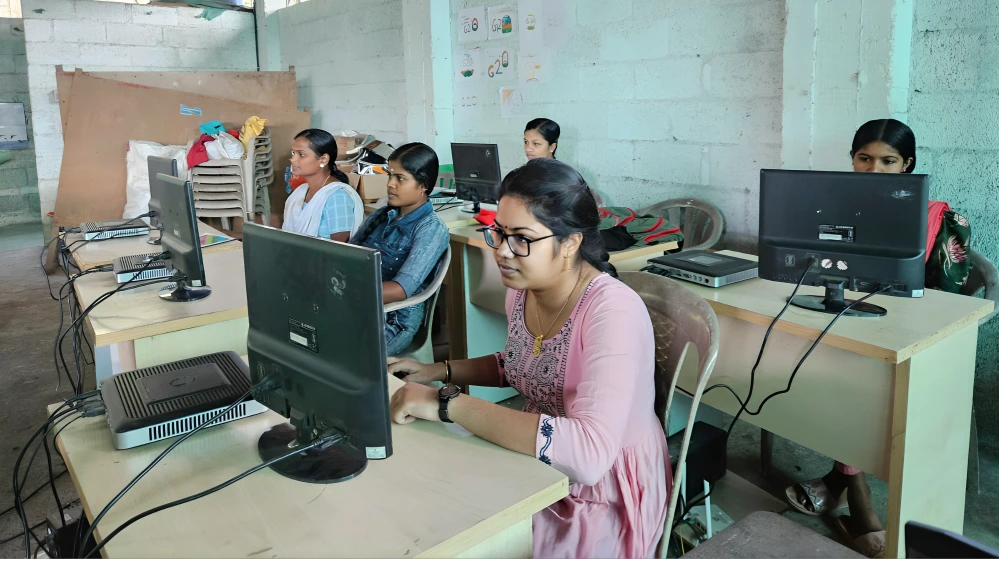
What makes Apna PC special for your learning environment is what’s already installed. Scratch teaches coding through play. LibreOffice lets your child create projects that feel professional. Apni Prerna helps you track their progress without being intrusive. The system is fast enough for research, coding, and creative work, but simple enough that your child won’t get lost in endless apps.
This is focused home learning. Not distracted. Not overwhelming. Just purposeful.
You can also connect Apna PC to resources like the DIKSHA digital learning platform for structured lessons alongside your child’s curiosity-driven exploration.
Creating a Learning Environment Your Child Deserves
Start small. You don’t need to renovate a room. Find a corner with natural light. Add a small table and chair. Keep it clean. Make it a place your child wants to be.
Add a good device. Apna PC fits perfectly into this setup. It’s powerful enough for real learning but designed for young minds. Your child can code, research, create presentations, and explore without distraction.
Set a routine. Study time from 4 to 5 PM. Or 6 to 7 PM. Whatever works for your family. Consistency matters more than duration.
Then step back. Watch what happens when your child has structure, tools, and permission to be curious. They’ll surprise you.
Your child’s natural curiosity is already there. It doesn’t need to be created. It needs space. It needs structure. It needs the right tools. Apna PC is designed to support exactly this kind of learning environment at home. Visit apnapc.com to learn more.