

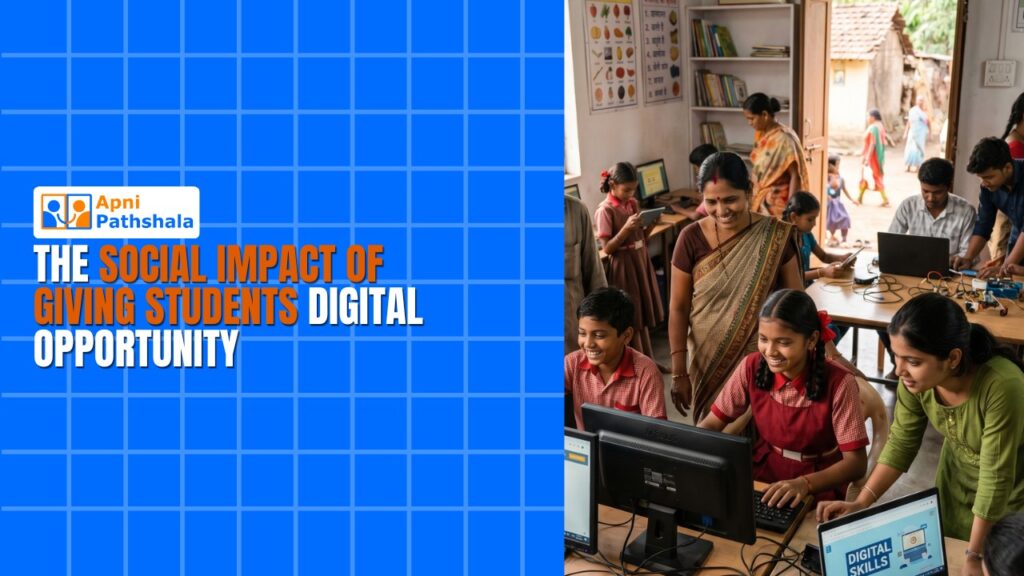
Meera scored 94 percent in her Class 10 board exams. She was the topper in her taluka. But when she reached the district college, she discovered something that shook her confidence. Every assignment required a computer. Every project needed digital submissions. Every presentation had to be made in slides. Meera had never touched a keyboard.
Her classmates from the city finished assignments in an hour. Meera spent three hours at a cyber cafe, paying ₹30 per hour, struggling with a machine she did not understand. By the end of her first semester, her grades had dropped from 94 to 71. Not because she was less intelligent. Because she was less equipped.
Meera’s story is not unusual. It is the story of millions of Indian students who score well in school but collapse in college because they never had digital opportunity. The marks were there. The access was not.
What Digital Opportunity Really Means
Digital opportunity is not about giving every child a smartphone. It is about giving every child the chance to use a computer meaningfully. To type documents. To build presentations. To search for information. To code. To create. These are not luxury skills. These are baseline requirements for functioning in modern education and modern work.
A student without digital opportunity does not just lack skills. They lack confidence. They walk into a computer lab and freeze. They sit in a lecture about digital tools and feel lost. They see classmates using technology effortlessly and assume they are less intelligent. The gap is not about ability. It is about exposure.
Digital inclusion means ensuring that every student, regardless of their family’s income or location, has the chance to build this confidence before they need it. Not in college. Not at their first job. In school. When the brain is still curious and the fear has not set in.
UNESCO global education research has documented how access to digital tools correlates with better academic outcomes across developing nations. The data is clear. Students with digital access perform better, not because technology makes them smarter, but because it gives them tools to express what they already know.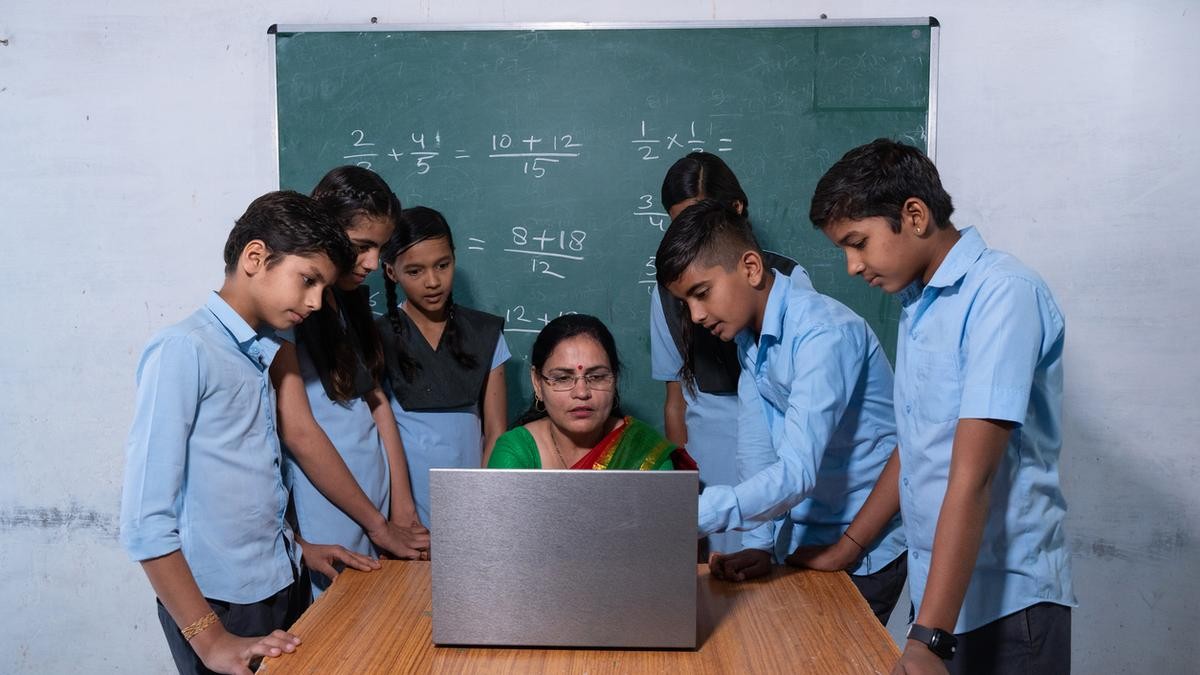
How Education Equality Depends on Access
Education equality in India is usually discussed in terms of school quality. Government schools versus private schools. Rural schools versus urban schools. But there is a quieter inequality that nobody talks about. The inequality between students who have computers at home and those who do not.
A student with a computer at home practices digital skills every day. They type, search, create, and explore as naturally as breathing. By the time they reach college, they are digitally fluent without ever taking a formal course.
A student without a computer encounters digital tools only in the school lab, which they visit once a week for forty minutes. They share a machine with three other students. They do not get enough time to explore. By college, they are still nervous about opening a spreadsheet.
This inequality is invisible. Both students sit in the same classroom. Both take the same exam. Both score similar marks. One is prepared for the digital world, and the other is not. The exam does not reveal this gap. College does. The workplace does. Life does.
A personal computer helps students learn beyond the school curriculum. But more importantly, it gives them the confidence to use those tools without fear.
The Social Impact of One Computer in a Village
When one family in a village buys a computer, the effects extend beyond that family. The neighborhood children see the machine. They ask to try it. The word spreads. Within weeks, the computer becomes a shared learning tool for the entire street.
This social impact is the most powerful aspect of digital access for students. A single computer does not just educate one child. It creates a ripple of curiosity. Children who had never seen a computer discover that they can build things, search for answers, and create projects. That discovery changes how they see themselves.
The social impact goes beyond children. Parents who see their children using computers start valuing digital skills. They start talking about technology at community gatherings. They start asking the school to add computer classes. The community shifts from seeing technology as a luxury to seeing it as a necessity.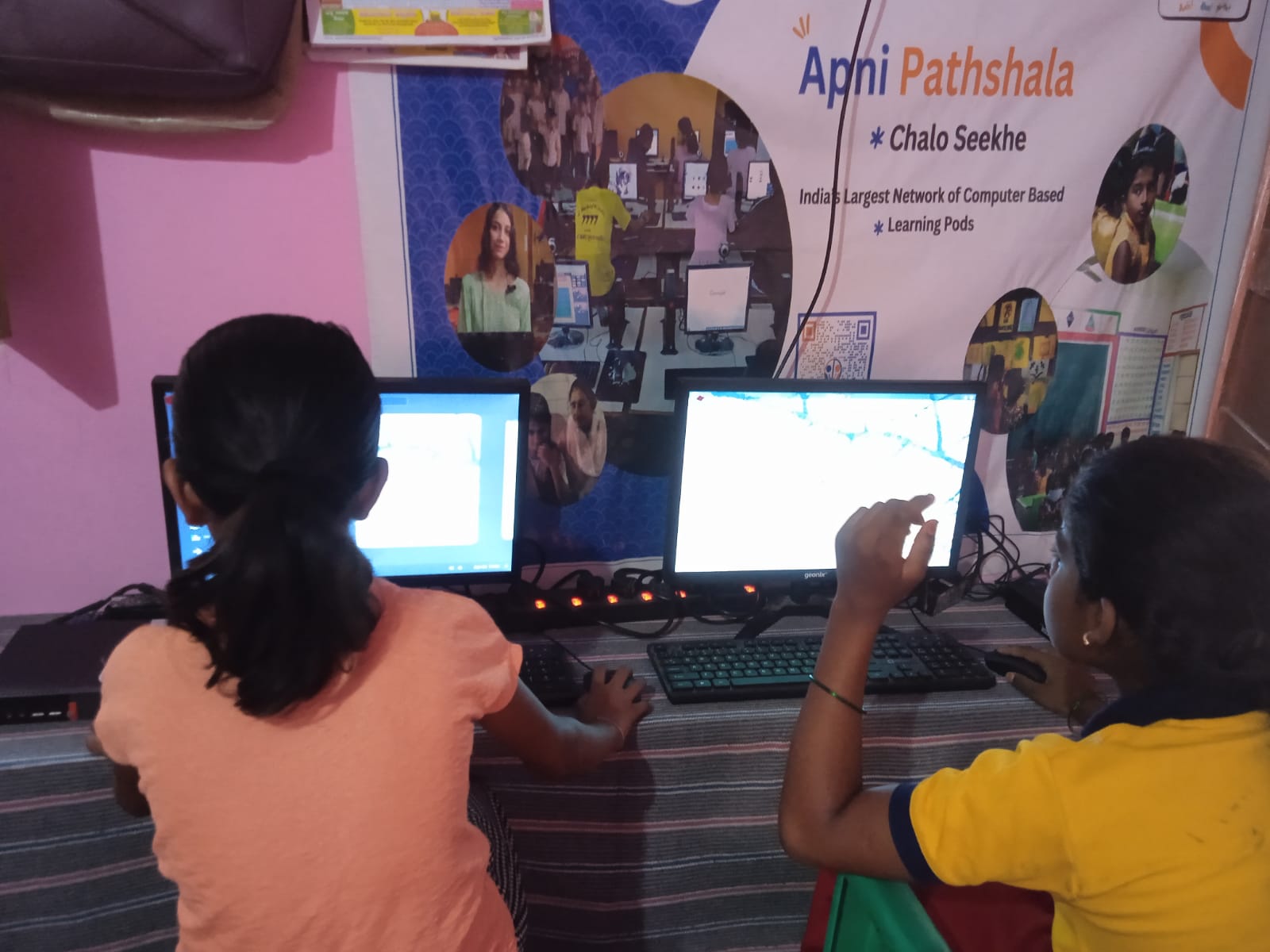
The biggest advantage a student can have today is not marks. That advantage compounds over years. A student who starts at 10 enters college with six years of practice. A student who starts at 16 enters college with three. The first student is confident. The second is anxious.
What Parents and Communities Can Do
You do not need to wait for the government to provide digital opportunities. You do not need to wait for the school to add a computer lab. You can create digital access in your home or community.
For families, the step is simple. Buy a computer for your child. Apna PC, priced at ₹21,000 (shipping and GST excluded), is designed for Indian students. It comes complete with a monitor, keyboard, mouse, and CPU, pre-loaded with educational software. Your child plugs it in and starts learning from day one.
For communities, the step is equally simple. Set up a learning centre with 4-5 computer stations. Find a local person willing to run it. Enroll children in rotating batches. The investment is modest. The impact is enormous.
Digital India initiative is building the infrastructure for digital education across India. But infrastructure needs devices. A computer is the device that turns digital opportunity from a policy into a reality. Visit apnapc.com to learn more.