

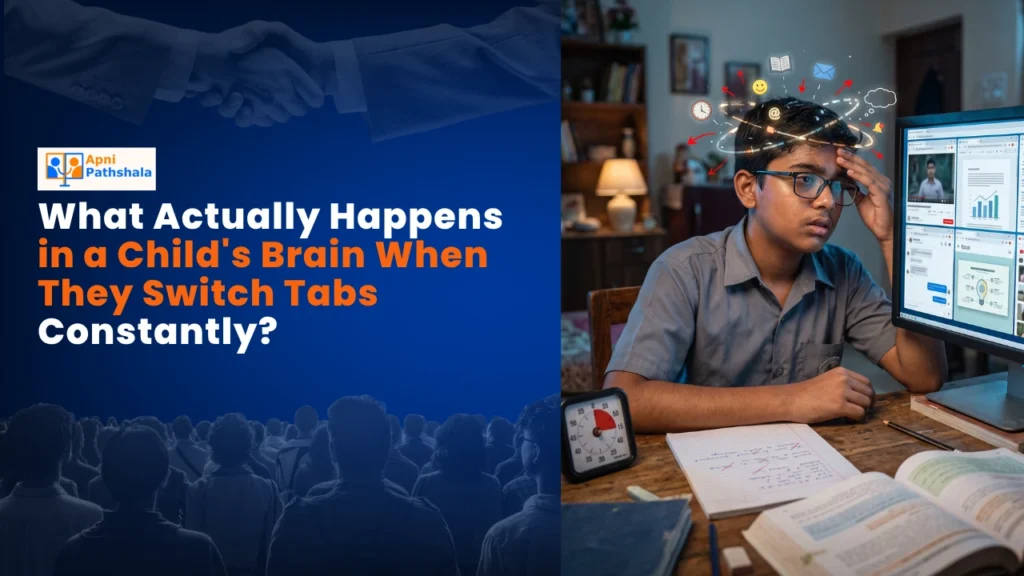
When a child switches tabs constantly, their attention never fully settles on one task. Part of their mind stays on the last tab, working memory gets fragmented and each switch means restarting their thinking, so homework takes longer and less of it sticks.
A typical pattern is familiar: textbook, then YouTube, then WhatsApp, then back to homework. Repeated every day, this habit makes deep focus feel harder and harder.
What happens in a child’s brain when they multitask?
The brain does not pause one activity and start another cleanly. When a child switches, part of their attention stays stuck on the previous task while they try to focus on the new one, which is often called “attention residue.”
The parts of the brain that handle concentration and decision-making are still developing in children and teenagers, so rapid switching is especially hard for them. Each switch creates a small mental jolt that breaks focus.
Working memory suffers too. This is the mental space where a child holds information while using it. Constant switching fragments it, so they cannot hold enough in mind to solve a maths problem or follow a complex idea.
What does task switching cost a student?
Every switch costs time to refocus, and those losses add up across a study session without the child noticing. A one-hour session broken by repeated tab switches can produce far less learning than it seems.

Apps, websites and notifications are designed to grab attention. A child switching between them is competing with systems built to keep them hooked. Over time, the brain gets used to constant novelty, and calm, deep focus starts to feel uncomfortable.
How does multitasking affect schoolwork?
Multitasking during study makes it harder to move information into long-term memory, so children may study longer and still remember less.
- Reading: a child may read every word but finish a paragraph unable to explain it.
- Maths and problem-solving: these build step by step, and switching breaks the chain of reasoning, forcing the child to restart.
- Homework time: tasks stretch out because focus keeps resetting.
Why do children find tab switching so hard to resist?
Young brains, especially teenage ones, are naturally drawn to novelty and reward, and modern technology feeds that pull. Switching feels necessary and rewarding in the moment.
Social pressure adds to it. Friends are online and group chats are active, so a child may fear missing out if they focus only on studies.
Many students also believe doing several things at once makes them more efficient. They feel busier, so they assume they are achieving more, when in fact their attention is spread too thin.
What are the signs your child is struggling with multitasking?
Watch for homework that takes much longer than it should, marks that drop despite more study time, trouble summarising what they just read and often asking you to repeat instructions.
Restlessness, trouble winding down at night and anxiety about studies can also be linked to constant stimulation. If your child seems frustrated or overwhelmed at study time, frequent switching may be part of the cause.
How can parents reduce distraction and switching?
Make single-tasking the easy option. These steps help:
- Clear the space. Remove phones, close unneeded tabs and use website blockers like Freedom or Cold Turkey during study time.
- Use time blocks. One subject for 25-30 minutes, then a proper break. This is called the Pomodoro Method.
- Take real breaks. Movement, water or stepping outside resets attention better than another screen. See study breaks that help kids focus better.
- Check tiredness. If your child is exhausted, read why your child is too tired to study.
How can technology support single-task focus?
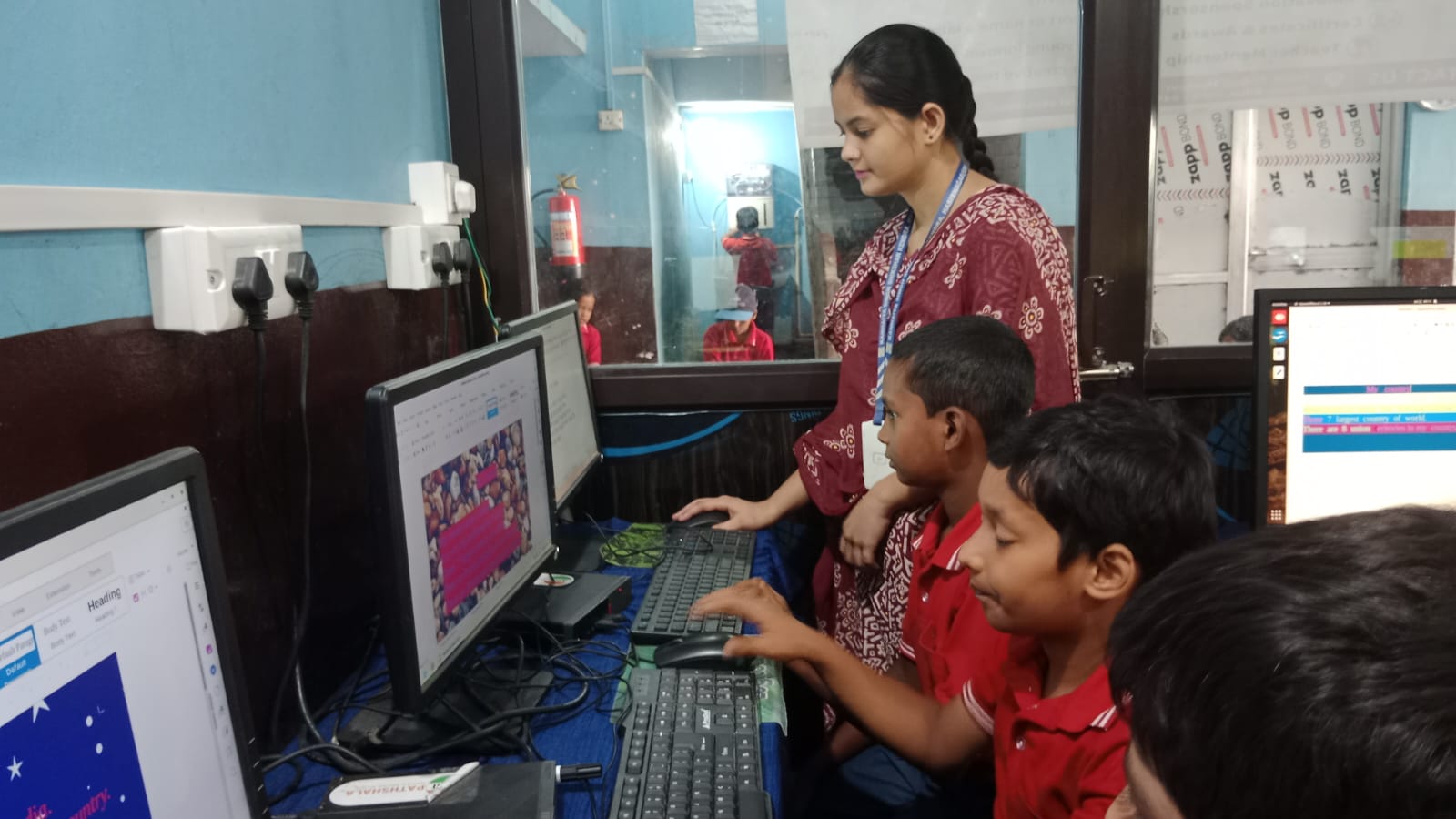
A dedicated study device without social media or games removes much of the temptation to switch. When study materials and online classes come without notifications, a child settles into deeper work more easily.

Parental controls and app limits are not punishments. They protect a developing brain from tools designed to fragment attention. Practise single-tasking as a family too: meals without phones and conversations without checking devices. Praise focused study sessions when they happen. Our guide to a focused computer setup has more ideas.
The Ministry of Education website and this overview of student life are useful background reading on supporting learners.
Frequently Asked Questions
Is listening to music while studying also multitasking?
It can be, depending on the music and the task. Songs with lyrics or frequent skipping between tracks pull attention away, especially during reading or maths. If your child prefers sound, calm instrumental music played without changing tracks is less distracting than an active playlist.
Can my child learn to focus better over time?
Yes, focus improves with practice. Short single-task sessions, regular breaks and a study space without phones help your child build the habit gradually. Explaining why switching hurts learning also motivates children to try, especially when you praise each focused session they complete.
Should I block YouTube completely during study time?
Not always, since some lessons are useful. A better approach is to agree on specific study videos beforehand and block other entertainment during study blocks. That way your child can use helpful content without falling into the recommendation feed.
The focus habits your child builds now will shape how they learn for years. Visit Apna PC to learn more about study computers designed for distraction-free learning.