

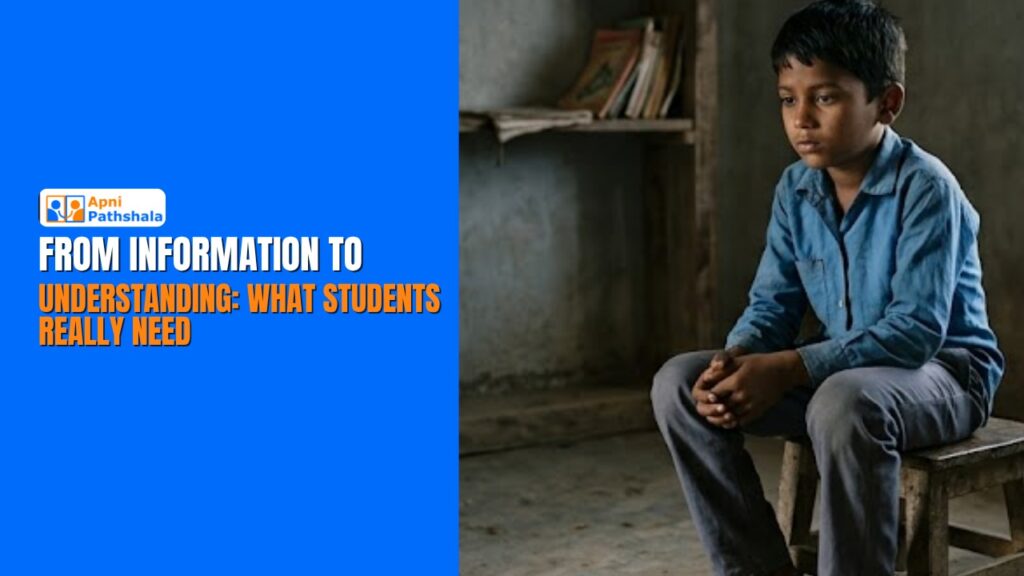
Haripriya sat in her small room in a village near Bhopal, surrounded by handwritten notes and borrowed textbooks. She had memorized every formula, every definition, every date her teachers had given her. But when she tried to solve a real problem, something she had not seen before, she felt stuck. The information was there, but understanding was missing. She is not alone in this struggle. Across India, millions of students face the same gap every day.
The Difference Between Information and Understanding
Information is what you find in a textbook. Understanding is what stays with you when the textbook is closed. When Sruthi from a government school in Telangana first encountered geometry, she could recite every theorem. But it was not until she started drawing shapes on her computer screen that she truly understood why those theorems worked. The digital tool did not give her more information. It helped her see the information differently.
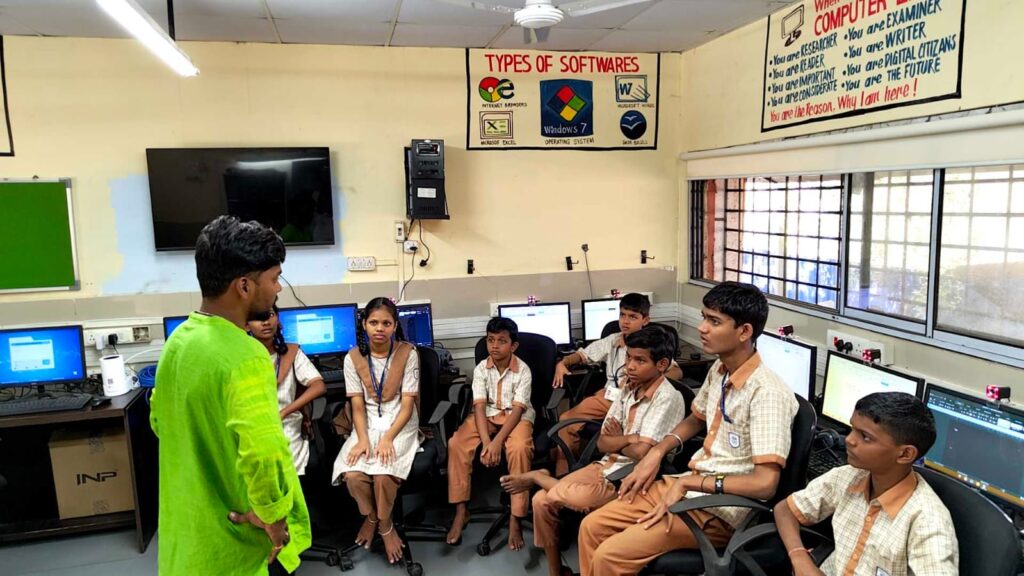
Understanding comes from interaction, from trying and failing, from connecting dots that seemed unrelated. A student who understands can explain a concept to someone else. A student who only has information can repeat what they memorized.
Why Access Matters More Than Content
You might think the solution is better textbooks or more qualified teachers. Those help, but something more fundamental is missing. Access. When students can explore at their own pace, when they can pause and rewind, when they can try different approaches without judgment, understanding becomes possible. Why Digital Access is becoming the New Foundation of Learnin explores this idea more deeply.
Digital access does not replace teachers. It empowers them. It gives them tools to show, not just tell. It lets students practice without fear of being wrong in front of their peers.
Learning Speed Changes Everything
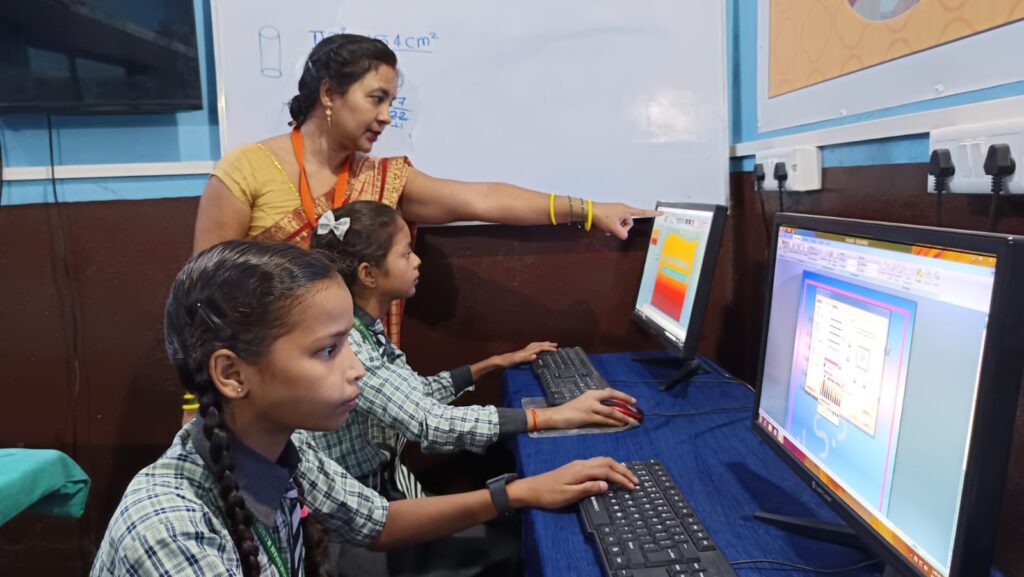
Some students grasp concepts quickly. Others need more time. In a traditional classroom, everyone moves at the same pace. This works for some, but leaves many behind. Surendra, a student from a rural area in Maharashtra, used to struggle because he needed more time to process new ideas. Once he had access to online resources, he could replay lessons, pause to think, and learn at his own speed. How Access Changes the Speed of Learning shows why this matters.
When students control their pace, they do not just learn faster or slower. They learn better. They build genuine understanding instead of surface-level memorisation.
The Role of Practice and Feedback
Understanding grows through practice. But not just any practice. Practice with immediate feedback. When Devendra tried solving math problems on paper, he would sometimes practice the wrong method for days before realizing his mistake. With digital tools, he learned instantly when he went wrong. This feedback loop accelerated his learning dramatically.
Platforms like SWAYAM offer courses with built-in quizzes that provide this feedback. Students do not just consume content. They interact with it, test themselves, and learn from their mistakes in real time.
This approach mirrors how we learn naturally. Think about learning to ride a bicycle. You do not memorize a manual. You try, fall, adjust, and try again. Digital tools bring this learning style to academic subjects.
Building Confidence Through Understanding
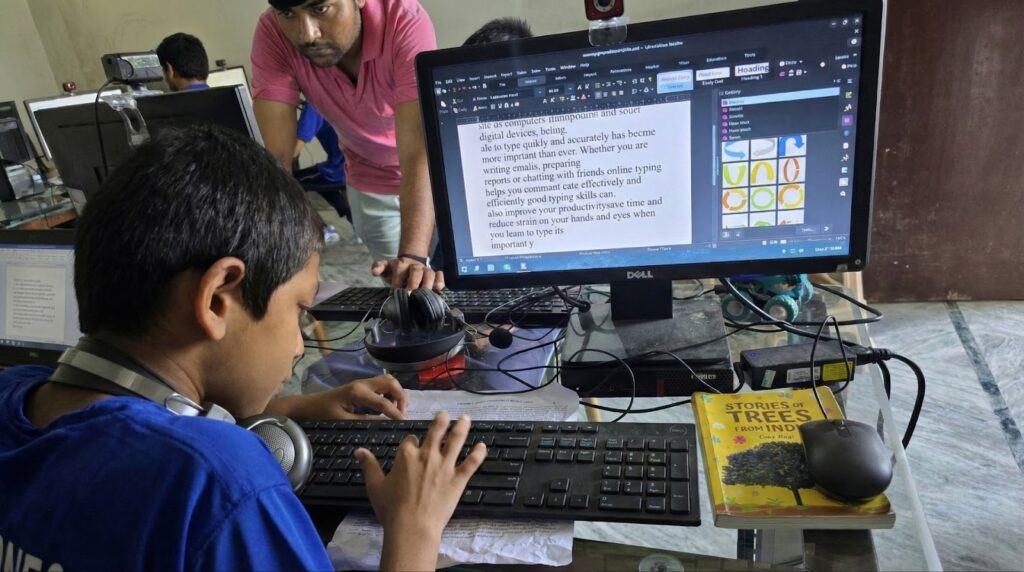
When students truly understand something, their confidence grows. They start asking better questions. They start connecting concepts across subjects. They start seeing themselves as capable learners.
Sivani, a student who once felt embarrassed to speak in class, began participating actively after she started using digital resources. She could explore topics before class, so she came prepared with questions instead of confusion. Her teachers noticed the change. Her classmates noticed it. Most importantly, she noticed it.
Confidence is not built through praise. It is built through genuine achievement. When students understand, they know they understand. No one can take that from them.
Creating Independent Learners
The goal is not to help students pass exams. The goal is to create independent learners who can teach themselves anything. This matters more now than ever because the world changes faster than any curriculum can keep up.
IGNOU demonstrates this principle at scale. Their distance learning programs work because they assume students can take ownership of their learning. Resources are available. Support exists. But the student drives the process.
When students move from information to understanding, they become capable of this independence. They do not need everything explained to them. They can figure things out. They can fill gaps themselves. They can adapt when circumstances change.
This is what students really need. No more information. Better tools for real understanding. No more lectures. More chances to explore, practice, and discover every single day.
If you want to help a student make this important shift, give them the access they need. Check out Apna PC for affordable options starting at ₹21,000 (shipping and GST excluded).