

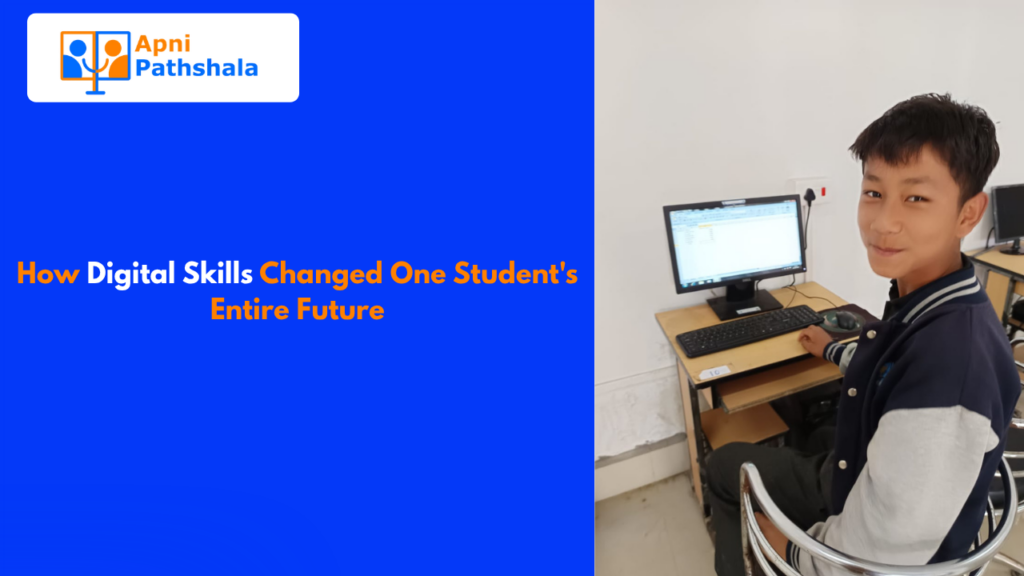
Surendra Kumar Saini didn’t grow up with computers. He grew up watching his family work hard for every rupee, and he knew early on that a steady income would require more than just effort. It would require skills. The kind that most people in his neighborhood didn’t have yet.
Today, Surendra runs his own e-Mitra shop. He handles government forms, Aadhaar corrections, utility bills, and a dozen other digital services for people who can’t do it themselves. But what got him there wasn’t luck. It was digital skills for students that he worked to build, one task at a time.
Digital Skills for Students Are Not Just About School
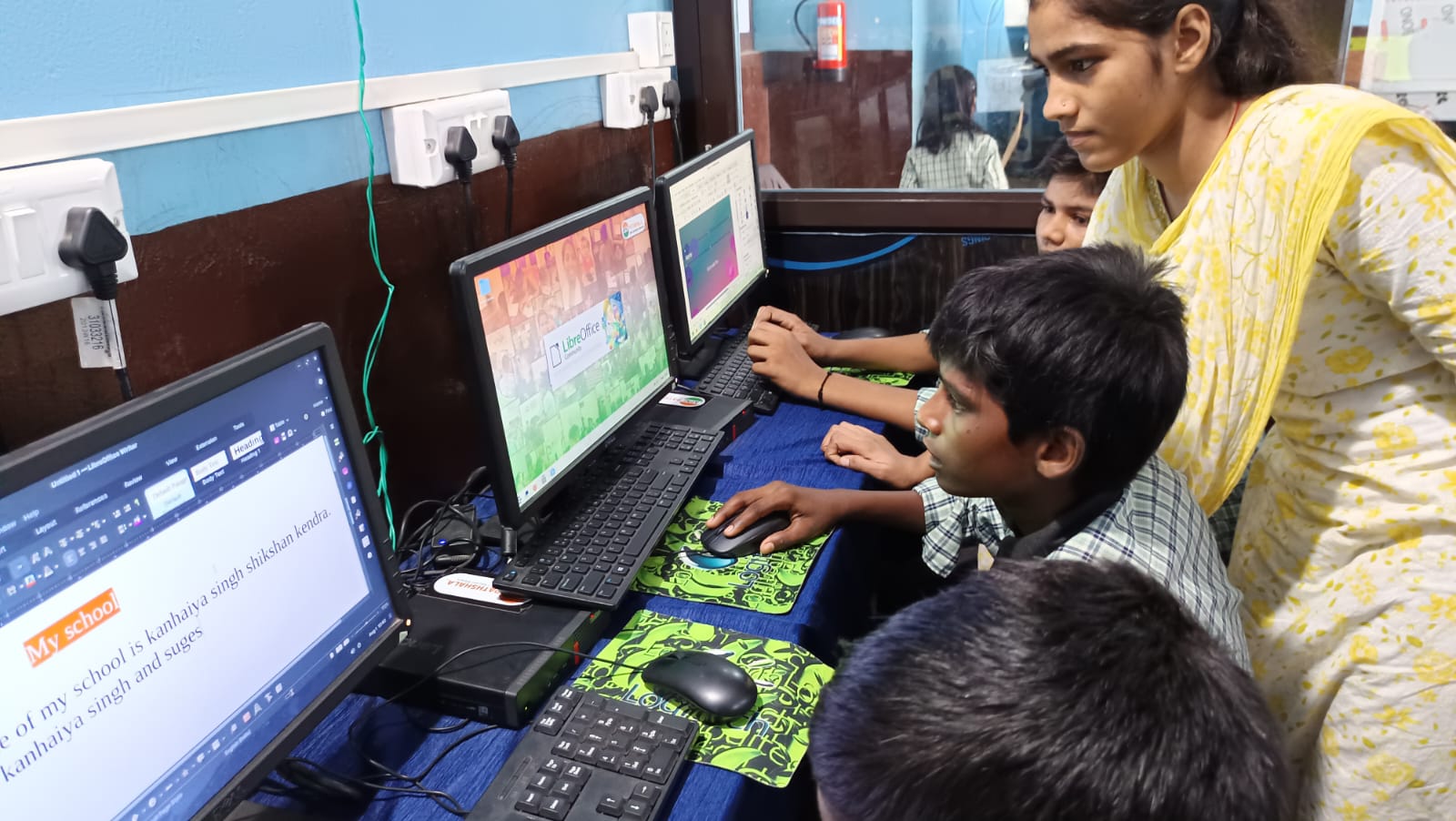
There’s a common assumption that computer education is about exams. Learn to type, understand MS Word, get a certificate, move on. Surendra’s story completely dismantles that idea.
The digital skills for students that actually change lives are the practical ones. The ability to search for information quickly. The confidence to navigate an unfamiliar website. The patience to figure out a form that wasn’t designed with your background in mind. These aren’t things you learn from a textbook.
Surendra learned by doing. He started with basic tasks, typing documents, organizing files, sending emails. Then he moved to more complex ones: filling online forms, scanning documents, uploading them correctly. Each skill built on the last. None of it was glamorous. All of it was useful.
What Surendra Actually Learned (and How It Changed Everything)
Ask Surendra what digital skills for students he uses daily, and the list is specific. He knows how to work with PDFs. He understands how to verify whether a government portal is legitimate before entering someone’s Aadhaar number. He knows which browser is fastest on a low-bandwidth connection. He knows how to explain a digital process to someone who’s never used a computer.
That last one matters more than people expect. A huge part of his job isn’t just doing digital tasks. It’s translating the digital world for people who don’t understand it yet.
He built that capability through consistent practice. Having regular access to a computer meant he could try things, fail, figure out what went wrong, and try again. That’s not possible when you’re sharing a school lab computer with 30 other students for 45 minutes a week.
Resources like Khan Academy helped him fill in knowledge gaps and move at his own pace. But the real classroom was the computer he had consistent access to every day.
Why Digital Skills for Students Matter Beyond Academics
Here’s what most people don’t say out loud: school grades and real-world digital capability are not the same thing.
A student can score 90% on a computer science exam and still freeze up when asked to attach a file to an email. Another student might have average grades but be entirely comfortable navigating digital government services, creating basic presentations, or troubleshooting a slow internet connection.
The difference is practice. Real practice on a real device. Digital skills for students aren’t built in a classroom once a week. They’re built through daily interaction with technology, including the mundane stuff: creating folders, renaming files, copying text from one place to another.
Surendra’s e-Mitra shop exists because he has those skills. Not because he’s exceptional. Because he had access and he used it. That’s the whole story.
See how having regular access changes the trajectory: Digital Independence: When Students Take Control of Their Own Learning.
The Skills That Actually Build a Future
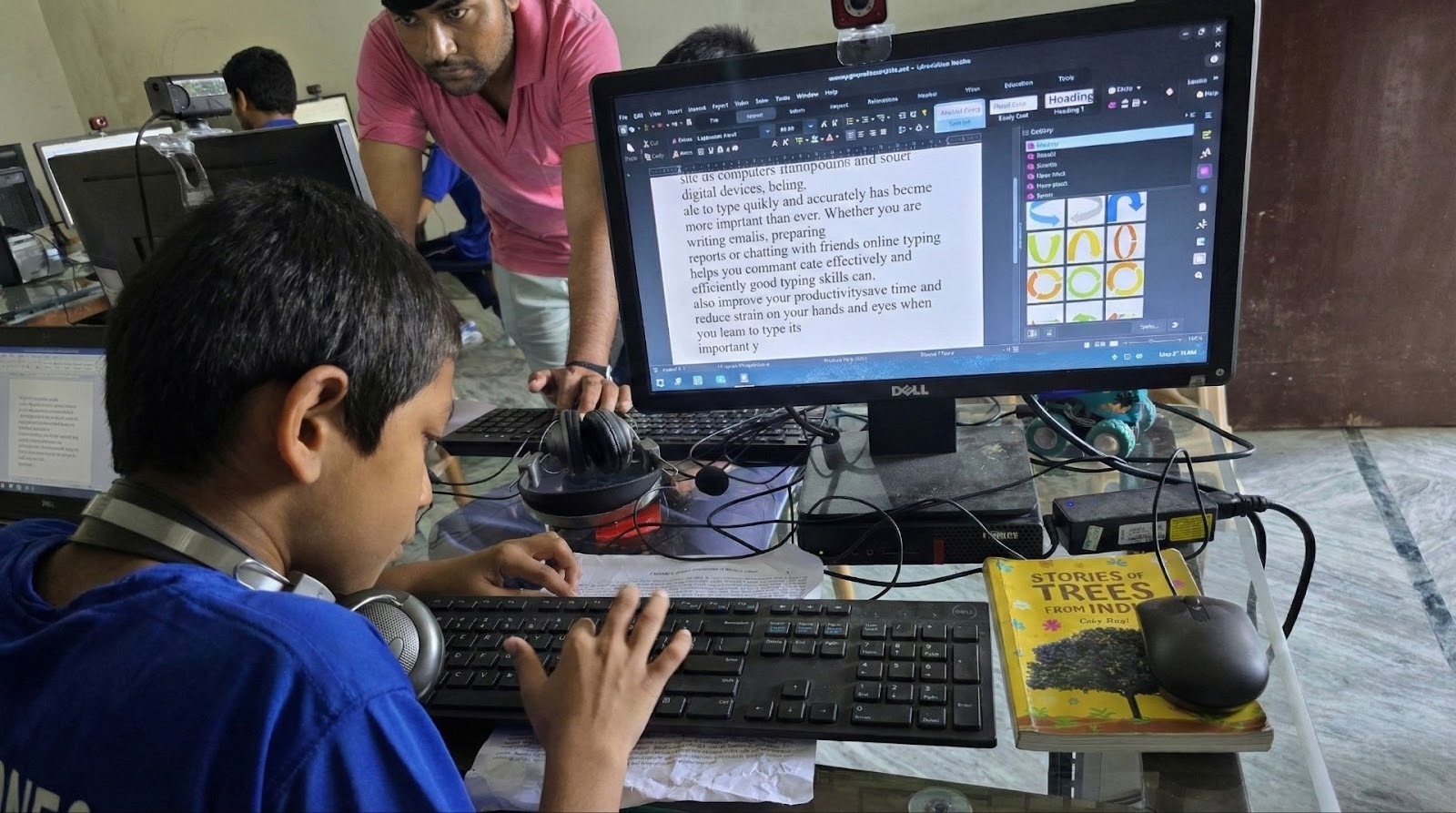
The students who’ll thrive in the next decade aren’t necessarily the ones with the best grades. They’re the ones who can research a problem, find the right tool, apply it, and communicate the result. These are digital skills for students that apply everywhere, in every field, at every income level.
Typing fast. Reading a webpage critically. Filling in a form without making errors. Knowing which platforms are trustworthy. Creating a simple document that looks professional. These aren’t advanced skills. But they’re the foundation of everything digital, and millions of students are going through school without ever properly building them.
Surendra built them. Not because he had a special advantage. Because he had access to a device and the time to develop real skills on it. That combination changed the entire direction of his life.
Programs that put computers directly in students’ hands, like the initiative behind Apni Pathshala’s student stories, understand that the gap isn’t about intelligence. It’s about access.
Read more about building this foundation: How Digital Skills Build Confidence in Rural Students.
Start Building Digital Skills for Students Now
Surendra didn’t wait for someone to hand him a curriculum. He worked with what he had and built skills that the market actually needed. That’s not a story about natural talent. It’s a story about consistent access and intentional practice.
The digital skills for students that will matter most aren’t taught in exams. They’re built through real use, every day, on a device that belongs to them. The sooner students get that access, the further those skills can take them.
Surendra’s e-Mitra shop is proof. He’s not exceptional. He’s just prepared.