

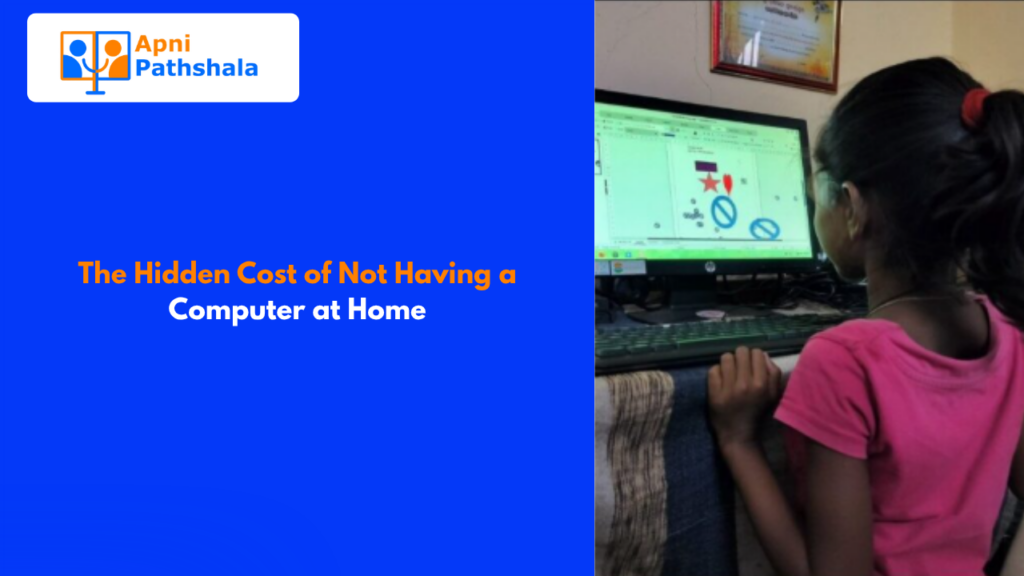
Sivani S is 18 and studying B.Com at ATMA Gurukulam in Thrissur. For most of her school years, she didn’t have a computer at home for students like her. She had a smartphone, but smartphones aren’t computers. Not for the kind of work that matters for education.
She was doing her coursework on a small screen, struggling to type documents she’d submit for college, and missing the kind of deep, focused practice that only a proper computer can give. She didn’t think much of it at the time. She didn’t realize what she was losing.
That’s the hidden cost. It’s invisible until you compare yourself to someone who had access all along.
What Students Miss Without a Computer at Home for Students
The loss isn’t just convenience. It’s compounding.
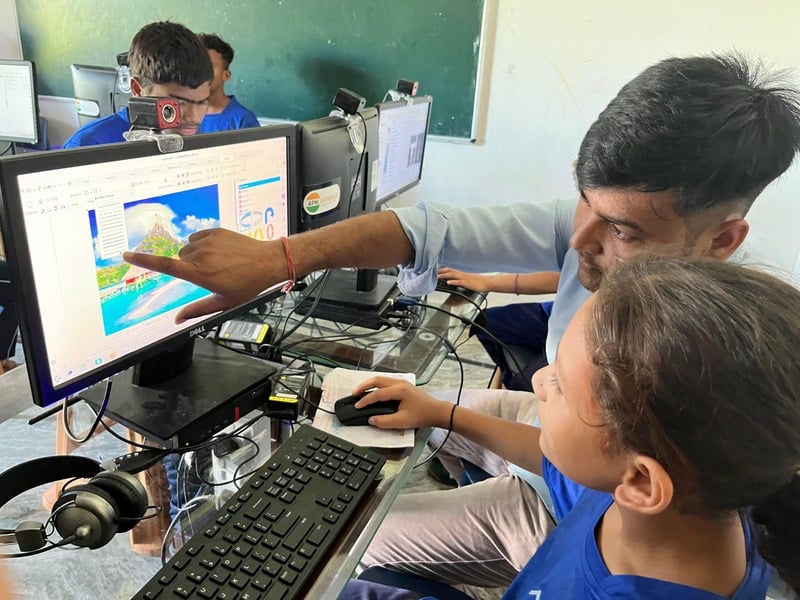
A student without a computer at home for students can’t practice typing at the pace they need to. They can’t work on long documents without constant frustration. They can’t easily research topics that go beyond what their textbook covers. They can’t build the kind of digital fluency that employers and colleges now expect.
Meanwhile, their peers who grew up with computers at home are building these skills unconsciously. Not because they’re studying harder. Just because they’re living with technology every day.
By the time both students apply for the same college program or job, the gap is significant. And the student without home access has no idea how significant it is, because they don’t know what they’ve been missing.
The Opportunity Gap Is Real and Growing
There’s a version of education inequality that’s easy to see. Underfunded schools. Lack of books. Poor infrastructure. But there’s another version that’s harder to quantify: the daily, accumulated disadvantage of not having your own computer.
For every day a student doesn’t have a computer at home for students, they fall slightly further behind in digital fluency. They’re slower at tasks that their peers do automatically. They’re less comfortable with tools that the workplace assumes everyone knows. They’re less likely to explore technology for creative or entrepreneurial purposes because the tool simply isn’t there.
The Khan Academy and similar platforms make world-class education completely free. But they require consistent device access to be effective. Without a home computer, free education stays largely out of reach.
Sivani understood this when she finally got access to a proper computer. She didn’t just feel more productive. She felt like she’d been running a race in the wrong shoes and didn’t know it.
The Skills That Don’t Get Built Without Home Access
Think about what students with home computers do naturally: they type for long periods. They manage files. They research topics out of curiosity, not just for assignments. They try software and figure out how to use it. They make mistakes without an audience.
That last one is crucial. Learning happens faster when there’s no pressure. When you can close a window, try something differently, fail silently, and move on. A school computer lab, even a well-equipped one, doesn’t give you that. There are other students around. Time is limited. Failures feel public.
A computer at home for students creates a private learning space. It’s where students can be genuinely curious without performing competence for anyone else. That’s where real skill-building happens.
Real-world examples of what this access produces are documented at Apni Pathshala’s student stories. Across the board, students who gained personal computer access show remarkable growth in a short time.
What Changes When Students Get a Computer at Home for Students
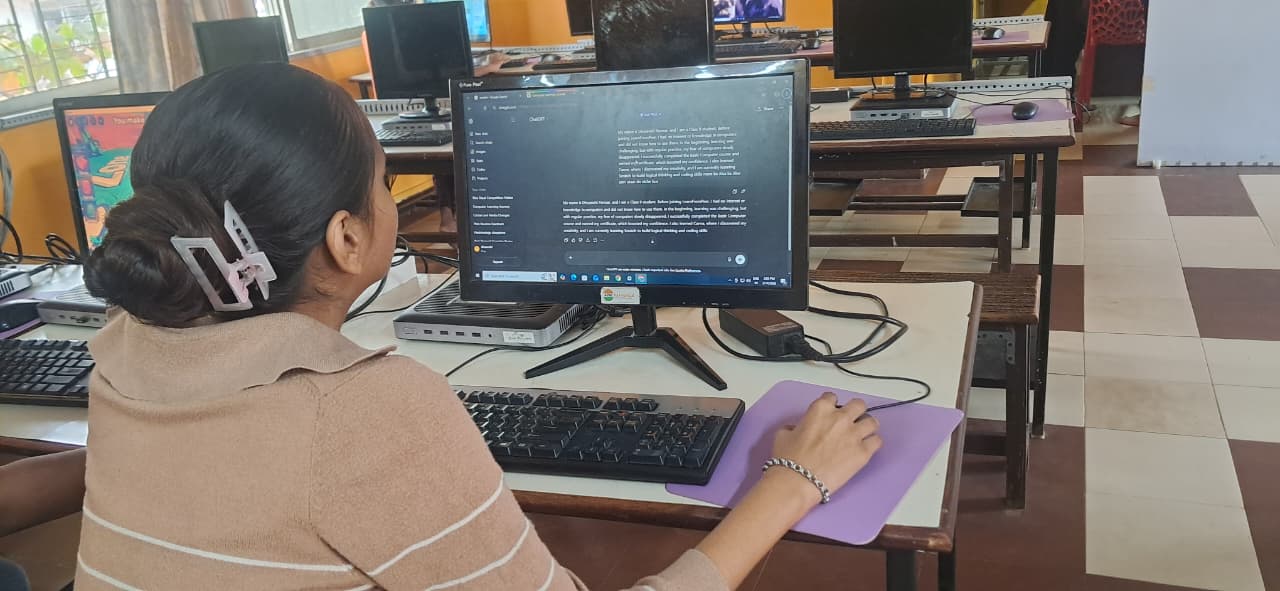
When Sivani got consistent access to a computer, her study habits changed. She was no longer cramming information in short lab sessions. She could read at her pace, take notes properly, research topics that interested her, and actually practice the skills her B.Com course required.
She also started exploring things no one assigned her. That’s the part that doesn’t show up in academic reports but matters enormously: student-driven curiosity. A computer at home for students doesn’t just help them keep up. It gives them space to get ahead.
See the impact of access on student development: Apna PC: Helping Rural Students Access City School Resources.
The Hidden Cost Isn’t Hidden Anymore
The cost of not having a computer at home for students is measured in missed skills, slower development, and a widening gap between students who had access and those who didn’t. That gap is real, and it follows students into college, into the job market, and into every digital task the modern world asks them to complete.
Sivani is making up the time. But she shouldn’t have had to.
Every student deserves a computer at home. Not as a luxury. As the educational tool it’s become. The students who have one are already building the future. The ones who don’t are working twice as hard just to stay in the race.
Find out how affordable and purpose-built computers are closing this gap: How Affordable Computers Are Changing Rural Education.
The solution exists. Using education-focused platforms alongside the right device, students can build real skills, in a safe environment, at a cost that doesn’t exclude them. What’s left is making sure every student gets the chance.