

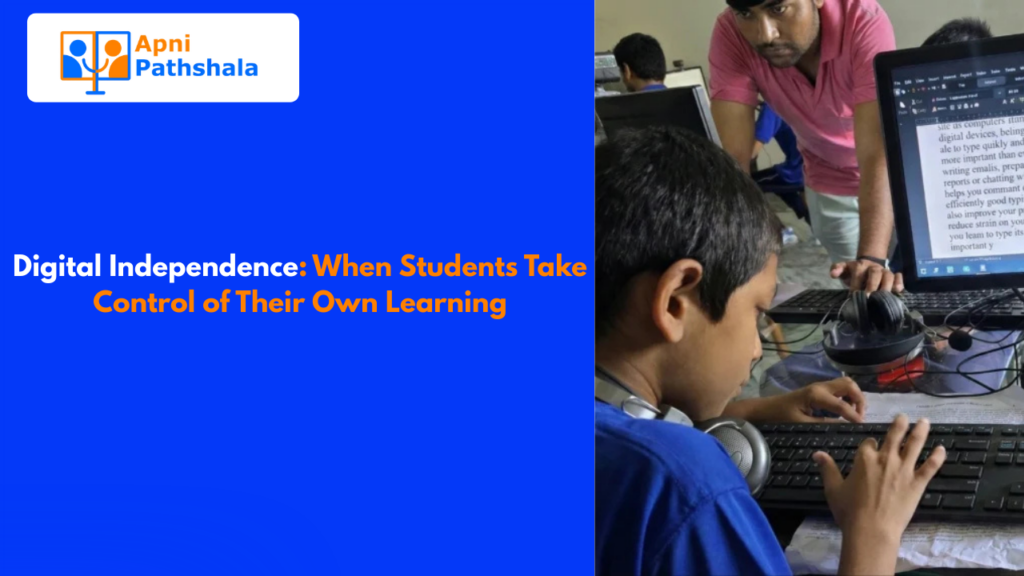
There’s a moment that happens with some students not all, but the ones who really take off, where they stop waiting to be taught something and start teaching themselves.
You can’t schedule this moment. You can’t force it. But you can create the conditions for it to happen. And when it does, everything changes.
What Digital Independence Actually Means
It’s not about being good at technology. It’s about using technology to drive your own learning.
A digitally independent student doesn’t need someone to assign them a topic to research. They don’t need a teacher to recommend a resource before they’ll look one up. They see a gap in their knowledge, and they close it on their own, at their own pace, in the direction that makes sense to them.
That kind of learner is almost impossible to stop.
Sivani’s Path to Independence
Sivani S. is 18 years old, studying B.Com at ATMA Gurukulam in Thrissur. She didn’t get to where she is by following a prescribed path exactly. She built her own path, one search, one tutorial, one skill at a time.
The computer gave her access. But what she did with that access was entirely her own decision. She chose what to learn. She set her own pace. She figured out what she needed and went and got it.
That’s digital independence. And it’s not a passive thing, it’s deeply, actively autonomous.
Why This Matters More Than Ever
The world students are entering doesn’t have a fixed syllabus.
Industries change. Job roles shift. Skills that didn’t exist five years ago are now essential. The students who will thrive in this environment aren’t the ones who memorized the most; they’re the ones who know how to learn new things quickly and independently.
Schools teach students what is known. Digital independence teaches students how to keep learning after school ends. That’s a fundamentally different and more lasting skill.
The Three Stages of Digital Independence
Stage 1: Using
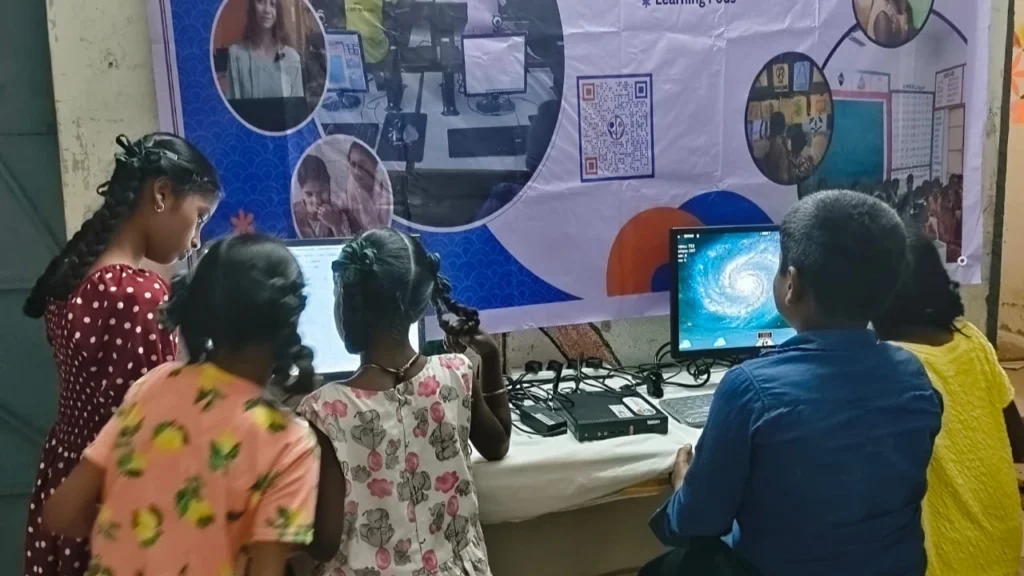
The student follows instructions. Searches when asked to. Uses software with guidance. This is where most students start, and there’s nothing wrong with it. It’s the beginning.
Stage 2: Exploring
The student starts going beyond what they were shown. They try features nobody taught them. They search for things they want to know. They discover tools and resources on their own. This is where curiosity kicks in.
Stage 3: Directing
The student is now the architect of their own learning. They identify what they need, find the resources, work through the material, and apply what they’ve learned. They don’t need assignments to grow. They create their own.
Most students never reach Stage 3 because they don’t have enough unsupervised, unstructured time with a device that’s truly theirs. Thirty minutes in a school lab keeps students at Stage 1 permanently.
What Haripriya Showed Us
Haripriya K.S., 16, from ATMA Gurukulam Thrissur, represents Stage 3. She wasn’t content with what was in front of her. She used her access to reach further to learn things her curriculum didn’t cover, to develop skills that will distinguish her long after her classmates have moved on.
The computer didn’t give her those skills. She built them herself. The computer just gave her the space to do it.
What Parents and Educators Can Do
- Give students real device time, not just supervised sessions, but genuine exploratory time
- Ask open questions, “What did you learn today that I didn’t assign?” sends a powerful signal
- Reward curiosity when a student goes beyond what was asked, and celebrate it
- Trust the process, digital independence develops over time, not overnight
- Set boundaries on entertainment, not learning. The goal is to protect learning time, not eliminate all freedom
The Connection to Real-World Success
Every meaningful professional doctor, engineer, entrepreneur, and artist is a self-directed learner. They don’t wait for someone to tell them what to read or what to know. They stay curious. They stay current. They teach themselves what they need.
Research from the OECD’s Education at a Glance findings consistently shows that students who demonstrate autonomy in learning outperform peers in long-term outcomes, career adaptability, income growth, and personal satisfaction.
Digital independence isn’t a nice-to-have. It’s a predictor of lifelong success.
The Right Start
All of this begins with a student having a computer that’s truly theirs. Not borrowed. Not shared. Not a phone with limited capabilities. A real computer with the software, structure, and space to grow into independence.
That’s not a small thing. For many students, it’s the whole thing.
Help your student take control of their own learning journey. Visit apnapc.com to find the right computer for independent learning.