

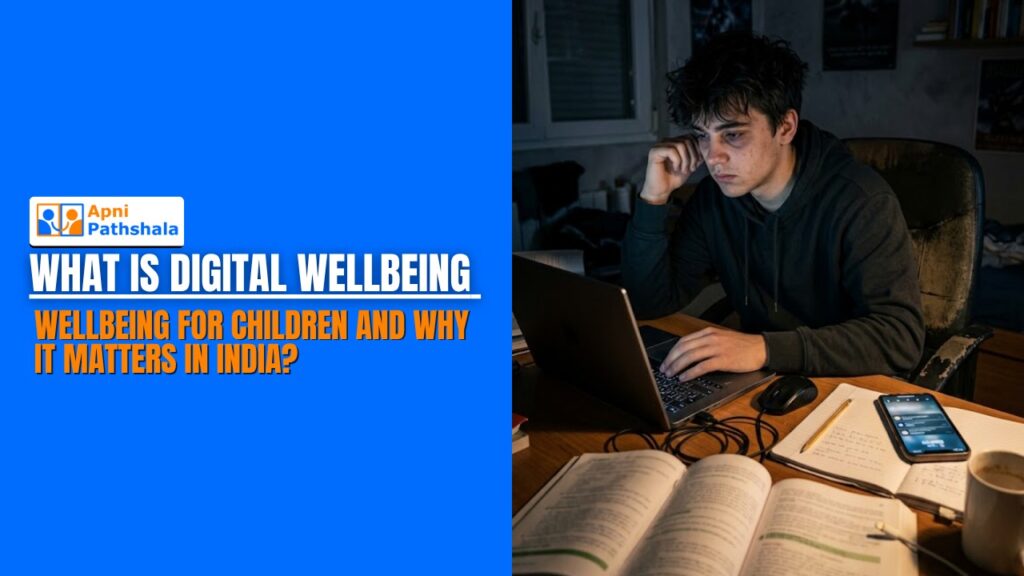
Meena noticed her 10-year-old son, Arjun, becoming increasingly irritable whenever she asked him to put down his tablet. He struggled to fall asleep before midnight. His appetite had dropped. His teacher called to say he seemed distracted and unfocused in class. Nothing dramatic had changed at home, except that Arjun had been spending four to five hours a day on screens for the past three months. Meena did not know what to call what she was seeing. What she was witnessing is now one of the most pressing concerns for Indian families, a breakdown in digital wellbeing in children in India is experiencing at a scale that is growing faster than most parents realise.
What Is Digital Wellbeing and Why Does It Matter for Indian Children?
Digital well-being is the state of a child’s physical, mental, and emotional health in relation to their use of technology. It is not about avoiding screens entirely. It is about ensuring that technology use supports a child’s development, rather than working against their sleep, focus, relationships, and emotional balance.
When technology is used with structure and purpose, it enhances learning, builds skills, and connects children to resources they would not otherwise have. When it is used without limits or guidance, it disrupts sleep cycles, shortens attention spans, displaces physical activity, and can contribute to anxiety and social withdrawal.
Child digital health in Indian families needs to be prioritised, as smartphones and cheap data plans have brought the internet into the hands of younger and younger children across the country, often without the guidance needed to use it safely and healthily.
According to WHO guidelines on children’s health and screen use, excessive unstructured screen time in children is directly linked to reduced physical activity, disrupted sleep, impaired cognitive development, and increased risk of anxiety and depression, making digital wellbeing one of the most significant public health concerns affecting school-age children today.
The Signs of Poor Digital Wellbeing in Children
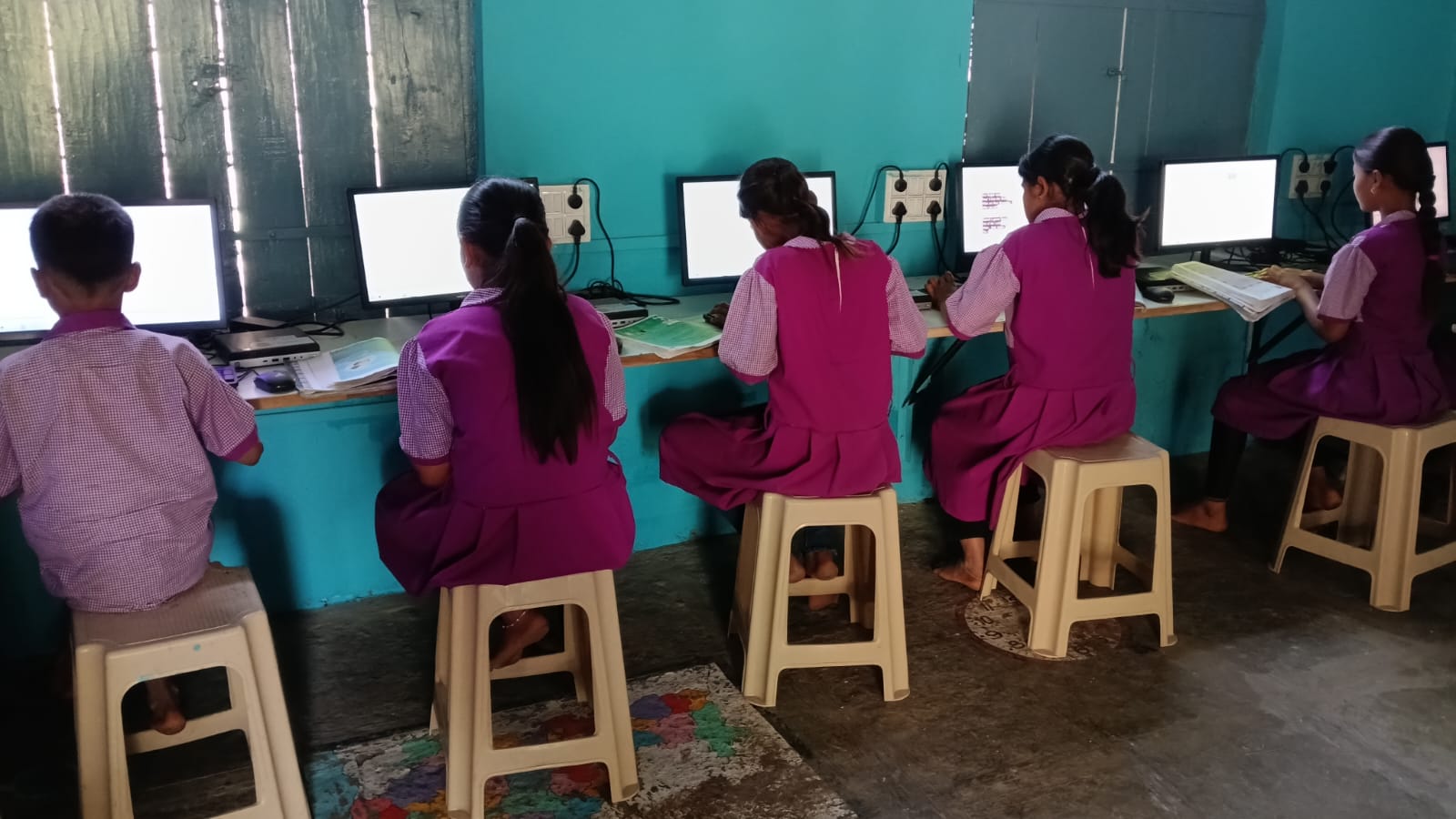
Many Indian parents do not realise their child’s digital habits have become unhealthy until the effects are already visible. Here is what poor screen wellness experts in India flag as early warning signs:
- Difficulty sleeping or consistently late bedtimes: Blue light from screens suppresses melatonin, the hormone that signals to the brain it is time to sleep. A child who uses a device right up until bedtime is actively disrupting their own sleep chemistry. Persistent sleep issues in school-age children are now one of the most commonly reported effects of unmanaged screen time.
- Irritability or anger when devices are taken away: A healthy relationship with technology means a child can put it down without distress. When the removal of a device triggers a strong emotional reaction, anger, crying, or anxiety, it signals that the child’s psychological relationship with screens has become unhealthy.
- Declining interest in physical activities or hobbies: Children who previously enjoyed outdoor play, drawing, or reading but now prefer screens exclusively are showing a classic sign of digital imbalance. Physical activity, creative play, and face-to-face social interaction are all essential for healthy development, and none can be replaced by screen time.
- Reduced attention span and difficulty focusing in school: Fast-paced digital content, short videos, rapid game responses, instant notifications, condition the brain to expect constant stimulation. A classroom lesson that moves at a human pace feels unbearably slow by comparison. Teachers across India report noticing this pattern with growing frequency.
- Withdrawal from family conversations: A child who is perpetually distracted by a device, gives one-word answers at dinner, and disappears into a screen the moment homework is nominally “finished” is showing signs of digital disconnection from real-world relationships, a significant concern for long-term social development.
Learn how Apna PC creates structured, purposeful screen time that supports rather than undermines children’s wellbeing on our What Is Apna PC page.
How Indian Families Can Build a Healthy Digital Balance
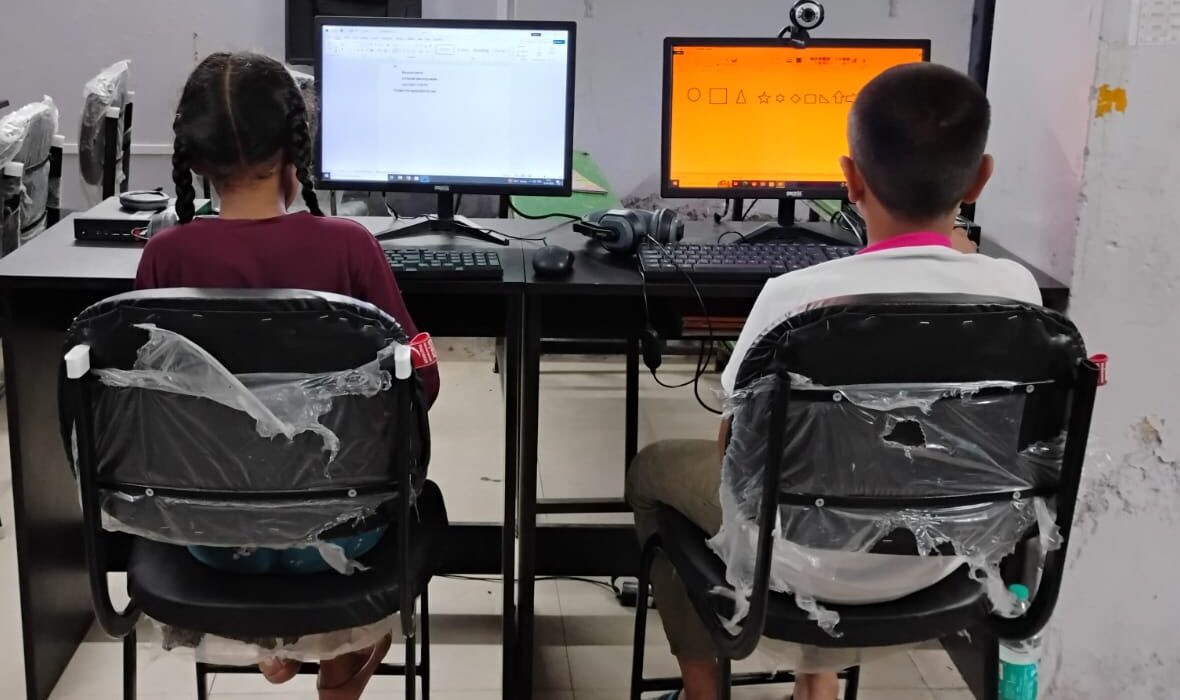
The good news is that the digital balance that Indian families can achieve does not require extreme measures. It does not mean banning all devices or removing internet access. It means creating a structured, intentional relationship with technology, where screens serve the child’s goals rather than replacing them.
Here is what works in practice for Indian families:
- Set clear screen-free times: Meals, the hour before bedtime, and the first 30 minutes after waking should be screen-free by default. These boundaries protect sleep, encourage face-to-face conversation, and give the brain time to rest from digital stimulation.
- Separate educational screen time from recreational screen time: A child using a computer for DIKSHA lessons or a school assignment is engaging in productive use of technology. A child watching unrelated videos for three hours is not. Treating these differently and setting different limits for each builds a healthier understanding of what screens are for.
- Replace, do not just restrict: Removing screen time without offering engaging alternatives creates conflict. When devices are put away, have something ready: outdoor play, a board game, a creative project, or a family activity. Children who have rich offline lives are naturally less dependent on screens for stimulation.
- Use purpose-built educational devices: A smartphone or a general laptop makes it almost impossible to enforce boundaries consistently. Apna PC, at Rs. 21,000 (shipping and GST excluded), removes the problem at the source. Safe browsing built in, no social media or entertainment apps, and educational content as the default means every session is purposeful, structured, and healthy by design.
UNICEF India’s child online safety framework emphasises that digital wellbeing is not achieved through restriction alone; it is built through positive digital habits, structured use, and open family communication about technology. Parents who approach screens as a tool to be used well, rather than a threat to be fought, raise children with far healthier digital relationships.
Read more about creating a safe and focused digital learning environment at home on our How a Personal Computer Helps Students Learn Beyond the Curriculum page.
Digital well-being is not about less technology; it is about better use of technology. And that starts at home, with clear expectations, good habits, and the right device. Visit apnapc.com to learn more.