

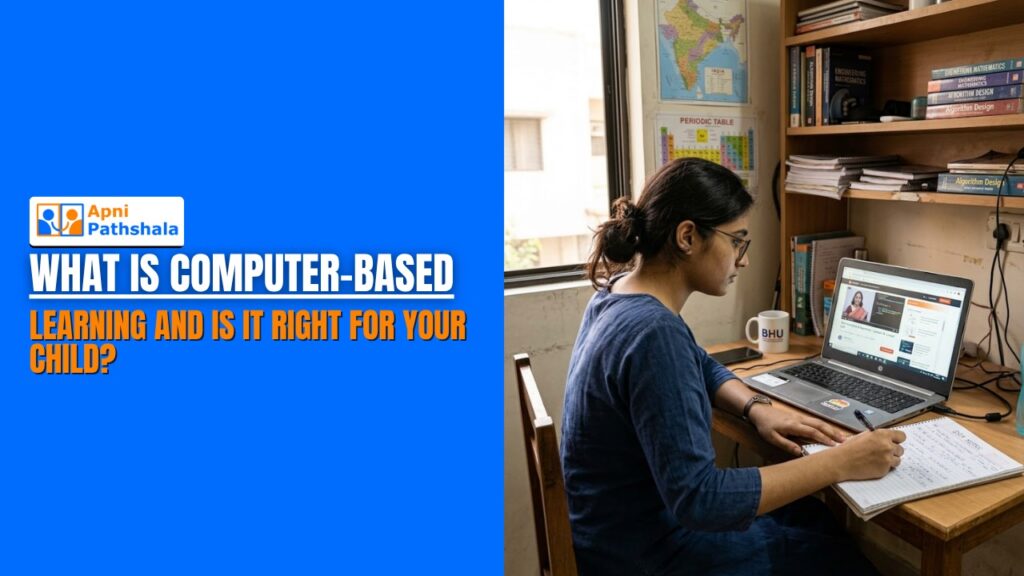
Sunita’s daughter, Kavya, has always been a quiet learner. In a class of 45, she rarely asks questions, not because she does not have them, but because she is too shy to raise her hand. She comes home with confusion she could not resolve in school, and no one to ask. Then Sunita sets up a computer at home. Within two weeks, Kavya is watching concept videos, pausing to take notes, rewinding when she does not understand, and completing practice questions at her own pace, without anxiety, embarrassment, or waiting for anyone’s permission to go slower. What Kavya discovered is that the core promise of computer-based learning for children in India is increasingly turning to education that moves at the child’s pace, not the classroom’s.
What Is Computer-Based Learning and How Does It Work?
Computer-based learning is any form of education that uses a computer as the primary tool, such as watching video lessons, completing interactive exercises, practising on digital platforms, creating typed assignments, or accessing curriculum-aligned content. It is not a replacement for school. It is a powerful supplement that fills the gaps classroom instruction inevitably leaves.
The biggest advantage of digital learning for Indian families is personalisation. A classroom teacher must move at a pace that works for the majority of students. A computer moves at the pace of the individual child. A student who needs three explanations of the same concept can get three, without any awkwardness. A student who masters a topic quickly can move ahead without waiting. This adaptive quality is what makes computer-based learning so effective for such a wide range of children.
According to UNESCO’s global research on digital learning outcomes, computer-based learning consistently improves student performance when it is structured, curriculum-aligned, and used alongside, not instead of, traditional school instruction. The combination of both produces the strongest results.
Is Computer-Based Learning Right for Your Child?
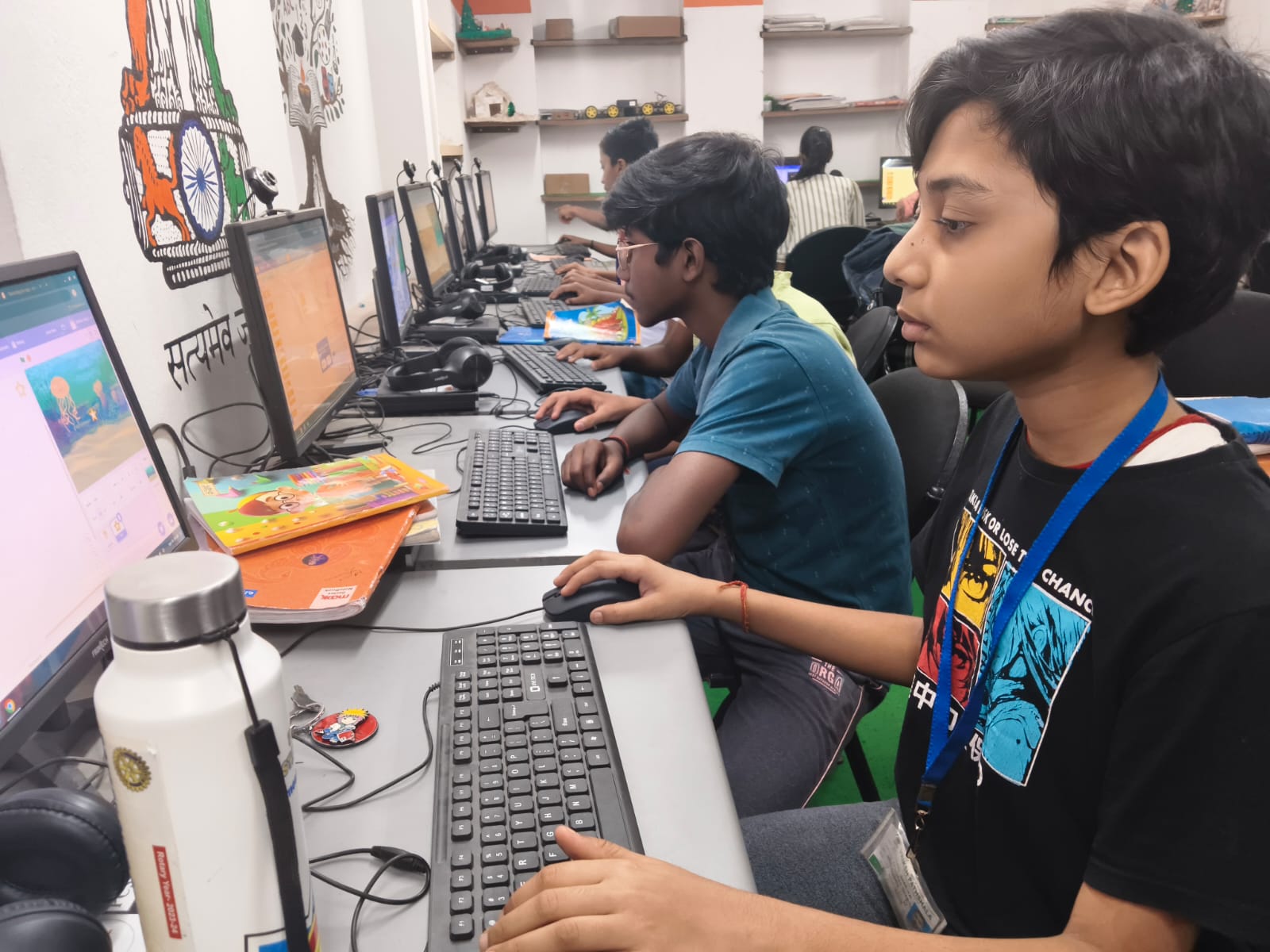
The honest answer is: yes, for most children, but only when set up correctly. Here is how to know if your child is ready to benefit from computer-based learning at home, and what conditions need to be in place for it to work:
- Your child has specific subjects they struggle with, and computer-based learning works exceptionally well for targeted improvement. If your child consistently struggles with maths, science, or English, structured digital practice in these subjects for 30 to 45 minutes daily can produce measurable improvement within weeks. The key is focus: one or two subjects, done consistently, produce far better results than scattered use across everything.
- Your child learns better through visuals: Many Indian children who underperform in traditional classrooms are not slow learners; they are visual learners in a text-heavy system. Animated science videos, interactive maths demonstrations, and visual grammar lessons make abstract concepts concrete in ways textbooks simply cannot. For these children, computer-based learning is not just helpful, it is transformative.
- Your child needs more practice than school provides: Board exams, competitive tests, and scholarship assessments all reward consistent practice. Free platforms like DIKSHA, Khan Academy, and e-Pathshala provide thousands of practice questions, sample papers, and concept reviews. A child who practises digitally for 45 minutes every evening builds exam readiness that no amount of textbook re-reading can match.
- You can provide a focused, distraction-free device: Computer-based learning fails when the device used for it also hosts social media apps, games, and entertainment platforms. The learning environment matters as much as the content. A purpose-built educational device that keeps the child focused on learning, rather than a general laptop that competes for their attention, makes a fundamental difference to outcomes.
- You are willing to be involved, especially at the start: The first four to six weeks of home computer learning are the most important. Sitting with your child for the first few sessions, helping them navigate platforms, and checking in weekly keeps the habit consistent. Children whose parents are engaged with their digital learning develop stronger habits and sustain them far longer.
See how Apna PC creates the ideal environment for computer-based learning at home on our What Is Apna PC page.
The Real Computer Learning Benefits for Indian Kids
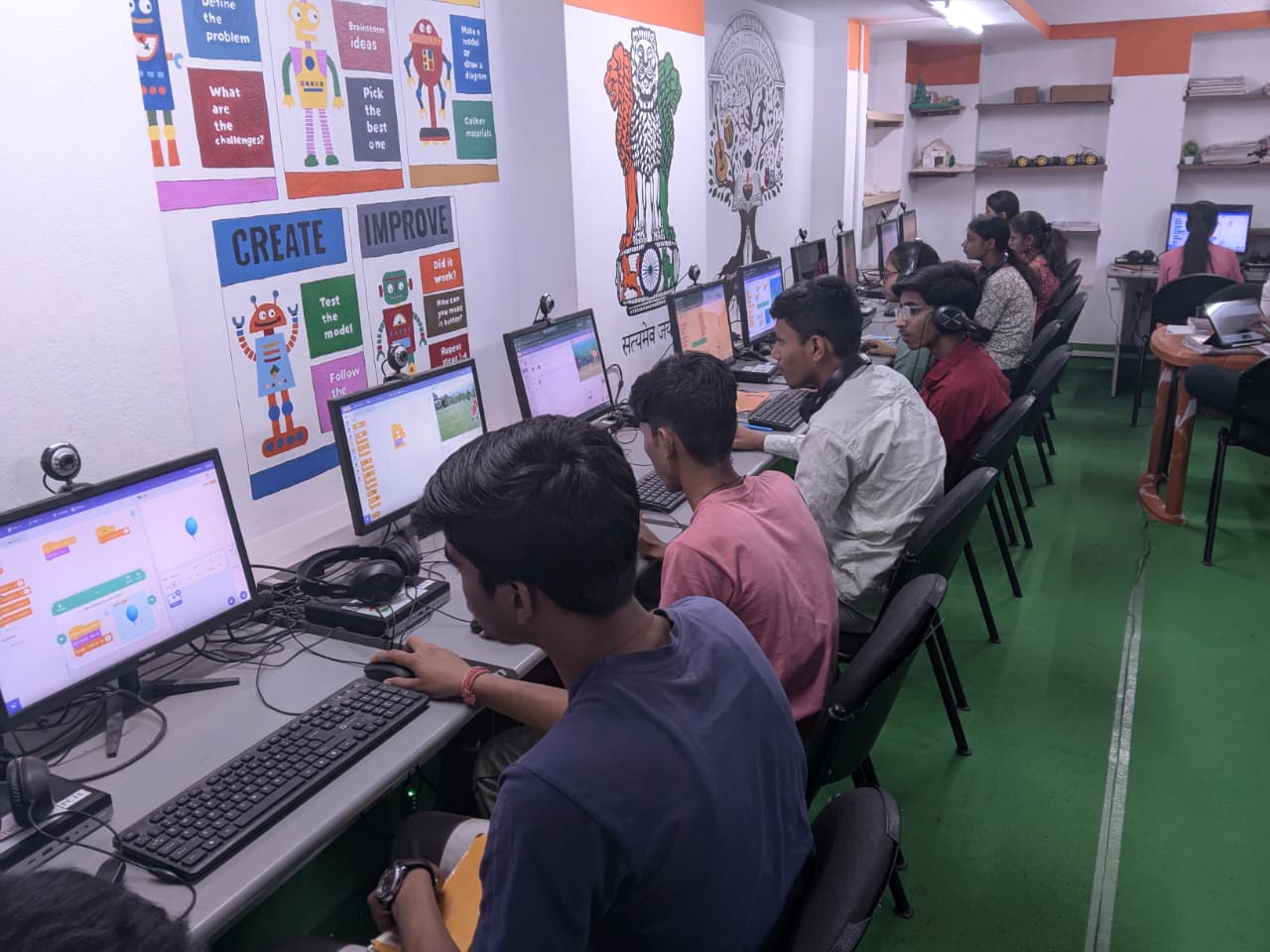
When computer-based learning is set up correctly and used consistently, the computer learning benefits for kids in India go well beyond improved exam scores:
Children develop genuine curiosity because a computer lets them follow their questions wherever they lead. A child who wonders how a volcano works can watch an animated explanation, read a short article, and attempt a quiz, all within ten minutes. This self-directed exploration builds the kind of independent thinking that schools rarely have the time or structure to nurture.
Children build digital fluency naturally, by using a computer daily for learning, they develop typing speed, file management, platform navigation, and document creation skills that are now tested directly in board exams and required in virtually every career. These skills are not taught in a single session; they accumulate through consistent, purposeful daily use.
Children gain confidence, particularly those who feel lost in large classrooms. When a child can learn at their own pace, without comparison to peers, without the fear of asking a question in front of forty classmates, they rediscover their own capability. This restored confidence often translates directly into better classroom participation and stronger academic performance.
DIKSHA India’s national digital learning platform provides free, curriculum-aligned content for every class and subject, giving every Indian child with a computer access to the same quality of structured digital education, regardless of where they live or which school they attend.
Apna PC at Rs. 21,000 (shipping and GST excluded) is the device that makes all of this possible, preloaded with learning tools, built-in safe browsing, offline-capable, and designed for daily student use without entertainment distractions. Read more about why a dedicated home computer changes what is possible for Indian students on our The Hidden Cost of Not Having a Computer in 2026 page.
Computer-based learning is not a trend. It is the direction all education is moving, and children who start building these habits today will be years ahead of those who wait. Visit apnapc.com to learn more.