

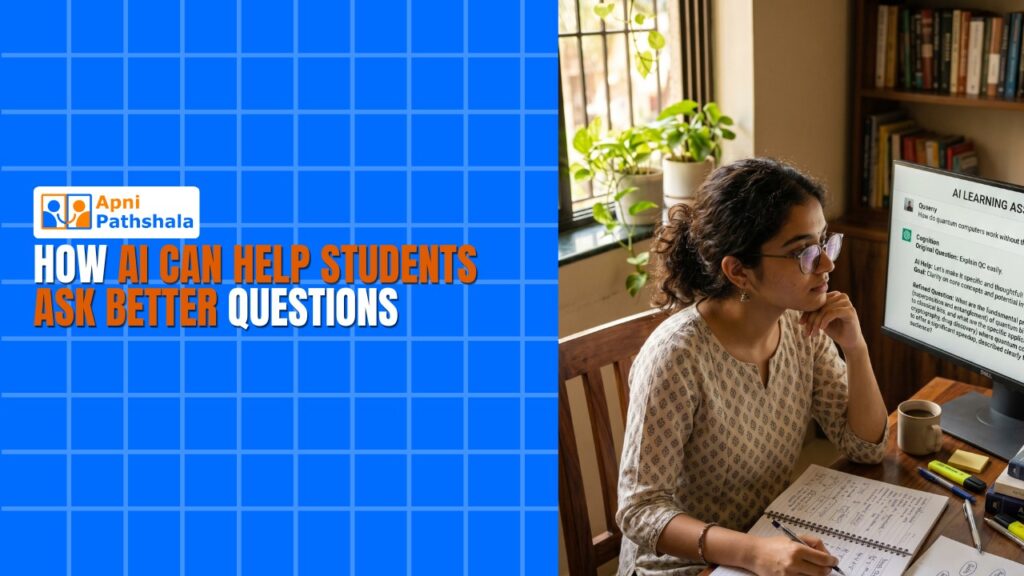
The teacher asked the class: “Any questions?” Thirty students sat in silence. Not because they understood everything. Because they did not know what to ask. They had gaps in their knowledge, but the gaps were too vague to turn into questions. They knew they were confused. They did not know where the confusion started.
This happens in every classroom in India. Students do not ask questions because they do not know how to formulate them. They have the curiosity. They do not have the skill. The ability to ask a good question is not natural. It is learned. And AI for students is one of the best tools to learn it.
When a student interacts with an AI, they have to type their question. They cannot sit passively and hope the answer comes to them. They have to articulate what they do not understand. They have to be specific. They have to break a vague confusion into a clear question. This process, the act of formulating a question for a machine, teaches the student how to ask better questions everywhere.
Why Are Most Students Bad at Asking Questions?
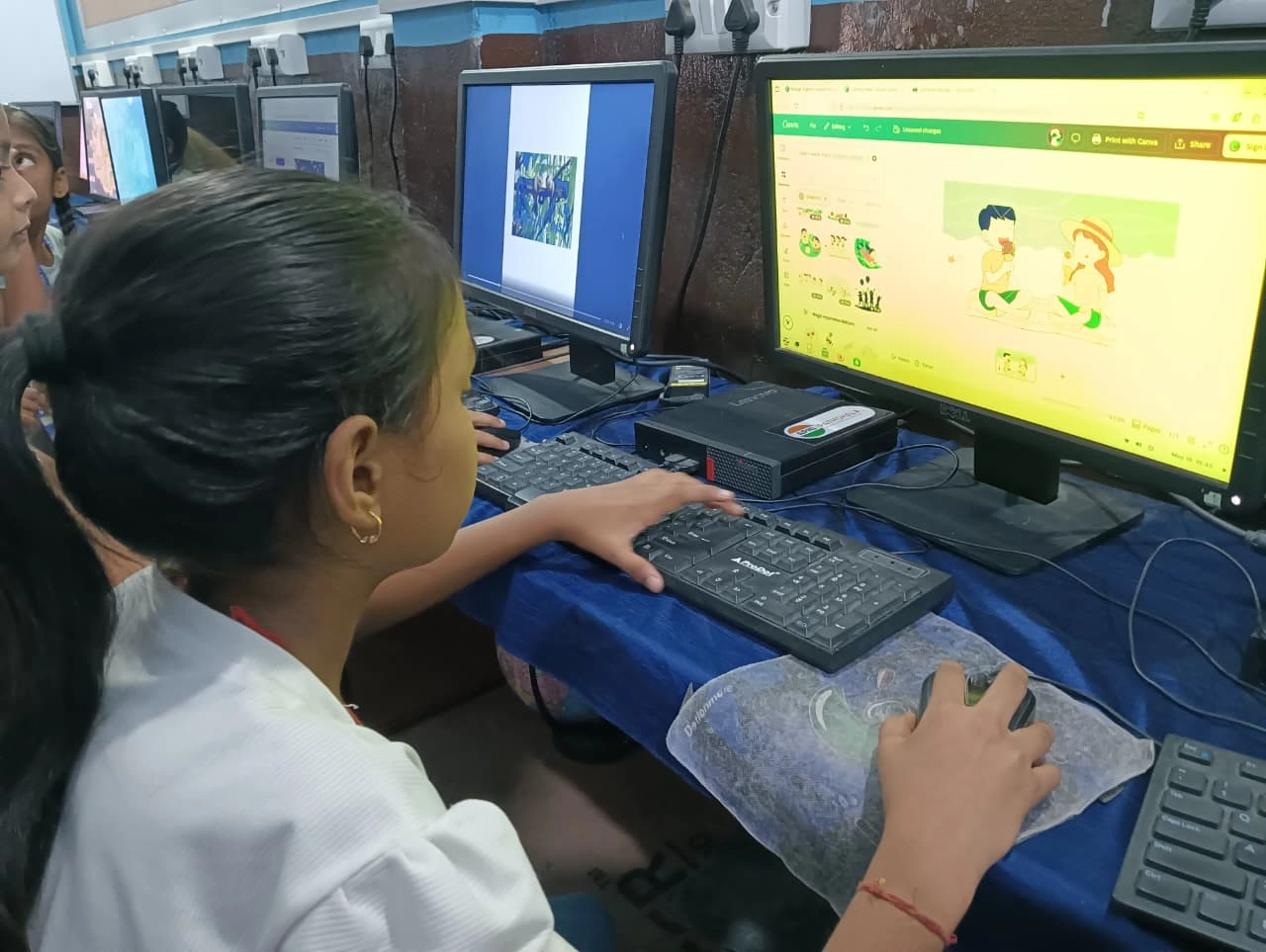
Most Indian students are not taught to ask questions. They are taught to listen. The teacher speaks. The student takes notes. If the student does not understand, they are expected to figure it out later. The classroom rewards compliance, not curiosity.
The result is a generation of students who can answer questions but cannot ask them. They can solve textbook problems but cannot identify their knowledge gaps. They can pass exams but cannot diagnose their own confusion. This is not a knowledge problem. It is a skill problem.
Critical thinking skills start with the ability to ask questions. A student who can ask “Why does this formula work?” is thinking more deeply than a student who memorises the formula. A student who can ask “What happens if I change this variable?” is exploring more actively than a student who follows the textbook. The question is the thinking tool.
UNESCO global education research has documented how inquiry-based learning produces deeper understanding than passive instruction. Students who ask questions retain more, understand more, and apply more than students who only listen.
How AI Teaches Students to Ask Better Questions
An AI learning assistant does not judge. A student who is embarrassed to ask a “stupid” question in class will type it freely into an AI. The fear of looking foolish disappears. The student asks what they actually want to know, not what they think is acceptable to ask.
This freedom changes the quality of questions. In class, a student might say, “I don’t understand Chapter 3.” That is too vague for anyone to help. With AI, the student has to be more specific. They type, “I don’t understand why we use the quadratic formula instead of factoring.” Now the AI can give a targeted explanation. The student learned to be specific because the tool required it.
AI also teaches iteration. A student asks a question. The AI answers. The student realised they had a deeper question underneath. They ask again, more precisely. The AI answers again. The student discovers the real question they wanted to ask all along. This iterative process is how inquiry skills develop.
Question-asking skills are not just about getting answers. They are about understanding what you do not know. A student who can identify their gaps has a map of what to study. A student who cannot identify their gaps studies everything or nothing, both inefficiently.
How a Personal Computer Helps Students Learn Beyond the School Curriculum. But more importantly, it helps them learn how to ask the questions that lead to understanding.
Why a Computer Make This Possible?
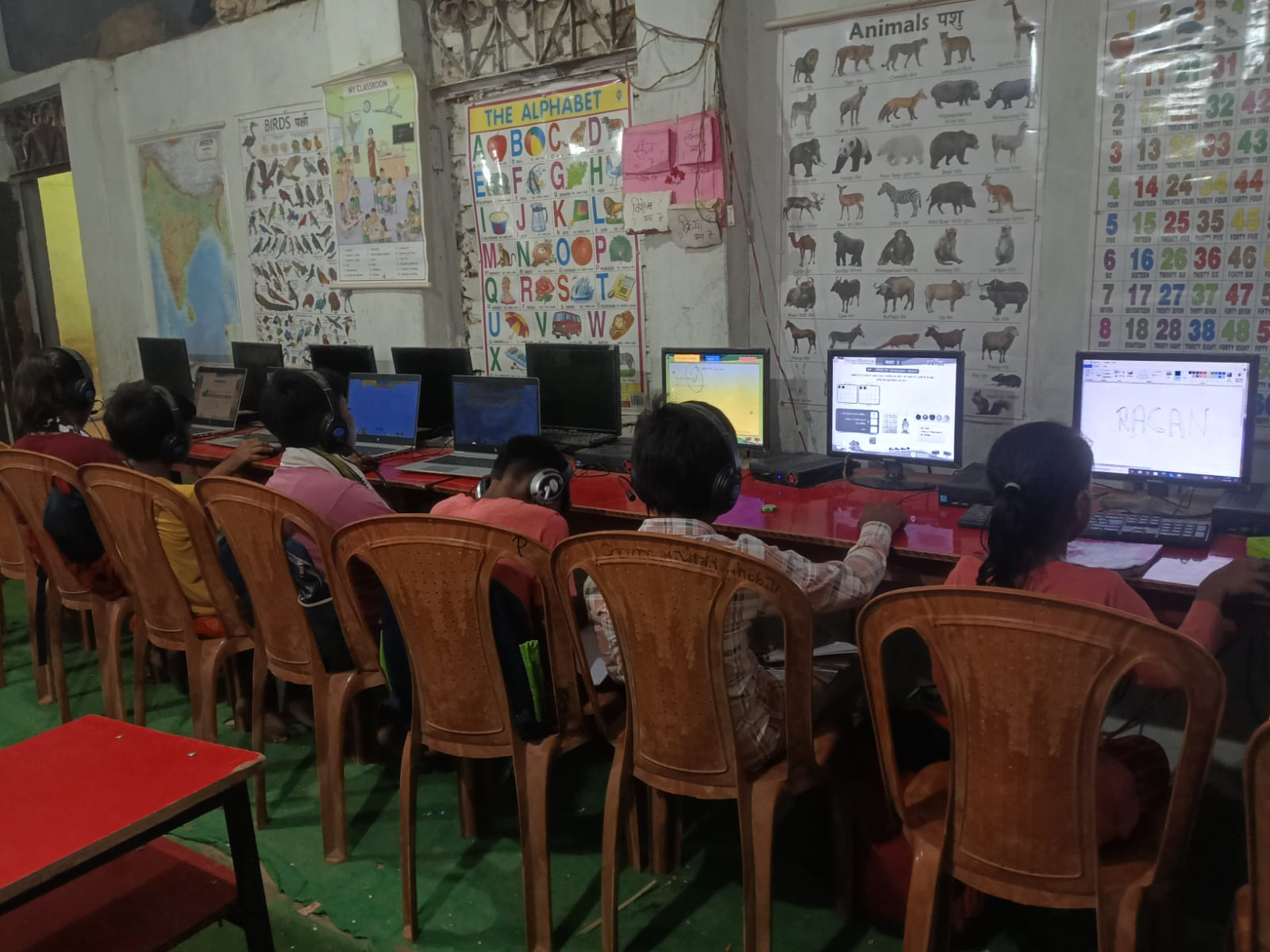
A phone can access AI. But a phone is not the right device for developing question-asking skills. The keyboard is too slow for typing detailed questions. The screen is too small for reading long explanations. The experience encourages quick, shallow interactions instead of thoughtful exchanges.
A computer makes the interaction meaningful. The keyboard is fast enough for typing detailed questions. The screen is large enough for reading and evaluating long responses. The student can open their textbook in one window and the AI in another, asking questions about what they are reading in real time.
The habit of asking better questions requires a device that supports the habit. A phone encourages short, vague questions. A computer encourages detailed, specific ones. The device shapes the behaviour.
The Hidden Cost of Not Having a Computer in 2026. But the cost of not developing question-asking skills is higher. A student who cannot ask good questions cannot learn independently. They will always need someone to tell them what to study.
What Parents Should Do?
Give your child a computer and an AI tool. Do not supervise every interaction. Let them explore. Let them ask questions. Let them discover that the quality of the answer depends on the quality of the question. This discovery is more valuable than any specific piece of knowledge.
Apna PC, priced at ₹21,000 (shipping and GST excluded), gives your child the device to develop question-asking skills. A keyboard for typing detailed questions. A screen for reading explanations. Tools for exploring answers. Your child plugs it in and starts learning how to ask.
Digital India initiative is building digital infrastructure across India. But infrastructure without curiosity is unused capacity. Give your child the tools and the habit of asking questions that matter. Visit apnapc.com to learn more.