

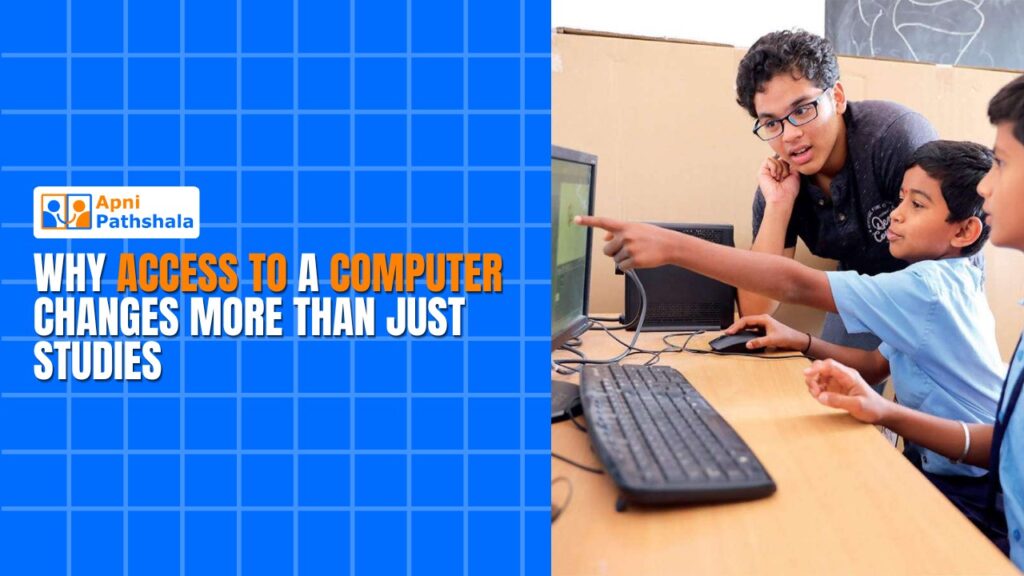
Most parents think of a computer as something students need for homework, typing an assignment, attending an online class, and submitting a project. But the importance of computers for students goes far beyond completing schoolwork. When a child has consistent, personal access to a computer, something larger begins to happen. They begin building skills, habits, and confidence that last long after the homework is done and the school years are over. This is about that broader change and why it matters to every Indian family making decisions about their child’s future.
The Benefits of a Computer That Go Beyond the Syllabus
The first thing a student does with a computer is usually schoolwork. But the benefits of computers for students quickly spread into areas that the school itself rarely teaches directly.
A student who uses a computer regularly learns to organise. They create folders, name files, and manage documents across different subjects, small, repeated actions that build a mental habit of structure. This is a professional skill that most adults only develop on the job. Students with their own computers absorb it naturally, years earlier, without anyone having to formally teach it.
They also learn to search well. Not just typing a question and clicking the first result, but learning to read sources critically, compare different explanations, and figure out when information is reliable or not. This kind of independent thinking becomes more valuable every year in a world where misinformation spreads as fast as facts.
And they learn to present. A project formatted properly in a word processor, a simple table in a spreadsheet, a slide deck that communicates an idea clearly, these are skills that students who only use mobile phones never develop fluency in. That fluency is exactly what separates a confident candidate from an unprepared one, whether the setting is a college entrance interview or a first job application.
According to the Central Board of Secondary Education (CBSE), digital literacy and computer-based learning are now embedded in the curriculum from middle school onwards. A student without consistent computer access is already struggling to keep pace with a curriculum that quietly assumes they have one.
The Digital Learning Tools That Only Work Well on a Computer
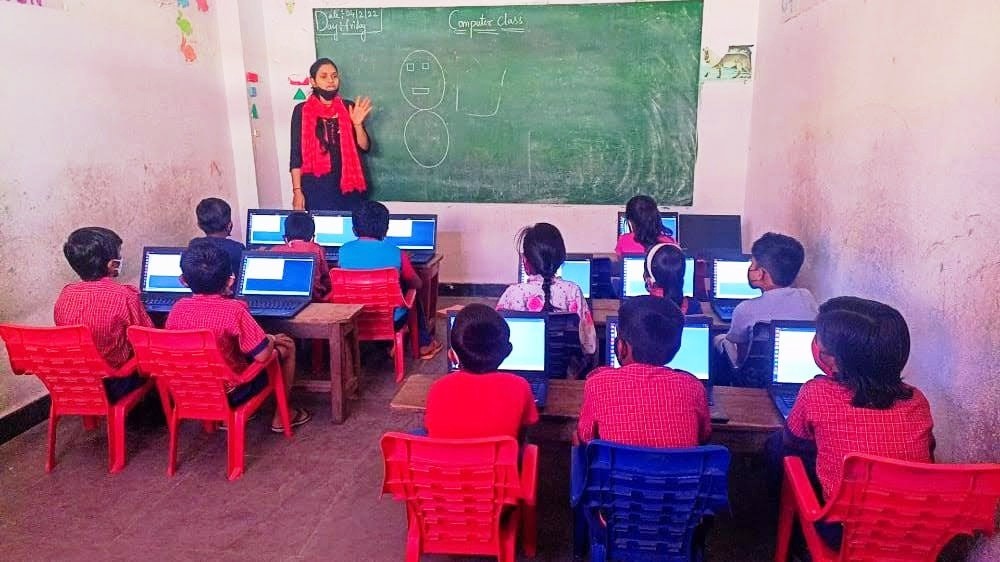
One of the strongest arguments for giving a student their own computer is that it actually unlocks the full range of digital learning tools available today, but only when they work as intended on a proper screen.
India’s national digital education resources, the platforms, and the structured coursework recommended by the Ministry of Education are built for browser-based access on computers. Interactive exercises load fully. Content displays as it was designed. Downloadable materials open properly. On a mobile phone, students get a compressed, frustrating version of what the platform was meant to deliver.
Beyond government platforms, the world of digital learning tools includes coding environments for beginners, scientific simulation software, typing skill trainers, digital drawing and design tools, and project-based learning platforms covering everything from mathematics to spoken English. None of these functions is meaningful on a small touchscreen. All of them are freely available to any student sitting in front of a computer with an internet connection.
DIKSHA – India’s national digital learning platform provides curriculum-aligned content for students across all states and boards. But to receive the full experience it was designed to deliver, a student needs a computer. A phone gives them a glimpse. A computer gives them the complete picture.
Computer Education Benefits That Follow a Student Into Adult Life
The computer education benefits a student gains during their school years do not stay in the classroom. They carry forward into college, into job applications, and into whatever field a student eventually enters.
A child who has used a computer since Class 5 or 6 arrives at their first interview with real advantages. They type faster and more accurately. They navigate software without needing to be trained on the basics. They know how to format a document, manage data, and present information in a way that signals competence to anyone evaluating them.
For students preparing for government competitive exams, the stakes are even more specific. Nearly every central and state government recruitment exam is now conducted fully online computer-based typing tests, timed digital assessments, and online submissions. A student who has never regularly used a keyboard is at a concrete, measurable disadvantage that last-minute practice cannot fix.
More broadly, every field a student might enter, teaching, healthcare administration, logistics, retail, finance, design, runs on computers today. The student who grows comfortable with one early does not just study better. They build a foundation that makes every next step easier.
Reading about How a Personal Computer Helps Students Learn beyond the curriculum shows just how wide that impact really is. And when families consider The Hidden Cost of Not Having a Computer in 2026, the decision becomes clearer; the cost of waiting is higher than the cost of the computer itself.
Apna PC is priced at ₹21,000 (shipping and GST excluded) and is built specifically to help Indian students get a reliable, dedicated computer that supports real learning from the very first day.
A computer does not just help a student study; it changes who they become. Give your child the tool that builds knowledge, confidence, and readiness for whatever comes next. Visit apnapc.com to learn more.