

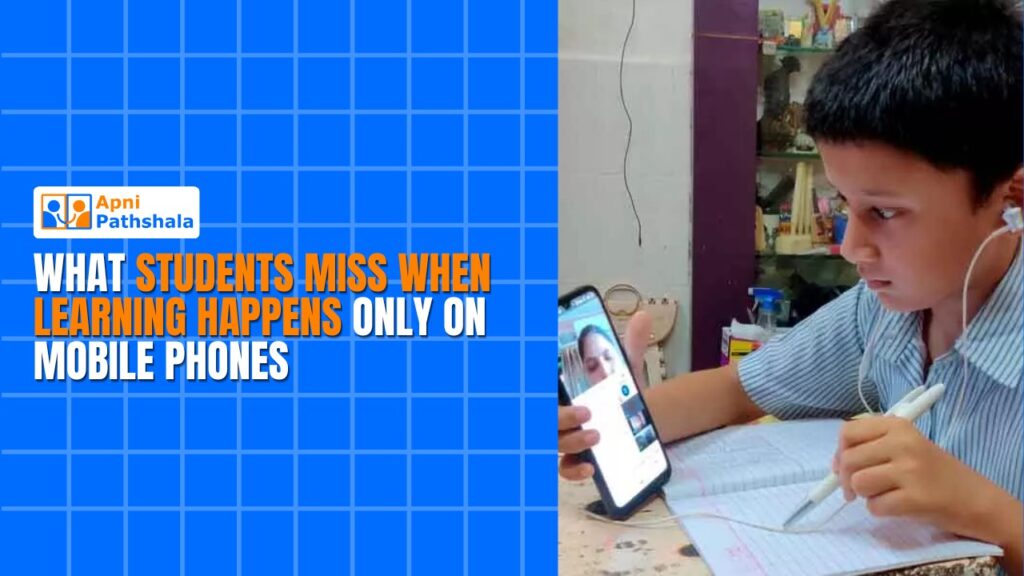
When schools moved online, millions of Indian students did what they could: they picked up the family phone and attended class. It worked, barely. But now that digital learning has settled into everyday life, a real problem is quietly taking shape: mobile learning disadvantages that were invisible during an emergency are becoming permanent barriers. A phone is better than nothing. But it is not the same as a proper computer, and that difference is costing students far more than most families realise.
What Gets Lost When a Phone Becomes the Classroom
Studying on a mobile phone feels like learning. The screen is on, the student is looking at it, and pages are being scrolled. But what is actually happening inside that study session is fundamentally different from what happens on a computer.
A phone screen is small. Students zoom in, scroll sideways, and squint at content that was never designed for a palm-sized display. Files do not open cleanly. Spreadsheets get cut off. PDFs lose formatting. A student working on a phone must fight the interface just to reach the content, and that friction, repeated dozens of times every study session, drains concentration before any real learning begins.
Typing is another hidden cost. Writing on a touchscreen is slow, error-prone, and physically awkward. Students who do all their written work on a phone develop slower composition habits, shorter answers, and far less keyboard practice. By the time they reach a board exam, a competitive entrance test, or a job that requires real typing speed, the gap shows, and it is difficult to close quickly.
Multitasking is nearly impossible on a small screen. Switching between a PDF textbook, a notes app, a calculator, and a reference video requires constantly reopening windows and losing context each time. On a computer, all of this sits open side by side. The workflow that builds deep understanding, reading, cross-referencing, writing, and applying simply cannot happen comfortably on a mobile phone.
Research cited in WHO guidelines on children and screen use also highlights the physical toll of sustained handheld device use, neck strain, eye fatigue, and reduced sustained attention. For students already spending hours on schoolwork, these effects compound daily.
Computer vs Mobile for Students – The Gap That Quietly Grows
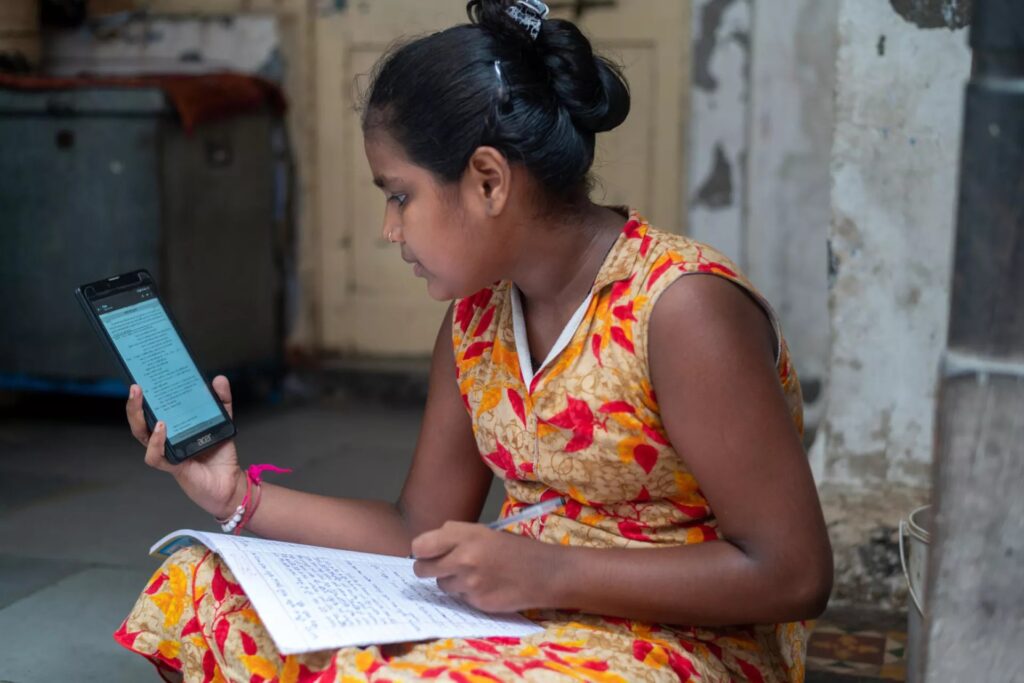
When parents think about computer vs mobile for students, the conversation usually comes down to cost. The phone is already there. A computer costs money. That logic makes sense in the moment. But what each device actually allows a student to do and what it prevents them from doing is the comparison that matters for the long term.
On a computer, a student can write a full assignment without autocorrect guessing every third word. They can run educational software designed for a proper screen and keyboard. They can organise files and folders the way professionals do. They can sit for two or three hours of focused study without the device pulling them toward social notifications designed to break concentration.
On a mobile phone, almost all of this is compromised. Apps are simplified, screens truncate content, and the device is almost always shared and used by the same parent who needs it for calls, payments, and messages. Sustained, distraction-free study is difficult to maintain on a device shared by the whole family.
India’s national digital learning resources, including structured coursework and interactive exercises, often deliver a reduced experience on mobile screens. Students miss parts of the curriculum not because the content is unavailable, but because the device they use cannot display it properly.
Why Indian Students Cannot Afford to Stay Mobile-Only
Online learning problems in India are not caused by a shortage of content. There is more free, high-quality educational material available today than ever before. The real problem is whether a student can access it on a device that works with them rather than against them.
For students in Class 9 and above, the stakes are especially high. Board exam preparation, competitive exam practice, and typing speed for government entrance tests all require a computer. Practising these on a mobile phone is like training for a long run in sandals. You can do it, but you are working harder just to keep pace with peers who have proper equipment.
The Digital India initiative was built on a vision of meaningful digital access, not just connectivity, but the tools required to actually use it. A student with only a mobile phone is connected. They are not empowered.
Understanding Why Every Indian Student Needs Their Own Computer is the first step for families still assuming a phone is enough. And for those who believe a personal computer is financially out of reach, The Biggest Advantage a Student Can Have Today reframes the question: it is not about marks, it is about removing the barriers that prevent real learning from happening in the first place.
Apna PC is priced at ₹21,000 (shipping and GST excluded) and is built specifically so Indian families do not have to choose between what they can afford and what their child actually needs to study well.
Mobile phones kept learning alive during a crisis. But a crisis tool was never meant to be a permanent classroom. Give your student a proper computer and watch what changes. Visit apnapc.com to learn more.