

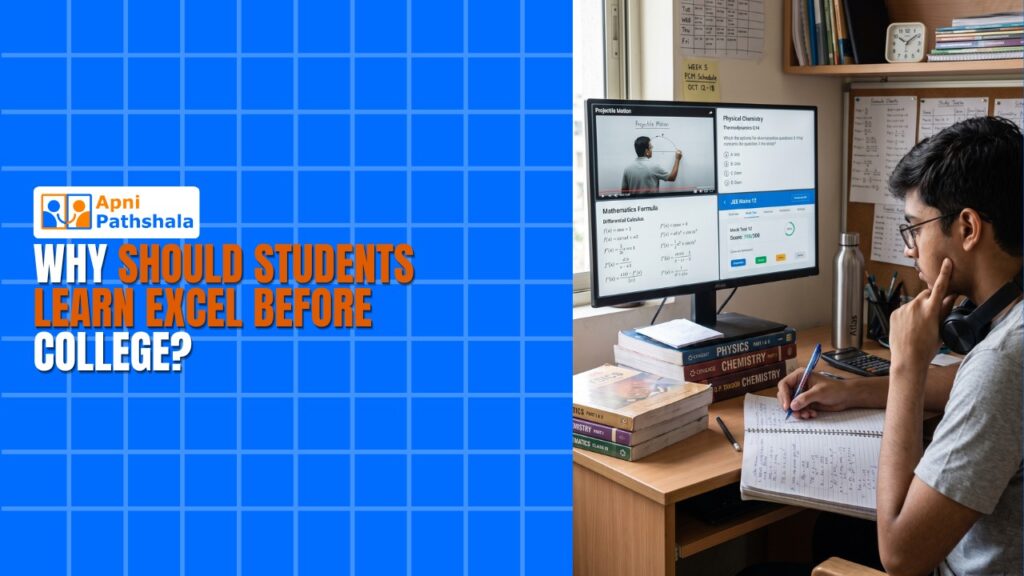
Raj’s Story: When Excel Changed Everything
Raj sat in his bedroom in Indore, staring at his economics assignment. His teacher had asked the class to track monthly expenses for a small business, but Raj didn’t know where to start. He tried using pen and paper, making columns and rows by hand, but the numbers kept getting messy. His older cousin saw him struggling and opened something called Excel on the family computer. Within minutes, Raj watched his cousin create neat columns, add formulas, and generate a colourful chart. “This is what you’ll use in college,” his cousin said. Raj didn’t realise then that learning Excel for students would become his secret advantage.
Today, Raj is in his second year of college, and he’s the only student in his accounting class who doesn’t panic when professors ask for spreadsheet work. His classmates scramble to learn basic Excel skills while juggling assignments. Raj, however, already knows how to organise data, create formulas, and present information clearly. This story isn’t unique. Across India, thousands of students reach college unprepared for spreadsheet learning, only to discover that this skill is essential in almost every field.
Why Excel Skills Matter Before You Enter College
You might think Excel is just for accountants or business people. You’d be wrong. Today, every field uses spreadsheets. Engineering students track project budgets in Excel. Medical students organise research data. Commerce students can’t survive without it. Even arts students use spreadsheets for research projects and data analysis.
When you learn Excel before college, you’re not just learning software. You’re learning how to think logically about data, organise information, and solve problems. These are skills that employers value across every industry. According to student learning research, students who develop computer skills early tend to perform better academically overall.
The Indian Ministry of Education has emphasised digital literacy as a core skill for the 21st century. Your child won’t just need Excel for one class. They’ll need it for internships, project presentations, and eventually, their first job.
Real Benefits of Spreadsheet Learning for Students
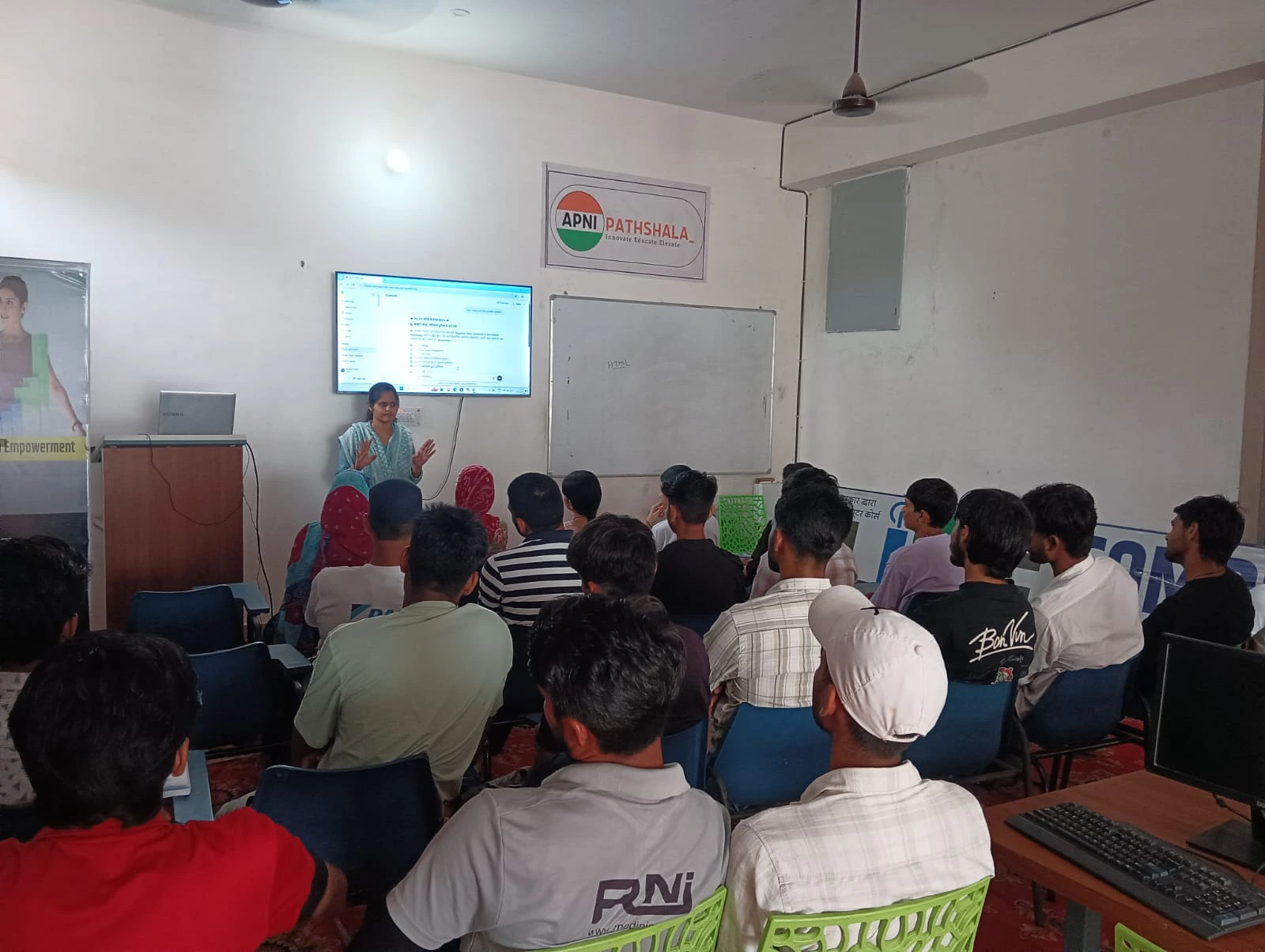
- Better grades in math and science: When you understand how to organise data in spreadsheets, you see patterns more clearly. Your child will solve math problems faster and understand data analysis better.
- Faster project completion: Instead of spending hours manually creating tables and charts, your child can finish student projects in half the time using Excel formulas.
- Confidence in class: When teachers ask for data analysis or charts, your child won’t feel lost. They’ll already know what to do.
- Job-ready skills: Most part-time jobs and internships for college students require basic Excel knowledge. Your child will qualify for better opportunities.
- Improved problem-solving: Excel teaches logical thinking. Your child learns to break problems into steps and create solutions systematically.
These aren’t just academic benefits. When your child can handle spreadsheets confidently, they feel more capable in general. This confidence spreads to other areas of their studies and life.
How to Start Learning Excel for Students at Home
You don’t need expensive software or coaching classes. Free tools like LibreOffice Calc (which comes pre-loaded on Apna PC) teach the same spreadsheet learning concepts. Your child can start with simple tasks like creating a personal budget, tracking pocket money, or organising their study schedule.
Start with basic tasks. Have your child create a simple table with their monthly expenses. Then teach them to add a SUM formula to calculate the total. Next, show them how to create a simple chart from that data. These small steps build confidence and understanding of the basics of computers.
You can also connect Excel learning to real projects. If your child studies geography, they can create a spreadsheet comparing cities by population and climate. For history, they can track historical events by date and region. For science, they can record experiment results and analyse patterns. This makes student projects practical and interesting.
Beyond Excel, having access to a proper computer at home makes a huge difference. When your child has a dedicated space to practice these skills, they learn faster and retain more. This is why many parents in Tier 2 and Tier 3 cities are investing in affordable educational computers like Apna PC, which comes pre-installed with LibreOffice and other learning tools.
The Right Computer Makes Spreadsheet Learning Easier
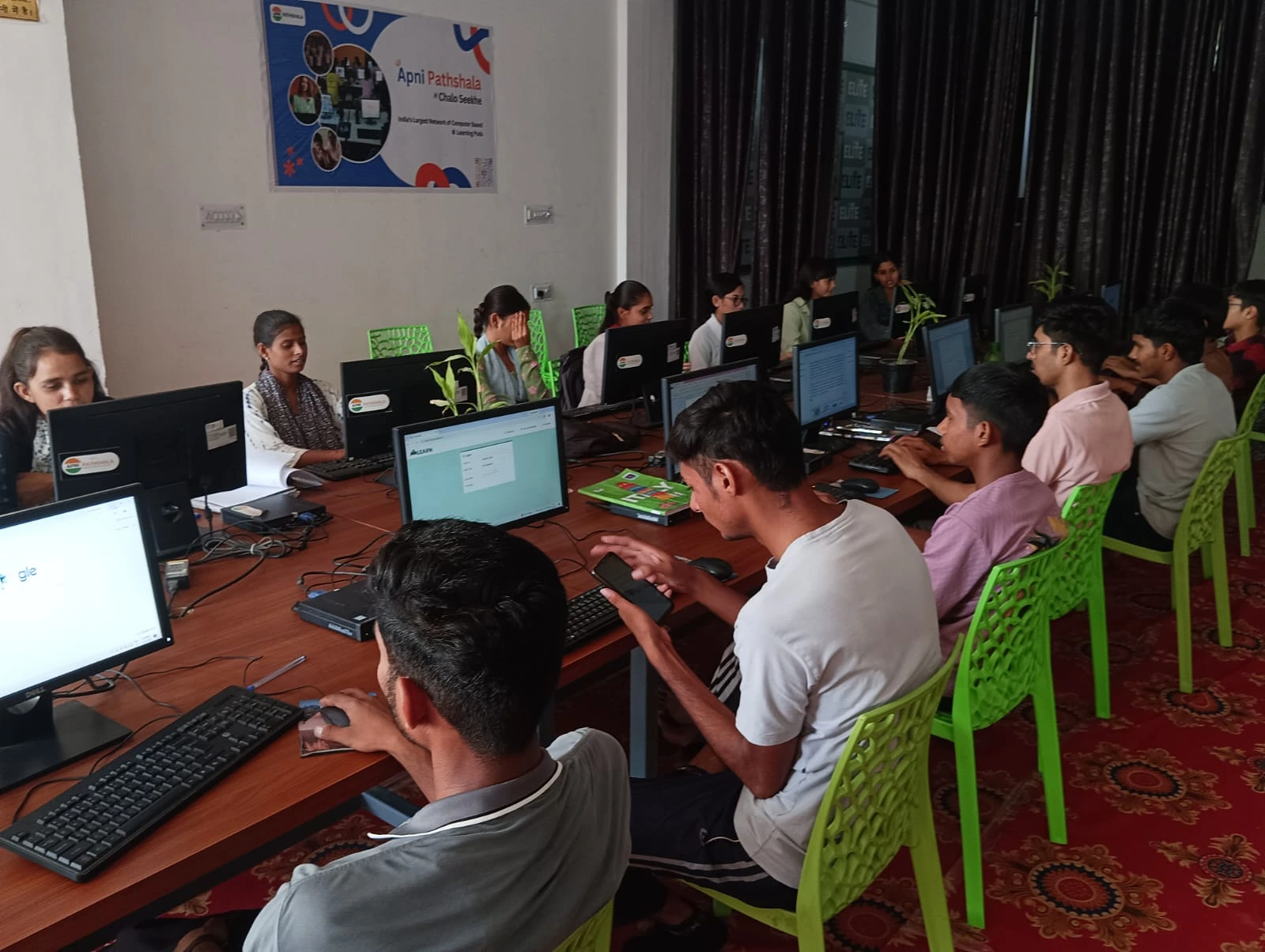
A good computer removes barriers to learning. Apna PC (Rs. 21,000; shipping and GST excluded) is specifically designed for students. It comes with 8GB RAM and 128GB SSD, which is more than enough for spreadsheet work, research, and schoolwork. The system runs Zorin OS, a user-friendly operating system that’s easy to learn.
What makes Apna PC special for students is what comes pre-loaded. LibreOffice gives your child professional spreadsheet software without the need for expensive licenses. Scratch helps them learn coding basics. Apni Prerna allows you to monitor their learning progress. Everything your child needs for school is already there, ready to use.
When your child has reliable access to a computer with the right software, they don’t just learn faster. They develop independence. They can practice typing whenever they want. They can work on projects without waiting for school computer labs. They can explore and learn at their own pace.
Having a computer also helps with other important skills. Your child learns how computers improve note-making and study organisation. These skills compound over time, making your child more prepared for college and beyond.
What Parents in Your Situation Are Doing
Parents across Indore, Nagpur, Lucknow, and other Tier-2 and Tier-3 cities are recognising that computer basics and Excel for students can’t wait until college. They’re introducing their children to spreadsheets, coding basics, and digital literacy early. These parents understand that their children won’t compete just on exam scores. They’ll compete on skills.
Many of these families are starting with affordable options. They’re not buying expensive laptops for gaming. They’re investing in educational computers designed specifically for learning. The difference is clear. When a computer is set up for education, with the right software and parental monitoring tools, children use it for learning instead of distractions.
Your child doesn’t need to wait until college to learn these skills. They can start now, at their own pace, with proper guidance and the right tools. The earlier they start, the more natural these skills become. By the time they reach college, they’ll have an advantage most of their classmates won’t.
Your child’s future depends on skills that go beyond textbooks. Excel for Students is one of those skills that opens doors. Start today by investing in a good computer, and watch your child’s confidence grow. Visit apnapc.com to learn more.