

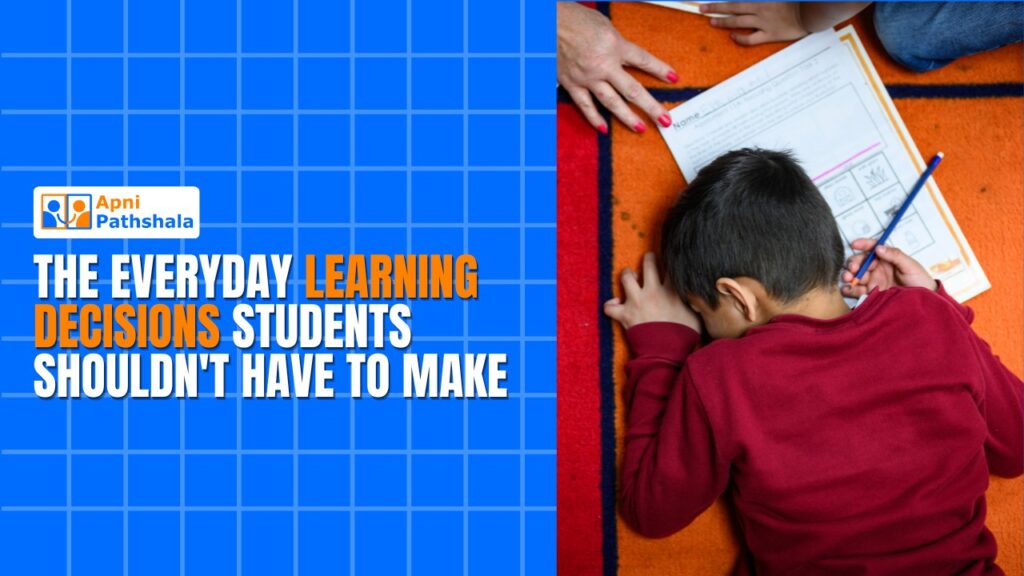
Before a student in a Tier 2 city sits down to study, they often face a set of decisions that have nothing to do with their subject. Is the shared phone free right now? Is the internet working tonight? Is there a quiet corner available in the house? These questions repeat every single evening, and they are real learning challenges for students that rarely get named, let alone solved.
The Decisions That Shouldn’t Come Before the Textbook
There is a version of studying that begins long before the first page is opened. For many students across India, the routine looks something like this: check if the family device is available, wait for a sibling to finish, find a spot with enough light, hope the connection holds, and then try to focus before one of those conditions changes.
These are not minor inconveniences. They are educational barriers, structural problems that sit between a student and their ability to concentrate. Every minute spent managing device access or waiting for connectivity is a minute not spent learning. And because these decisions happen quietly, inside the home, they go unnoticed by teachers, schools, and even the students themselves.
The most damaging part is how students adapt. They compress their sessions. They skip topics that need the internet. They stop using digital tools because the friction is not worth the effort. Over time, that quiet adaptation becomes a real and growing gap.
The Digital India initiative by the Government of India recognises that digital access shapes learning outcomes and that students without reliable tools fall behind not because of effort, but because of the environment.
What Study Challenges at Home Actually Look Like
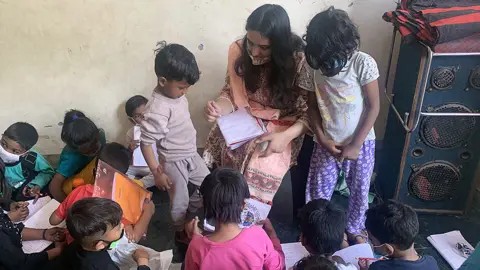
Study challenges at home are rarely dramatic. They do not announce themselves as crises. A student who borrows a phone for twenty minutes does not think of themselves as disadvantaged; they just make do. But making do has a cost that compounds quietly.
When study time depends on borrowing a device, a student cannot revisit a concept at midnight when it finally clicks. They cannot rewatch a video explanation three times until something makes sense. They cannot spend a free Saturday morning following a topic that genuinely interests them. The study session is shaped not by the student’s curiosity or pace, but by the availability of a shared object.
This is what student learning problems actually look like in most Indian households. Not a lack of intelligence. Not a weak teacher. Not poor effort. It is the absence of a tool that should be as basic as a notebook.
The Central Board of Secondary Education (CBSE) curriculum is now deeply integrated with digital resources, from sample papers to video content and supplementary reading. Students who cannot access these consistently navigate the same syllabus with fewer tools than peers who have a personal device at home. The syllabus is equal. The access is not.
The student who fits their entire homework session into a borrowed phone window is not lazy. They are resourceful in the face of a constraint; they never choose one that should not exist.
What Changes When the Decision Is No Longer a Question
Imagine a student who no longer has to ask whether the device is free. It sounds small. In practice, it changes the entire shape of their day and their learning over time.
They study when a concept is fresh, not when a device happens to be available. They revisit difficult problems at their own pace. They explore beyond the textbook without asking permission. They build the habit of independent study, the habit that separates consistent learners from those who only prepare when conditions allow.
Understanding what Apna PC is and how it helps Indian Students Learn Better makes this shift clear. A dedicated, affordable computer means that learning fits into the student’s schedule, not the other way around. The question of access disappears. What remains is how hard the student chooses to work.
Exploring How a Personal Computer Helps Students Learn Beyond the School Curriculum shows how much learning expands when the device is personal, consistent, and always ready. The learning no longer has to fit into borrowed windows. It starts filling them.
Apna PC is an affordable, education-ready computer built for Indian students, available at ₹21,000 (shipping and GST excluded), designed for Tier 2 and Tier 3 cities, where access has always been the only thing standing in the way. No student should spend study time solving a logistics problem. Visit apnapc.com to learn more.