

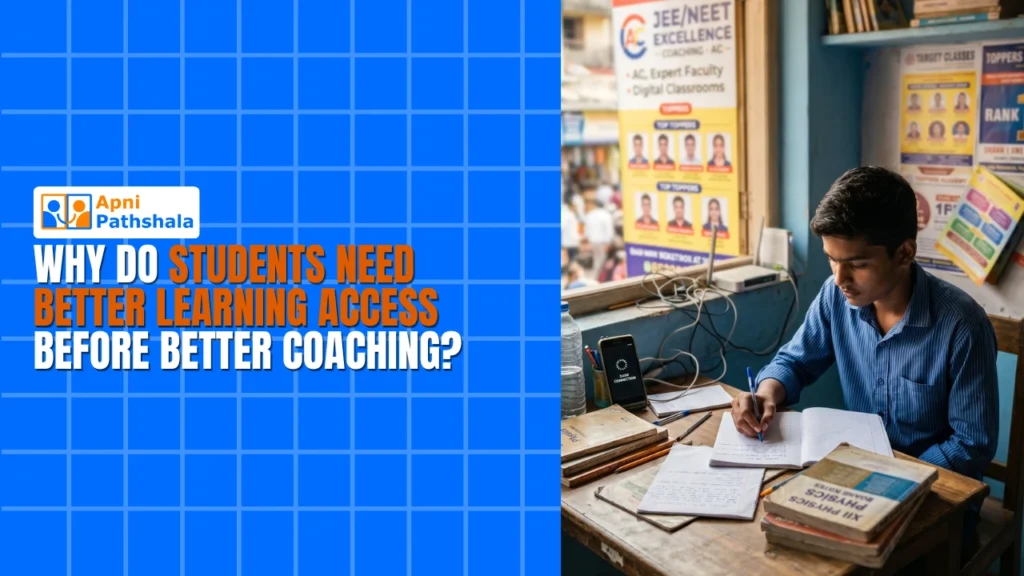
Rahul is 14. He lives in Jaipur. His parents enrolled him in a coaching class last year, the kind with printed notes, a strict schedule, and a teacher who covers three chapters a week. They paid ₹8,000 for the semester.
Rahul fell behind by the second month. Not because the coaching was ineffective He struggled because he had no way to review what was covered in class. He had no device at home to access the recorded explanations that his teacher shared. He had no way to download the study materials that his classmates had. He had no way to practice with the digital tools that were central to the class.
The coaching was effective. The access wasn’t there.
What Coaching Actually Needs to Work?
Most parents consider coaching the solution to learning gaps. And for many students, effective coaching does make a real difference. But coaching assumes something: that the student can engage with the content being taught during class and especially after it.
In 2026, that engagement is almost entirely digital. Recorded lectures. PDF notes. Online practice tests. WhatsApp groups with supplementary material. Study apps recommended by teachers. These aren’t extras anymore. They’re how modern coaching actually functions.
A student without digital learning access at home isn’t getting the full value of coaching. They’re getting a partial experience and often falling further behind without understanding why.
The Access Problem Is More Common Than We Admit
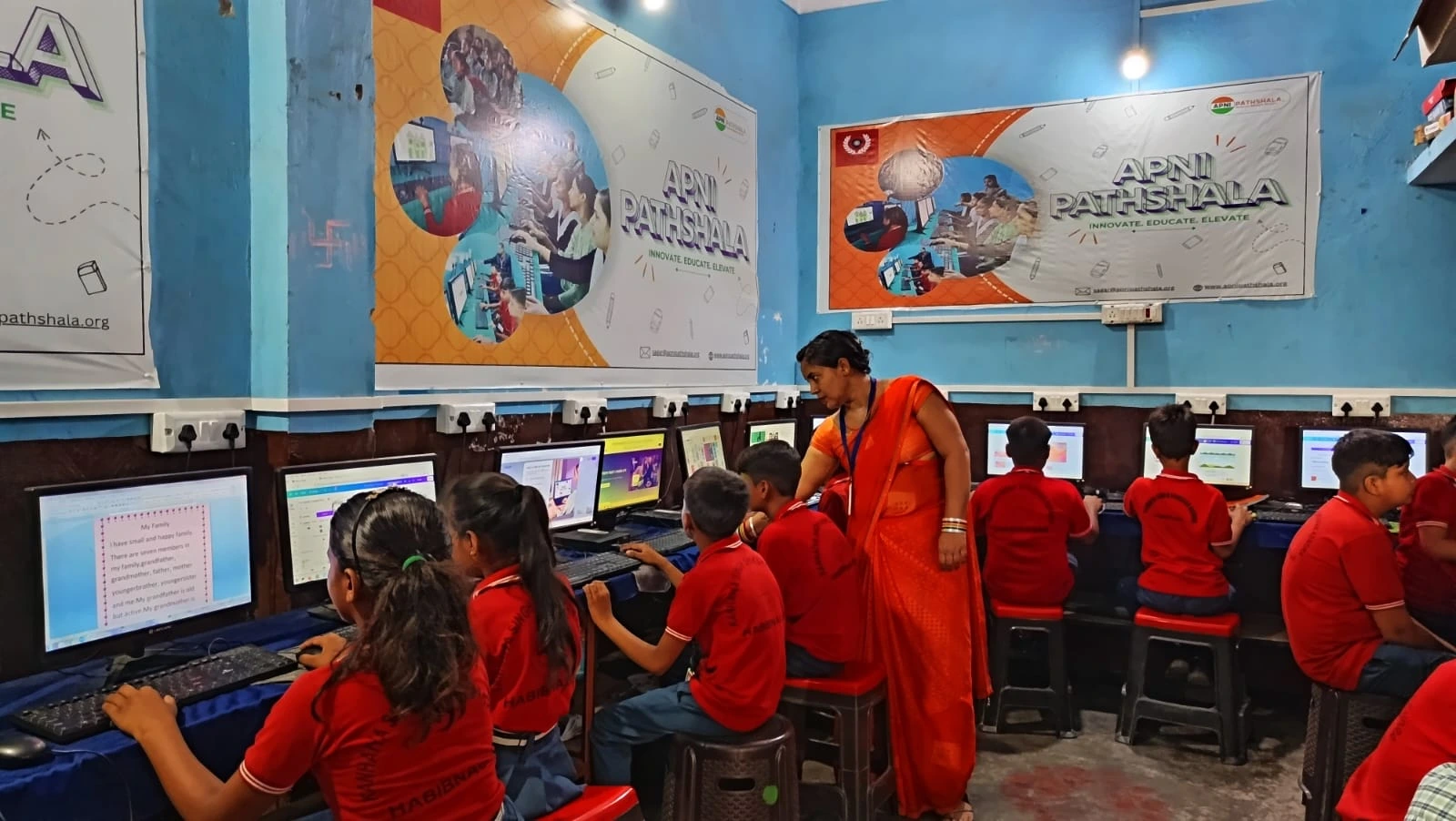
India has expanded coaching significantly over the last decade. Cities like Kota, Patna, and Hyderabad have become known for it. And in thousands of smaller towns, local coaching centers serve families who work hard to afford the fees.
But coaching enrollment has grown faster than device access at home.
A large number of students, particularly from households earning ₹15,000–₹40,000 per month, attend coaching while sharing one phone among the entire family. That phone is the parent’s. It’s needed for work. It isn’t available at 9 PM when a student wants to review today’s lesson or finish an assignment due tomorrow.
This is the gap that matters. Not the quality of teaching. Not the student’s ambition. Just access. Simple, daily, reliable access to a device that the student can call their own.
Coaching vs Online Learning: A False Debate
There’s a popular argument going around: is traditional coaching better, or is online learning better? Parents ask it. Teachers have their own opinions on it. Education influencers debate it endlessly.
The framing is wrong.
Coaching and online learning are not alternatives. They work best together. A student in a coaching class gains enormous benefits from watching recap videos at home, practicing concepts with interactive tools, and searching for explanations when a process doesn’t click. The classroom starts the understanding process. The device deepens it.
The real question isn’t coaching vs. online learning. It’s “Does the student have the tools to make both work?” For students who have access, the issue isn’t even a discussion; they use whatever helps. For students who don’t, neither option delivers what it should.
Why Digital Learning Access Has to Come First?
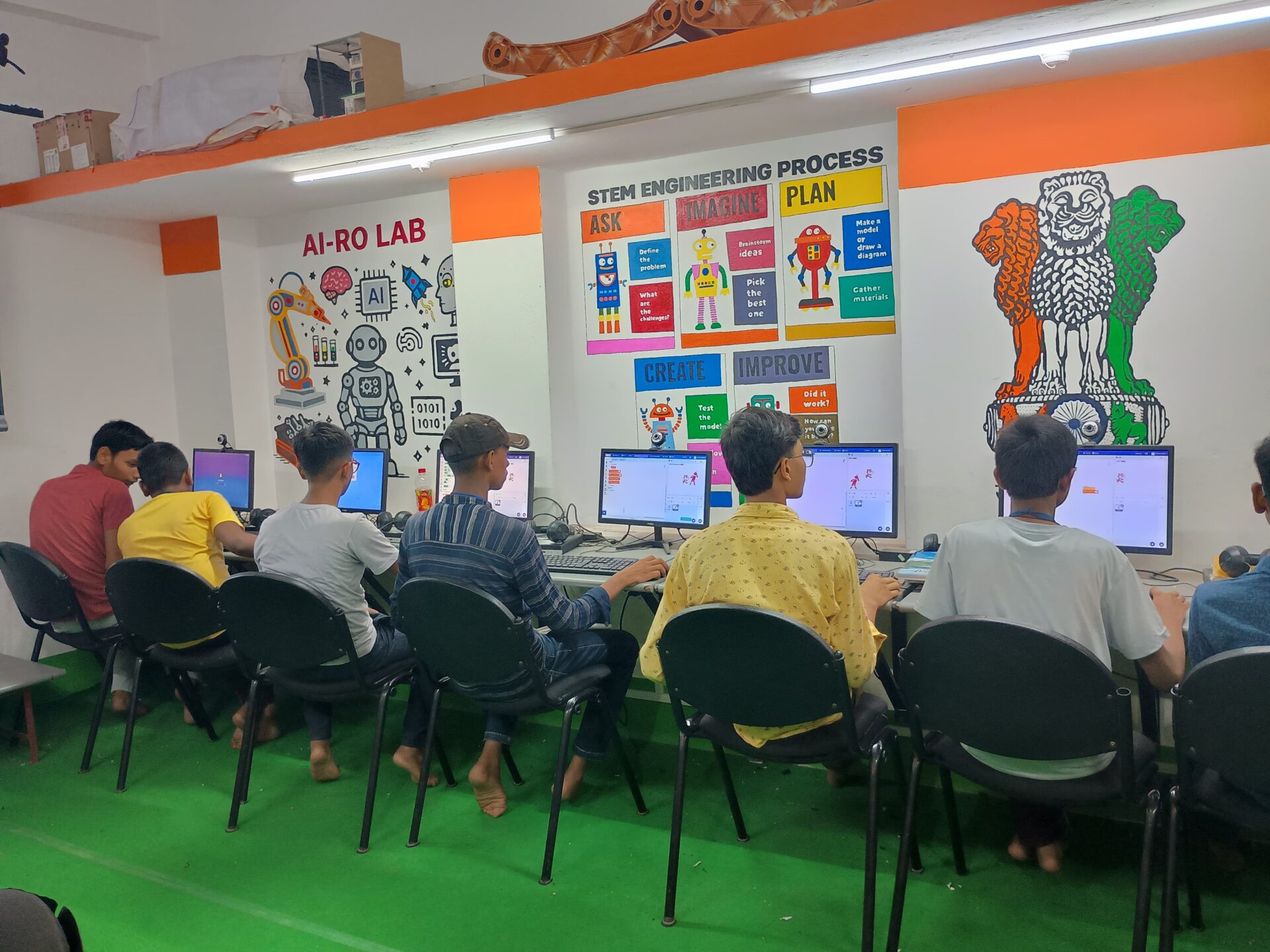
Here is the practical reality most families don’t think through. If a family is deciding between investing in a coaching class and investing in a home computer, which one provides a better return?
A coaching class provides structured instruction, but only for a few hours a week, for one academic year. A home computer provides access to structured instruction every single day, through platforms like Khan Academy, NCERT e-Pathshala, and dozens of free resources built specifically for Indian students and their curriculum.
Once we address education access in India at the device level, students will be able to fully benefit from coaching. The computer doesn’t replace coaching. It amplifies it. Every class the student attends becomes more valuable because they can review, practice, and go deeper at home.
The logic runs clearly in one direction: access first, coaching second. Coaching is often valuable, but its value is significantly reduced without access.
Technology for Students Is Infrastructure, Not a Luxury
The idea of a computer as a luxury item belongs to another era. Today, a home computer for a student is infrastructure. Like a study table. Like electricity. Like textbooks.
The expectation has shifted in a country where hundreds of millions of students are pursuing education and where government programs like Digital India have specifically emphasized digital literacy. Technology for students is no longer a luxury to have. Modern learning is built on this foundation.
The families who act on this early provide their children something real: not just the ability to attend better coaching, but the ability to learn independently, consistently, and at their pace every single day. That daily access compounds it. Over months and years, it changes outcomes in ways that a single coaching enrollment cannot.
That’s what digital learning access actually means. Not a tablet used twice and forgotten. Not shared phone time squeezed between parent messages. A dedicated device that is available every evening, configured for learning, and ready for use when the student is prepared.
Want to give your child that foundation? Visit Apna PC, affordable, education-focused computers built for Indian students who are ready to learn.