

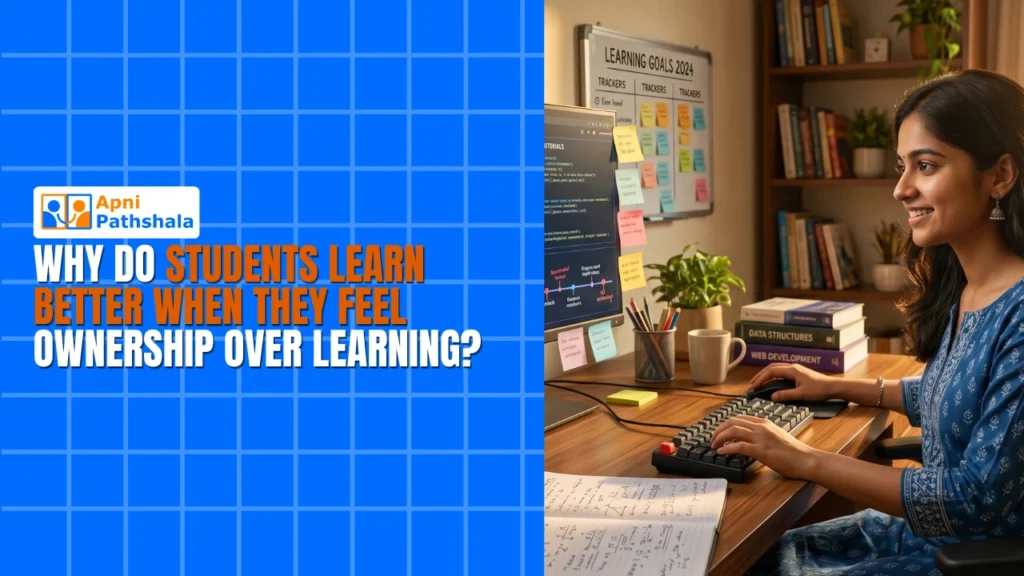
Neha’s son hated math. Every evening was a battle. She would sit with him, explain the same problem three times, and he would stare at the textbook as if it were written in a foreign language. She tried tuition. She tried online videos. Nothing worked.
Then she got him a computer. She did not install any math apps. She did not force him to study. She just gave him access and walked away. Within a week, he was using a spreadsheet to track his cricket scores. He was calculating averages, comparing strike rates, and making charts. He was doing math. Voluntarily.
What changed? The textbook told him to learn math. The spreadsheet let him use math for something he cared about. That shift, from being told to learn to choosing to learn, is what student ownership of learning means. And it changes everything.
Why Forced Learning Hits a Ceiling?
Most Indian schools run on a simple model: the teacher teaches, the student listens, and the exam tests. The student has no say in what they learn, when they learn it, or how they learn it. The schedule is fixed. The method is fixed. The pace is fixed.
This model works for students who are naturally compliant. It works for students who are good at memorising. But for students who are curious, creative, or simply bored by the textbook approach, it fails badly.
The problem is not the content. The problem is the control. When a student has zero control over their learning, they treat it as someone else’s responsibility. They study because they are told to. They complete homework because they will be punished if they do not. The moment the external pressure disappears, so does the motivation.
Self-directed learning flips this entirely. When a student chooses what to learn and how to learn it, they treat it as their own project. They put in more effort. They stay focused longer. They push through difficulty because they want to, not because someone is watching.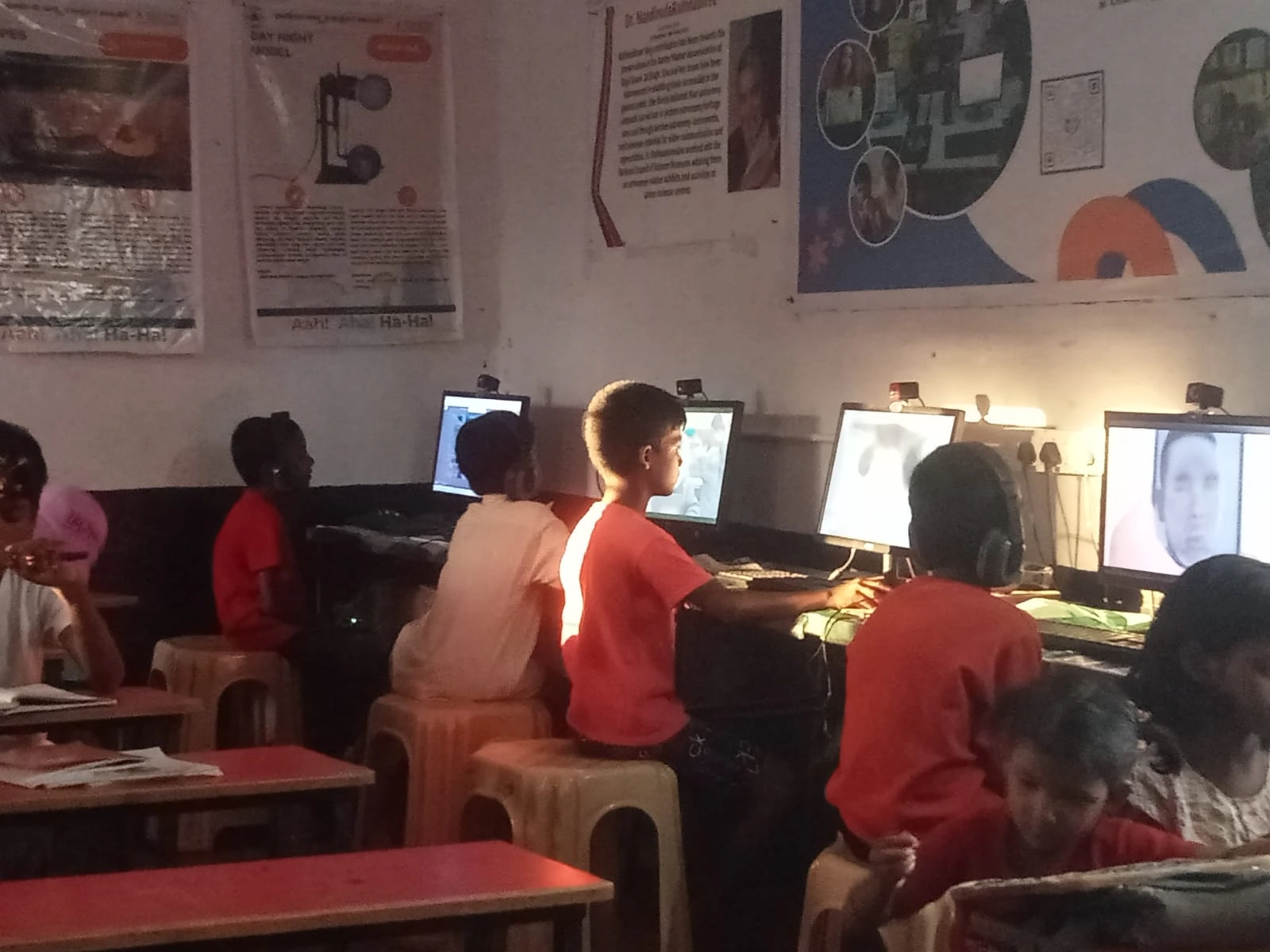
How a Computer Creates Ownership
A computer does not teach ownership directly. It creates conditions where ownership naturally happens.
When a student has their own computer, they decide what to open first. They decide what to explore. They decide how long to spend on something. That small sense of control changes their relationship with learning entirely.
A child who is told to “learn coding” from a textbook will resist. The same child who opens Scratch on their own and tries to make a game character move will spend two hours without being asked. The difference is not the subject. The difference is who is in charge.
Independent learning happens when a student has the tools and the freedom to explore at their own pace. A computer provides both. The student does not need permission to try something new. They do not need to wait for the teacher to cover the next chapter. They open a tool, try something, fail, and try again. That cycle of trying, failing, and retrying is where real learning happens.
A personal computer helps students learn beyond the school curriculum. But more importantly, it helps students learn on their terms.
Why Student Motivation Is Tied to Relevance?
Students are not lazy. They are selective. A student who cannot focus on a history textbook for ten minutes will spend three hours learning how to edit a video. A student who struggles with a grammar worksheet will write a thousand-word story if they get to choose the topic.
Student motivation is not about discipline. It is about relevance. When a student sees a direct connection between what they are learning and something they care about, motivation appears on its own.
A computer makes this connection possible for every subject. A student interested in music can learn about sound waves and frequencies through audio editing software. A student interested in sports can learn statistics through score tracking. A student interested in fashion can learn about color theory through design tools.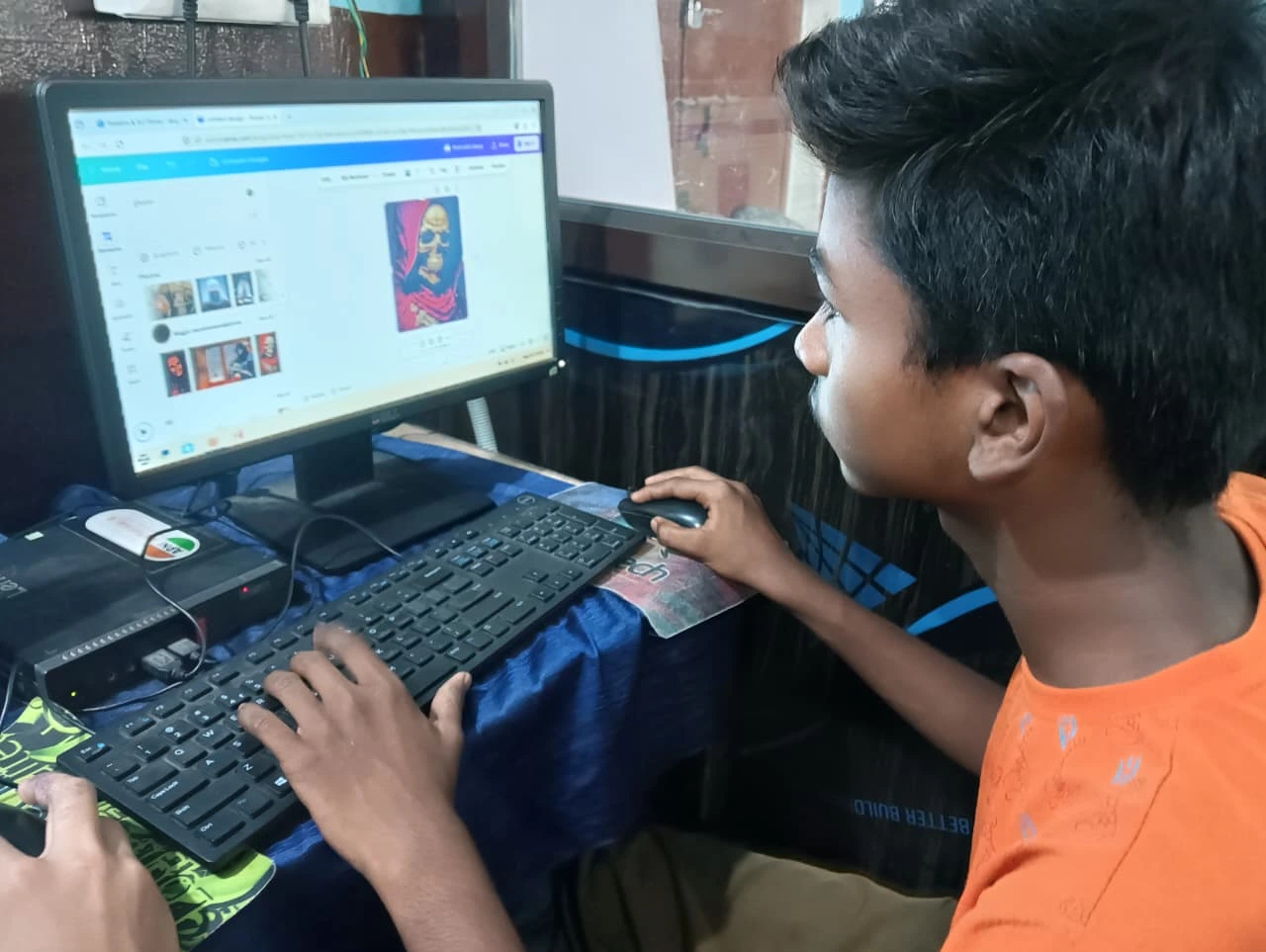
The computer does not replace the textbook. It makes the textbook come alive. And when that happens, the student does not need to be told to study. They study because they want to understand.
The biggest advantage a student can have today is not marks. It is the desire to learn independently. A student who owns their learning will outperform a student who is dragged through it every time.
What Can Parents Do?
You cannot force ownership. You can create the conditions for it. The simplest thing you can do is give your child a computer and step back.
Do not install monitoring software that tracks every click. Do not set a schedule that says “learn coding from 4 to 5 PM.” Do not hover over their shoulder asking what they are doing. Give them the machine. Give them space. Let them figure out what interests them.
You will be surprised. The child who fights doing homework will spend an hour building something in Scratch. The child who complains about reading will spend forty minutes researching something they are curious about. The child who seems unmotivated in school will show incredible focus when they are in control of what they are learning.
Student ownership of learning is not about letting children do whatever they want. It is about giving them the right tools and trusting them to explore. A computer is the most powerful learning tool ever created. When a child owns that tool, they own their education.
Apna PC comes pre-loaded with Scratch, LibreOffice, VS Code, Blender, and Arduino IDE. At ₹21,000, it gives your child the tools to take control of their own learning. Visit apnapc.com to learn more.