

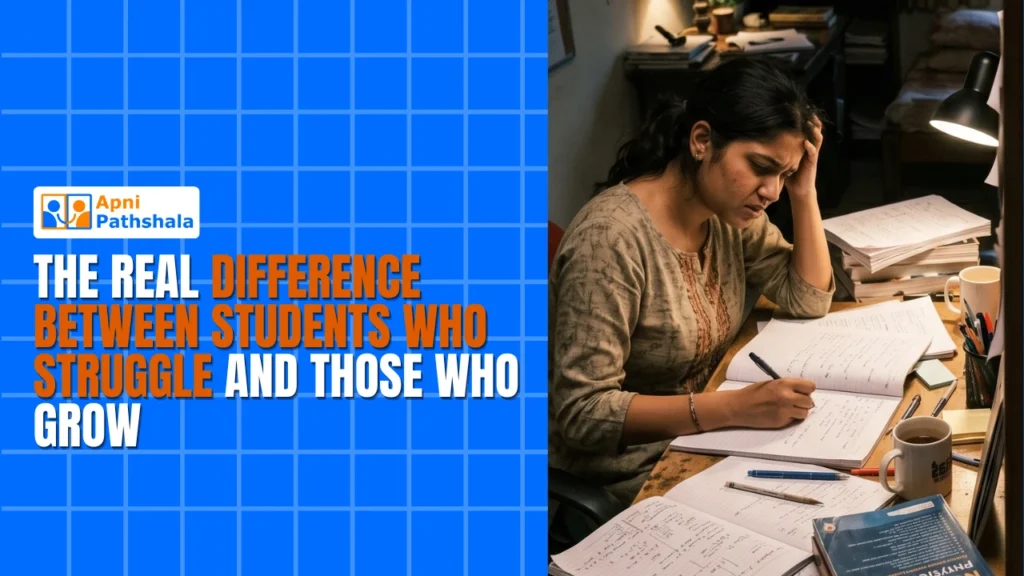
I remember meeting Sruthi at a learning center last year. She was in class 10, struggling with mathematics. Her notebooks were filled with crossed-out answers and frustrated doodles. Her teacher had labelled her a “slow learner” and suggested she focus on passing marks rather than aiming high.
But there was something different about how she approached her struggles. Instead of accepting the label, she started using online resources to understand concepts her teacher couldn’t explain well. She watched video tutorials late into the night and practised problems repeatedly. Within six months, her grades improved dramatically. Today, she’s helping other students who face similar challenges.
Sruthi’s story made me wonder: What’s the real difference between students who struggle and stay stuck and those who grow?
Mindset Matters More Than Marks
Here’s what I’ve noticed after years working with students at Apni Pathshala: it’s rarely about intelligence or natural talent. Students who grow share one common trait. They believe they can improve with effort and the right approach. When Surendra failed his first math test in class 9, he didn’t see it as proof he was “bad at math.” He saw it as feedback, a signal that he needed a different approach. This growth mindset isn’t something you’re born with. It develops through small wins and support. Students who grow treat failures as stepping stones, while struggling learners treat setbacks as stop signs.
Access to Resources Changes Everything
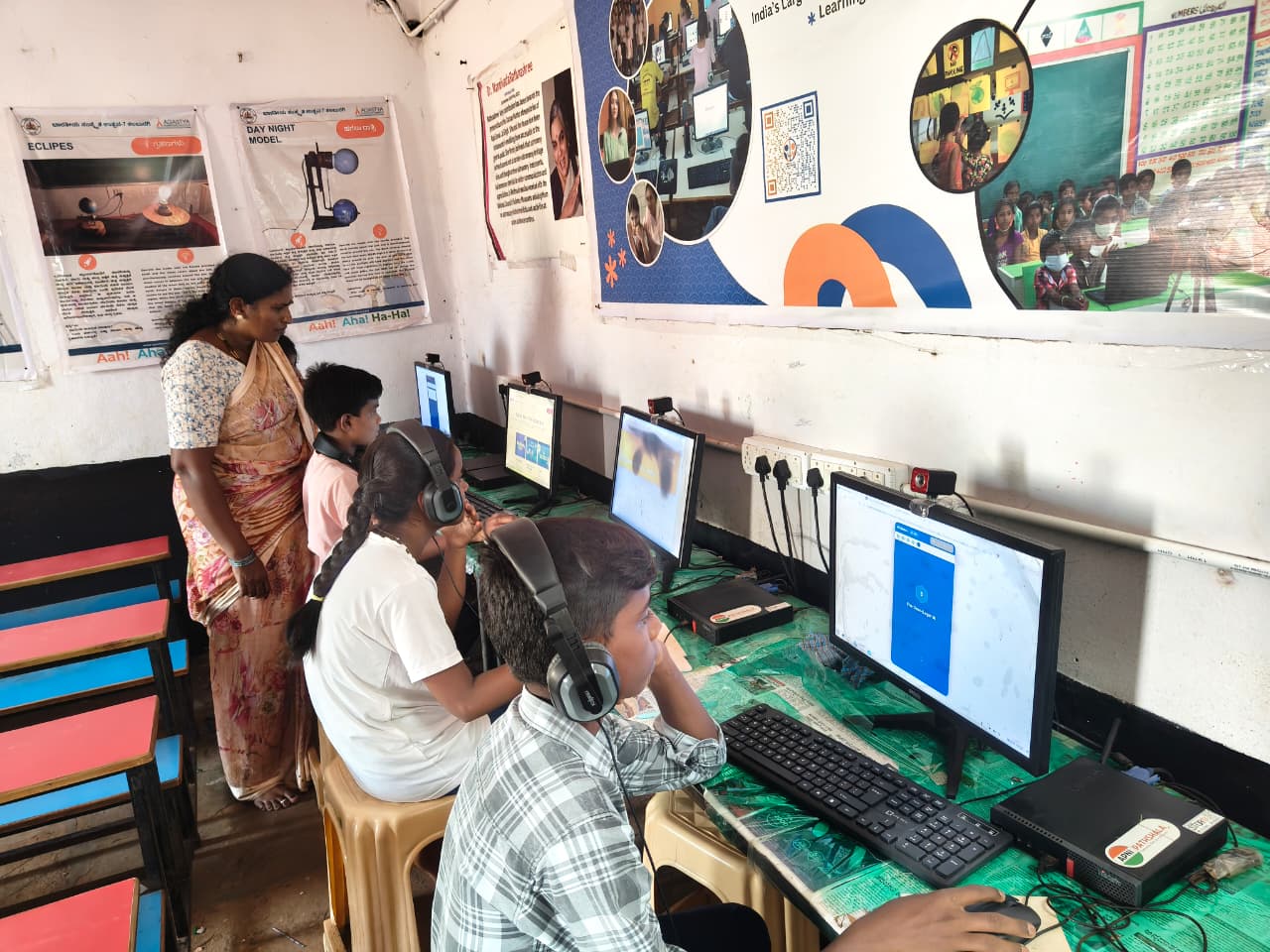
Think about this scenario: two students with identical potential sit in the same classroom. One goes home to a computer with internet access. The other doesn’t. Who’s more likely to succeed today?
Haripriya’s story illustrates the situation perfectly. She was a bright student, but couldn’t access online study materials at home. Her family couldn’t afford a computer. Once she got access to a computer through her learning centre, everything changed. She could pause and replay difficult concepts until she understood them. She could explore topics beyond her textbook. You can read more about how digital access transforms learning at apnipathshala.org/blog/.
They Ask Better Questions
Students who grow don’t just ask “Why is this so hard?” They ask, “What can I try differently?” This subtle shift changes how they approach learning. When Devendra couldn’t understand physics, he didn’t complain about the subject being too difficult. He asked his teacher for extra examples. He searched for YouTube videos that explained the topic in different ways. He tried solving problems using multiple approaches until one clicked. The question you ask determines the answer you receive. Struggling students ask questions that confirm their limitations. Growing students ask questions that reveal new possibilities.
They build support networks.
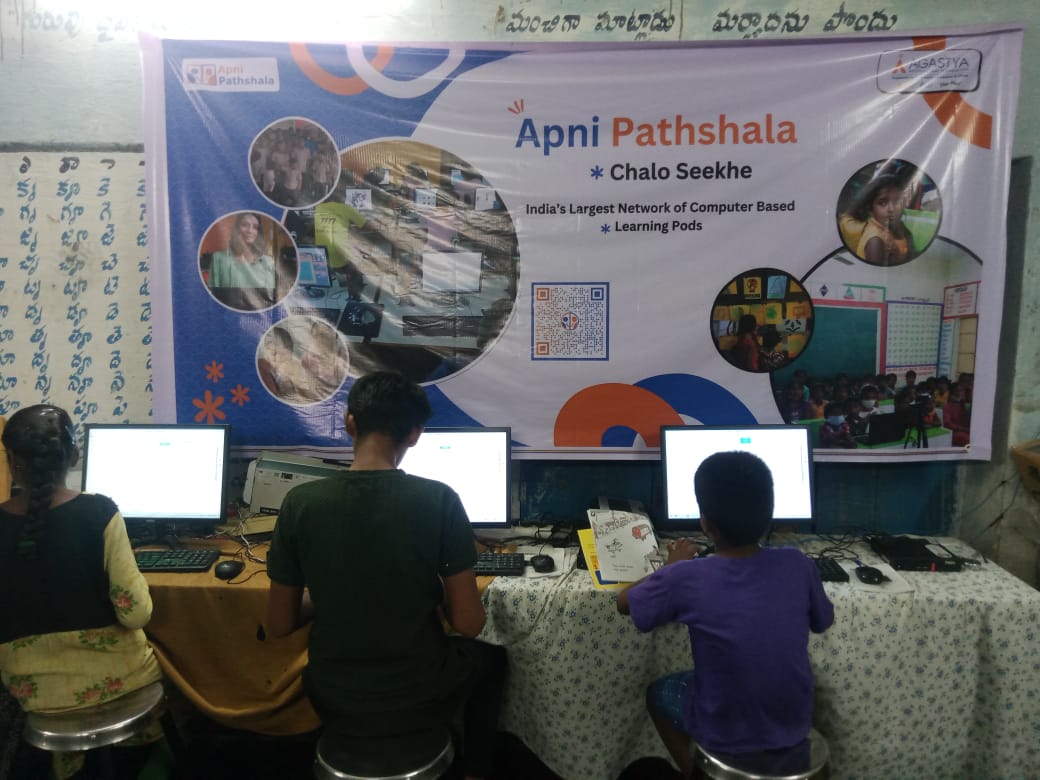
Growing students know something important that struggling learners miss: you can’t do it alone. Sivani struggled with English until she joined an online study group through her learning centre. Suddenly, she wasn’t just learning from her teacher. She was learning from peers across the country who shared notes, resources, and encouragement. When she felt stuck, someone in the group had already solved that problem. This support network transformed her approach to learning. Whether it’s teachers, classmates, or online communities, successful students actively seek help and build relationships that support their growth.
They embrace small daily improvements.
Here’s a secret: students who grow don’t make dramatic overnight changes. They make tiny improvements every day. Surendra didn’t suddenly become a math genius. He spent twenty minutes extra on math each evening, consistently. Haripriya didn’t master English in a week. She reads one article daily and learns five new words every morning. This compound effect leads to remarkable results over time. Students who grow understand that consistency beats intensity. They don’t wait for motivation. They create simple routines they can follow even on challenging days. You can explore structured learning at the National Institute of Open Schooling, which offers flexible study options for students who want to learn at their own pace.
They Connect Learning to Real Life.
Students who grow don’t see subjects as isolated topics. They connect what they learn to real problems they care about. When Sruthi learned about percentages, she calculated discounts on things she wanted to buy. When Devendra studied motion in physics, he thought about cricket ball trajectories. This connection to real life makes learning stick better and feel meaningful. It transforms abstract concepts into practical tools they’ll actually use outside the classroom.
The difference between struggling and growing isn’t about talent or luck. It’s about mindset, access, better questions, support networks, daily habits, and connecting learning to life. If you’re ready to take control of your learning journey, check out Apna PC for ₹21,000 (shipping and GST included). Also, explore how computers transform learning and why access matters more than marks. You can visit apnapc.com to learn more.