

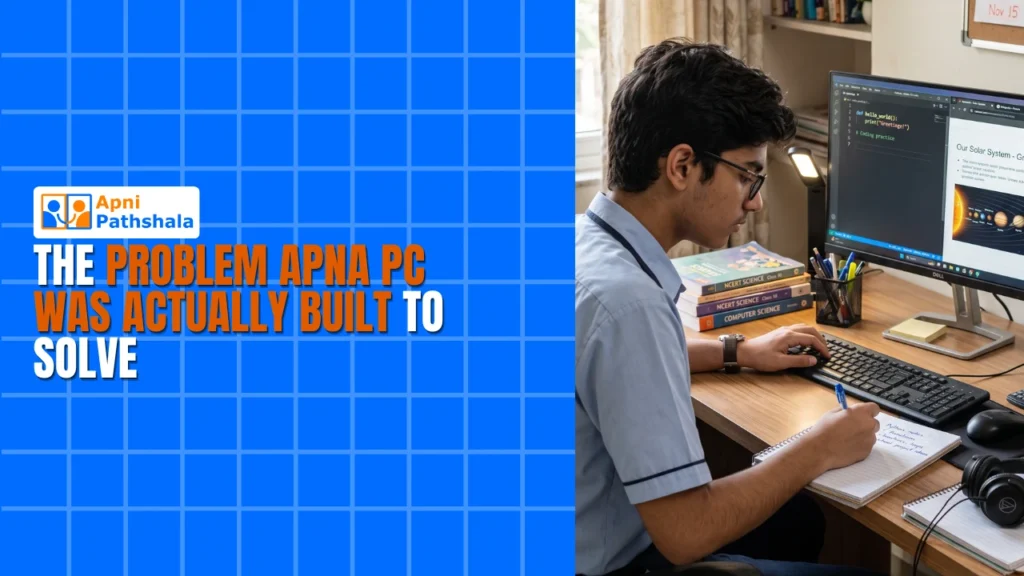
Rajesh’s Dilemma: Why One Laptop Wasn’t Enough
The Gap Between What Students Need and What They Can Afford
When the team at Apni Pathshala started talking to parents and students across India, they kept hearing the same story. A student computer needs to be powerful enough for real learning, not just browsing YouTube. It needs to run educational software, handle video calls, and let kids actually build skills in coding and digital tools. But it also can’t cost 50,000 or 60,000 rupees.
The problem isn’t that affordable computers don’t exist. The problem is that most affordable computers come loaded with bloatware, outdated software, and operating systems that slow down over time. A good learning computer needs to be clean, fast, and designed specifically for education. That’s where most budget options fail.
What Makes a Real Learning Computer for Students
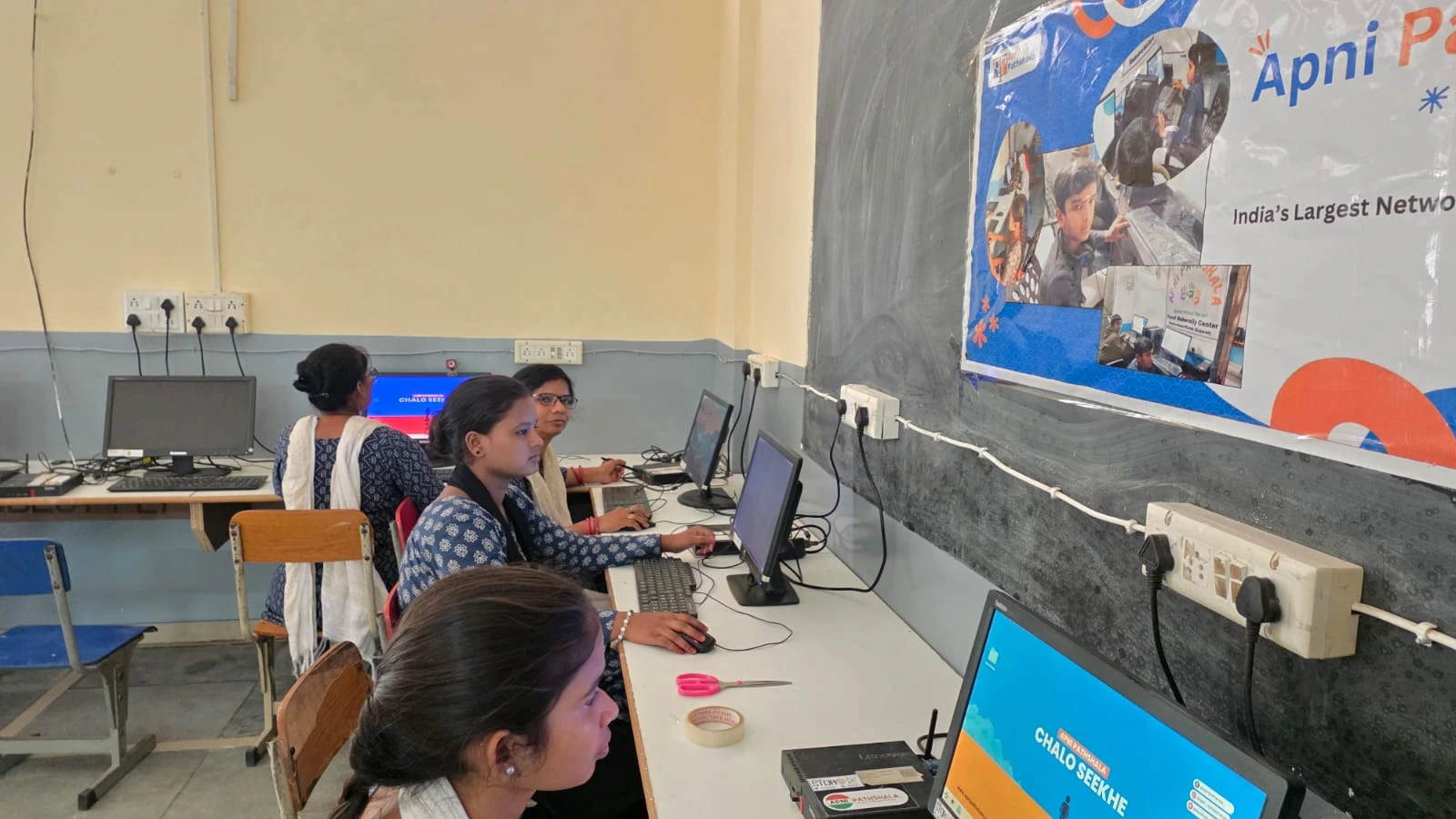
- Speed that doesn’t lag: 8GB RAM and 128GB SSD mean your child can run multiple applications without the machine crawling to a halt during an online class.
- Software built for learning: Pre-loaded with Zorin OS (a clean, student-friendly Linux system), LibreOffice for documents and presentations, and Scratch for coding. Everything a student needs, nothing they don’t.
- Parental peace of mind: Apni Prerna monitoring software lets you track your child’s learning progress without invading their privacy.
- Price that makes sense: At just 30,000 rupees, it’s affordable enough that families like Rajesh’s can actually buy two if needed.
The Real Cost of Not Having the Right Computer
You might think you’re saving money by buying a cheap laptop from the electronics store. But here’s what actually happens. The machine slows down after three months. Your child misses online classes because the video keeps freezing. They can’t submit assignments on time because the software keeps crashing. Within a year, you’re either buying a new machine or paying for repairs.
The hidden cost isn’t just money. It’s your child’s confidence. When their computer fails them during an important exam or project submission, they learn that technology is unreliable. They start avoiding digital tools instead of embracing them. In a world where digital skills are non-negotiable, that’s a real loss.
Why Your City’s Computer Shop Can’t Solve This
If you visit a local computer shop in your city, they’ll show you machines at 25,000 or 40,000 rupees. The cheaper ones come with Windows pre-loaded with antivirus trials, bloatware, and slow hard drives. The expensive ones are often just rebranded versions of the same thing. Neither is designed for a student’s actual needs.
The bigger problem is that local shops aren’t thinking about education at all. They’re selling machines. They’re not thinking about which software a student actually needs, how to keep the machine clean and fast, or how to support learning computer skills specifically.
Learning Computer Skills Without Breaking the Bank
Your child’s future depends on digital skills. That’s not an opinion; that’s the reality of the Digital India initiative and the job market your child will enter. But building those skills doesn’t require a 1,50,000-rupee machine. It requires the right machine at the right price.
A personal computer built for students should support learning to code, create documents, design presentations, and use educational software. That’s exactly what Apna PC does. It’s not a gaming machine. It’s not an office workstation. It’s a learning computer.