

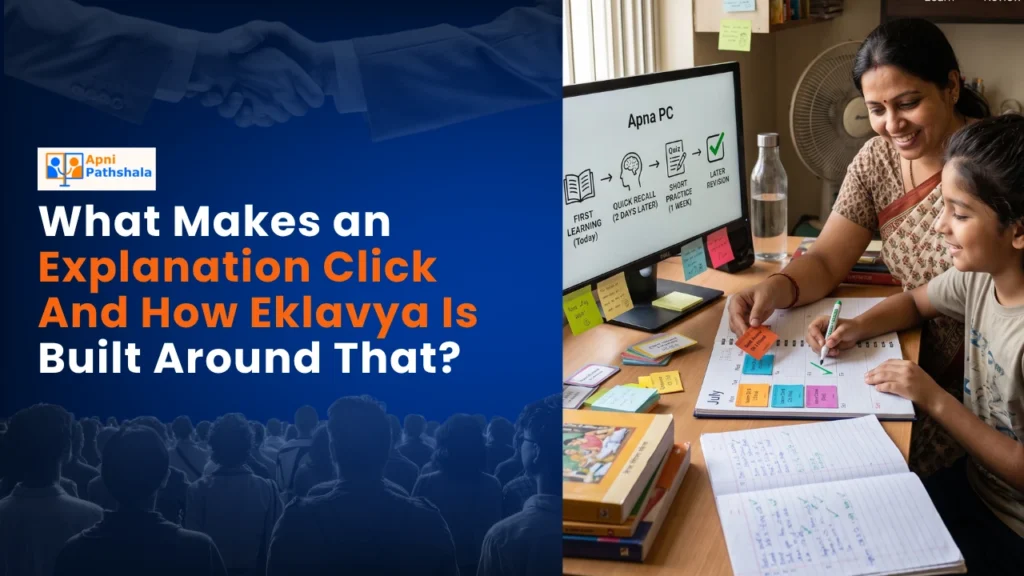
An explanation clicks when it starts from what a student already knows and connects the new idea to it step by step, then makes the student think actively to check understanding. Explanations fail when they skip steps or assume knowledge the student does not have. EklavyaAI on Apna PC is designed around this idea.
Good learning methods are not about cramming more content into less time. They are about building bridges between new ideas and old ones.
Why do some explanations click and others do not?
An explanation clicks when the student builds a mental bridge between the new idea and existing knowledge. Teaching that treats explanation as one-way delivery, where the teacher speaks and the student listens, often misses this step.
This overview of how learning occurs is useful background: understanding depends on active engagement, not passive absorption. When an explanation highlights connections, the concept clicks. When it skips steps, confusion follows.
That is why one student understands a topic quickly while another struggles with it for months. It is often not about intelligence, but whether the explanation matched what the student already knew.
Where do traditional classrooms miss the mark?
Textbooks and lectures often follow a broadcast model, where one explanation has to fit every student. But students differ in prior knowledge and pace.
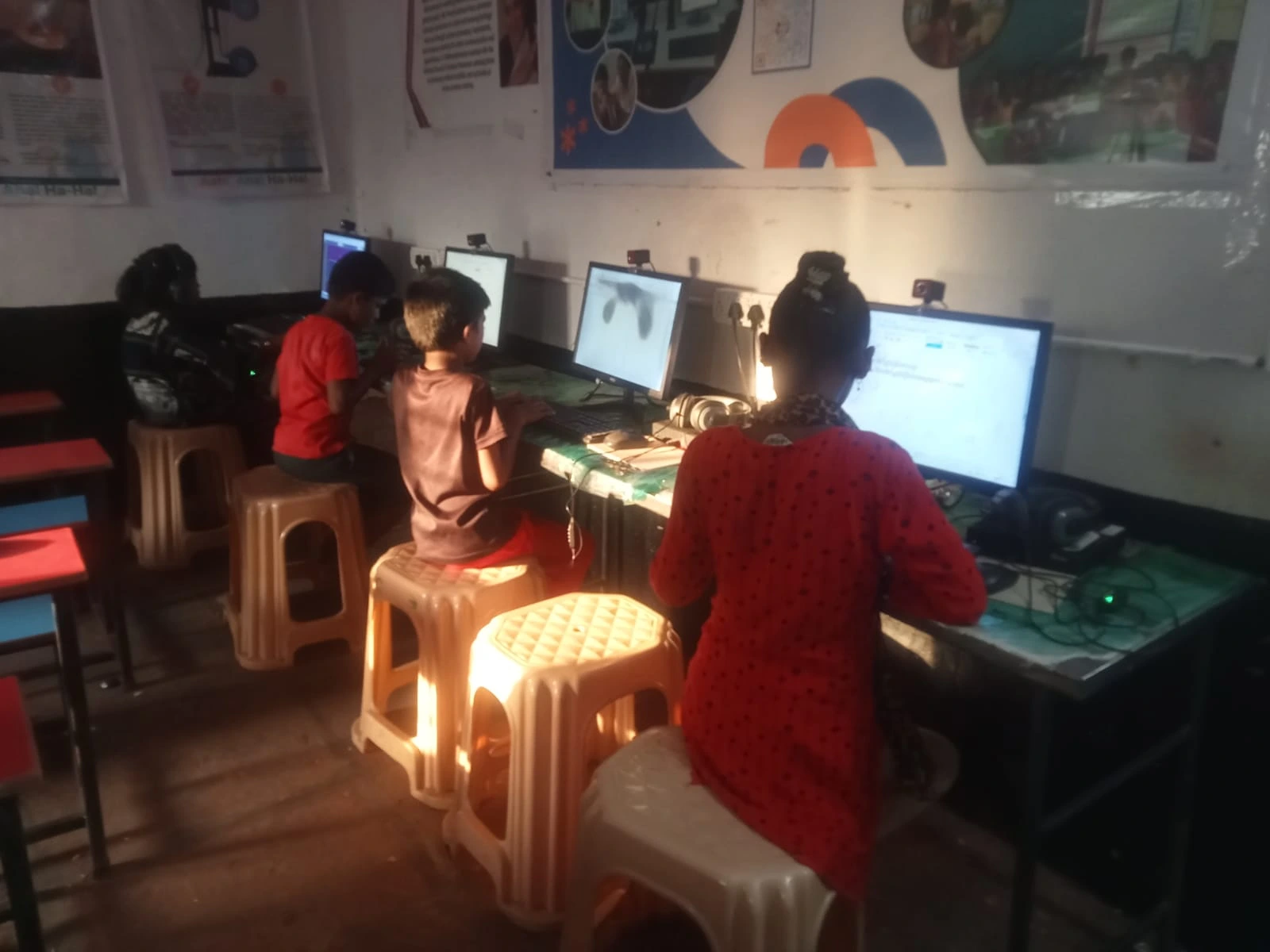
Some students respond better to visual examples and others to step-by-step logic, yet one lecture serves them all. This is part of why active learning outperforms passive screen use: active engagement makes the brain build connections instead of only receiving information.
Cost is also a barrier. Tutoring that adapts to individual needs can cost thousands of rupees per month, which many Indian families cannot afford.
What are the three pillars of an explanation that works?
Effective explanations rest on three pillars, and most teaching ignores at least one of them.
- Start from what the student knows. The explanation builds on existing knowledge.
- Connect step by step. New ideas link to that foundation without jumps.
- Test understanding actively. The student must think, not only recall.
A textbook may explain clearly but never check understanding, and a lecture may engage students but skip the basics. EklavyaAI is designed around all three: it checks what a student knows, breaks concepts into connected steps and asks questions that need active thinking.
Why does concept learning need personalisation?
Students approach ideas differently. Some picture concepts, others think in words or sequences, and some need to work with objects to understand. These are differences in preference, not learning disabilities.
When an explanation suits how a student thinks, understanding usually comes more easily. Classrooms cannot personalise at scale, but AI can try. EklavyaAI is designed to notice how a student responds to different explanations and adjust its approach for that student.
How does EklavyaAI build understanding?
EklavyaAI does not simply give the answer. When a student asks about a concept, it tries to find what the student already understands and where the gap is, then builds an explanation to bridge that gap.
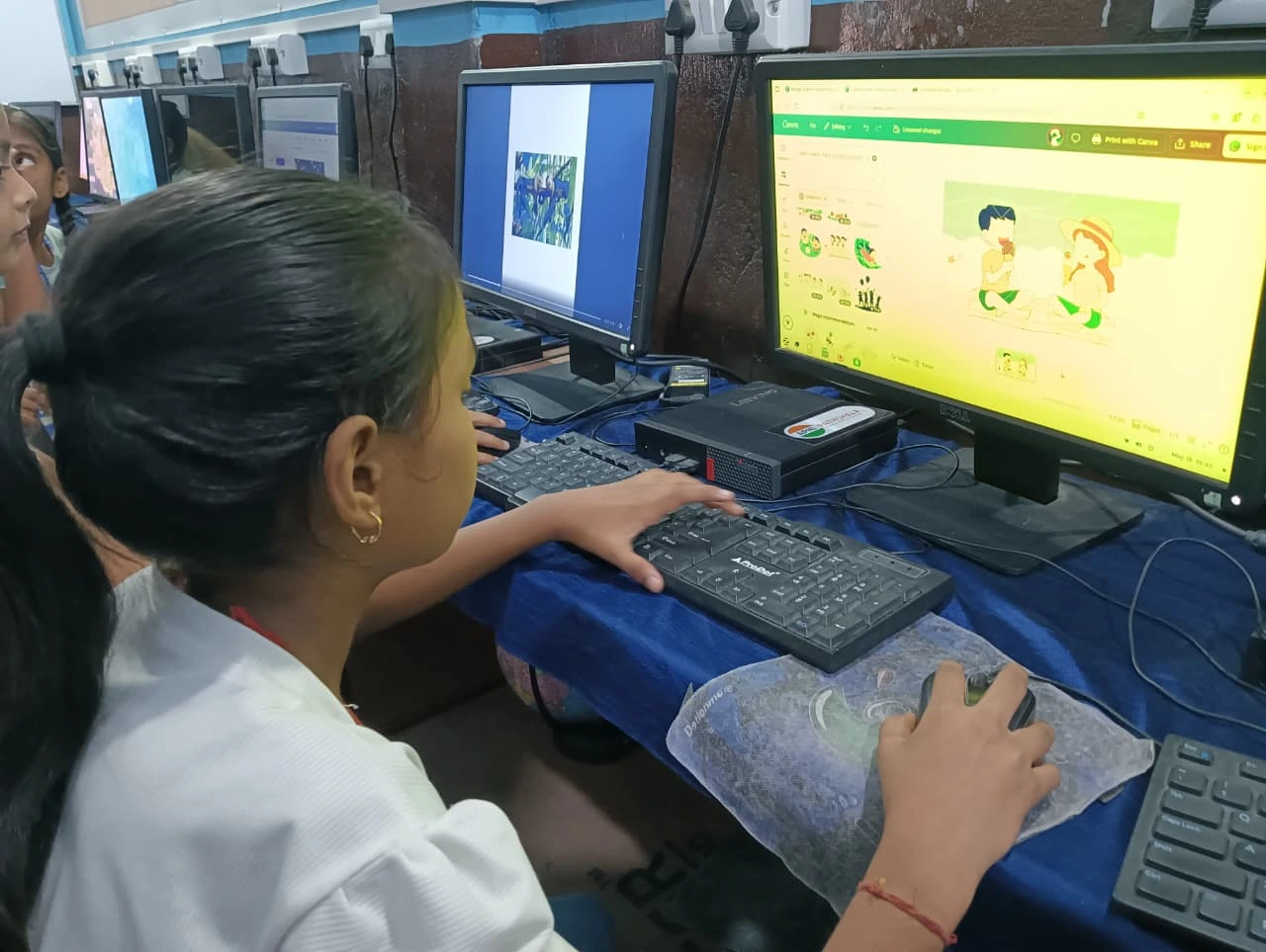
It might use an analogy, break the concept into smaller pieces or ask a leading question. For more on how it works on the computer, read about Eklavya AI learning on Apna PC.
Example: fractions
Teaching often says “a fraction is a part of a whole” and shows a pie chart. For a student who thinks in sequences, explaining a fraction as “division that has not been finished yet” may work better, because it connects to division they already know.
Example: photosynthesis
One approach explains the chemical equation, another shows the process as a sequence of events and a third compares it to a factory. Trying different approaches helps find the one that clicks.
Why does active learning make concepts stick?
Active learning makes a student think to engage with the material, while passive learning only asks them to receive it. Active learning takes more effort, but it is what helps concepts stay in long-term memory. See how study habits change with Apna PC.
EklavyaAI encourages this by asking questions that cannot be answered just by listening, presenting problems that need thinking rather than memory and asking students to explain their reasoning.
Why does affordable access to good explanations matter?
Personalised explanation has usually depended on private tutors or well-resourced schools, which many Indian students cannot access. At Rs.30,000, Apna PC puts a learning system with EklavyaAI in your child’s hands, bringing adaptive explanations within reach of many more families.
Frequently Asked Questions
How can I tell if an explanation has really clicked for my child?
Ask your child to explain the idea back to you in their own words or apply it to a new problem. If they can, the concept has clicked. If they can only repeat the textbook line, the connection to what they already know is probably missing, and a different explanation may help.
Does EklavyaAI just give students the answers?
No. EklavyaAI is designed to find what your child already understands and where the gap is, then build an explanation step by step. It asks questions that need active thinking and asks students to explain their reasoning, so the focus stays on understanding rather than copying answers.
Is AI explanation a replacement for my child’s teacher?
No. Teachers remain central to learning. AI tools like EklavyaAI help at home by offering another explanation when a classroom one did not click, at the student’s own pace. Think of it as extra support between lessons, much like a patient tutor, rather than a replacement for school.
If you want your child to build real understanding instead of surface-level memorisation, visit Apna PC to learn more.