

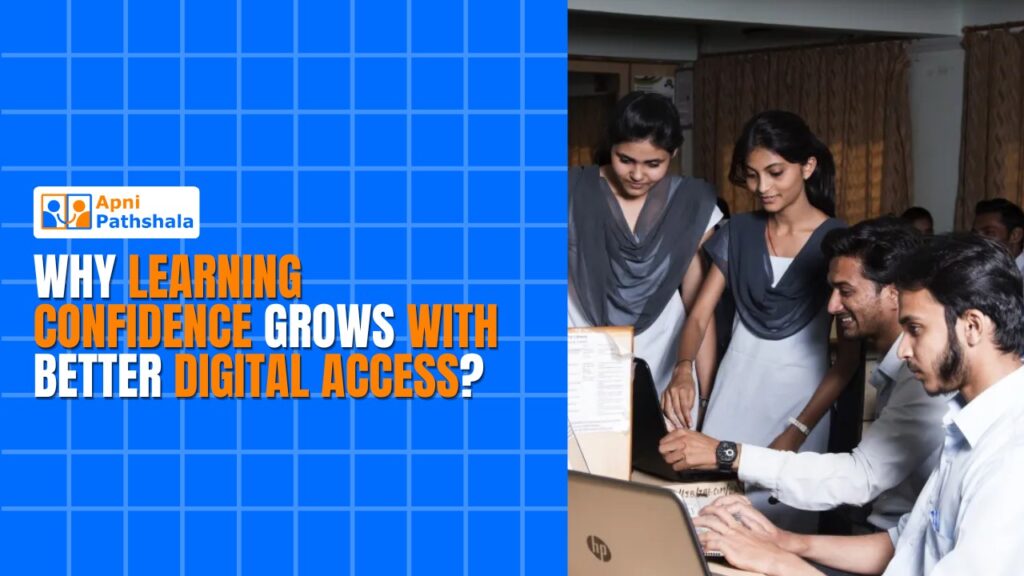
A student who cannot complete homework without borrowing a sibling’s phone does not just face a logistics problem; they carry something heavier. Every time device access is uncertain, a small piece of self-belief quietly erodes. They begin to see themselves as behind, not because they lack ability, but because they lack a tool. Student confidence is shaped by environment more than most people realise, and in Indian households today, that environment often begins with what is or isn’t available on the study table.
What Digital Access Actually Does to How Students See Themselves
When students have reliable, personal access to a device, something shifts that is difficult to measure but impossible to miss. They stop waiting for permission to learn. They search for answers when curiosity strikes. They revisit a concept until it makes sense, without feeling they are burdening someone. That shift from passive waiting to active doing is where digital access for students begins to change more than just grades.
A student who knows their device will be available at 9 PM, at 6 AM, or on a Sunday afternoon no longer organizes their study around what is accessible. They organize it around what they need to understand. That is a fundamental change in how they relate to learning and to themselves as learners.
According to the UNICEF India education report, children who have consistent access to learning tools at home are more likely to develop the independent study habits that define long-term academic success. Access is not just a resource; it is a signal. It tells a student that learning is meant for them.
Think about the student who gets stuck on a chemistry concept at 10 PM on a Tuesday. If they own their device, they look it up, watch a video, take notes, and move on. If they don’t, they either skip it and hope the confusion resolves itself or carry that unresolved doubt into class the next day. That doubt, repeated enough times, becomes a belief: this subject is not for me. That belief does not come from ability; it comes from the absence of a tool at the wrong moment.
How Confidence Builds Through Small, Repeated Wins
Confidence does not arrive in a single moment. It builds through repetition, through small wins that accumulate into a sense of genuine capability. A student who revisits a difficult concept three times until it finally clicks builds confidence. A student who compresses their study into a 20-minute borrowed phone window rarely gets that experience.
Confidence-building in education is deeply connected to whether a student can follow their own pace. When they can rewatch a video explanation as many times as needed, they stop accepting confusion as normal. When they can practise extra problems without a time limit, they start to believe that effort leads somewhere real.
This is the cycle that personal digital access creates: a student tries, they have the right tool to try properly, they see progress, and they try again with greater belief. Remove the tool, and the cycle breaks before it begins. The opposite is equally true when a student cannot follow through on their own curiosity, when the device is taken away mid-session, or connectivity fails at a key moment, the message they internalise is not about wifi. It is about whether learning belongs to them. Over time, that message shapes their willingness to try at all.
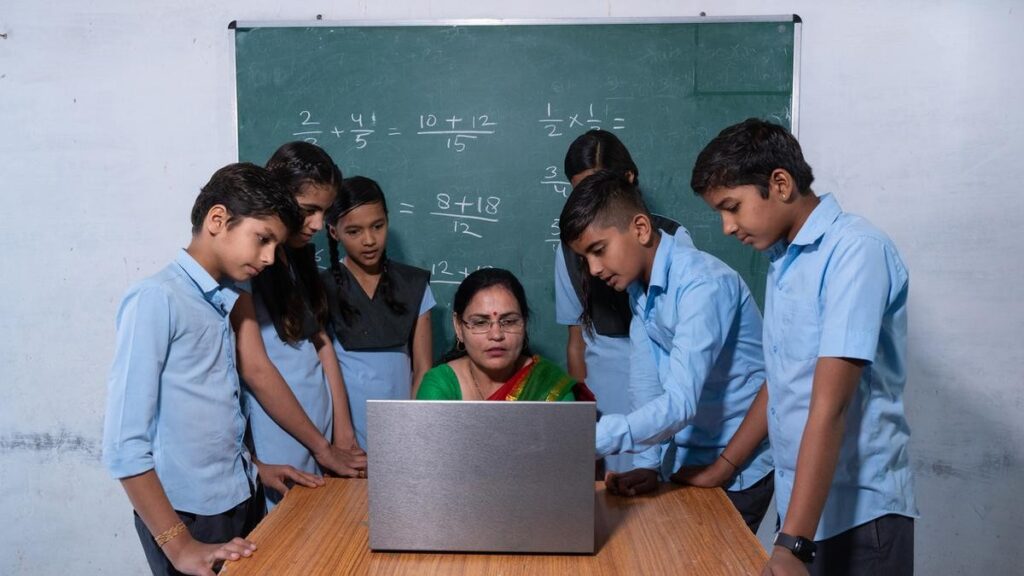
Why Technology and Student Learning Are Inseparable Today
The relationship between technology and student learning has moved beyond convenience. It is now structural. CBSE and state board syllabi assume access to digital content, sample papers, supplementary videos, NCERT materials, and practice tools, all of which exist only online. A student without a personal device navigates the same curriculum with a gap built into every single day.
UNESCO global education research has consistently shown that students with home access to digital tools outperform peers without it, not because one group is smarter, but because one group has the environment to practise, revisit, and explore without friction.
For families in Tier 2 and Tier 3 cities, the challenge is not awareness. Parents know their children need access. The challenge is finding something affordable, reliable, and built for how Indian students actually study. Understanding Why Every Indian Student Needs Their Own Computer explains why a personal device changes a student’s relationship with learning, not just their timetable.
The student who does not have a personal computer is not lazy or disinterested. They are learning under a constraint that more privileged peers never face. Leveling that constraint is not about luxury; it is about giving every student the same starting conditions.
The Biggest Advantage a Student Can Have Today is not a higher mark or a better school. It is consistent, reliable access to the tools that enable independent learning. Confidence follows naturally from that because it grows from competence, which grows from practice.
Apna PC is designed for exactly this student, capable and motivated but working against a constraint they never chose. At ₹21,000 (shipping and GST excluded), it removes that constraint. Visit apnapc.com to learn more.