

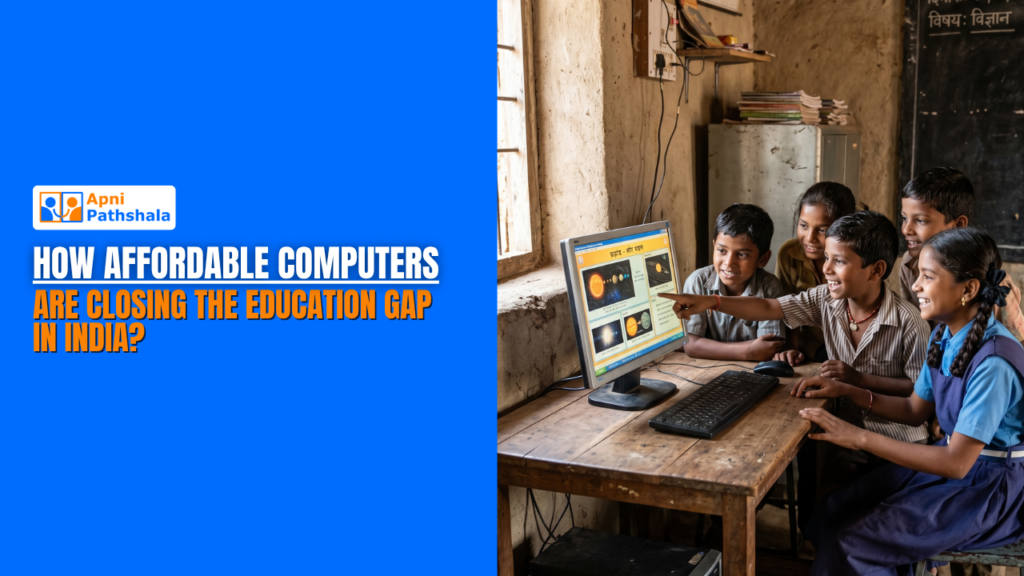
In Varanasi, a young girl named Divya walks past a private school every morning on her way to the government school down the road. She knows the children in that school have computer labs, digital lessons, and devices they take home for homework. Divya’s school has a blackboard and thirty-year-old textbooks. She is just as intelligent, just as motivated, but her family earns Rs. 12,000 a month and cannot afford the fees, let alone a laptop. This is the education gap that millions of Indian children live with every day. But something is changing. The affordable computer education gap India has lived with for decades is finally beginning to close, and technology is the reason why.
The Education Gap in India Is Largely a Technology Gap
When we talk about the education gap between rich and poor students in India, we often focus on school fees, teacher quality, or infrastructure. But increasingly, the gap is a technology gap. The student with a computer at home has access to unlimited practice, video explanations, interactive quizzes, research tools, and exam preparation resources, all free. The student without one has a textbook and whatever their teacher could cover in a 45-minute period.
This is where low-cost PC education in India initiatives are making a real difference. When a family can afford a dedicated educational computer, not a premium device, not a flagship laptop, but a purpose-built, affordable machine designed for learning, the playing field begins to level. The Divyas of India suddenly have access to the same free content, practice platforms, and digital preparation tools as students from families earning ten times as much.
According to UNICEF India’s research on education equity, access to digital learning tools at home is now one of the strongest predictors of academic performance, stronger, in many cases, than school quality or tuition spending. A child with the right device at home and the right free platforms can learn more effectively than a child in an expensive coaching centre without one.
How Affordable Technology Is Bridging the Education Gap
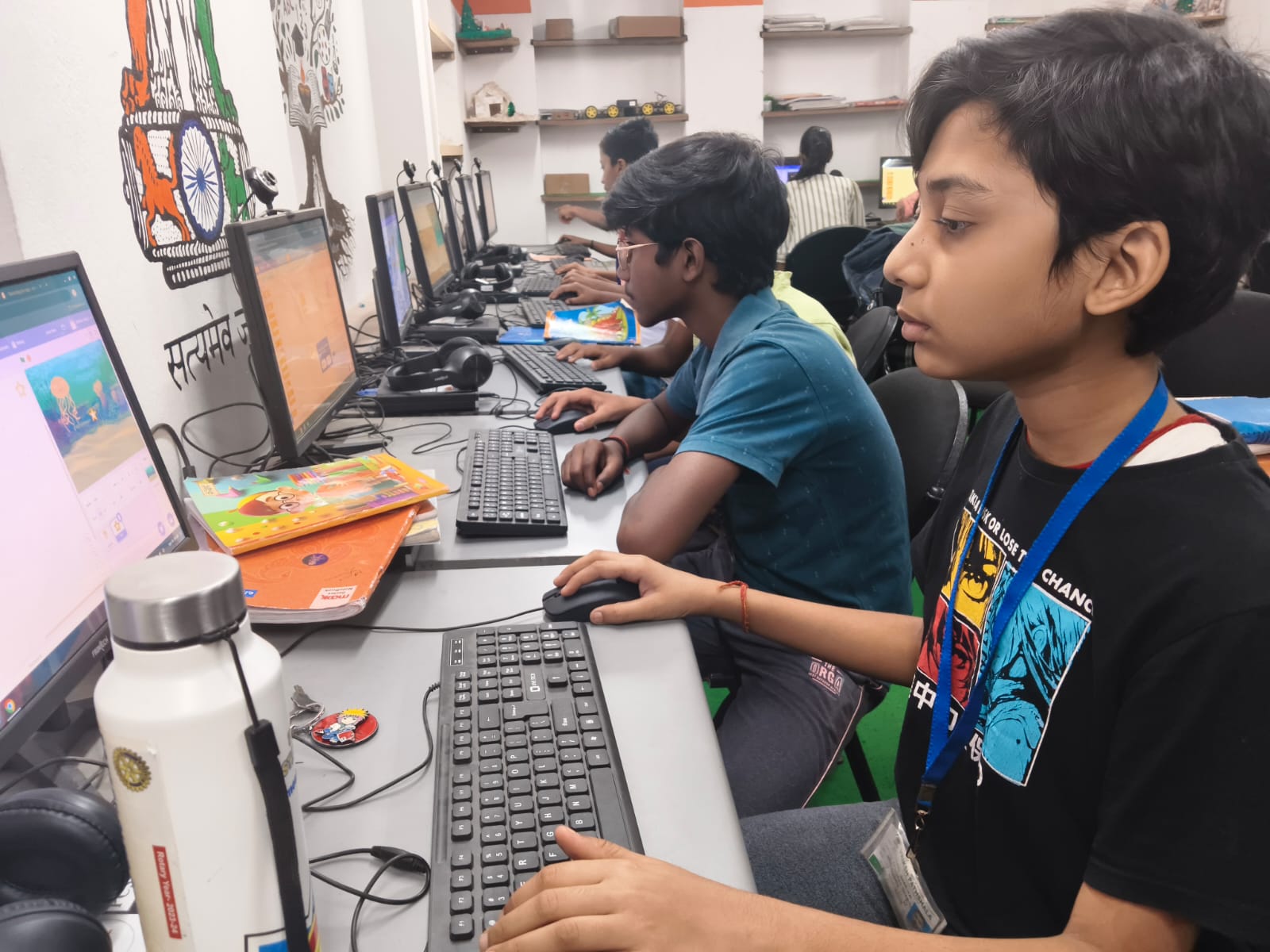
The shift is already happening across India, in small towns, NGO-run learning centres, and homes where parents are making calculated, deliberate decisions to invest in education technology even on tight budgets. Here is how bridging the education gap, technology in India is seeing work at the ground level:
- Free platforms removing the cost of content: DIKSHA, Khan Academy, e-Pathshala, and NPTEL collectively provide thousands of hours of curriculum-aligned educational content for Class 1 to Class 12, completely free. The only requirement is a device to access them on. When a family invests in one affordable computer, they unlock an educational content library worth lakhs in private tuition value.
- Affordable devices reaching families previously excluded: At Rs. 21,000, Apna PC brings a fully functional, education-ready computer into the reach of families who previously had no realistic path to owning one. Spread over five years of a child’s schooling, that is less than Rs. 350 per month, less than the cost of a single private tuition session.
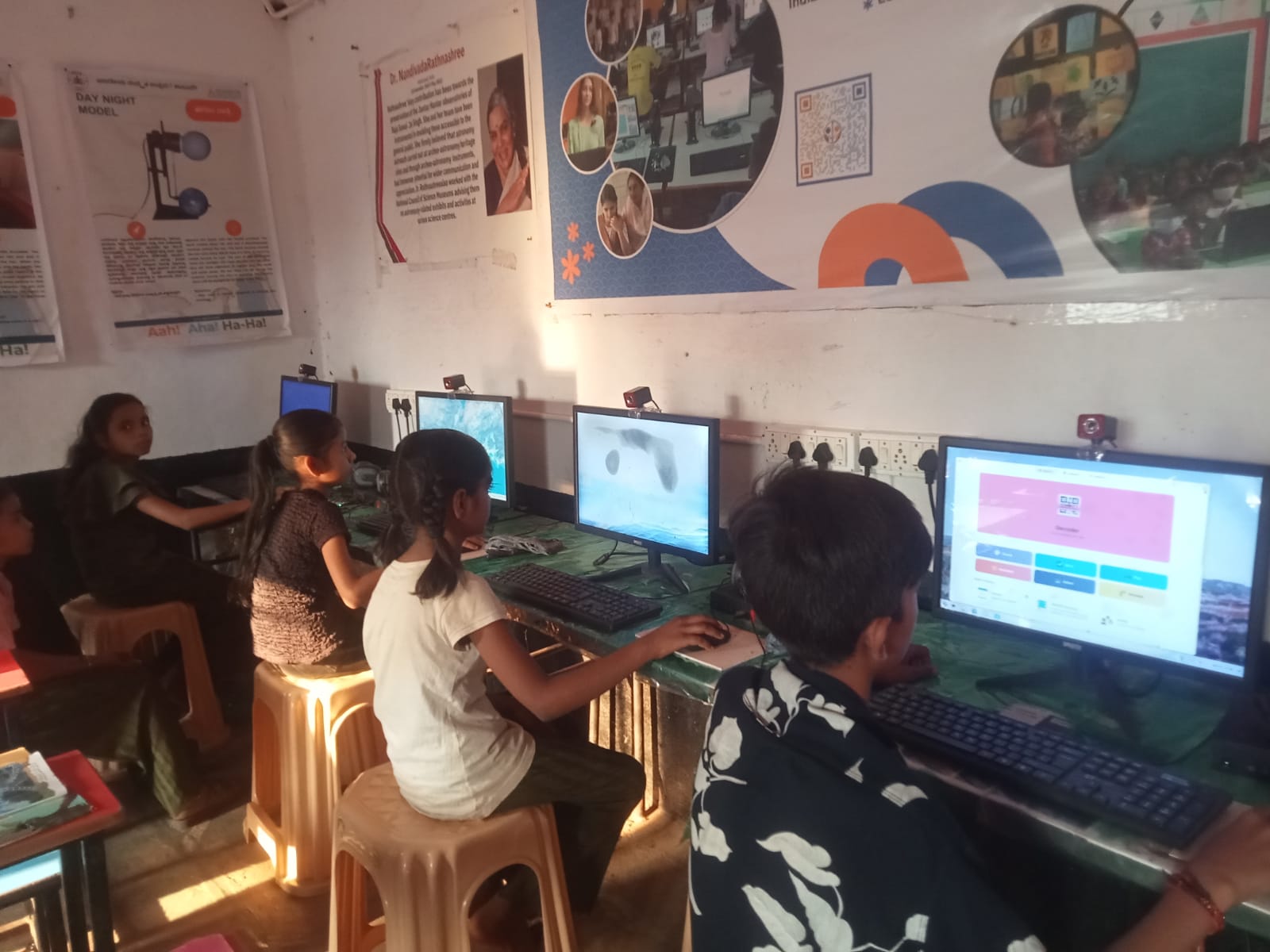
- Community learning centres multiplying access: Across India, NGOs, teachers, and community leaders are setting up small digital learning hubs with 5 to 10 affordable computers, giving dozens of children shared access to technology that none of their families could afford individually. One affordable device investment serves an entire community.
- Digital exam readiness equalising competition: Every major scholarship, competitive exam, and government assessment is now computer-based. A student from a low-income family who has used a computer regularly for two years competes on equal technical footing with a student from a wealthy family. The exam does not know how expensive your device was, only whether you know how to use one.
- Parents investing smarter, not more: Families who previously spent Rs. 5,000-8,000 per month on multiple tuitions are increasingly recognising that a single good computer, with free platforms and structured daily use, delivers comparable or better results at a fraction of the annual cost. The shift from tuition spending to technology investment is one of the most significant changes in how Indian middle-class families approach education.
Read how Apna PC is built specifically to bring this opportunity to every Indian family on our Why Every Indian Student Needs Their Own Computer page.
Why the Right Affordable Computer Matters, Not Just Any Cheap Device?
Not every low-cost device closes the education gap. An Rs. 8,000 secondhand laptop with a cracked screen, no educational software, and unreliable performance does not give a child the same advantage as a purpose-built educational computer. The device needs to be affordable and education-ready, not just cheap.
This distinction is exactly what makes cheap computer learning in India families pursue work when done right. Apna PC at Rs. 21,000 (shipping and GST excluded) is not a compromise device. It is a complete educational computer, preloaded with learning tools, built-in safe browsing, offline-capable, and designed for the conditions of Indian homes: shared family use, variable internet, and limited technical support.
When a child from a modest family gets an Apna PC, they are not getting a charity device. They are getting a machine that gives them the same structured, safe, focused digital learning experience as any student in a well-resourced private school. That is what closing the education gap actually looks like.
India’s Digital India programme has long recognised that affordable, purpose-built technology is the most scalable path to educational equity, and Apna PC is one of the most concrete expressions of that vision at the family and community level.
Read more about the real cost of digital exclusion for Indian students on our How a Personal Computer Helps Students Learn Beyond the Curriculum page.
The education gap in India is real, but it is not permanent. Every family that invests in an affordable, purpose-built educational computer takes one concrete step toward closing it. And every child who gets access to the right tools discovers that the gap was never about ability. It was always about access. Visit apnapc.com to learn more.