


The Sharma Family’s Wake-Up Call
Priya Sharma sat at her kitchen table in Indore, watching her 14-year-old son Arjun stare at his textbook for the third hour straight. His eyes were moving across the pages, but she knew nothing was going in. He’d highlighted half the chapter in yellow, scrolled through his phone twice, and complained about being tired. When she asked him what he’d learned, he couldn’t answer. This is what Priya thought “focused study” looked like. It wasn’t.
You might recognise this scene from your own home. Your child sits for hours, but the grades don’t improve. The focused study time you’re paying for through tuition isn’t translating into actual learning. The problem isn’t your child’s intelligence. It’s that nobody’s ever shown them what a truly focused hour actually looks like.
What Focused Study Really Means
Focused study isn’t about sitting still for three hours. It’s about your brain doing deep work on one specific task without distraction. During a focused study session, you’re not multitasking. You’re not checking notifications. You’re not half-reading while half-thinking about something else.
According to research on Education in India, students in tier 2 and tier 3 cities often struggle not because they lack resources, but because they lack the right environment and tools for deep work. Your child’s focused study starts with understanding this difference.
One focused hour beats five distracted hours every single time. In that one hour, your child’s brain creates stronger neural pathways. Concepts stick. Problems get solved. Real learning happens.
The Three Pillars of a Focused Hour
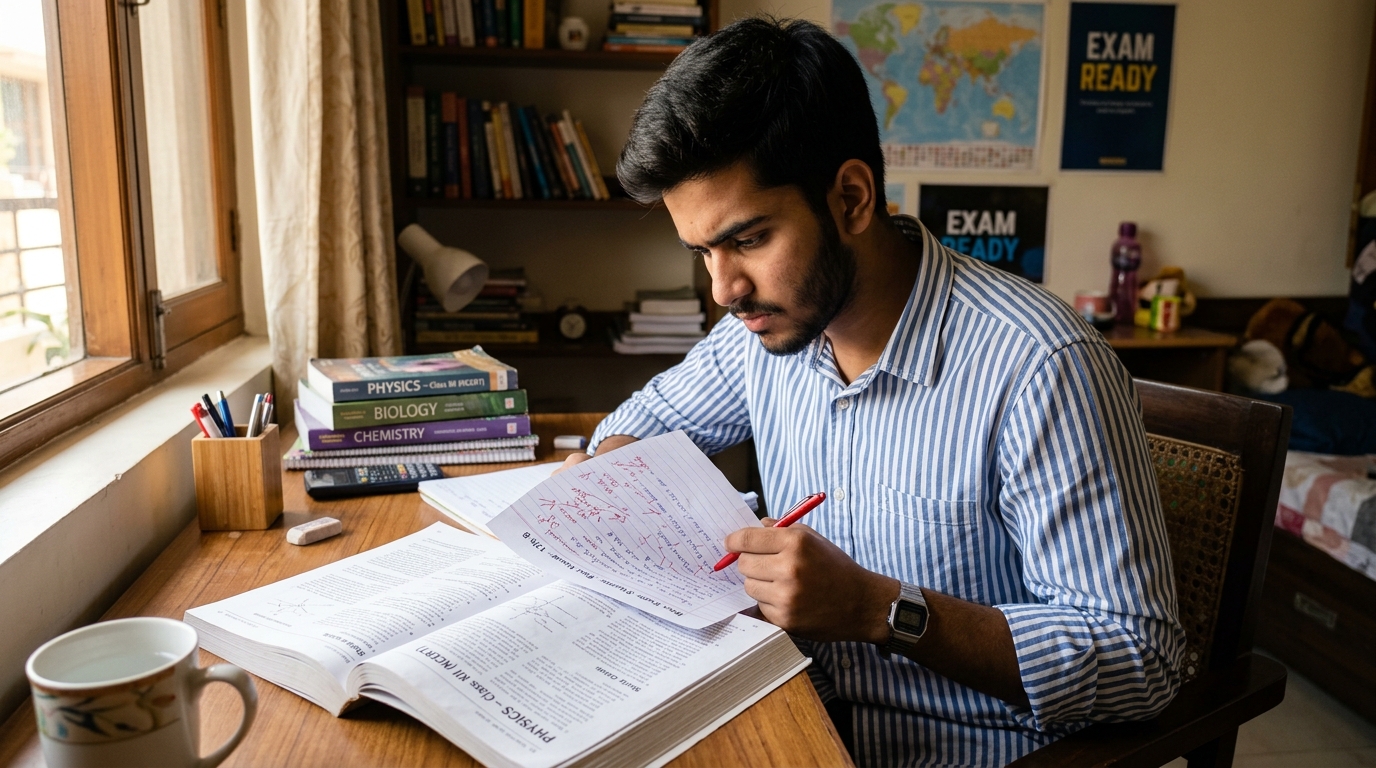
1. A Distraction-Free Space
Your child’s phone shouldn’t be in the room. Not on silent. Not face-down. Not in their backpack. It should be in another room. The study desk should face a blank wall, not a window or TV. The chair should be comfortable but not so comfortable they fall asleep. This is the foundation of focused study.
2. A Clear Goal
Before opening any book, your child should write down exactly what they’ll accomplish in 60 minutes. Not “study Math.” That’s vague. Instead: “Complete 15 algebra problems from Exercise 3.2” or “Understand photosynthesis and answer the five questions at the end of the chapter.” When you have a specific target, your brain stays locked in.
3. The Right Tools
Your child needs a computer or device that supports learning, not distraction. A laptop loaded with games, YouTube, and social media apps is a trap. You need a device built for study. The Apna PC comes pre-loaded with Zorin OS and Apni Prerna, a student monitoring system that keeps focus intact. With 8GB RAM and 128GB SSD, it runs smoothly for research, note-taking, and educational software without the baggage of entertainment apps.
What Happens During That One Hour
Minute 1-5: Your child reads the goal, reviews the previous day’s notes, and warms up their brain. This transition time is crucial.
Minute 6-45: Deep work. This is when the real learning happens. Your child solves problems, reads with a pen in hand, and writes summaries. They’re not just consuming information. They’re actively engaging with it.
Minute 46-55: Review and reinforce. Your child goes back through what they’ve learned, writes down key points, and identifies what they still don’t understand.
Minute 56-60: Planning for the next session. Your child notes what comes next and any questions to ask the teacher.
This structure works because it aligns with how your brain actually learns. You’re not trying to absorb everything at once. You’re building understanding in layers.
Why Your Child Struggles With Focused Study

It’s not laziness. It’s not lack of intelligence. Most students haven’t been taught how to focus. They’re used to scrolling, switching tabs, and jumping between tasks. Their attention span and learning environment have never been properly set up for deep work.
When you create the right conditions, everything changes. Your child doesn’t need longer study hours. They need smarter study hours. Learn more about creating the right attention span and learning environment for your child.
The Tools That Support Focused Study
Environment matters. The device matters. The software matters. When you combine these elements, your child’s brain can actually do focused work.
The Apna PC is designed specifically for Indian students. It removes distractions while providing everything your child needs for productive study session strategies. With Apni Prerna built in, you can monitor study sessions and ensure your child stays on track—the pre-loaded LibreOffice and Scratch support both academics and skill-building.
According to the Indian Ministry of Education, digital tools are becoming essential for learning. But the right tool enhances focus, not one that competes for your child’s attention.
Making It Happen at Your Home
Start this week. Choose one subject. Set a specific goal for 60 minutes. Remove all distractions. Have your child follow the three-pillar structure. Track what they accomplish.
You’ll notice the difference immediately. Your child will complete more work in one focused hour than they used to complete in three distracted hours. The grades will improve. The confidence will grow.
This isn’t about studying harder. It’s about studying smarter. Focused study is a skill you can teach your child, and the right environment makes it possible. Visit apnapc.com to learn more.