

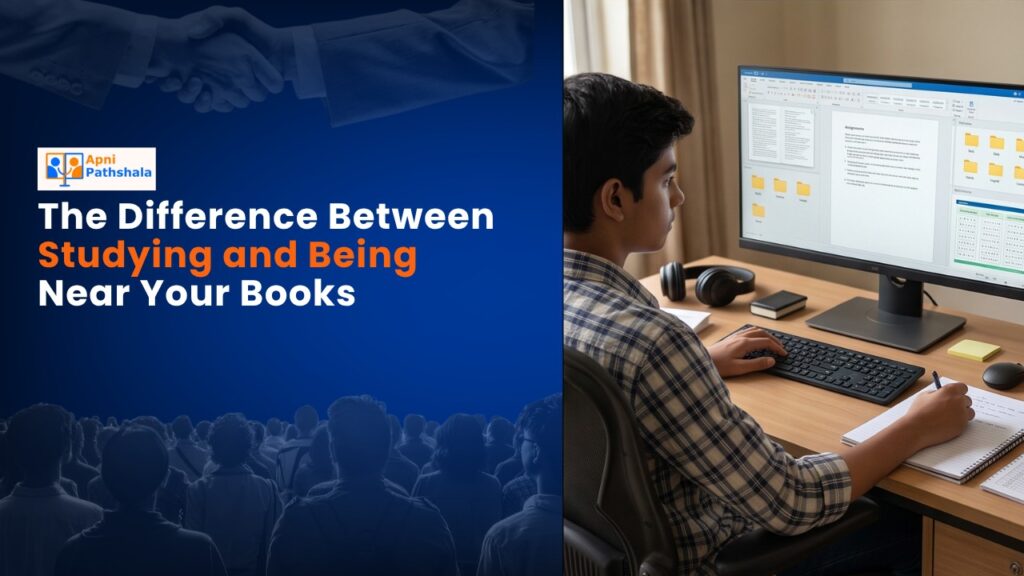
Why Effective Studying Beats Just Sitting Near Books
Rajesh sat at his desk in Indore, surrounded by seven textbooks, three notebooks, and a stack of printed notes. His mother, Priya, had bought him everything, expensive books from the market, coaching materials, even a fancy desk lamp. Yet his marks in the tenth standard had dropped from 78 to 62 in just one term. When Priya asked him what was wrong, Rajesh said, “Mom, I study for three hours every day.” But here’s the truth: he wasn’t doing effective studying. He was just sitting near his books.
This is the difference between effective studying and simply being present with your study materials. Many students and parents in tier 2 and tier 3 cities across India face this exact problem. Your child spends hours at the desk doing what looks like studying, but effective studying doesn’t happen. The books are there. The time is there. Yet the results aren’t there. Understanding this gap is the first step toward real improvement.
What Real Effective Studying Looks Like
Studying effectively means your brain is actively working, not passively sitting. When you study properly, you’re solving problems, asking questions, testing yourself, and connecting ideas. You’re not just reading the same page three times and hoping it sticks.
Real studying has these signs: you’re writing things down, you’re explaining concepts out loud, you’re doing practice questions, you’re checking your answers. Your study habits matter more than your study hours. A student who studies for one focused hour will learn more than a student who sits at a desk for four scattered hours.
In Rajesh’s case, his mother realized he was reading chapters passively, highlighting random lines, and then scrolling through his phone between chapters. He wasn’t testing himself. He wasn’t solving sample papers. He wasn’t even reviewing what he’d “studied” the previous day.
The Hidden Trap: Why Study Habits Beat Study Hours
Parents often mistake busyness for productivity. If your child is at the desk for three hours, you think learning is happening. But student productivity depends on focus, not time. Your child can waste three hours or use 45 minutes wisely.
Common traps include: keeping too many distractions nearby (phone, TV, siblings), studying in a noisy or uncomfortable space, not having a clear goal for each study session, and mixing subjects randomly. When you don’t have a proper study space or the right tools, your brain gets confused and tired faster.
Check your home’s study space warning signs right now. Is the desk cluttered? Is there noise? Is the lighting poor? These factors directly affect whether your child can actually study or just pretend to study.
Student Productivity Needs the Right Environment
You can’t expect good learning in a bad space. Your child needs a dedicated study area with proper light, minimal noise, and access to the right digital tools. This is where many families struggle in smaller cities.
The solution isn’t buying more books or hiring another tutor. The solution is creating an environment where focused learning can actually happen. This includes having a reliable computer for online learning resources, proper study materials, and tools that help you track progress.
Platforms like DIKSHA digital learning platform offer free educational content, but your child needs a proper device to access it. Similarly, the Digital India initiative has made learning resources available, but many families in tier 2-3 cities still lack the right computer setup.
Learning Skills That Separate Top Students from Average Ones
Top students don’t study longer. They study smarter. Here are the learning skills that actually work: active recall (testing yourself instead of re-reading), spaced repetition (reviewing material over days and weeks, not cramming), practice problems (solving questions similar to exams), and teaching others (explaining concepts to your parents or friends).
Your child should create a study schedule that includes these techniques. One hour of active recall beats three hours of passive reading every single time. This is the real difference between effective studying and just being near your books.
When Rajesh changed his approach, his marks improved to 81 within two months. He started solving practice papers, testing himself weekly, and using a proper computer setup with focused learning without distractions. His mother realized that what he needed wasn’t more study time, but better study habits and the right tools.
Why Your Child Needs a Proper Study Computer
Many students in tier 2-3 cities don’t have access to a reliable computer designed for learning. They use their parents’ old laptop or share a family device. This creates interruptions and distractions. Your child needs a dedicated computer that supports focused learning.
Apna PC is built specifically for students like yours. It comes pre-loaded with educational software including Apni Prerna (which helps monitor study progress), LibreOffice for projects, and Scratch for coding. The 8GB RAM and 128GB SSD mean your child can run multiple educational apps smoothly without lag or frustration.
At Rs.30,000 (shipping and GST excluded), Apna PC is an investment in your child’s actual learning, not just in books that sit on shelves. It removes distractions and provides a proper study environment right at home.
Start Today: From Books to Real Learning
Your child’s marks won’t improve just because there are more books around. They improve when your child actually studies effectively. This means creating the right space, using the right tools, and practicing the right study habits.
Begin by checking if your current setup supports focused learning. Does your child have a distraction-free space? Does your child have access to quality digital learning resources? Is your computer reliable and designed for learning? If you answered no to any of these, it’s time to make a change.
Apna PC removes the guesswork from study setup. Your child gets a computer designed for learning, with pre-loaded educational tools, proper specifications, and an environment that supports real studying, not just sitting near books. Visit apnapc.com to learn more.