

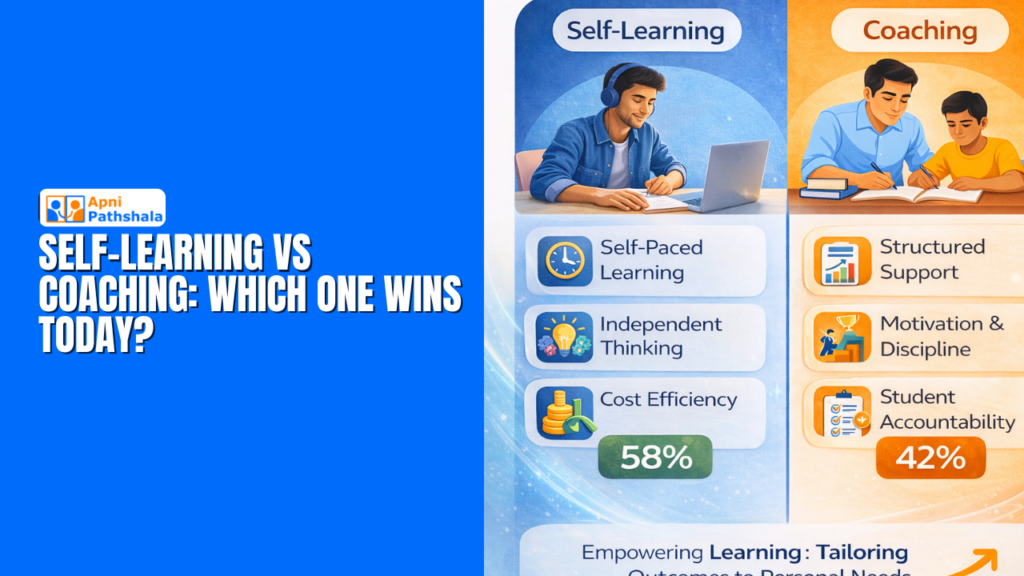
Every morning, two students wake up with the same goal: score well, get a good job, build a future. One rushes to a coaching center, notebook tucked under the arm, auto fare ready. The other sits at home with a laptop open, a YouTube tutorial playing, coffee going cold. Both are working hard. Only one is building something that lasts beyond exam season.
This is The Learning Battle. In 2026, it is more real than ever. The self-learning vs coaching debate is not just about marks. It is about who you become after the marks stop mattering.
What Coaching Actually Provides
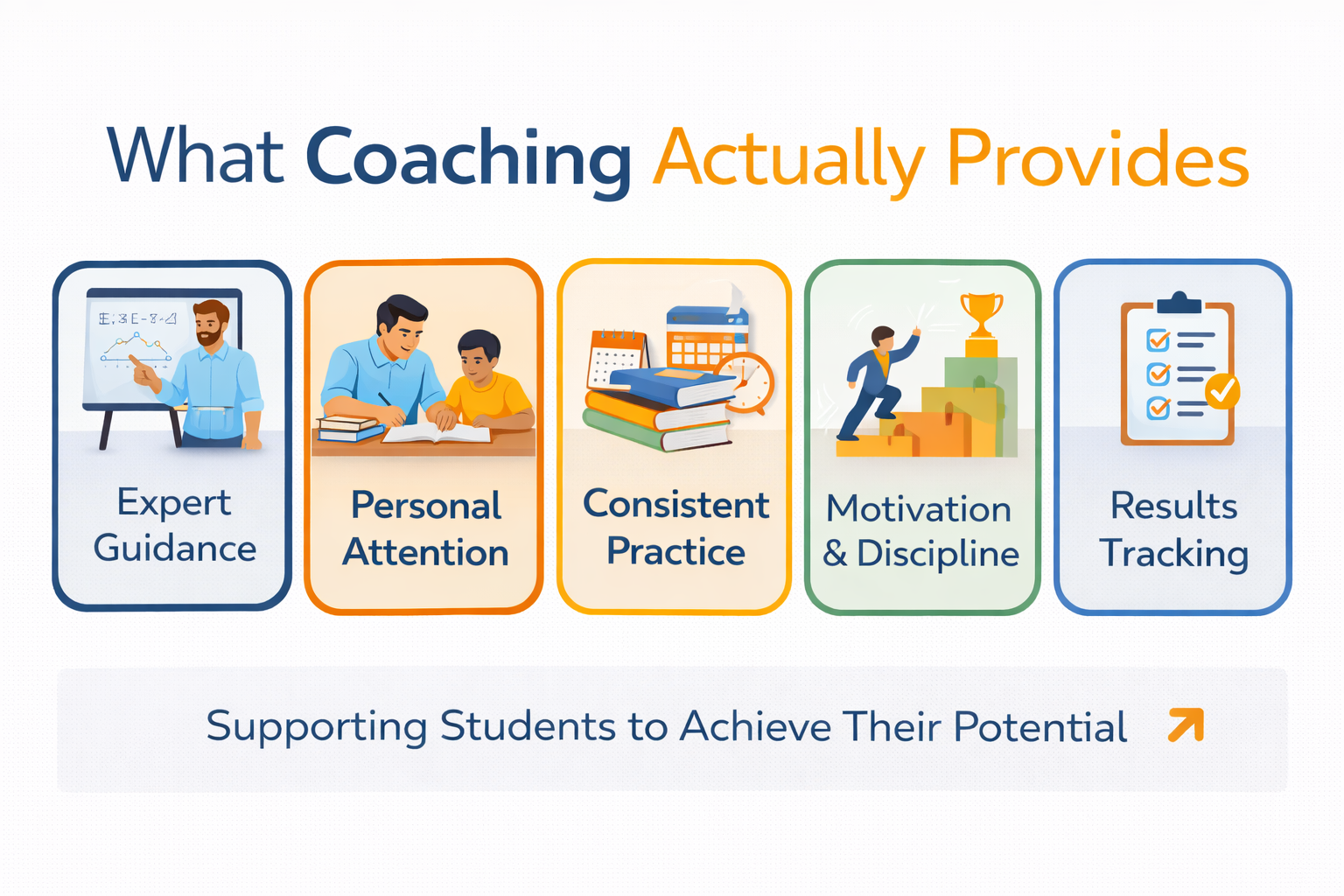
Coaching gives students structure. A fixed schedule forces you to show up even when motivation disappears. Teachers answer questions in real time. Peers push you to keep pace. If you fall behind, someone notices before it becomes a habit.
For syllabus completion, coaching works. The teacher maps out chapters, sets a pace, runs mock tests, and corrects mistakes early. For students who struggle with self-discipline, that external accountability is genuinely valuable. You pay for the structure, and the structure delivers results.
Coaching also builds a learning community. Sitting in a room with students who share the same goal creates energy that a solo session at home rarely matches.
What Self-Learning Actually Builds
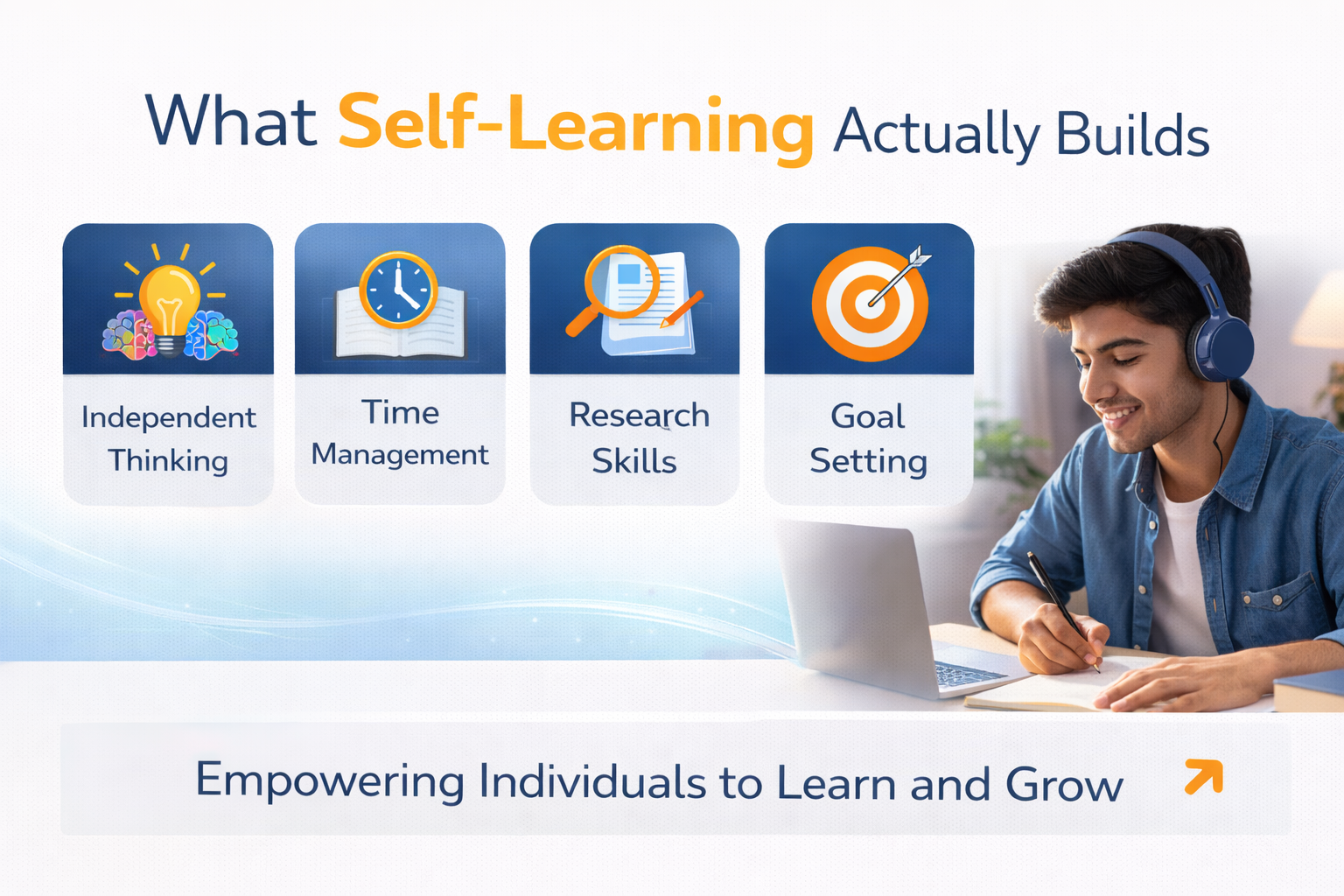
Self-learning builds a different kind of student. Not someone who follows a syllabus, but someone who knows how to find answers. That is a separate skill entirely, and it is the one employers actually want.
When you learn independently, you develop research habits. You learn to ask the right question, filter bad sources, and apply what you find. Platforms like Khan Academy give students access to world-class lessons for free. You move at your own speed, revisit what you missed, and skip what you already know.
Self-learners also build tolerance for confusion. When no teacher is available, you figure it out. That problem-solving muscle separates students who perform in exams from professionals who perform in careers.
The Cost Difference That Matters
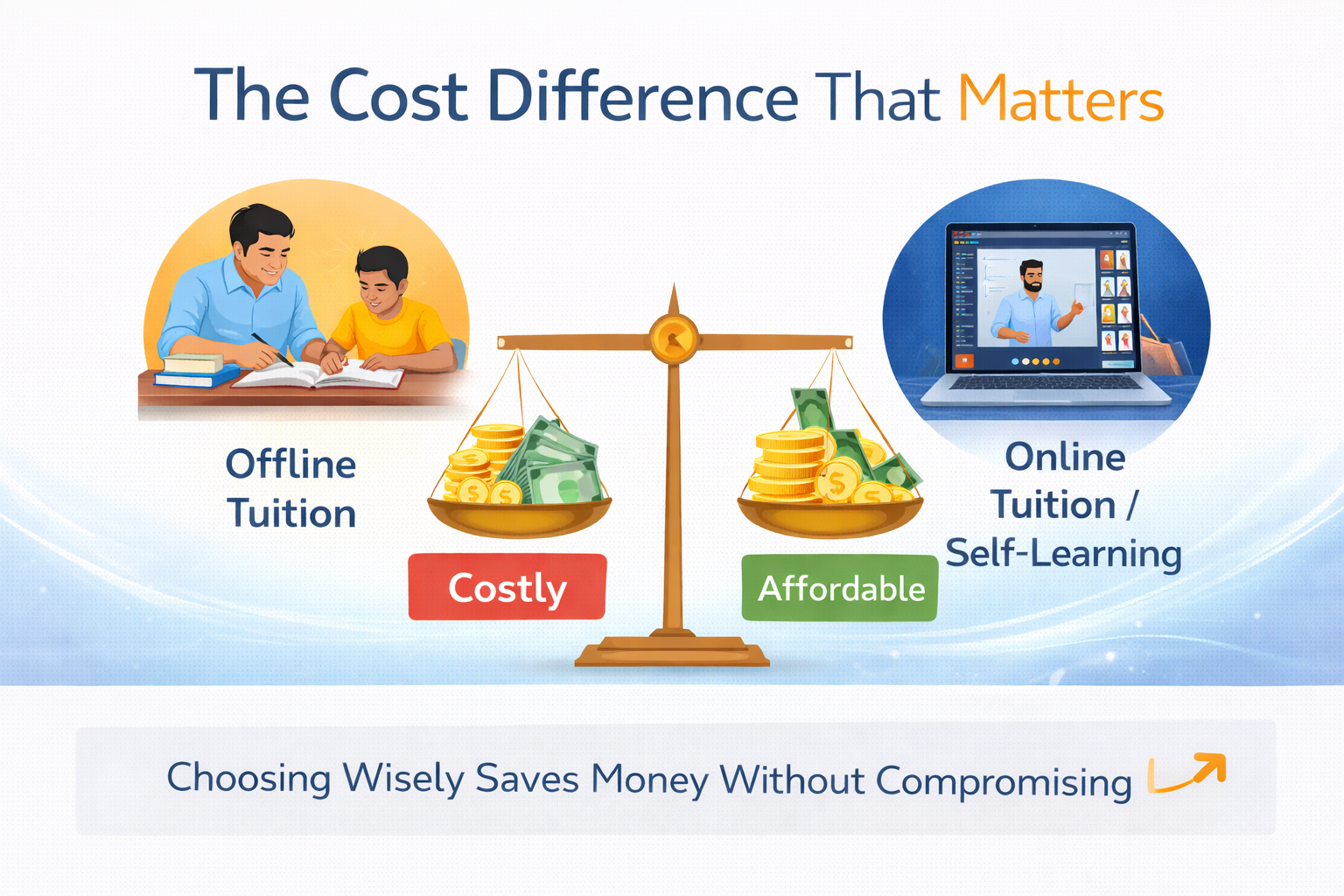
Here is where the self-learning vs coaching debate becomes very practical. Coaching fees in India typically run between Rs 3,000 and Rs 10,000 per month. Over two years of Class 11 and 12, that adds up to Rs 72,000 or more. Just for the classes. Transport, materials, and extra tuitions are separate costs on top.
Self-learning with a proper computer costs Rs 21,000 one time. That is the price of an Apna PC. One payment. No monthly fees. No auto fare. No recurring cost. A student who uses that computer for four years of school and college just spent less than two months of coaching fees on a tool that lasts the entire education journey.
The math is not complicated. The long-term value is obvious.
When Coaching Makes Sense
Coaching still makes sense in specific situations. Competitive exams like JEE and NEET require intensive, exam-pattern-focused preparation that most students cannot build alone. The coaching model exists for exactly this purpose.
Complex subjects with limited online resources also benefit from in-person guidance. And when a student is three months from an exam with knowledge gaps, a structured crash course fills them faster than solo study can.
When Self-Learning Wins
Self-learning wins when the goal is career skills, not exam scores. Coding, graphic design, video editing, digital marketing, data analysis: none of these are taught well in coaching centers. They are built through practice and online resources. Students who explore platforms like Apni Pathshala understand that real learning continues long after board exams end.
The 2026 Reality Check
Employers in 2026 are not asking for mark sheets at interviews. They ask for portfolios, projects, and practical skills. A student who scored 85 percent but cannot operate basic industry tools is less prepared than a student who scored 72 percent and has real work to show.
Technology access is no longer optional. Which is better: coaching or self study? That question is incomplete without asking whether the student has a device to practice on. Self-learning requires tools. Without a computer, it stays theoretical and never becomes skill.
The Smart Student’s Hybrid Approach
The smartest approach combines both. Use coaching for competitive exams and structured syllabus completion. Use a computer and self-learning platforms for skills, projects, and career preparation.
Do not choose one and ignore the other. Use coaching where it performs best. Use self-learning where it outperforms. Maximum results come from smart allocation, not loyalty to a single method. Students who learn this early spend less money and enter the job market ready.
The self-learning vs coaching debate does not have one winner. The student who combines both, starting with the right tools, always comes out ahead. Buy Apna PC at Rs 21,000 and give your child the foundation to learn, practice, and build real skills from day one.