

Many students want to study seriously, but without a fixed space and a dedicated device, routines simply don’t form. A shared mobile phone or a borrowed laptop never truly becomes “yours.” It belongs to someone else’s schedule. For thousands of families across India, having a computer for students at home isn’t just about getting access to the internet. It’s about creating structure, building consistency, and developing the daily habit of showing up to learn.
Why Shared Devices Break Study Routines
When a student depends on a parent’s phone or a sibling’s device, their learning happens in leftover time. They watch a tutorial when no one is calling. They finish notes when the device is free. This kind of learning has no rhythm, no predictability, and no momentum.
The benefits of a personal computer for students go far beyond just having a screen to look at. A personal device belongs to the student. It holds their notes, their bookmarks, their half-finished assignments. It waits for them at the same time every day, and that sense of ownership is where discipline begins.
When a student knows “this is my device, and this is my study time,” they are far more likely to sit down and actually study. The habit forms because the environment supports it. Without that environment, even a genuinely motivated student struggles to stay consistent.
How Structure Shapes Study Discipline for Students
Discipline isn’t just a character trait; it’s a system. And a personal computer is one of the most practical systems a student can have.
With their own device, a student can create a fixed study schedule and stick to it. They can set reminders, organise notes by subject, and return to the same apps and resources every evening. There’s no setup time, no waiting, no negotiating for screen time. The routine becomes effortless because the environment removes friction.
Developing study discipline for students works best when the tools and environment stay predictable. A student who opens the same app at the same desk every evening naturally starts associating that space with focused work. Over weeks, it becomes automatic. They don’t have to decide to study; they just sit down and start.
Students who study in structured environments with consistent tools tend to retain information better and feel less overwhelmed during exams. A personal computer makes that structure possible, especially for students who don’t have access to a private room or a quiet corner in a busy household.
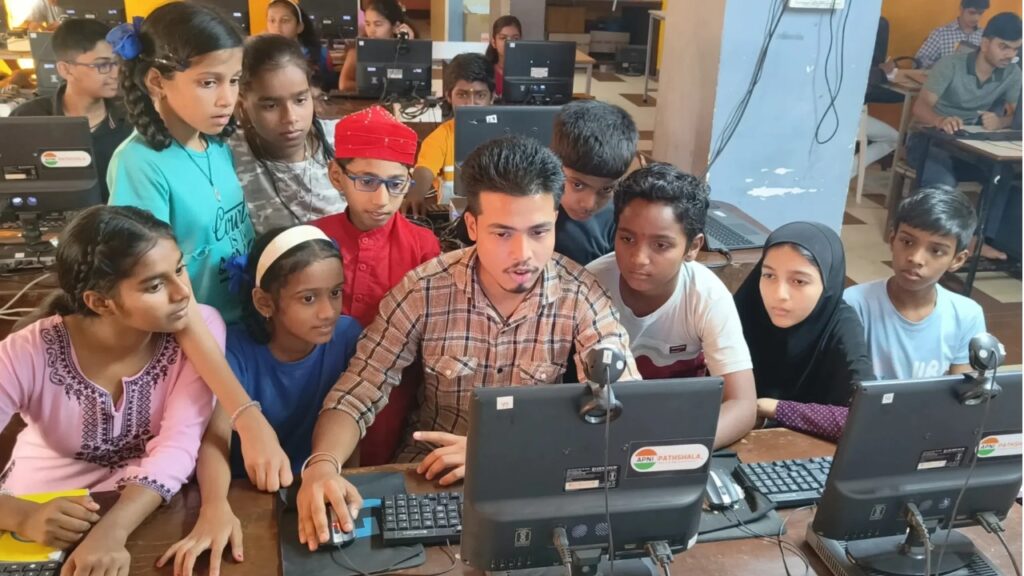
Digital Learning Tools Work Best With Daily Access
Having a personal computer also means being able to use digital learning tools the way they’re actually designed to be used daily, consistently, and with progress tracking.
Platforms like DIKSHA India’s national digital learning platform and NCERT (National Council of Educational Research and Training) textbooks are designed for repeated practice. A student is supposed to return to them every day, track where they left off, and build from lesson to lesson.
On a shared device, that continuity breaks. A student’s account gets logged out. Browsing history is cleared. Bookmarks disappear. The learning resets every time. What was supposed to be a progressive experience becomes a series of disconnected attempts.
With a personal computer, students build a digital study environment that grows with them, save progress, organise folders, and personal notes, and that consistency is what turns scattered effort into real, measurable progress.
What This Means for Indian Families
For parents in Tier 2 and Tier 3 cities, investing in a personal device might feel like a significant step. But it’s worth thinking carefully about what the alternative actually costs.
A student who shares a device is one whose learning is always secondary to someone else’s schedule. The time they lose, the habits they don’t form, the skills they don’t develop, these have real long-term consequences that show up later in confidence, results, and opportunity.
Apna PC is built specifically for this situation. At just ₹21,000 (shipping and GST excluded), it’s an affordable, education-ready computer designed for Indian students and Indian homes. Read more about What Is Apna PC and why families are choosing it, or explore The Hidden Cost of Not Having a Computer in 2026 to understand what’s really at stake.
When a student has their own computer, discipline becomes easier, not because they suddenly become a different person, but because their environment changes in ways that support them. Give your child that environment. Visit apnapc.com to learn more.