

One of the most persistent frustrations in teaching is not knowing what students have actually retained. You deliver a lesson. Students nod. They complete the assignment. And then the test comes back and half the class got it wrong not on the hard questions, but on something you thought was clearly understood weeks ago.
The gap between what teachers teach and what students actually learn is real, and it’s bigger than most educators want to admit. Apni Prerna helps close that gap by giving teachers actual data on how students engage with learning content not just what they turn in, but how they’re interacting with it on their own time.
The Limits of Traditional Assessment
Traditional assessment tools tests, assignments, verbal responses in class tell teachers something, but they don’t tell the full story. A student can score well on a test through rote memorisation without having genuinely understood the concept. A student can participate in class while completely lost on the underlying principles. And a student who understands everything might test poorly on a bad day.
What teachers really want to know is: is this student engaging with the material? Are they spending time on it? Do they struggle with one part but not another? Are they revisiting topics they found difficult? These process questions matter as much as outcome questions but traditional assessments only capture outcomes.
According to UNICEF’s learner-centred education research, ongoing formative assessment understanding the learning process, not just the results leads to significantly better student outcomes. Apni Prerna provides that kind of ongoing insight in a practical way.
What Apni Prerna Shows Teachers
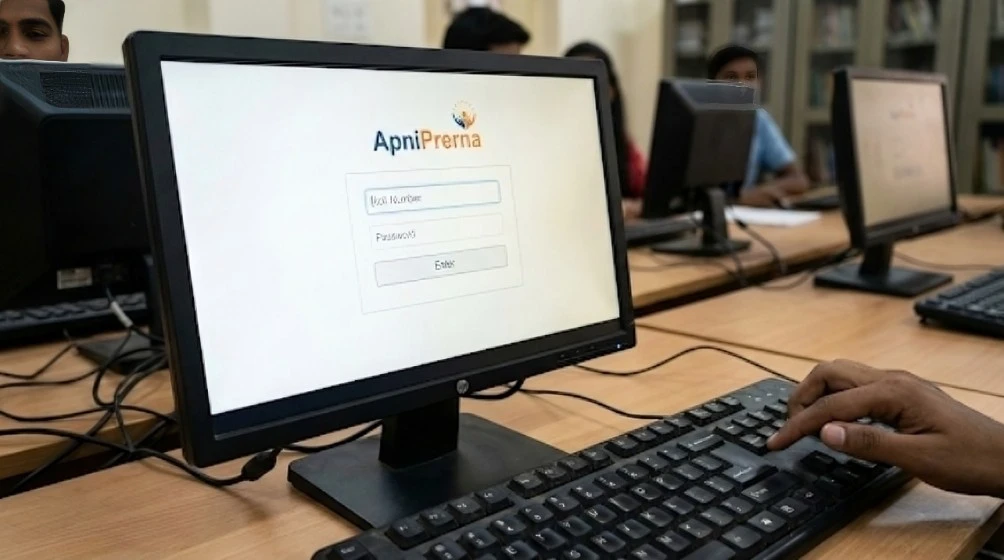
The platform generates data on student activity that helps teachers see the process behind the outcomes. Which subjects did a student spend time on this week? Where did they slow down or disengage? Which topics did they return to multiple times, suggesting they were working through difficulty?
This information changes how teachers can respond. Instead of waiting for a poor test score to identify a student who’s struggling, a teacher can see early engagement patterns and intervene proactively. Instead of assuming all students are on the same page, teachers get specific data showing where individual students are in their learning journey.
That specificity makes classroom and individual support far more effective. A teacher who knows Student A has been spending a lot of time on grammar exercises but barely touched the reading comprehension module can tailor their next conversation with that student accordingly. That level of personalised awareness was simply not possible before digital learning tools.
Shifting From Guesswork to Informed Teaching
Teaching without data is educated guesswork. Most teachers are very good at it years of classroom experience build strong intuition. But intuition has limits. It misses quiet students. It can confuse performance with understanding. It doesn’t scale well when a teacher has forty or sixty students across multiple sections.
Apni Prerna doesn’t replace teacher judgement it supplements it with information. When a teacher’s intuition about a student is confirmed by data, they can act on it with confidence. When data shows something the teacher didn’t expect, it opens a conversation.
The NCERT’s guidelines on formative assessment emphasise using observation and ongoing data to support teaching decisions. Apni Prerna makes this practically achievable in a digital learning context, where student activity can be tracked meaningfully over time.
Better Teacher Understanding Leads to Better Student Outcomes
When teachers understand what students are actually learning not what they appear to be learning they can teach more effectively. They spend less time covering material students already understand and more time on genuine gaps. They have better conversations with students because those conversations are grounded in real information.
Students, in turn, feel more seen. When a teacher notices that a student has been genuinely working hard on a topic and acknowledges it, that recognition is motivating in a way that generic praise isn’t. It says: I can see what you’re doing, and it matters.
See how the SSS system turns invisible computer use into real learning proof that teachers and parents can actually act on. It’s not just tracking it’s transforming the evidence of learning into something useful for everyone involved in a student’s growth.