

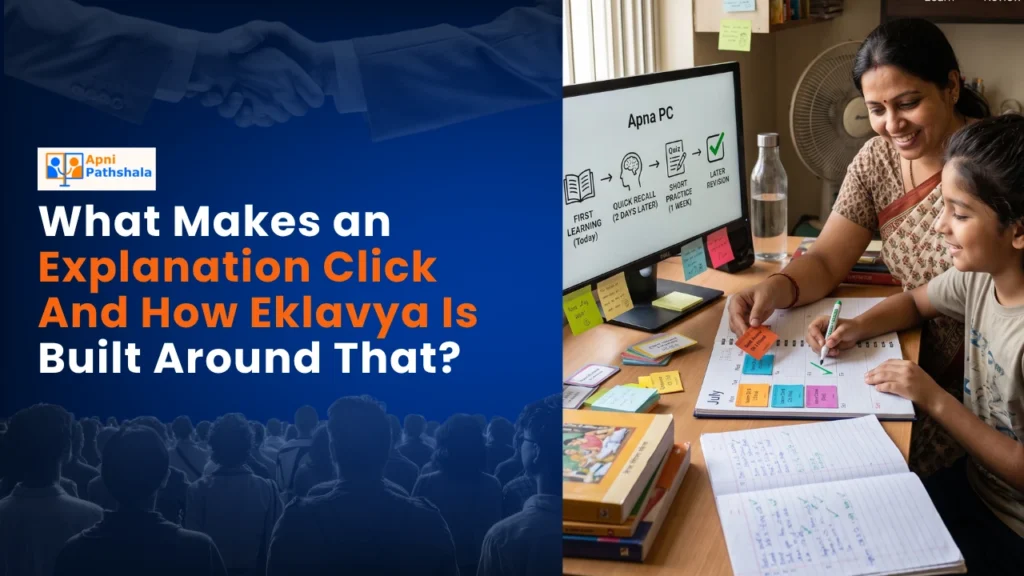
Why do some explanations make a concept instantly clear while others leave students confused? The answer lies in understanding how the human brain processes information. Effective learning methods aren’t about cramming more content into less time. They’re about structuring explanations so that new ideas connect naturally with what students already know. EklavyaAI, built into Apna PC, is designed around this exact science of concept learning. It doesn’t just deliver information. It explains concepts the way your brain actually learns.
The Science Behind Why Explanations Click
When a student finally understands a difficult concept, something specific happens in their brain. They’ve built a mental bridge between the new idea and existing knowledge. Most traditional teaching fails because it treats explanation as a one-way delivery system. A teacher speaks. A student listens. But real concept learning works differently.
Research on how learning actually occurs shows that understanding requires active engagement. Your brain doesn’t passively absorb facts. It builds connections. When an explanation is structured to highlight these connections, the concept clicks. When it skips steps or assumes prior knowledge, confusion follows.
This is why some students understand calculus while others struggle with the same topic for months. It’s not about intelligence. It’s about whether the explanation matched their prior knowledge level and the right learning methods.
How Traditional Classrooms Miss the Mark
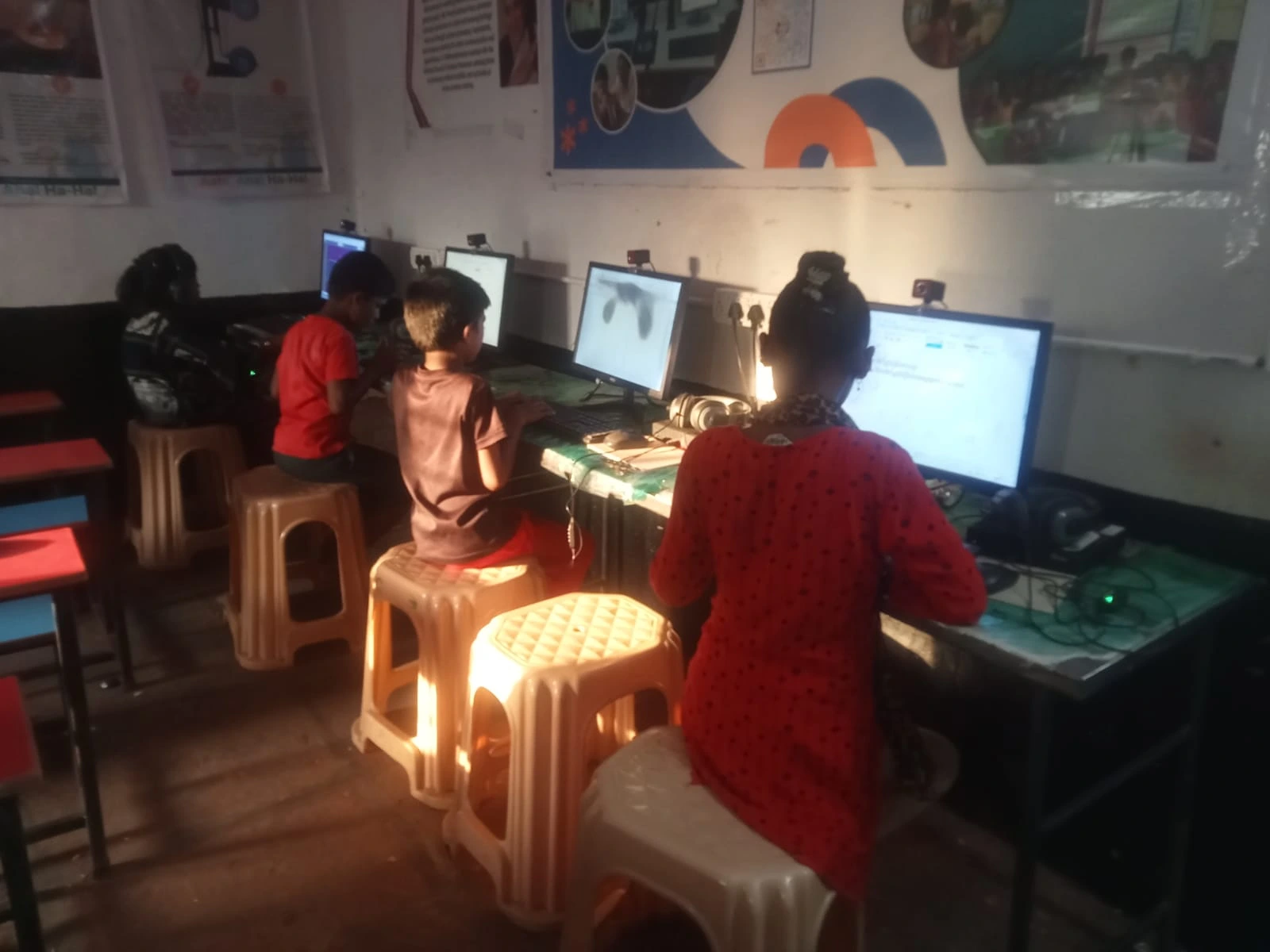
Textbooks and classroom lectures often follow a broadcast model. One explanation fits all students. But every student’s brain is different. Their prior knowledge is different. Their learning pace is different.
A student who learns best through visual examples needs a different explanation than one who learns through step-by-step logic. Yet most traditional teaching treats all students the same. This is why active learning outperforms passive screen use. Active engagement forces the brain to build connections rather than just receive information.
The cost is also a barrier. Quality tutoring that adapts to individual needs can cost thousands of rupees per month. Most Indian families can’t afford this, which is why affordable solutions like Apna PC matter.
The Three Pillars of Effective Learning Methods
Real concept learning rests on three pillars. First, explanations must start from what the student already knows. Second, new ideas must connect to that foundation step by step. Third, the student must actively test their understanding.
Most teaching ignores at least one of these. A textbook might explain clearly, but it never checks whether the student truly understands. A lecture might engage students but skip the foundational steps. Only when all three work together do explanations truly click.
EklavyaAI is built around these three pillars. It assesses what each student knows before explaining. It breaks concepts into connectable steps. And it asks questions that force active thinking, not passive recall.
Why Concept Learning Needs Personalisation
Every student’s brain is wired differently. Some students visualise concepts as pictures. Others think in words or sequences. Some need to manipulate objects to understand. These aren’t learning disabilities. They’re learning preferences.
When an explanation matches a student’s preferred style, understanding happens faster and sticks longer. When it doesn’t, the student struggles even if they’re intelligent. This is why personalisation isn’t a luxury. It’s essential for concept learning.
Traditional classrooms can’t personalise at scale. But AI can. EklavyaAI watches how each student responds to different types of explanations. It learns which approach works for that specific student and adapts in real time.
How EklavyaAI Builds Deep Understanding
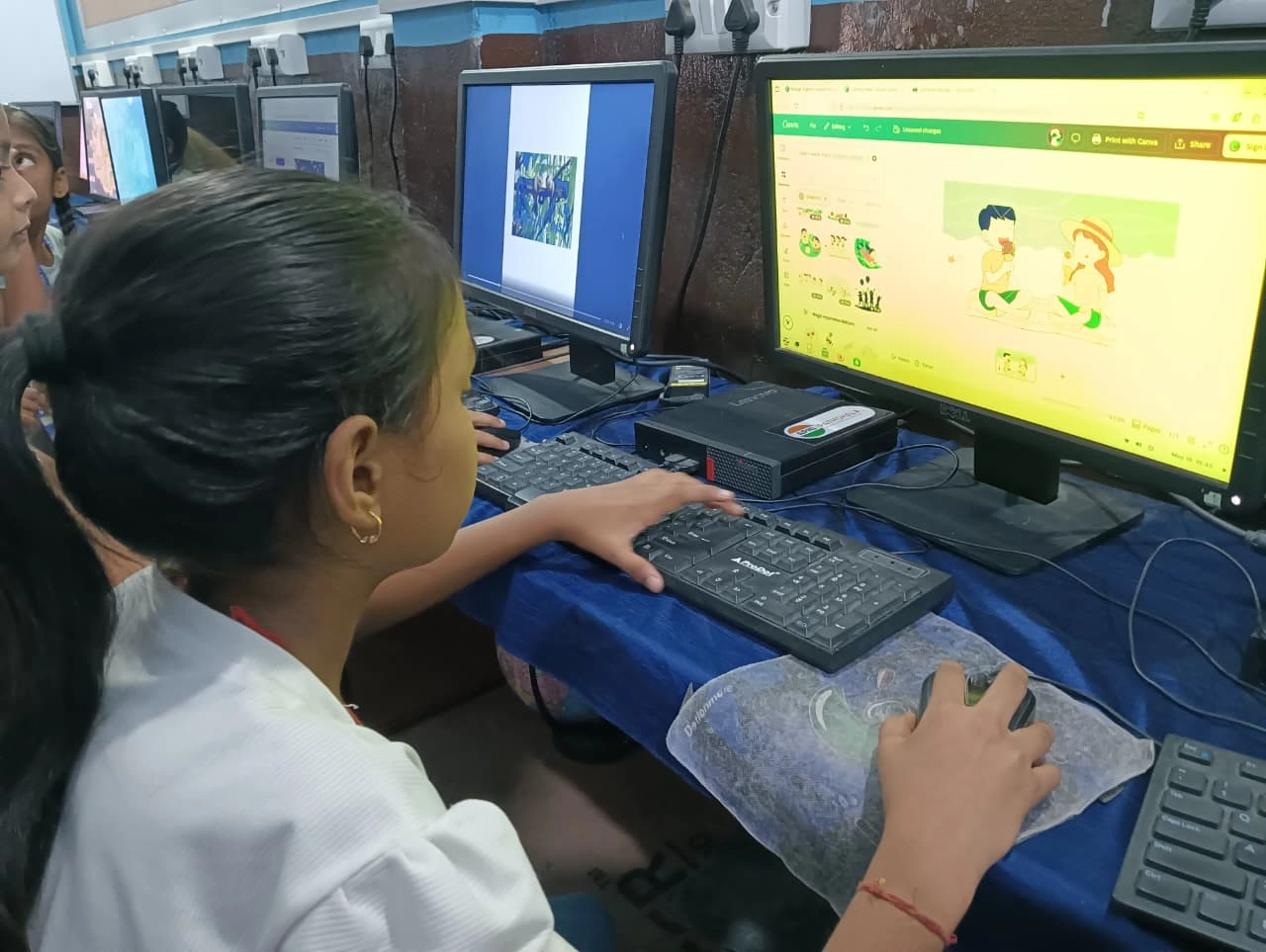
EklavyaAI isn’t just a video player or problem generator. It’s built on the science of how explanations actually work. When a student asks about a concept, EklavyaAI doesn’t just give the answer. It diagnoses what the student already understands and where the gap is.
Then it builds an explanation that bridges that specific gap. It might use an analogy. It might break the concept into smaller pieces. It might ask a leading question that forces the student to think. The approach it chooses depends on what will work for that student’s brain.
This is why EklavyaAI feels different from other educational tools. It doesn’t assume all students learn the same way. It adapts its explanations to each individual.
Real Examples: Better Explanations Change Outcomes
Consider a student struggling with fractions. Traditional teaching often says “a fraction is a part of a whole” and shows a pie chart. But this explanation doesn’t click for a student who thinks in sequences, not pictures.
EklavyaAI might instead explain fractions as “division that hasn’t been finished yet.” It connects to the student’s existing knowledge of division. It builds the concept step by step. Suddenly, fractions make sense because the explanation matched the student’s thinking style.
Or consider a student confused about photosynthesis. One approach explains the chemical equation. Another shows the process as a sequence of events. A third uses an analogy to a factory. EklavyaAI tries different approaches and learns which one clicks for that student.
The Role of Active Learning in Making Concepts Stick
Passive learning is when a student receives information without thinking. Active learning is when a student must think to engage with the material. The difference in outcomes is dramatic. Study habits that change with Apna PC show how active engagement produces faster, deeper understanding.
EklavyaAI forces active engagement. It asks questions that can’t be answered by just listening. It presents problems that require thinking rather than memory. It makes students explain their reasoning, which forces them to build mental connections.
This active approach takes more effort than passive watching. But it’s what makes concepts actually click and stay in long-term memory.
Why Affordable Access to Smart Learning Methods Matters
Quality concept learning has always been expensive. Private tutors who understand how explanations work charge high fees. Schools with better resources can afford experienced teachers. But most Indian students don’t have access to either.
This is where Apna PC and EklavyaAI change the equation. At Rs.21,000, Apna PC puts a complete learning system in your child’s hands. EklavyaAI brings the kind of personalised, adaptive explanations that were once available only to wealthy families. These proven learning methods are no longer a privilege. They’re a product any Indian family can buy.
If you want your child to experience explanations that actually click, that build real understanding instead of surface-level memorisation, Apna PC is built for exactly that. Visit apnapc.com to learn more.