

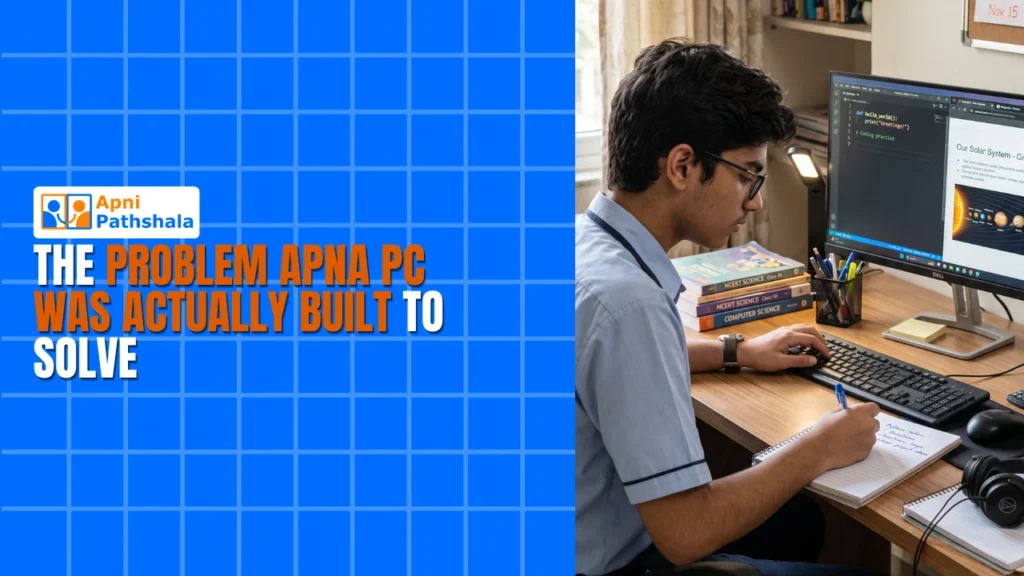
Most Indian families trying to support their child’s education face the same gap: they know their child needs a dedicated computer for school, but everything available is either too expensive, too distracting, or not built for a student’s actual needs. Apna PC was built to close that gap with a device priced at 30,000 rupees that is configured purely for learning.
What Problem Does a Dedicated Student Computer Actually Solve?
The core problem is not a lack of devices in Indian homes. Most families have a smartphone, and many have a laptop. The problem is that these devices are shared, distraction-filled, and not configured for a child’s academic work. When a Class 8 student sits down to write an essay on the family phone, the experience is frustrating and ineffective.
A dedicated student computer removes three barriers: shared access, distraction, and the wrong software. When a child has their own device set up for learning, they can work at any time without waiting for the phone to be free, without YouTube notifications pulling their focus, and with the right software already open.
- Shared devices: homework competes with adult work and entertainment
- Distracting software: games and social media on family devices delay study
- Wrong configuration: browser apps and entertainment shortcuts fill the screen
- Reliability issues: budget phones and old laptops lag or crash during homework
Who Was Apna PC Actually Built For?
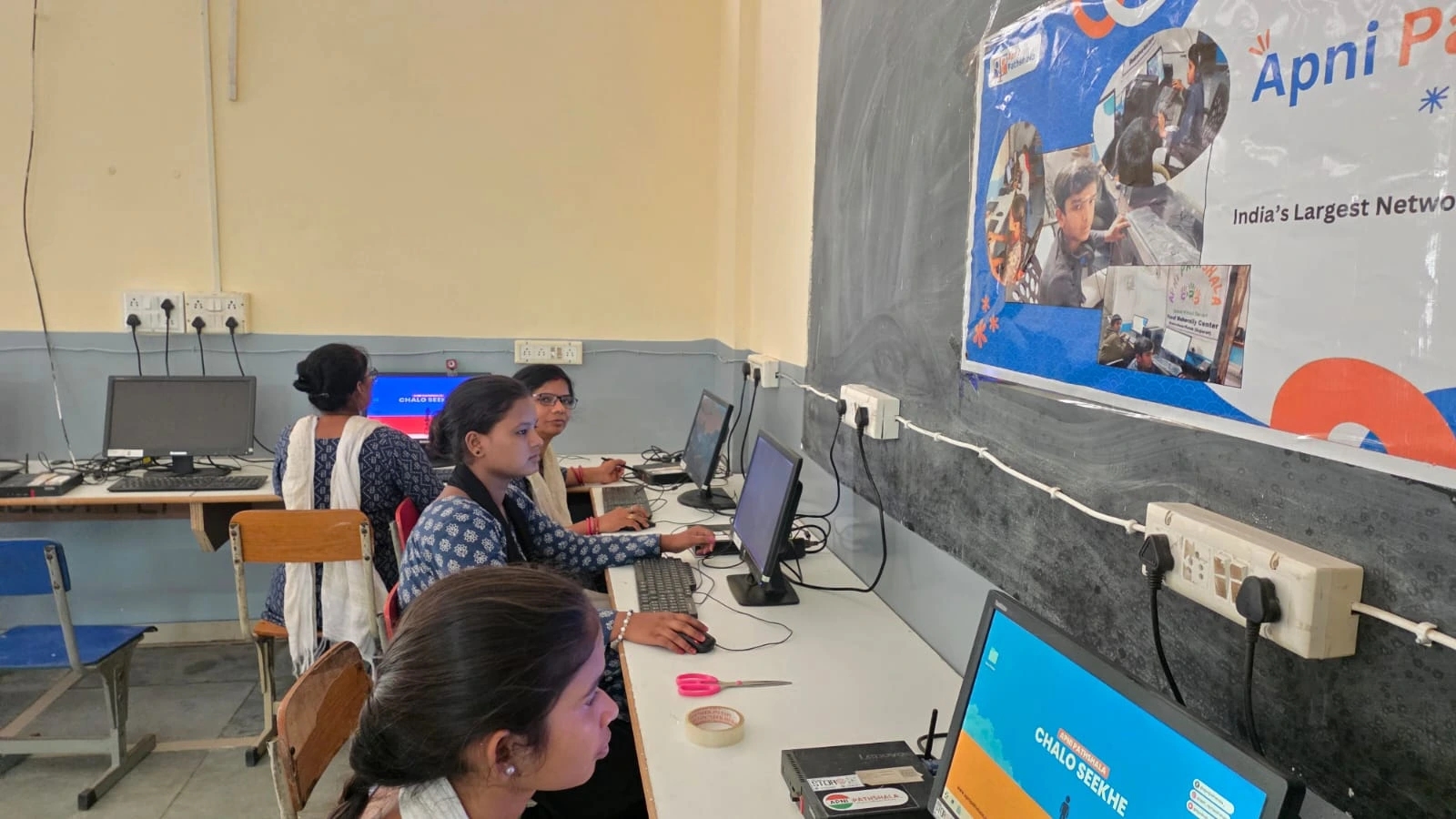
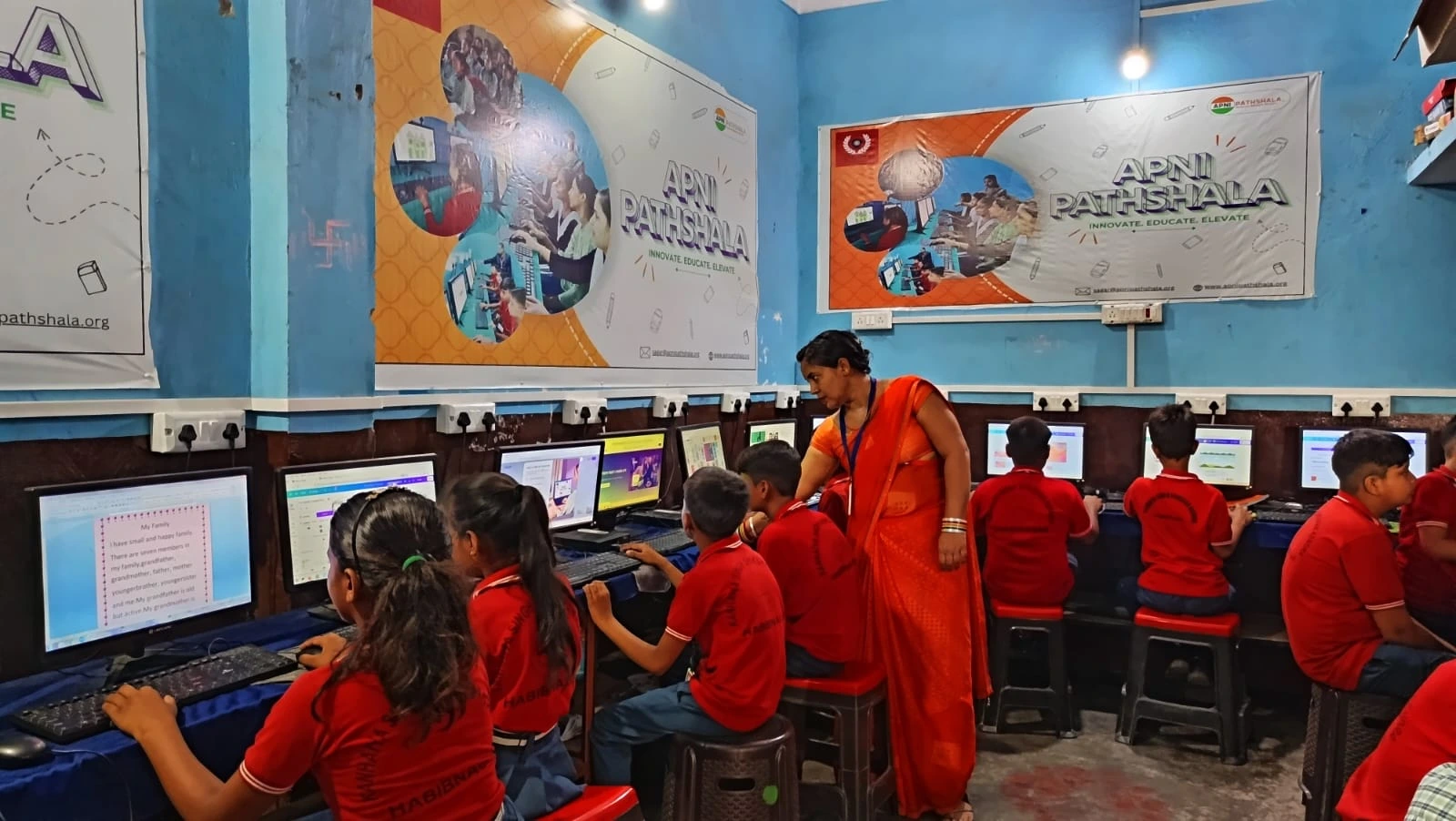
Apna PC was built for students in Tier 2 and Tier 3 Indian cities whose families cannot afford a mid-range laptop but want something better than a repurposed office computer. It is specifically designed for CBSE and state board school curricula, with LibreOffice for documents, Scratch for coding, and Apni Prerna for progress monitoring.
The price point of 30,000 rupees (shipping and GST excluded) was chosen to be accessible without compromising on the specs a school student needs. The comparison is not with a gaming PC at 60,000 rupees or 50,000 rupees, or a professional workstation at 1,50,000 rupees, but with the question of whether an Indian family can get a reliable, purpose-built learning device for their child at a price that makes sense. The full story of why Apna PC was built covers the thinking behind this decision in detail.
How Is Apna PC Different From a Cheap Laptop From an Online Store?
Budget laptops from online marketplaces come with Windows trials, bloatware, gaming shortcuts, and entertainment software that actively competes with study time. They also often have unreliable keyboards, dim screens, and processors that cannot handle multiple applications at once.
Apna PC runs Zorin OS, which is lighter and more stable than Windows on equivalent hardware. Apna PC outperforms common budget laptops because Zorin OS uses hardware resources more efficiently than Windows on comparable devices, and because the device is configured for learning from day one rather than general-purpose use. For students who need a budget computer for board exam preparation, the specs matter because a slow computer during revision is a source of real frustration.
What Does Apna PC Include That a Regular Computer Does Not?
Apni Prerna is the key addition. This is a monitoring system built into Apna PC that shows parents which subjects their child studied and for how long. No separate app to install, no subscription fee, no privacy concerns beyond what a parent would want to know about their child’s study sessions.
LibreOffice and Scratch come pre-loaded. The operating system is configured for student use. The device arrives ready to work without any setup required from the parent. This is different from buying a standard computer and spending hours configuring parental controls and installing software.
Is 30,000 Rupees a Reasonable Price for a Student Computer in India?
At 30,000 rupees (shipping and GST excluded), Apna PC competes favourably with tuition costs for a single subject over a year in many Indian cities. Many families spend more than this on private coaching for one subject annually. A one-time hardware investment that enables independent study across all subjects is a different kind of value.
For parents making this decision, the best computer for school students at home comparison covers what different budget ranges actually deliver and where Apna PC sits in that landscape.
Frequently Asked Questions
What specific problem does Apna PC solve that a smartphone cannot?
A smartphone cannot run LibreOffice for essay writing, cannot handle Scratch coding projects comfortably, and is too small for sustained reading and document work. The keyboard is the biggest limitation. School projects, typed essays, and research tasks all require a full keyboard and proper screen, which only a desktop or laptop provides.
Why does the operating system matter for a student computer?
Zorin OS on Apna PC is lighter and more stable than Windows on equivalent hardware. It does not require expensive licence fees, does not push unwanted updates during homework time, and does not come with the trial software and entertainment shortcuts that fill Windows devices from day one. The result is a computer that starts quickly and stays out of the way.
How does Apna PC help parents who are not tech-savvy?
Apna PC arrives pre-configured with the right software already installed and no setup required. Apni Prerna shows study session data in plain language. Parents who have never configured a computer before can get a child started in under an hour. There is no need to install parental controls, remove bloatware, or troubleshoot Windows activation issues.
The affordable student computer gap in India is real, and Apna PC was built specifically to fill it. Visit apnapc.com to see the full details and decide if it is the right fit for your child.