

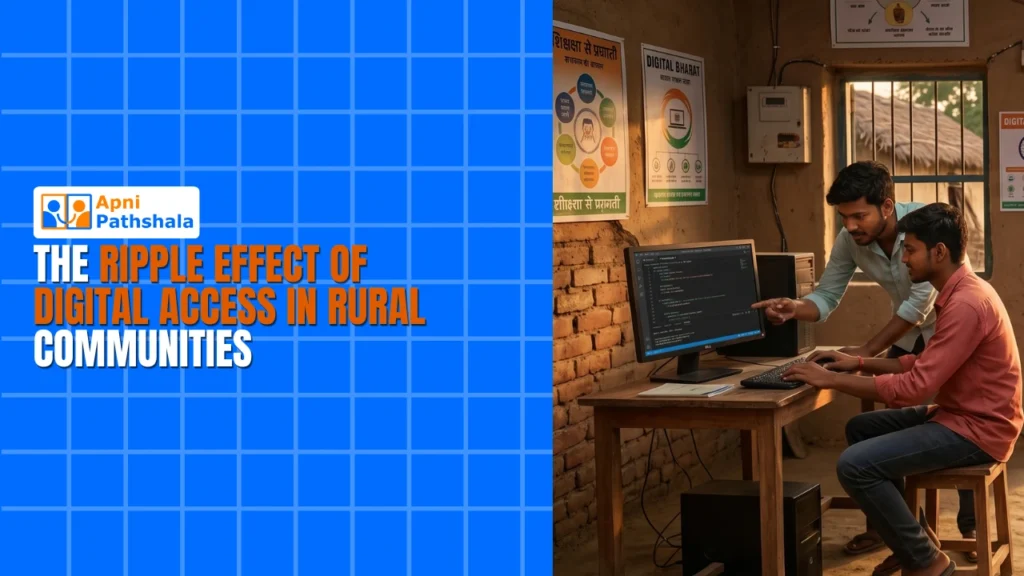
Kamla’s village in Rajasthan has one school, one medical shop, and one road that connects to the nearest town. Until last year, the closest internet cafe was 12 kilometres away. Her daughter, who topped her class every year, had never used a computer. When the school introduced a digital learning module, she sat in the back of the class, hoping the teacher would not ask her to try.
Three months later, a learning centre opened in the village with four computers. Kamla’s daughter was the first to enroll. Today, she types at 30 words per minute, has built two projects in Scratch, and helps her classmates use the machines. She is still the same student. She still has the same brain. The only thing that changed was access.
Digital access in rural India is not about giving children fancy gadgets. It is about giving them the same starting line that urban children take for granted. When a rural community gets access to computers, the effects ripple outward in ways that most people do not expect.
The Digital Divide India Refuses to Talk About
The digital divide India faces is not just about internet speed or smartphone ownership. It is about what a child can do with technology. An urban student uses computers at home, at school, at tuition, and at a friend’s house. By the time they reach college, they are digitally fluent without ever taking a formal course.
A rural student may go through their entire school life without touching a computer. They hear about coding, digital design, and online learning, but these are abstract concepts. They have never seen a Scratch project. They have never typed a document. They have never searched for information on a screen larger than a phone.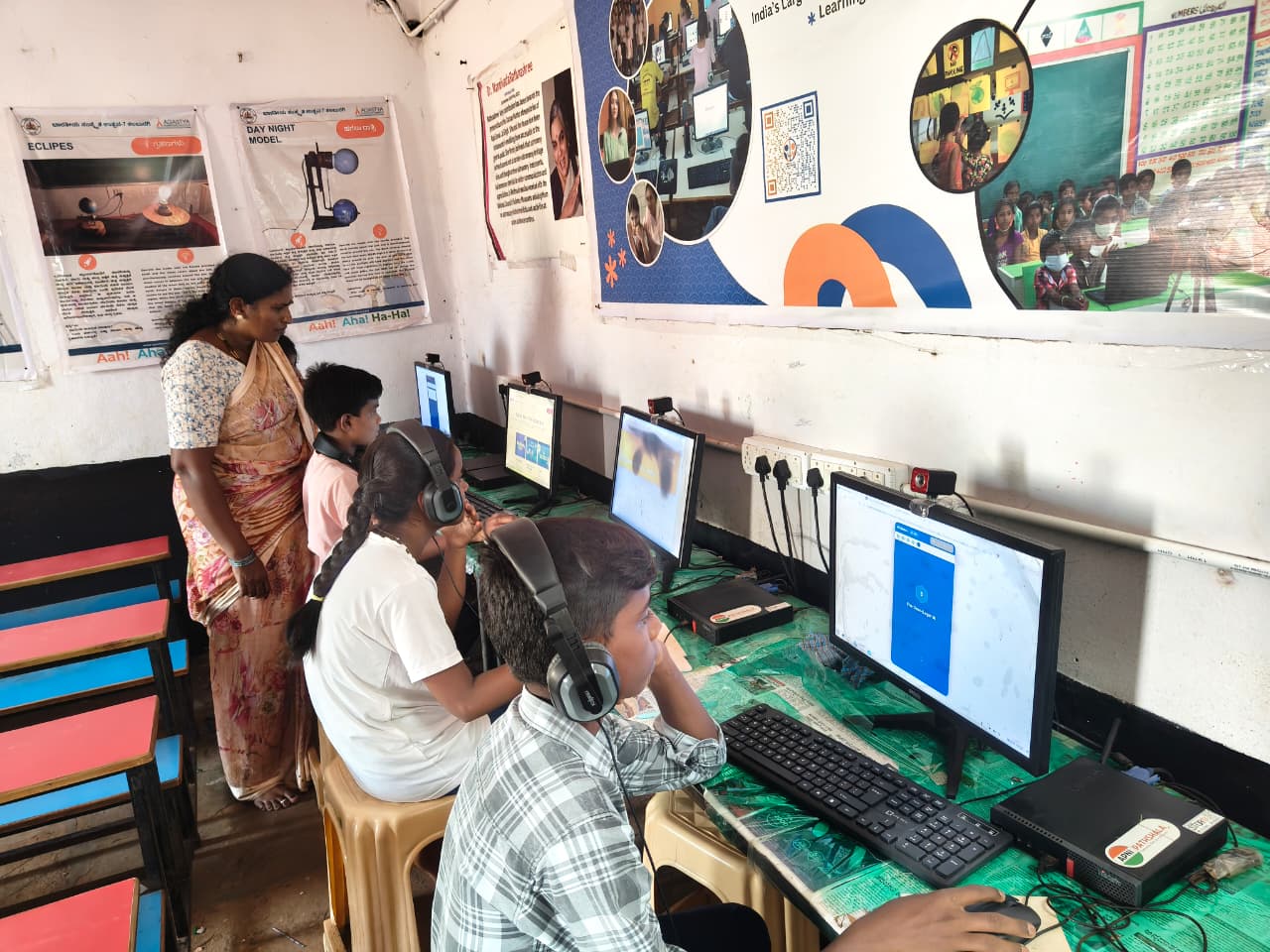
This gap is not about intelligence. Rural students consistently outperform urban students in board exams when given equal resources. The gap is about access. And access is something that can be fixed with a room, a few computers, and a person willing to run the show.
DIKSHA, India’s national digital learning platform, offers thousands of courses for students across the country. But a student who has never used a computer cannot benefit from DIKSHA. The platform exists. The access does not.
What Happens When a Village Gets Computers
The first thing that changes is curiosity. Children who had never seen a computer gather around the machine. They touch the keyboard. They click on things. They ask questions. Within a week, the most curious ones have figured out how to open applications, search for videos, and type their names.
The second thing that changes is confidence. A child who was afraid of technology discovers that a computer is not complicated. It responds to what you tell it to do. That discovery, that a machine obeys your commands, is powerful for a child who has never controlled any tool in their life.
The third thing that changes is ambition. A rural student who learns coding on a computer starts to consider careers they had never heard of. Software developer. Data analyst. Graphic designer. These are not jobs that rural families talk about. But when a child builds their first project on a computer, these careers stop being abstract and start being possible.
A personal computer helps students learn beyond the school curriculum. In rural communities, it helps students imagine beyond the village boundary.
How Technology Access in Rural Areas Changes Families
The ripple effect of technology access in rural areas does not stop at the student. When a computer enters a rural home, every family member benefits.
The father, who runs a small shop, learns to use a spreadsheet to track expenses. The mother, who never went to college, learns to search for health information online. The younger sibling, too young for school, starts exploring the machine out of curiosity. The grandmother, who has never video-called anyone, sees her brother in another city for the first time in years.
One machine changes how an entire family thinks about technology. The fear disappears. The curiosity grows. The family starts seeing computers as tools for their lives, not just for their children’s homework.
In rural India, this family-level change is more important than the individual student’s change. When the whole family values digital access, they invest in it. They protect the computer. They encourage the children to use it. They talk about what they learned at dinner. The computer becomes part of the family’s identity.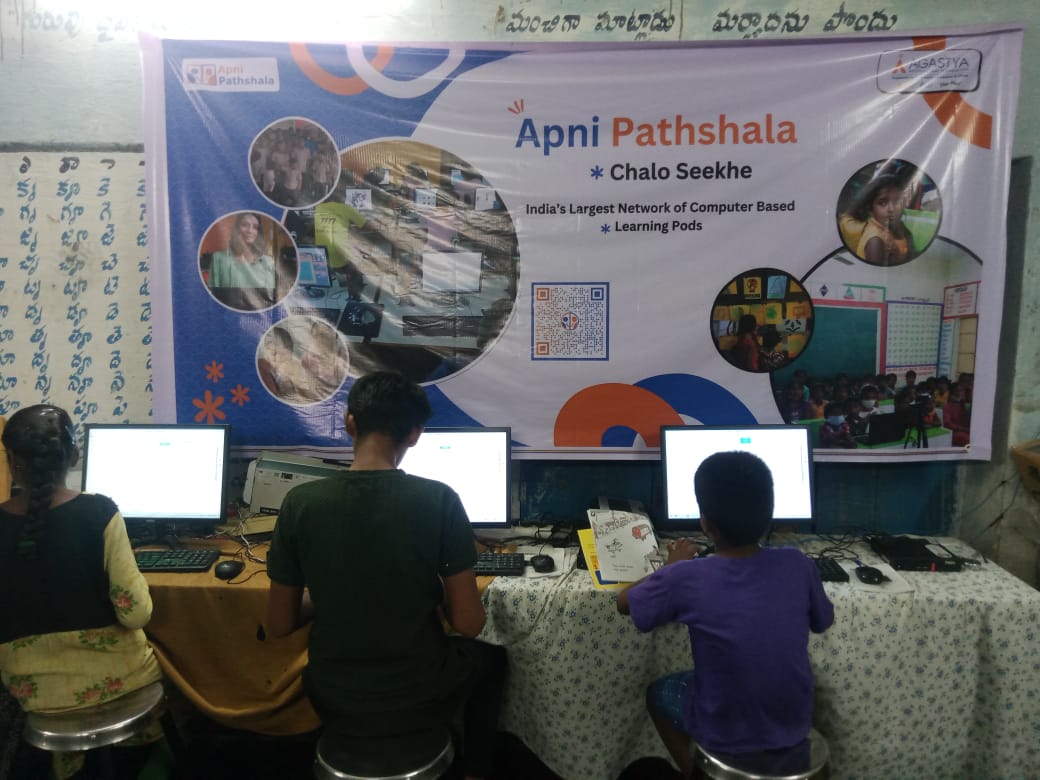
What It Takes to Bridge the Gap
Bridging the rural-education India gap does not require government programs or billion-dollar investments. It requires a room, 4-5 computers, and a local person willing to run a learning centre.
A personal computer like Apna PC, priced at ₹21,000 (shipping and GST excluded), is designed for exactly such an environment. It comes complete with a monitor, keyboard, mouse, and CPU, pre-loaded with educational software. A rural family plugs it in and starts using it. No installation headaches. No compatibility issues.
For a community learning centre, 4-5 setups serve an entire village. Children rotate through in batches. The local educator guides them through structured curriculum. The computer handles the most challenging tasks. Within months, rural children are building projects, typing documents, and exploring the internet with the same confidence as their urban peers.
The biggest advantage a student can have today is not marks. It is digital confidence. And that confidence starts with access to a computer. Visit apnapc.com to learn more.