

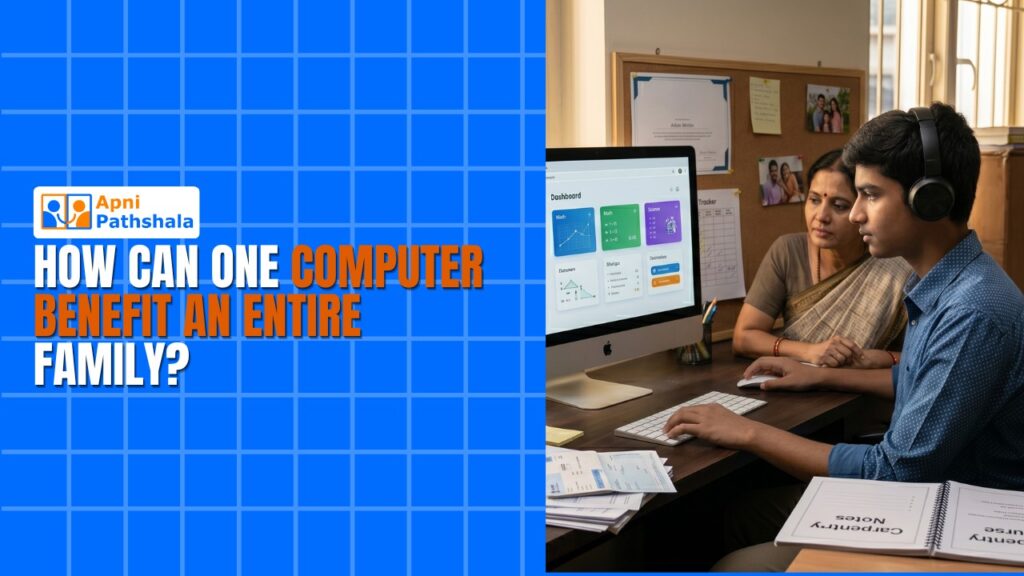
The Sharmas bought a computer for their son’s studies. Within three months, the father was using it to manage his small business accounts. The mother was learning to use email to stay in touch with her sister in Canada. The daughter was building Scratch projects. And the grandmother was video-calling her brother in another city for the first time in her life.
One machine. Four people. Four completely different uses. Four lives changed.
Most Indian families consider a computer to be a child’s study tool. It is something the student uses for homework and projects. But a computer for family learning is not just about the child. It is about the entire household. When a computer enters a home, everyone benefits. Not just the student.
Why a Computer at Home Is a Family Investment
In most Indian homes, ₹21,000 is a significant expense. Parents think carefully before spending that kind of money. They want to know if it is worth it. They want to know if their child will actually use it. But they rarely consider that the entire family will use the computer.
A computer at home benefits every member of the household. The student uses it for studies, projects, and learning new skills. The parent uses it for work, communication, and managing finances. The younger child uses it for early learning and exploration. The older family member uses it for staying connected.
When you buy a computer for your child, you are not buying a study tool. You are buying a family resource. It pays for itself many times over by serving everyone in the house.
A personal computer helps students learn beyond the school curriculum. But it also helps parents manage their work, helps younger children start learning early, and helps grandparents stay connected.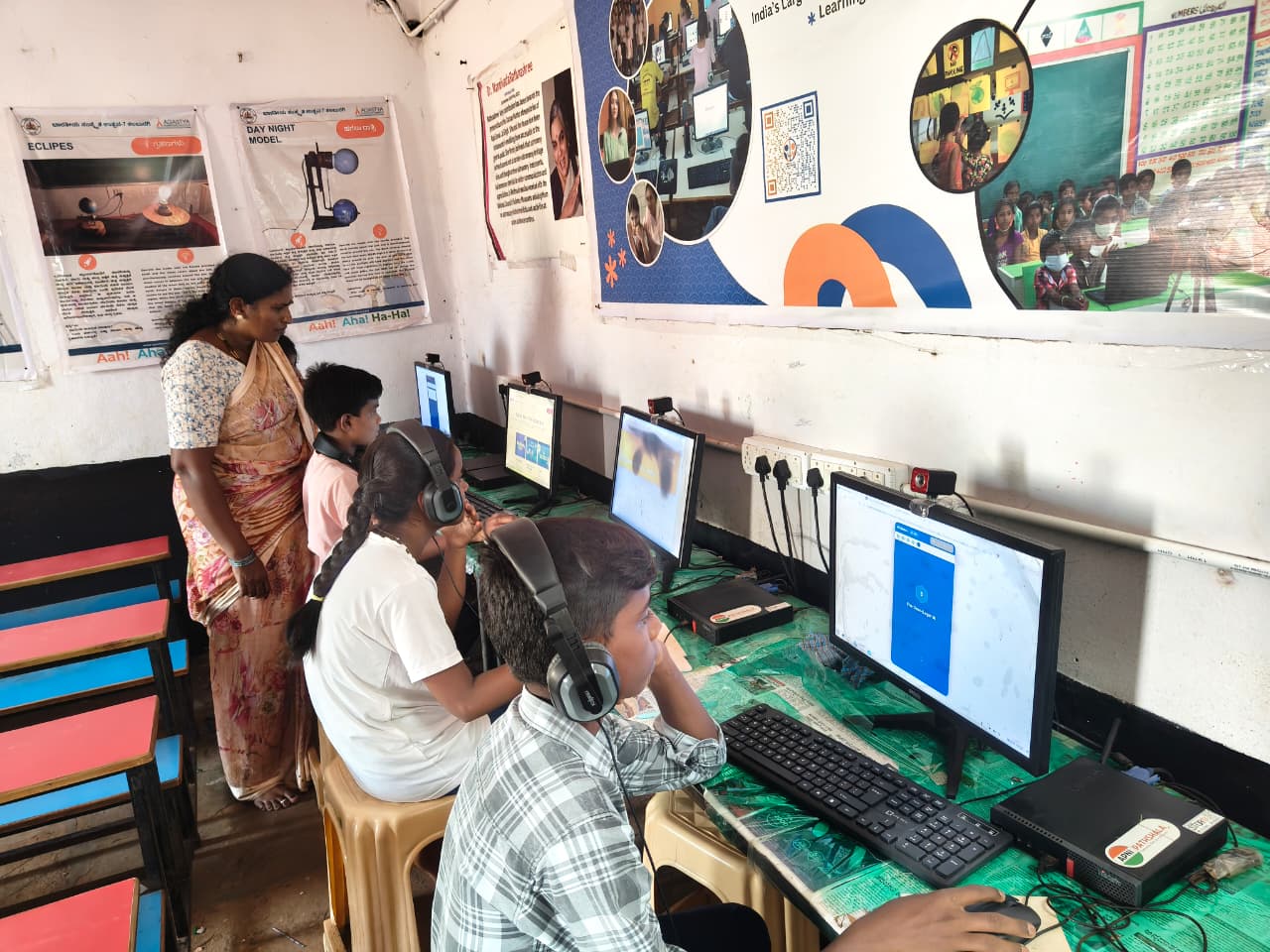
Digital Learning at Home Goes Beyond the Student
When families consider digital learning at home, they think about the child. But the learning happens for everyone.
A mother who has never used a computer learns to open a browser, search for information, and read articles online. She is learning digital literacy without anyone teaching her. She learns by watching her child use the machine. Within weeks, she was searching for recipes online, checking school notifications on email, and looking up health information on her own.
A father who runs a small business learns to use a spreadsheet to track expenses. He does not need an accountant for basic bookkeeping anymore. He saves money. He saves time. He feels more in control of his business. All this happened because a computer came into his home for his child’s studies.
A younger sibling, too young for formal education, starts exploring the computer out of curiosity. They click on things. They open applications. They watch educational videos. They are building familiarity with a tool they will use for the rest of their life. The early exposure provides them an advantage that no preschool can match.
How Family Learning Creates a Culture of Growth
When a computer is present in a home, something subtle happens. The family starts valuing learning differently. The child sees the parent using the computer and learns that learning does not stop after school. The parent sees the child building projects and learns that education is not just about marks. The entire household starts seeing knowledge as something you acquire, not something you are tested on.
This culture of growth does not require a formal setup. It happens naturally. A family that has a computer in the house talks about technology at dinner. They share what they learned. They help each other with problems. The computer becomes a shared learning tool, not just a student’s homework machine.
Computer at home benefits go beyond individual skills. They change how a family thinks about education. The child stops seeing learning as a punishment. The parent stops seeing education as something only schools provide. The household becomes a place where everyone is learning, everyone is growing, and everyone is exploring.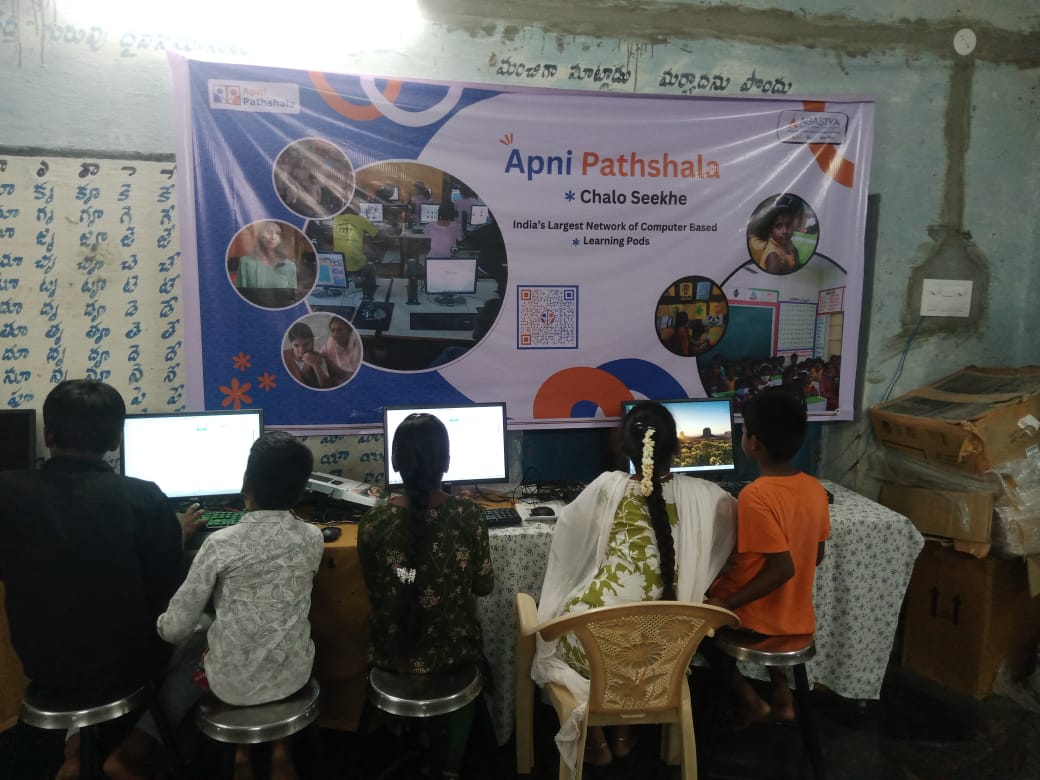
The biggest advantage a student can have today is not marks. It is growing up in a home where learning is a family value. A computer makes that possible.
What to Look For in a Family Computer?
A family computer does not need to be expensive. It should be reliable, easy to use, and able to handle different tasks for different people.
Look for a machine with an Intel Core i3 processor. That handles every task a family needs: browsing, email, documents, spreadsheets, video calls, and educational software. Make sure it has at least 8GB of RAM so multiple people can use it without lag. An SSD is important because it boots in seconds, and family members will not wait for a slow machine.
The computer should come with software pre-loaded. LibreOffice for documents and spreadsheets. A good browser for research. Scratch for children who want to learn coding. Pre-loaded software saves the family hours of installation and makes the machine useful from day one.
Apna PC offers all of this at ₹21,000 (shipping and GST excluded). It comes complete with a monitor, keyboard, mouse, and CPU. It has a three-year warranty. It is designed for Indian families, not just Indian students. Everyone in the house can use it from the moment it arrives.
Family learning starts with one machine. One investment. One decision. And everyone under your roof shares the returns. Visit apnapc.com to learn more.