

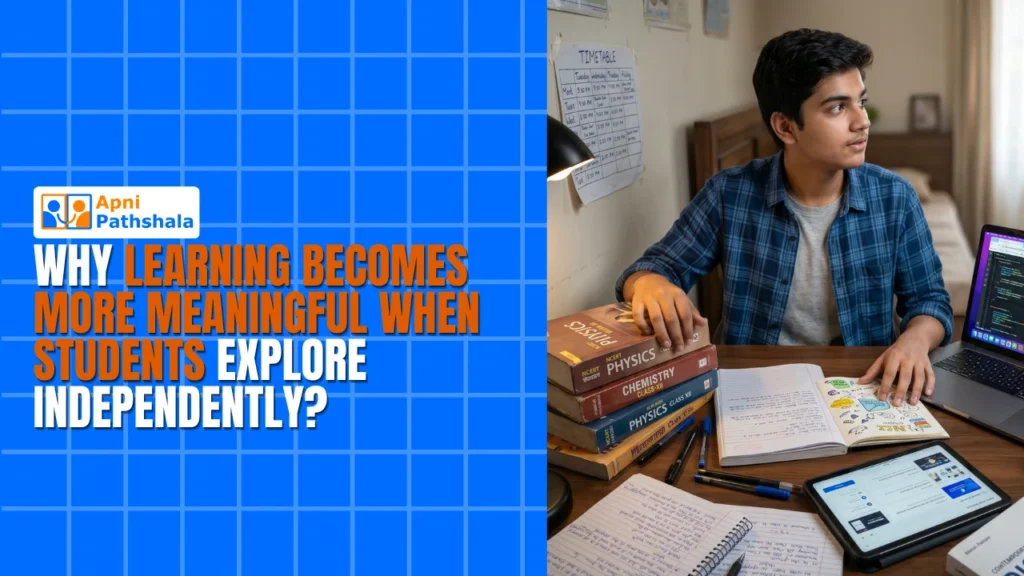
Rohan’s father bought him a math textbook in Class 8. Every evening, he would sit with Rohan and make him solve problems from chapter after chapter. Rohan solved them. He got marks. He passed. But ask him what he learned that year, and he cannot name a single thing. The knowledge went in for the exam and came out after it.
His sister, two years younger, got a computer the same year. Nobody told her what to learn. She opened Scratch, started building a small animation, and ran into a problem. She searched online, watched a tutorial, tried three different approaches, and finally made it work. That one evening taught her more about problem-solving, patience, and persistence than a year of textbook exercises taught her brother.
The difference is not the subject. It is the method. Independent learning changes how the brain processes information. When a student explores on their own, the learning sticks. When students are told what to learn, that information fades.
Why Curiosity-Based Learning Works Better
Curiosity-based learning is not a new concept. Every parent has seen it in action. A toddler who discovers a drawer will open it, pull things out, examine each one, and put them back. Nobody teaches them to do this. Curiosity drives learning naturally.
The same thing happens when a student has access to a computer. They do not wait for instructions. They open an application because it looks interesting. They try something because they want to see what happens. They fail, try again, and learn from their failure. The learning is driven by their curiosity, not by a syllabus.
This is fundamentally different from classroom learning. In a classroom, the teacher decides what to learn, when to learn it, and how quickly to go. The student’s job is to follow. There is no room for curiosity because the schedule does not allow it.
When a student explores independently, the opposite happens. They decide what interests them. They spend more time on things they enjoy. They skip things that bore them. They go deeper into topics that excite them. The learning is personalized in a way no classroom can replicate.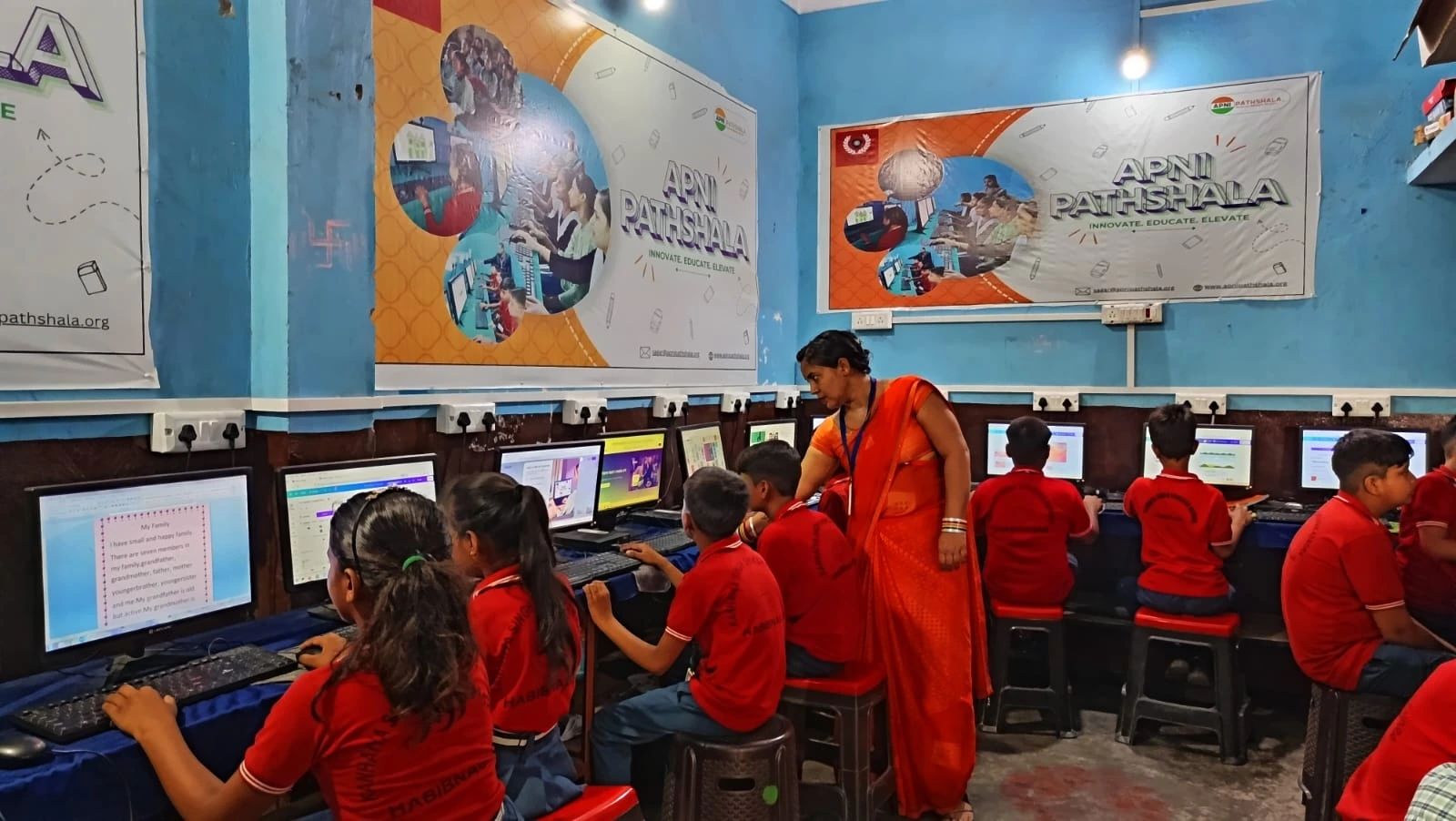
Self-Learning for Students Builds Deeper Understanding
Self-learning for students is not about studying alone. It is about building the ability to figure things out without being told. A student who learns to use a spreadsheet by exploring it on their own understands it better than a student who follows a step-by-step tutorial. The explorer makes mistakes, discovers shortcuts, and builds an intuitive understanding. The follower memorizes steps without understanding why.
This deeper understanding shows up in unexpected ways. A student who taught themselves Scratch can pick up a new programming tool faster because they understand the logic behind it. A student who explored LibreOffice on their own can adapt to any document software because they understand the patterns. The skill is not the specific tool. The skill is the ability to learn any tool independently.
A personal computer helps students learn beyond the school curriculum. But the most valuable lesson it teaches is how to learn independently, without formal instruction.
Why Student Engagement Depends on Ownership?
Student engagement is the biggest challenge in Indian education. Teachers complain that students do not pay attention. Parents complain that children do not study. The problem is not laziness. The problem is control.
When a student is told to study something they did not choose, at a pace they did not set, using a method they did not pick, the engagement is zero. They complete the task because they have to, not because they want to. The moment the pressure disappears, so does the interest.
When a student explores something they chose, at their pace, using their own method, the engagement is natural. They do not need to be forced. They do not need to be monitored. They are engaged because the learning is theirs.
A computer makes this possible for every subject. A student curious about history can explore historical sites online. A student interested in science can run virtual experiments. A student fascinated by art can try digital drawing. The computer does not force a subject. It offers every subject and lets the student choose.
The biggest advantage a student can have today is not marks. It is the desire to learn independently. A student who wants to learn will always outperform a student who has to learn.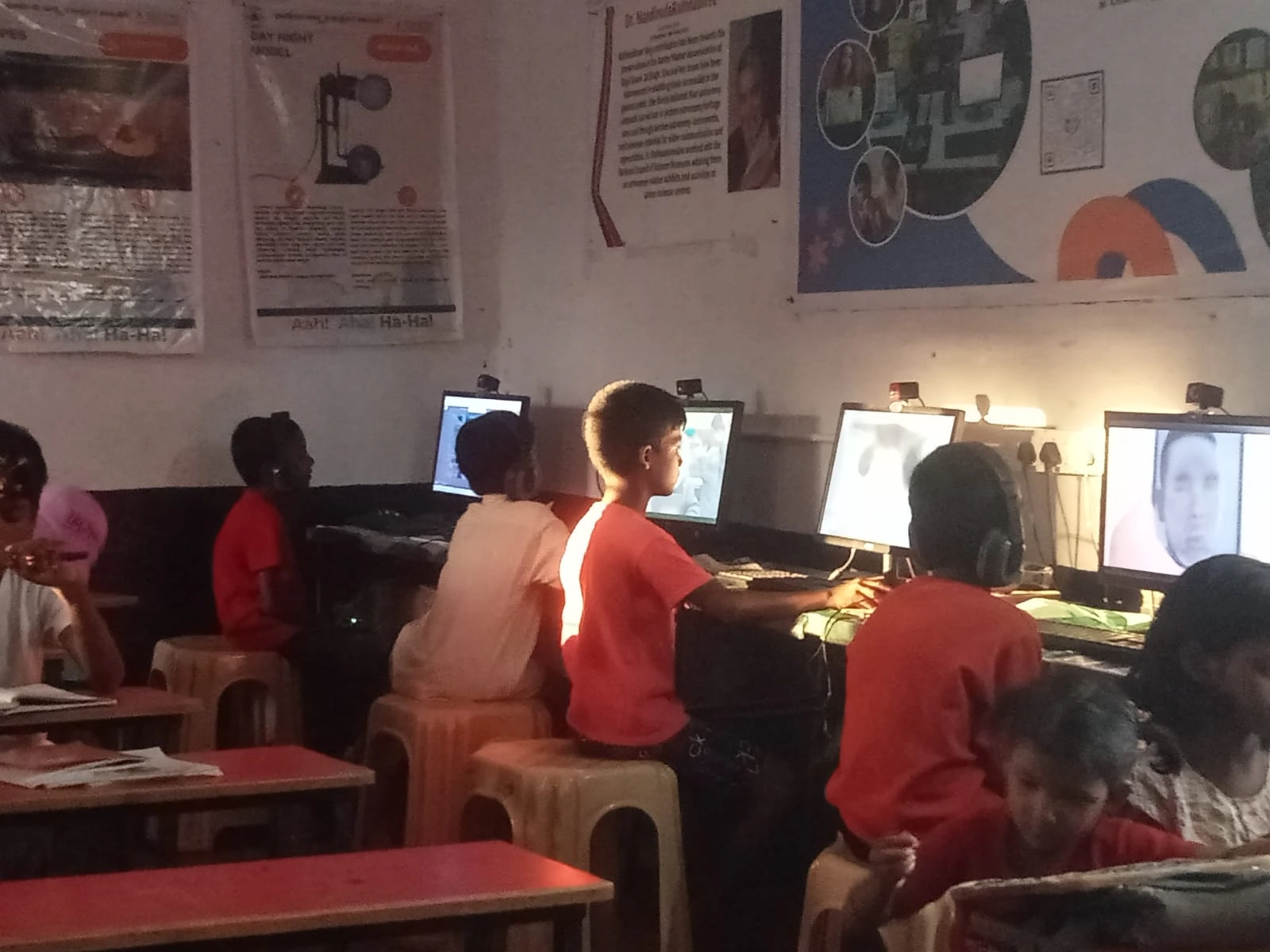
What Can Parents Do?
You cannot force curiosity. You can only create the conditions for it. The simplest thing you can do is give your child a computer and step back.
Do not tell them what to learn. Do not install educational software and force them to use it. Do not set a schedule that says “learn coding from 4 to 5 PM.” Give them the machine. Give them space. Watch what they gravitate toward.
You will be surprised. The child who fights doing homework will spend an hour building something in Scratch. The child who complains about reading will spend forty minutes researching something they are curious about. The child who seems unmotivated in school will show incredible focus when they are in control of their own learning.
Independent learning is not about leaving a child alone with a computer. It is about trusting that the child’s curiosity is enough. When a child has the right tools and the freedom to explore, the learning happens on its own. It is deeper, longer-lasting, and more meaningful than anything a classroom can deliver.
Apna PC comes pre-loaded with Scratch, LibreOffice, VS Code, Blender, and Arduino IDE. At ₹21,000 (shipping and GST excluded), it gives your child the tools to start learning independently. Visit apnapc.com to learn more.