

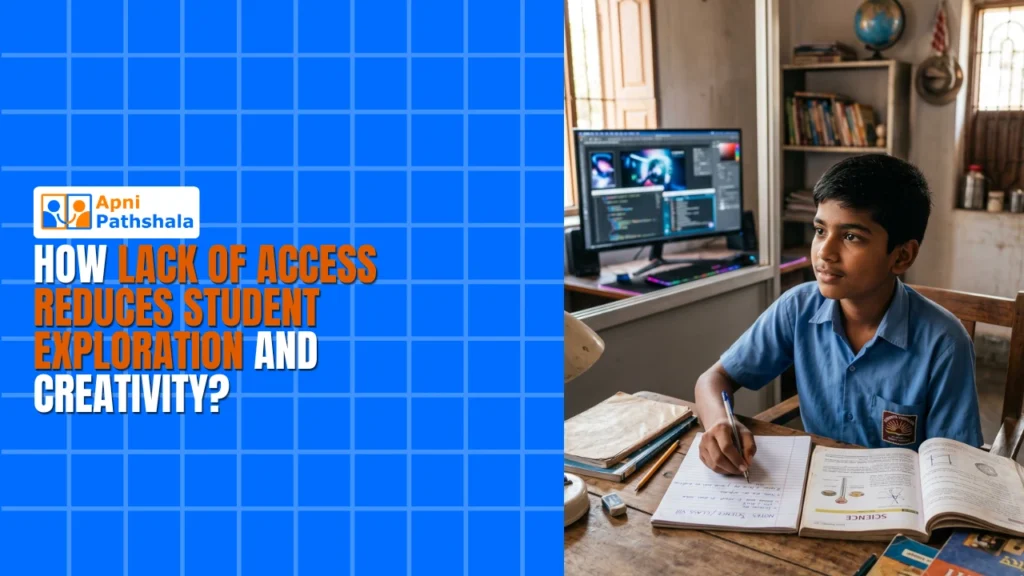
Millions of Indian students grow up with ideas they never have the opportunity to explore. This is not due to a lack of intelligence, but rather a lack of tools. Creativity in students does not vanish spontaneously. It is quietly suppressed when a child lacks the ability to look something up, experiment, build, design, or discover beyond what is handed to them in a classroom. Access, or the absence of it, shapes what a student believes is possible. And in too many homes across India, that boundary remains frustratingly close.
What Happens When Curiosity Has Nowhere to Go?
A child who wonders how bridges are built, why the sky turns orange at sunset, or how video games are made possesses the seed of something remarkable. But curiosity needs somewhere to go. Without a device or internet access, that spark quickly fades.
Student creativity development depends on exploration. It needs the freedom to try, fail, look something up, and try again. When that freedom is not available, when a student shares one phone with the entire family or has no device at all at home, the natural creative loop breaks. Ideas fade. Questions go unanswered. Over time, students stop asking questions they do not expect answers to. The habit of wondering quietly fades away.
This is not a small thing. The habit of curious exploration, built during childhood, stays with a person for life. It feeds problem-solving, confidence, and innovation. When it is not built, the gap is difficult to close later, and no amount of classroom instruction fully replaces what self-directed discovery teaches a young mind.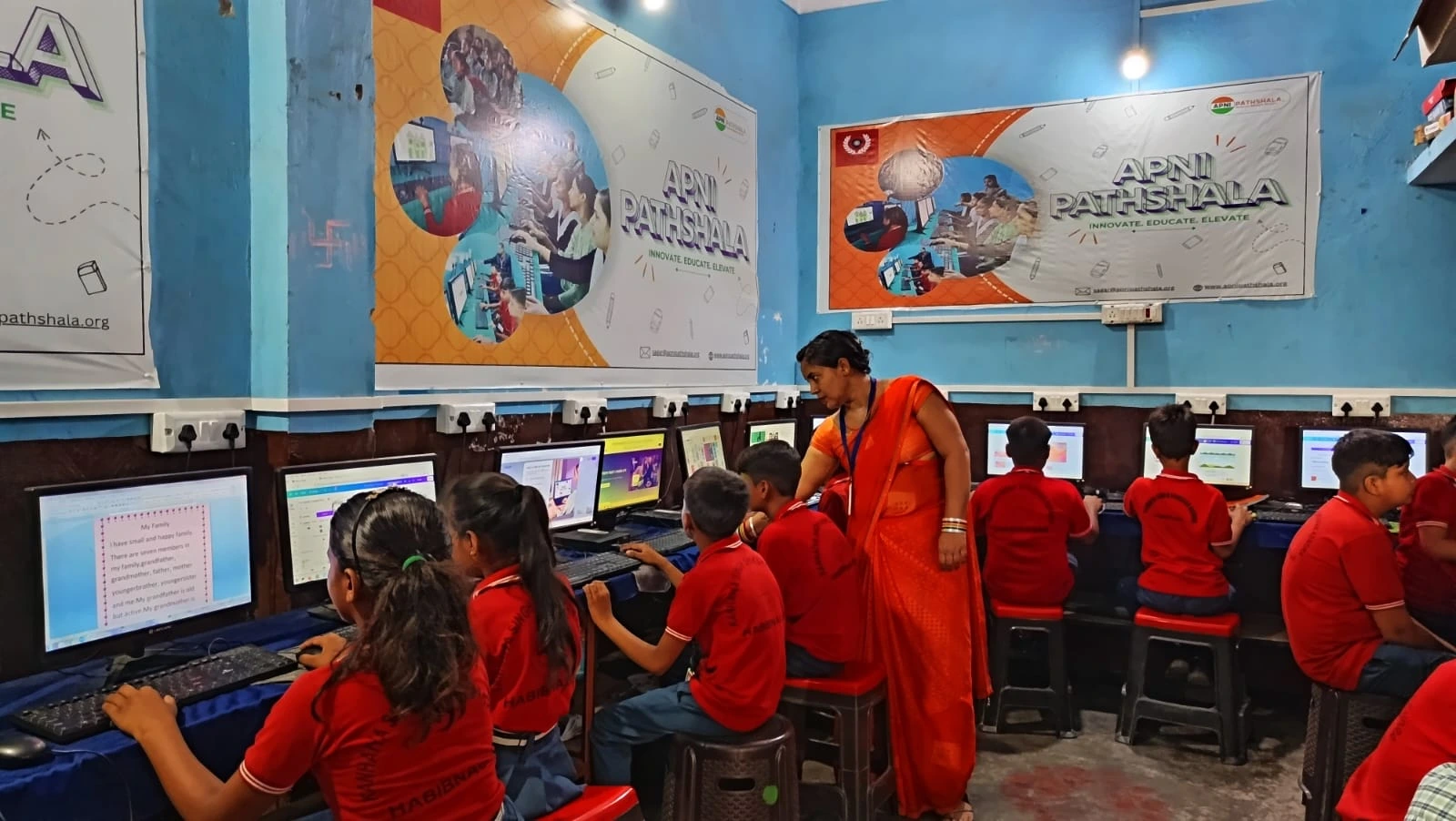
Technology and Creativity Are More Connected Than You Think
There is a common assumption that screens hurt creativity, that more technology makes students passive consumers. The truth is more specific. Passive scrolling does not build creative thinking. But active use of technology absolutely does.
When a student uses a computer to make a presentation, write a story, create a spreadsheet, build a simple digital project, or code even a beginner-level program, that is technology and creativity working together. The device becomes a canvas. The skills built on that canvas carry into every area of life: communication, design thinking, problem-solving, and original expression.
UNESCO global education research consistently links digital access to deeper learning outcomes. Students who can explore freely, who can research, create, and share using technology, develop stronger critical thinking skills and more confident creative instincts than those limited to rote learning alone. The difference compounds year after year.
Read more about how a personal computer helps students. Learn beyond what any textbook can offer.
Creative Learning Methods That Need a Device to Work
The most effective creative learning methods available today are digital by design. Mind mapping, project-based learning, visual storytelling, digital art, peer collaboration tools, and beginner coding, all of these provide students new ways to think and express themselves. But none of them are accessible without a device.
A student in a Tier 2 or Tier 3 city who has no computer at home may hear about these methods in school. But without the ability to practice independently, the methods do not become habits. They stay abstract concepts rather than real, usable skills. And without practice, the creative confidence that comes from those skills never fully develops either.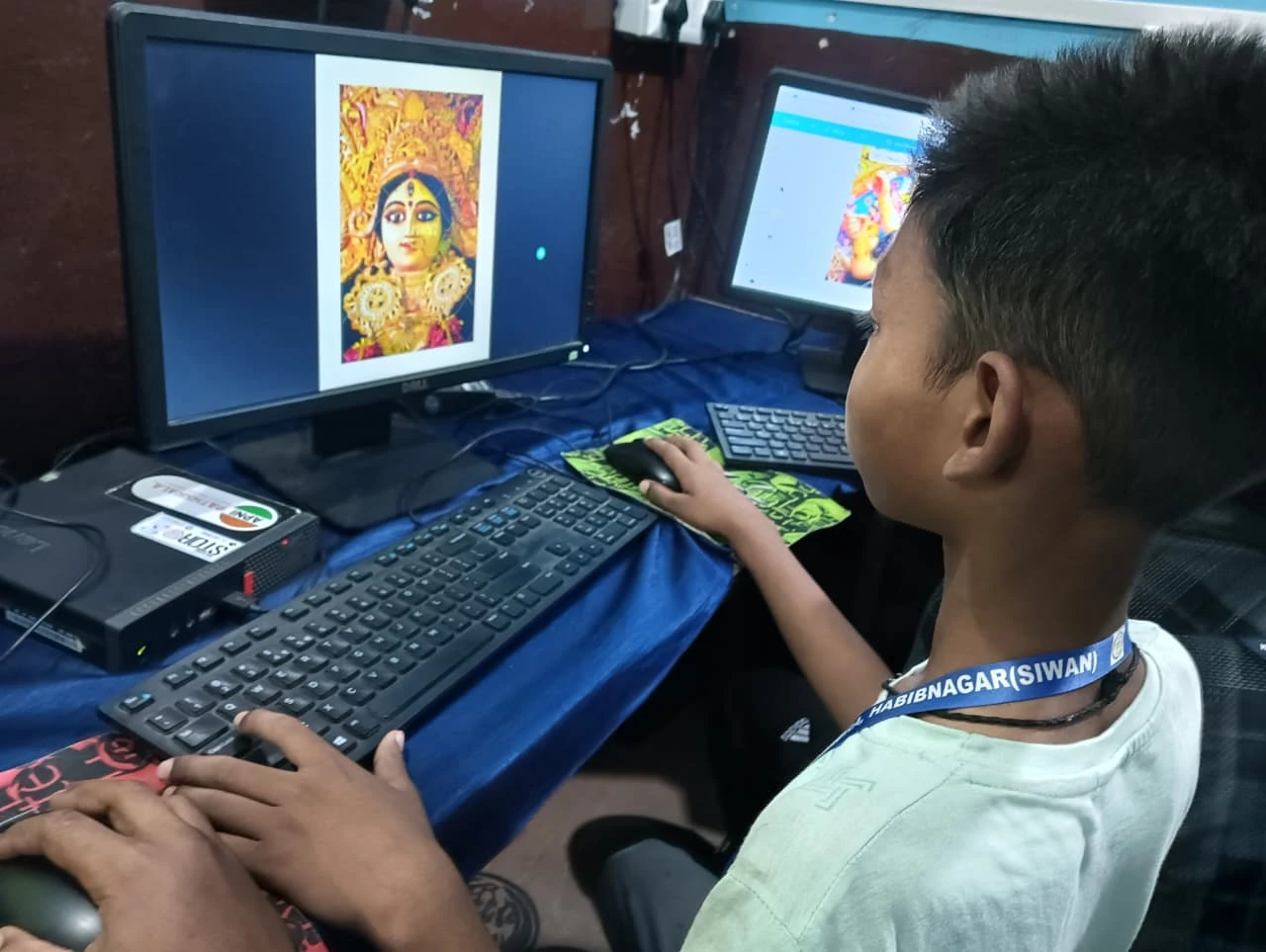
Platforms like DIKSHA, India’s national digital learning platform, offer enormous resources for self-directed creative learning, videos, interactive lessons, and subject-wise content. But they require a device. Without one, the platform is essentially useless to the student who needs it most.
Independent exploration, reading, watching, building, and experimenting at one’s own pace are what turn students into thinkers. Schools provide structure. A personal device offers freedom that structure alone cannot provide.
Access is the foundation, and Apna PC makes it a reality
Apna PC was designed with this exact problem in mind. At ₹21,000 (shipping and GST excluded), it gives Indian families a real computer built specifically for students, not a borrowed phone, not a shared tablet juggled between siblings, but a dedicated learning device that belongs to the child.
When a student has their own computer, they explore more. They try more. They fail privately and learn faster. Creative confidence builds slowly, through small moments of discovery, a project that finally came together, a concept that clicked, and a skill practiced until it felt natural. Those moments need space. Apna PC creates that space.
Whether it is researching a science project, practicing a new skill, following a curiosity wherever it leads, or simply having the room to make something, access changes everything. Read about the biggest advantage a student can have today: it is not just about achieving high marks. It is the freedom to explore, create, and grow on one’s own terms.
If you want your child to develop into a confident, creative thinker, give them the tool that makes it possible. Visit apnapc.com to learn more.