

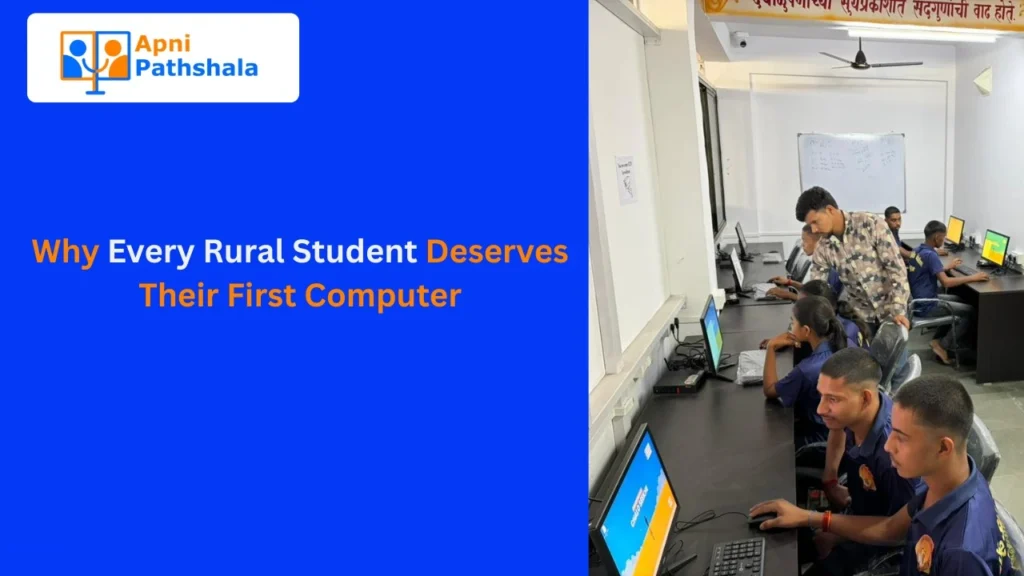
Sruthi had never touched a computer before she joined the program. Not once. She was in Class 9, her father worked construction, and a personal computer was simply not something her family could imagine owning. When she sat down in front of Apna PC for the first time, she didn’t know where to start. She just stared at the screen.
That moment, a student getting their first computer for students experience is more significant than most people realize. It’s not just about technology. It’s about belonging. It’s about a child understanding that the digital world wasn’t built without her in mind.
What the First Computer for Students Actually Means
There’s a version of this story that people in cities take for granted. Kids in urban homes grow up watching parents use laptops, playing games on tablets, and doing homework on shared family computers. By the time they’re in middle school, technology feels natural to them.
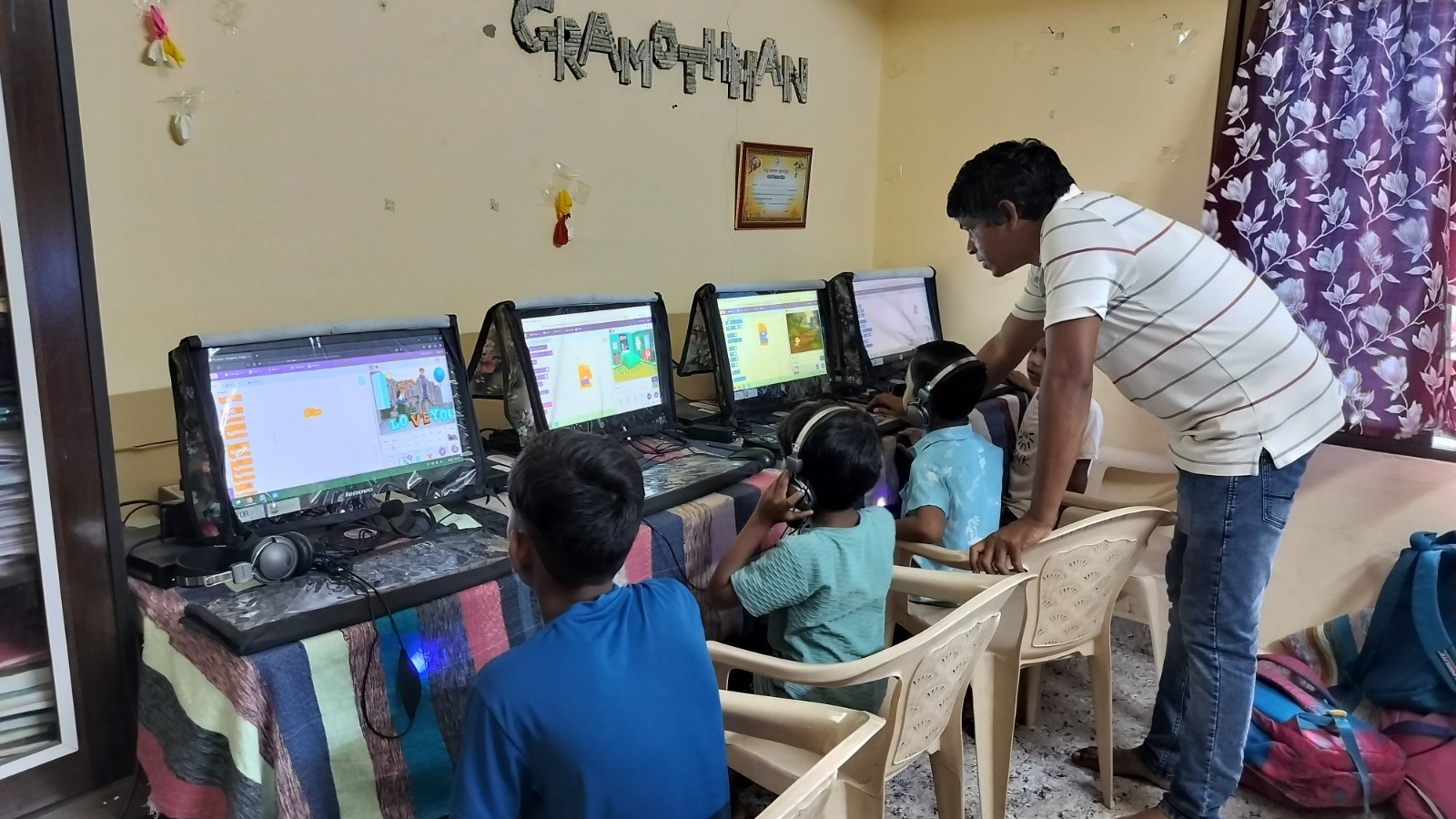
Rural students don’t get that runway. Their first computer experience often happens in a school lab, shared among 40 students, for maybe one period a week. That’s not enough. A student can’t build confidence with technology if she only gets to touch it for 45 minutes every seven days.
The first computer for students in rural areas needs to be personal. Something they can return to. Something they can make mistakes on and not feel embarrassed about. Something that waits for them.
Sruthi needed time. She needed to fail at things when no one was watching. She needed to discover what she was curious about, slowly, on her own terms. That’s what a personal computer gives a student that a school lab never can.
Why Rural Students Deserve the First Computer for Students Experience
Let’s be honest about what’s at stake here. We live in a world where job applications happen online. Government forms are digital. College admissions require email communication. Scholarships are applied for through portals that assume you know how to navigate a web browser.
A student who doesn’t get their first computer for students experience until they’re in college is already behind. Not because they’re less capable, but because the system didn’t give them the same starting line.
That gap compounds. The student who has a computer at home practices more. They get comfortable faster. They experiment with tools their rural peers haven’t heard of. And by the time everyone sits for the same competitive exam, the playing field isn’t level at all.
Sruthi caught up. That’s the good news. But it took months. Months that she shouldn’t have needed to spend just to reach where her urban peers already were.
Resources like Khan Academy are free and incredibly powerful for self-learning, but only if a student has consistent access to a device. Without that first computer, even free education stays out of reach.
What Happens in the First Few Weeks
When students get their first computer, something interesting happens. There’s usually a phase of pure exploration. They’re not trying to study. They’re not trying to be productive. They’re just figuring out what this thing does.
That phase is not wasted time.
Exploration builds comfort. Comfort builds confidence. And confidence is what eventually turns into a student who can type a resume, fill a form, or research a topic for an assignment without needing help.
Sruthi spent her first week just opening and closing programs. Learning what happened when she pressed different keys. Figuring out how to move the cursor. It sounds basic. But that’s what the first computer for students experience actually looks like when you start from zero.
By week three, she was making notes. By month two, she was looking things up on her own. The progression isn’t magic. It’s just access, repeated over time.
Read more about how this access shapes student thinking: How Digital Skills Build Confidence in Rural Students.
The Right First Computer for Students Makes a Difference
Not all first computer experiences are equal. A hand-me-down laptop that crashes every 10 minutes teaches a student that computers are frustrating and unreliable. That’s not the lesson we want.
The first computer for students needs to be fast enough to feel responsive. It needs to have the tools that matter for learning already installed. And it needs to work without requiring constant adult intervention to troubleshoot.
Apna PC was built with this in mind. It runs on Zorin Grid, which makes it easy to manage and keep running smoothly, even for students who are just starting out. The environment is clean, focused, and built around learning rather than entertainment. Students aren’t fighting through ads or distractions just to find their study materials.
That matters more than specs. A student’s first impression of computers becomes their relationship with technology for years to come.
Giving Every Rural Student Their First Computer for Students Experience
Sruthi didn’t need anyone to hand-hold her through the learning process once she had her own computer. She needed access, a device that worked, and time. That’s it.
The argument for giving every rural student their first computer for students isn’t complicated. These are students with the same curiosity, the same potential, and the same drive as their urban counterparts. They just need the same starting point.
The gap between rural and urban education isn’t a gap in intelligence. It’s a gap in access. And that gap has a solution. Find out more at How Affordable Computers Are Changing Rural Education.
Sruthi is still learning. She’s going to be fine. But the students who come after her shouldn’t have to wait until Class 9 to touch their first computer. That wait costs them something they can’t fully get back.
Every rural student deserves their own device. Not eventually. Now.