

Riya gets dropped off at one of the best private schools in the city every morning. Her parents pay ₹8,000 a month in school fees and another ₹4,000 for tuition. She has great teachers, a structured timetable, and a clean classroom. But when she gets home at 6 PM, she opens her notebook and stares at a wall. No computer.
No way to practice. No way to explore. This is the Tool Gap, and it is quietly destroying the potential of millions of students who have expensive education but no right tools for education at home. Solving it does not require spending more on school. It requires giving students the one thing their schools forgot to send home.
What Expensive Education Actually Provides
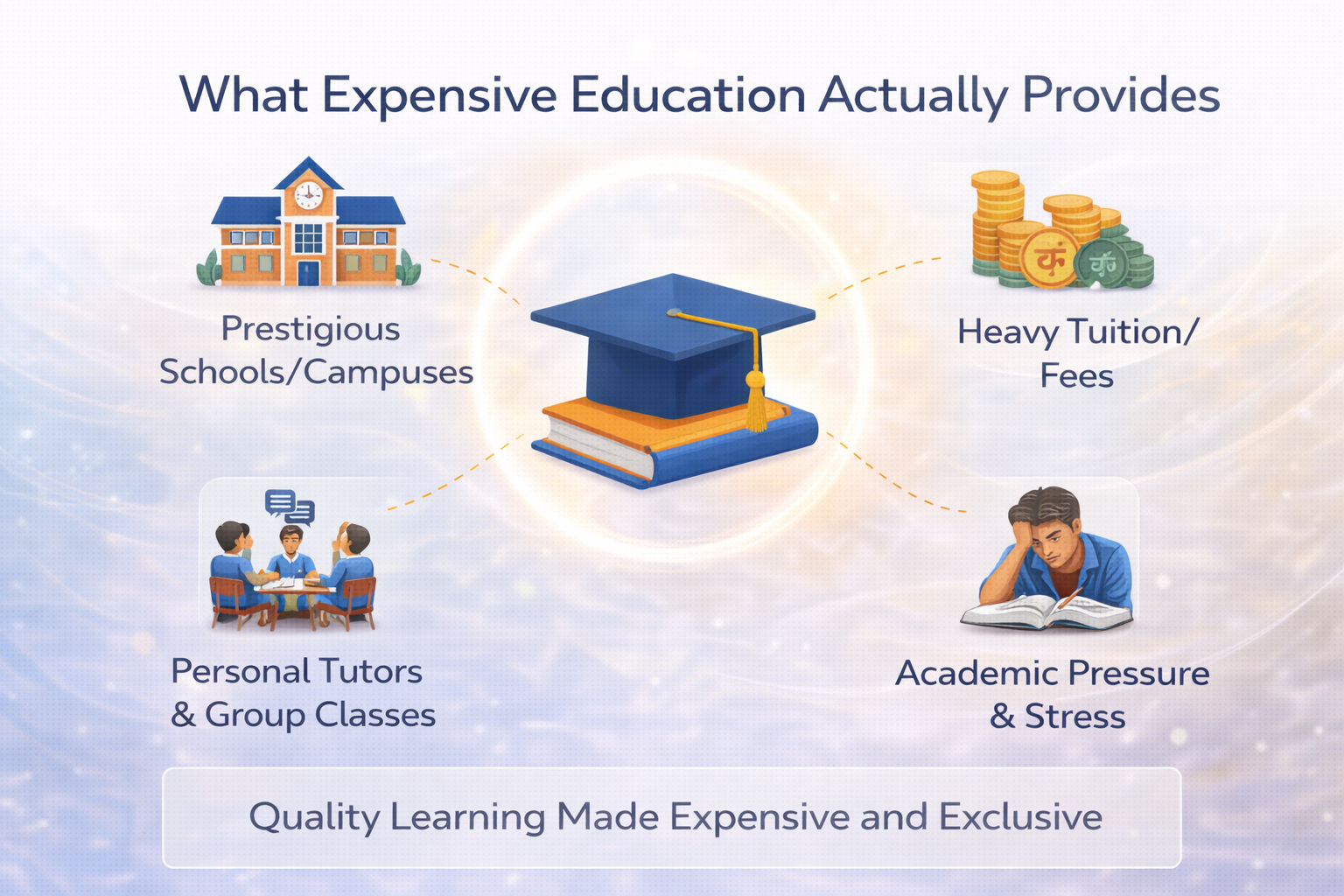
Expensive schools do give students real value. Good teachers explain concepts clearly. Structured curricula keep learning on track. A peer environment pushes students to perform. These things matter.
But even the best school cannot give your child one thing: a personal tool they can use at home every single day on their own terms. Schools provide access during school hours. That is seven hours out of twenty-four. What happens during the other seventeen?
The Missing Piece Nobody Talks About
Most schools have a computer lab. Students get maybe two sessions a week, forty minutes each. That is eighty minutes of screen time in seven days. For a subject that requires daily practice, this is not enough. The problem is not that schools lack computers.
The problem is that students lack computers at home. Home is where curiosity leads to late-night exploring. Home is where a student tries something, fails, and tries again. Home is where the right tool for education actually does its job. Without that access, school learning fades by the weekend.
Why Tools Trump Tuition in 2026
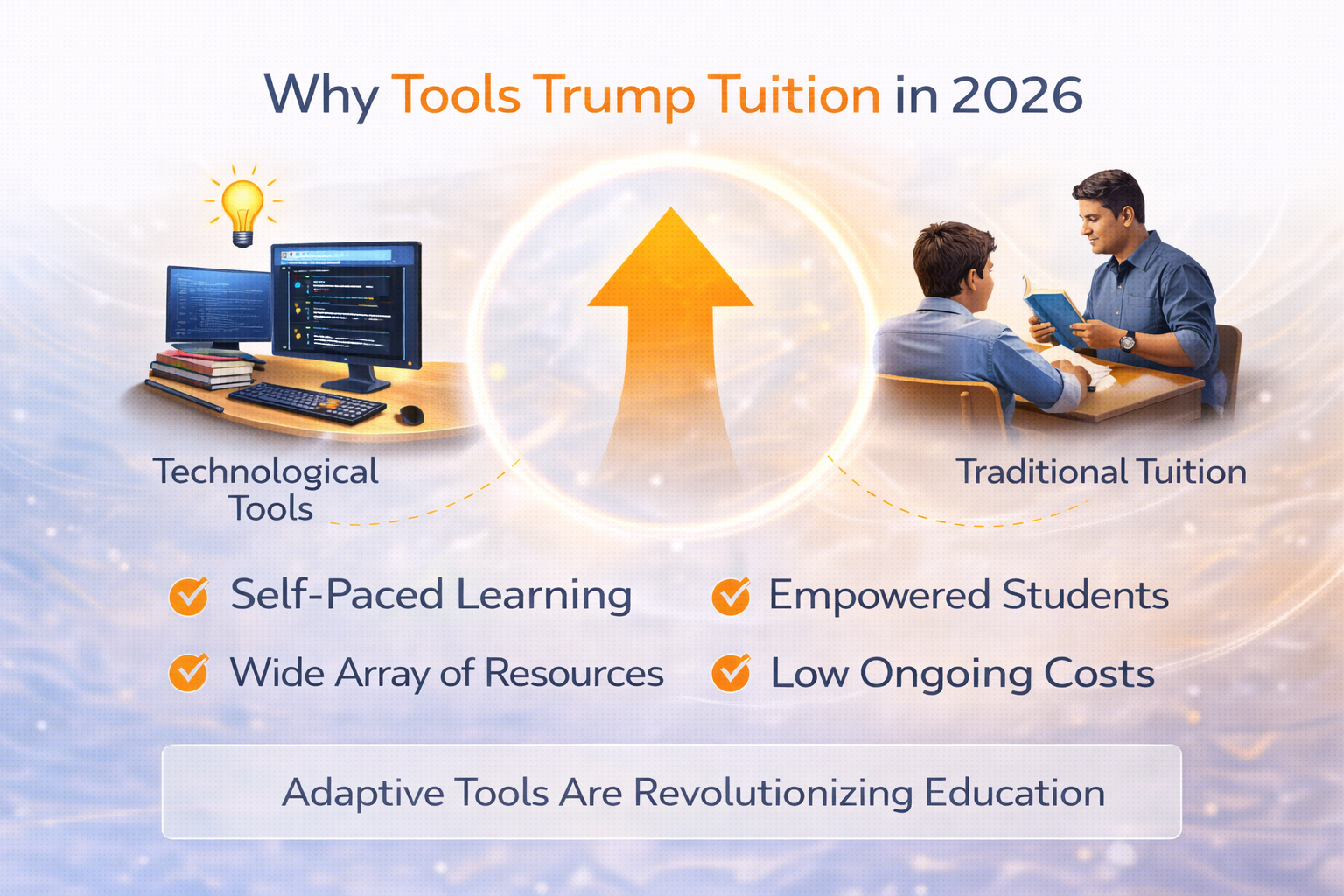
Information is no longer locked inside expensive textbooks or private classrooms. Coursera offers free and paid courses from top universities. A computer can genuinely replace tuition for many subjects when a student has daily access. Skills in coding, design, and research come from repeated practice, not from sitting in a classroom once a week. Tuition gives you one hour of guided instruction.
A computer gives unlimited hours of learning on your own schedule. In 2026, tools vs expensive education is not a close comparison when it comes to building real, lasting skills.
The Student With Tools vs Without
Picture two students in the same class, same teacher, same syllabus. Student A has a computer at home. She finishes homework, watches a short video to clear a doubt, and spends thirty minutes practicing something new. Student B has no computer. He copies notes, waits for the next lab session, and relies on whatever the teacher covered. By year end, Student A has hundreds of extra hours of practice.
Student B has none. The gap does not start at the school gate. It starts at home every evening, when one student has the right tool for education and the other does not.
What the Right Tool Actually Means
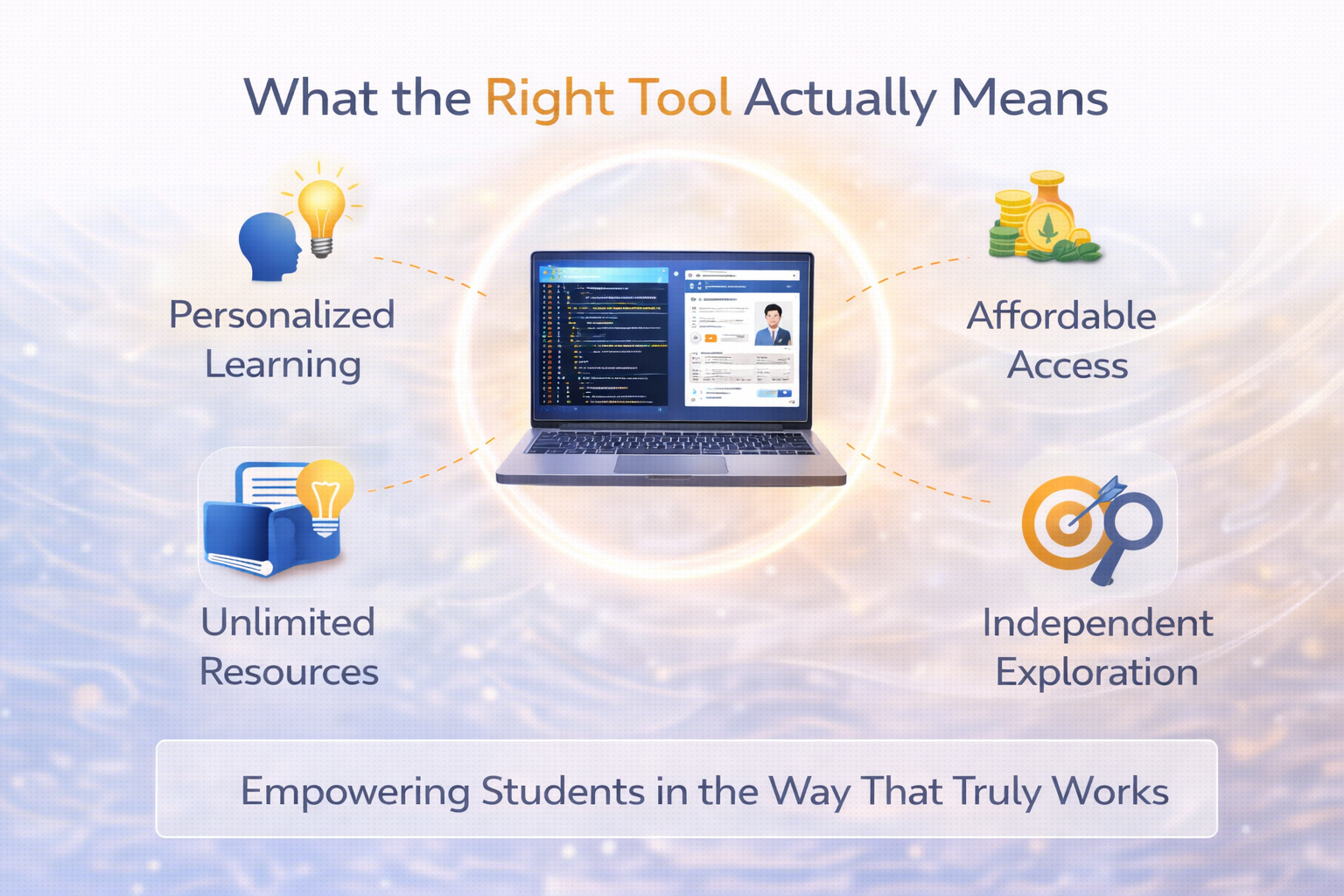
The right tool does not mean a ₹70,000 laptop with the latest processor. Most students need a reliable machine that runs educational software, loads browsers quickly, and handles word processing without freezing. Parents who believe their child needs an expensive device are solving a problem that does not exist.
According to UNESCO’s education research, access and consistency matter far more than device specifications for learning outcomes. A student with a ₹21,000 Apna PC who uses it daily will outperform a student with a ₹60,000 laptop that stays unused on a shelf.
Real Skills Come From Access
Coding cannot be learned in theory alone. A student who reads about loops but never types one is not learning to code. Design requires experimenting with tools until something clicks. Research means opening tabs, reading articles, comparing sources, and forming your own view. None of this happens in a classroom once a week.
It happens at home, after dinner, when a student has the right tool for education in front of them. Parents who invest in tuition over technology are often missing this point entirely.
The Affordable Solution That Works
Apna PC costs ₹21,000. It comes as a complete setup including monitor, CPU, keyboard, and mouse. It arrives pre-loaded with software students need for school, practice, and exploration. It carries a 3-year warranty, so families do not worry about repair costs.
For the price of four months of tuition, a family gets a tool that works every day for years. That is the smarter investment in any tools vs expensive education comparison. Stop paying for limited access when unlimited learning is at home.
Give your child the one thing school cannot send home. Get Apna PC today for ₹21,000 and close the Tool Gap for good.