

Every month, Indian parents spend thousands of rupees on education – school fees, tuition classes, books, and uniforms. And every month, the same students come home without real skills for the world waiting outside. Meanwhile is a one-time investment in a computer that sits ignored because “we cannot afford it right now.”
This is the education investment trap. You keep paying, the bills keep growing, and the results stay the same. The question nobody asks out loud: Are we overpaying for education while completely ignoring technology that could change everything?
What Parents Actually Spend on Education
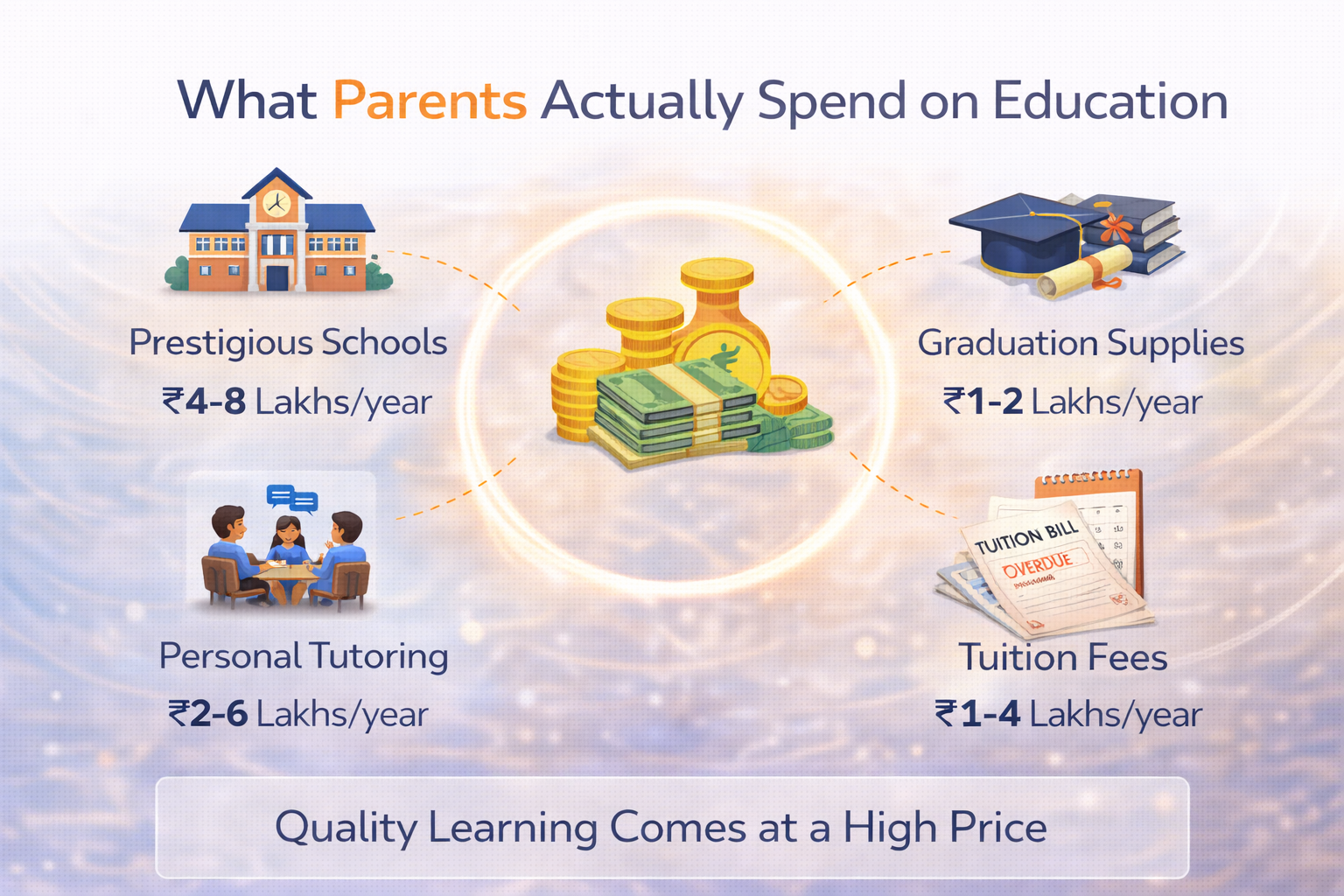
Let us be honest about the numbers. A private school in a Tier 2 city charges between ₹3,000 to ₹8,000 per month in fees alone. Add tuition classes for two subjects at ₹1,500 per subject, and you are already at ₹6,000 to ₹11,000 monthly. Then come books at ₹3,000 to ₹5,000 per year, uniforms, stationery, and exam fees.
By end of year, a single student costs ₹80,000 to ₹1,50,000. Across ten years of schooling, that is, anywhere from ₹8 lakh to ₹15 lakh spent on traditional education. And yet, most students graduate without knowing how to type properly, use a spreadsheet, or apply for a job online.
What Technology Actually Costs
Now consider what a computer actually costs. Apna PC is available at just ₹21,000 – a one-time purchase that lasts 3 to 5 years with basic care. No monthly fees. No tuition charges. No recurring expenses beyond electricity.
₹21,000 spread across five years is ₹4,200 per year – or ₹350 per month. Compare that to the ₹6,000 to ₹11,000 spent every month on traditional education. The math is not close. One investment grows a child’s capability for years. The other resets every single month and demands payment again.
The Results We Ignore
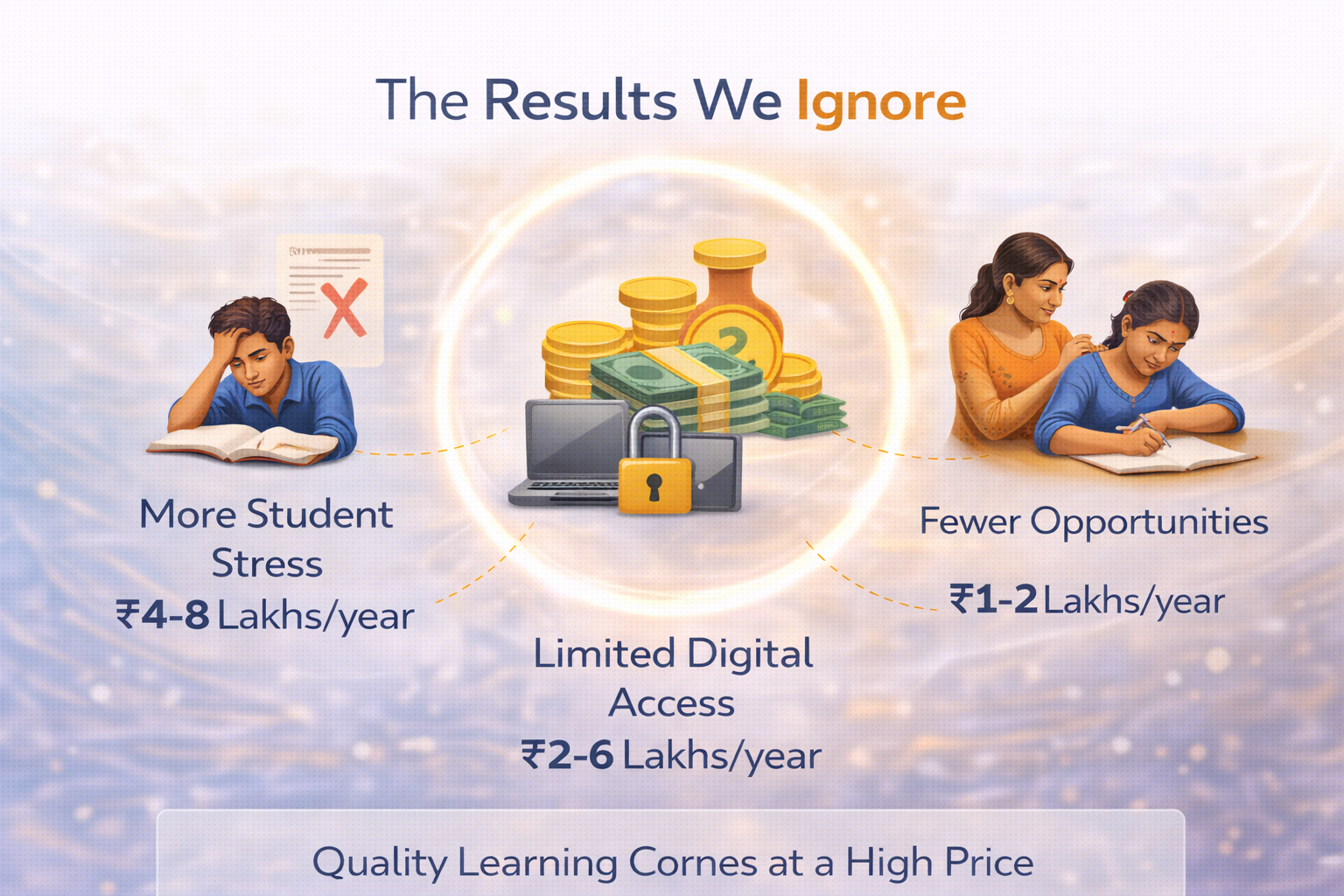
Here is something uncomfortable. Despite spending lakhs on education, many students still struggle. They pass exams but cannot write a professional email. They score marks but cannot build anything real. They depend on teachers for every answer and have no habit of learning on their own.
According to UNESCO’s education data, millions of students globally complete schooling without basic digital literacy – a skill now required for nearly every job category. We invest in grades. We ignore capability.
The dependency on tuition teachers means students never develop the most important skill: figuring things out themselves. That single skill determines career success more than any exam score ever will.
What Technology Actually Builds
A computer does not just help with homework. It builds a different kind of student. With access to platforms like Coursera, a student in a small town can learn the same skills as someone in a big city. The gap between opportunity and geography shrinks when a child has a device and internet access.
Technology builds digital literacy, self-learning habits, problem-solving ability, and confidence to explore. These are the exact skills employers look for in 2026. These are also the skills that tuition classes almost never teach.
The ROI Nobody Calculates
Return on investment from education spending is rarely calculated. Parents pay because it feels responsible. But if you tracked the actual outcome – skills gained per rupee spent – the numbers would be uncomfortable.
₹1,50,000 spent on school and tuition over one year versus ₹21,000 spent on a computer used for five years. One produces marks. The other produces capability. The real question is whether technology can replace tuition – and for many families, the answer is shifting.
Technology is not anti-education. But it is a smarter investment when budgets are limited and the future demands digital skills above all else.
Why 2026 Demands Technology Access
Jobs in 2026 require digital skills at the entry level. Data entry, customer service, freelancing, design, coding – none of these are accessible without a device. Online learning has moved from optional to essential. Students without computer access are falling behind not just in skills but in access to opportunity itself.
The internet does not care about exam scores at all. It rewards people who know how to use it.
Making the Smart Switch
The answer is not to abandon education. It is to stop treating technology as a luxury and start treating it as the foundation. Start with an affordable computer. Let your child explore, learn, and build alongside their schoolwork. Build skills and marks at the same time. Prepare them for the real world, not just the exam hall.
Parents who make this shift early give their children a genuine advantage that no tuition class can match.
Ready to make that investment? Get Apna PC at ₹21,000 and give your child access to a future that actually fits the world they are entering.