

School ends at 2 PM. Tuition starts at 4 PM.
What happens in between?
For most Indian students, the answer is simple:
Nothing.
We have created a generation that can score 95% in exams but cannot format a resume. Students who can define photosynthesis but panic when asked to compare two mobile phone plans.
A Community Learning Center is a safe third space where Indian students learn, collaborate, access digital tools, and grow beyond home and school.
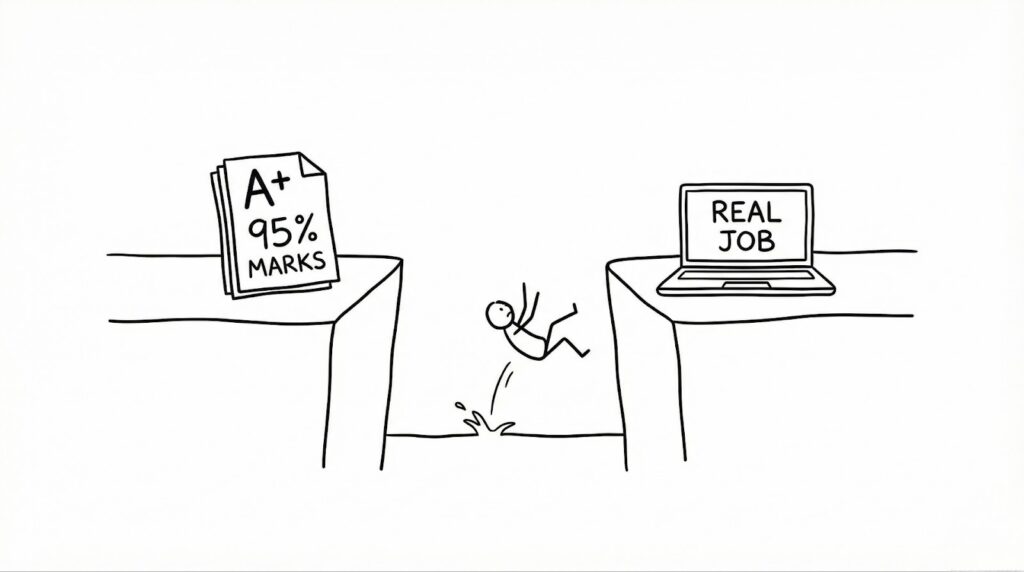
This is the skilling gap. India is full of degree holders with no employable skills.
The solution is not “another” tuition center. It is a Community Learning Center where students learn to do, not just memorize.
What Is a Community Learning Center?
Unlike schools (which have rigid syllabi) and tuition centers (which are obsessed with marks), a CLC asks one simple question:
“Can you actually do it?”
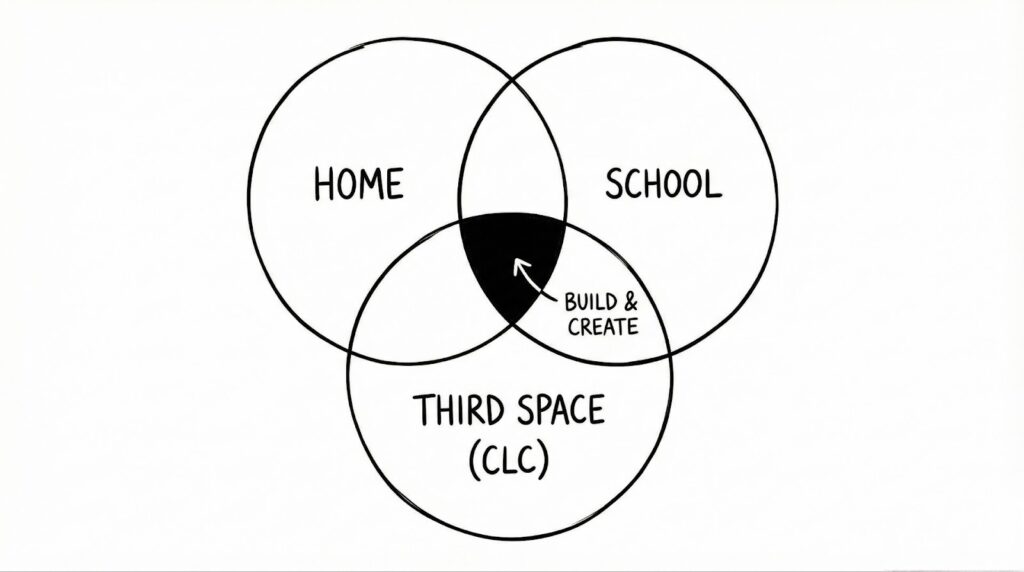
Sociologists call this the “Third Space.”
- It is not Home.
- It is not School.
It is a place for exploration without the pressure of grades. Here, a 12-year-old learns to build a website because it is interesting, not because it will appear in Section B of a test paper.
How Community Learning Centers Work
Walk into a functioning CLC and you will not see silent rows copying from a blackboard.
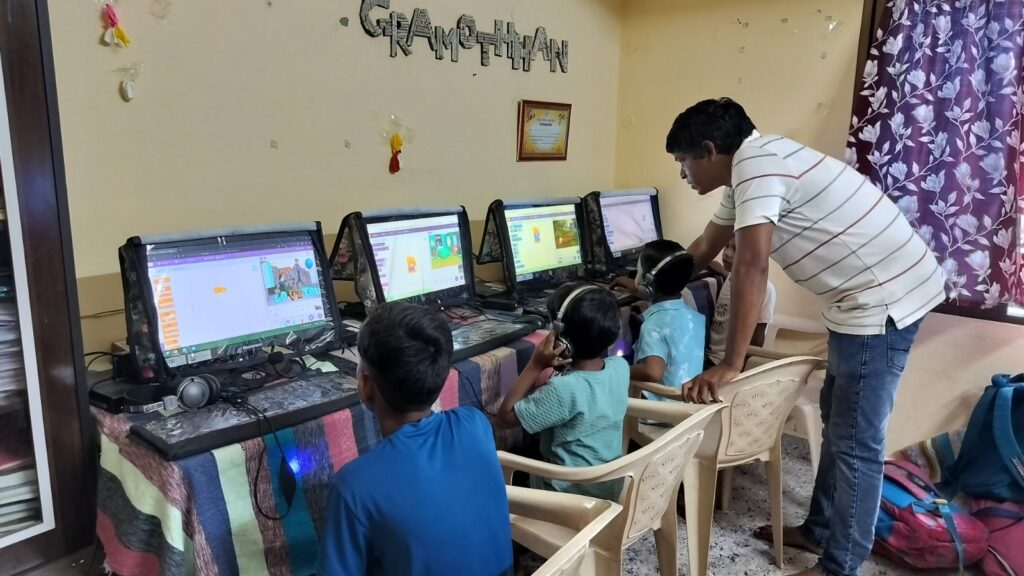
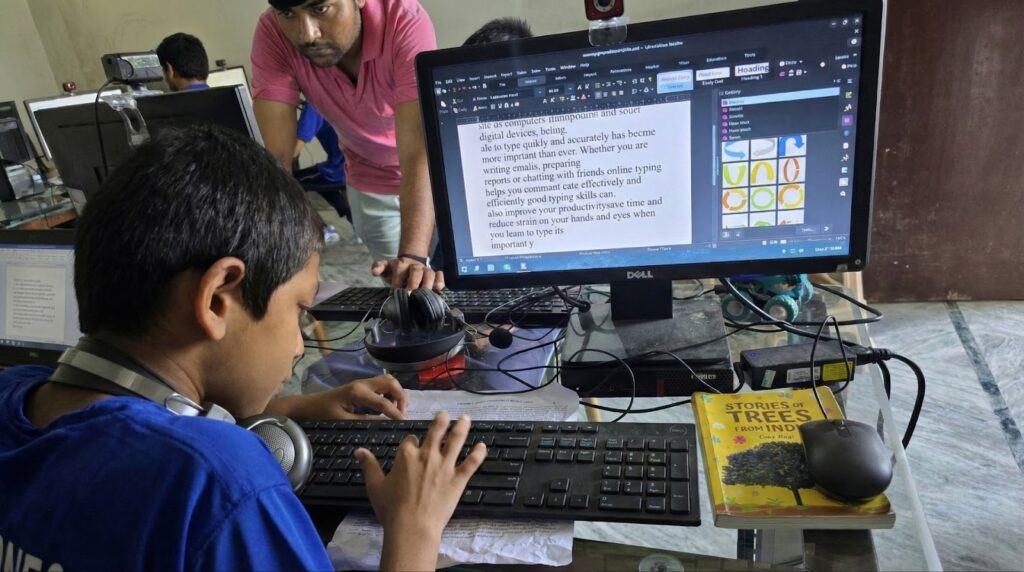
You will see students clustered around computers, building projects. The shift is simple: from consuming information to creating with it.
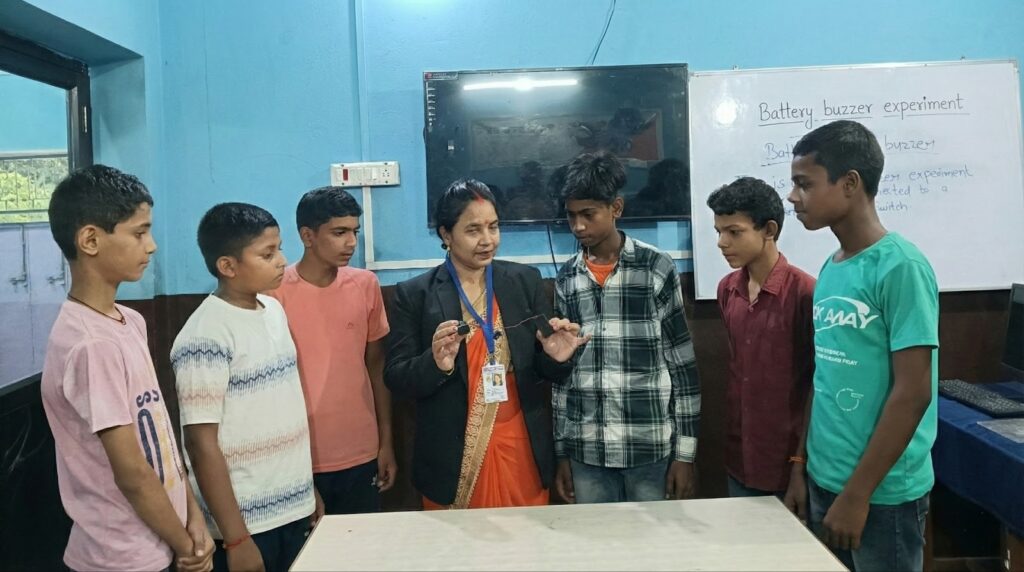
- Practical Application Over Theory: In school, students draw circuit diagrams.
In a CLC, they hold a 9V battery and wires. When they connect it wrong, nothing happens. When they get it right, the buzzer sounds.
That moment builds understanding no textbook can provide.
- Technology That Actually Works: Most school computer labs stay locked. In a CLC, technology is the foundation.
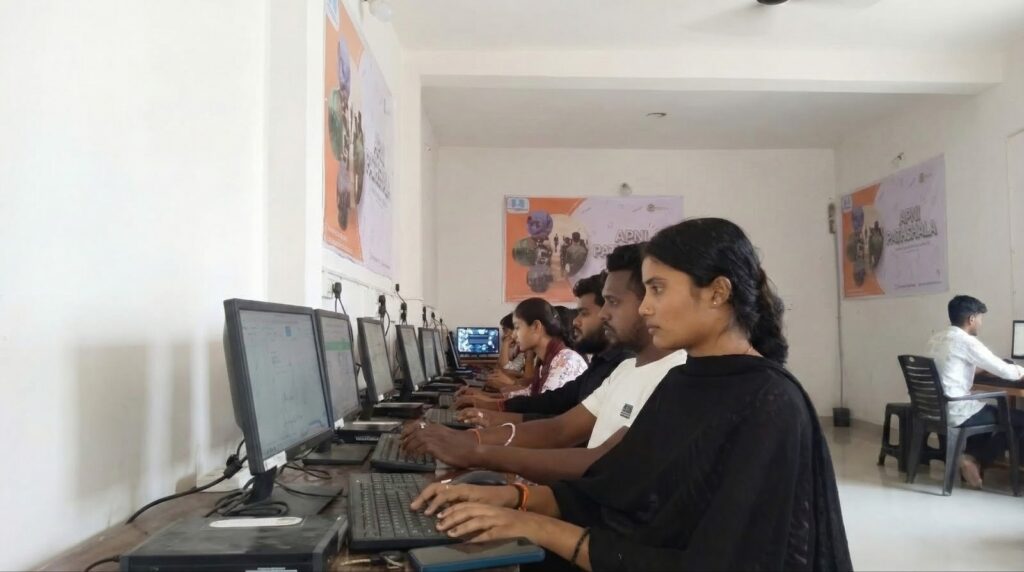
Apni Pathshala’s POD model equips each center with 10 functional computers, webcams, and headphones.
Students use these daily to build digital fluency.
- Mentorship, Not Just Teaching: Teachers deliver lessons. Mentors shape thinking.
Local leaders running these centers receive support from dedicated POD Admins who help with planning and pedagogy.
When students struggle, mentors ask questions that help them discover answers themselves.
This builds independent thinking.
Community Learning Centers vs Tuition Centers
Tuition centers optimize for exam scores. CLCs optimize for capability. Your child goes to tuition to answer specific question types faster.
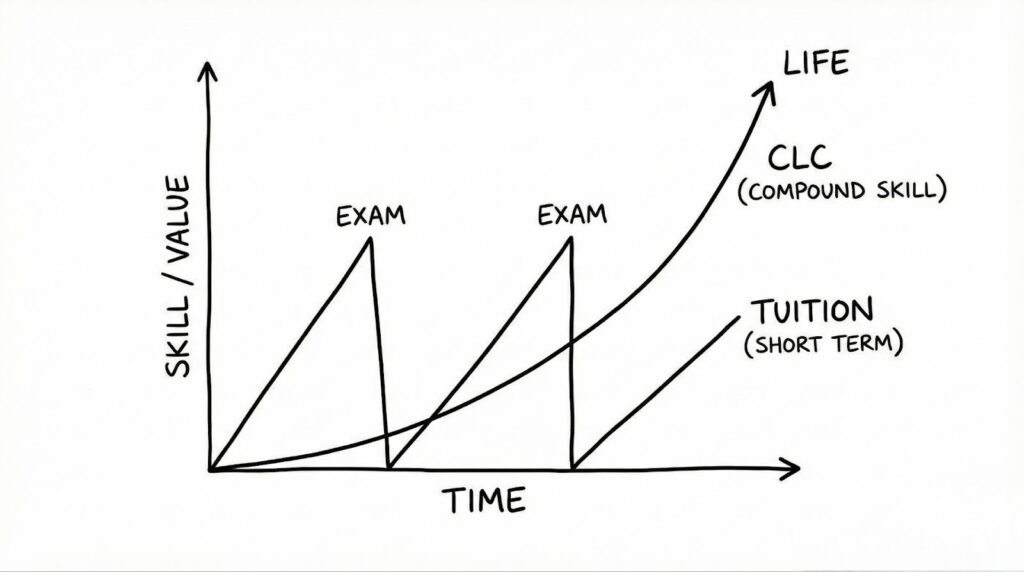
They go to a CLC to solve problems they have never seen before. Both serve different purposes.
One prepares for the next test. The other prepares for the next decade. If you want your child to score 95% in Chemistry, choose tuition.
If you want them thinking critically ten years from now, they need experiential learning opportunities only CLCs provide.
The Skills Gap Community Learning Centers Solve
India produces graduates who cannot write professional emails. Engineers who cannot troubleshoot basic software errors.
Commerce students who struggle to file taxes. This is not about intelligence.
It is about exposure.
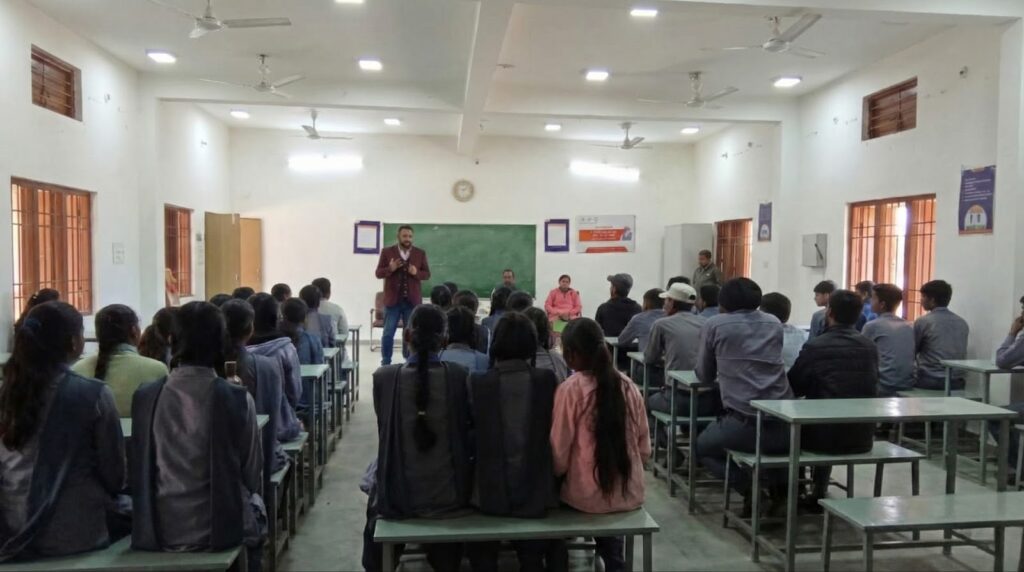
After school learning programs that focus on practical skills address this directly.
Students learn:
- Digital literacy (not just theory, actual creation)
- Problem-solving through real projects
- Communication and collaboration
- Technical skills applicable to jobs
These are skills the job market demands but traditional education does not provide.
Real Impact: The Apni Pathshala Model
Apni Pathshala is building 1,000+ PODs across India to reach over 1.5 lakh students.
They are self-sustaining centers run by local leaders, supported by communities, designed to last.
Every neighborhood should have a space where children can access computers, build projects, and develop skills beyond textbooks. It is achievable infrastructure.
The model works because it solves a genuine problem: the gap between what students know and what they can do.
What Parents Should Know
Look at your child’s schedule.
How many hours build genuine capability versus hours preparing for tests?
The job market cares about problem-solving, clear communication, learning speed, and collaboration (not just 10th marksheet)
These skills are not built through textbook study. They emerge from repeated exposure to real challenges in supportive environments.
A community learning center provides that exposure. Not replacing school, but complementing it with what schools cannot offer.
The Future of Learning Beyond Classrooms
India needs educational infrastructure that bridges theory and practice.
Community learning centers are that bridge.
They give students space to experiment, fail safely, and build confidence in their abilities. They ensure practical knowledge is not a privilege for the wealthy but a standard for everyone.
When every neighborhood has access to skill-based learning environments, we create a generation that does not just pass exams.
They solve problems.
If you want your child developing skills that matter beyond the next exam cycle, explore how Apni Pathshala’s community learning centers can become part of your area.
Visit our site to learn how to start or support a POD near you.