

For years, people have warned that AI will disrupt education.
But very few explain what that disruption actually means or why it might be the most positive shift students have seen in generations.
The truth is simple:
Education was built for a world that no longer exists.
AI didn’t break the system. It exposed its weaknesses.
And that’s a good thing.
Education Was Built on Scarcity. AI Destroyed Scarcity.
Traditional education was designed around one core assumption:
Knowledge is scarce.
Teachers had information.
Students didn’t.
Schools existed to transfer that information efficiently.
AI has completely shattered this model.
Today:
- Knowledge is abundant
- Answers are instant
- Learning resources are global and free
What’s scarce now is not information, but:
- Judgment
- Curiosity
- Critical thinking
- The ability to learn independently
As explained in the book Reshuffle, AI doesn’t replace humans it reshuffles value. Those who thrive are not the ones who memorise the most, but the ones who:
- Ask better questions
- Learn faster than others
- Adapt continuously
- Use AI as a thinking partner, not a crutch
Unfortunately, our education system is still preparing students for yesterday’s world
Why the Current Education System Is Badly Outdated
Most schools still operate on three broken assumptions:
- Memorisation equals intelligence
- One syllabus fits all students
- Teachers must be the primary source of knowledge
None of these hold true anymore.
AI can recall facts better than any human.
Online platforms can explain complex topics better than most classrooms.
AI tutors never get tired, impatient, or unavailable.
Yet schools continue to reward:
- Rote learning
- Obedience
- Exam performance
Instead of:
- Curiosity
- Creativity
- Independent thinking
- Real-world problem solving
That’s not education.
That’s conditioning
What AI Really Means for the Future of Work
The biggest insight from Reshuffle is this:
AI doesn’t eliminate jobs.
It rearranges who adds value.
What’s disappearing:
- Routine thinking
- Procedural work
- Credential-based authority
What’s rising:
- Judgment over knowledge
- Creativity over compliance
- Adaptability over degrees
- Lifelong learning over one-time education
In the AI era, your degree matters less than your ability to learn, unlearn, and relearn.
And that is exactly why traditional education is under threat.
The Skills That Will Actually Matter in the AI
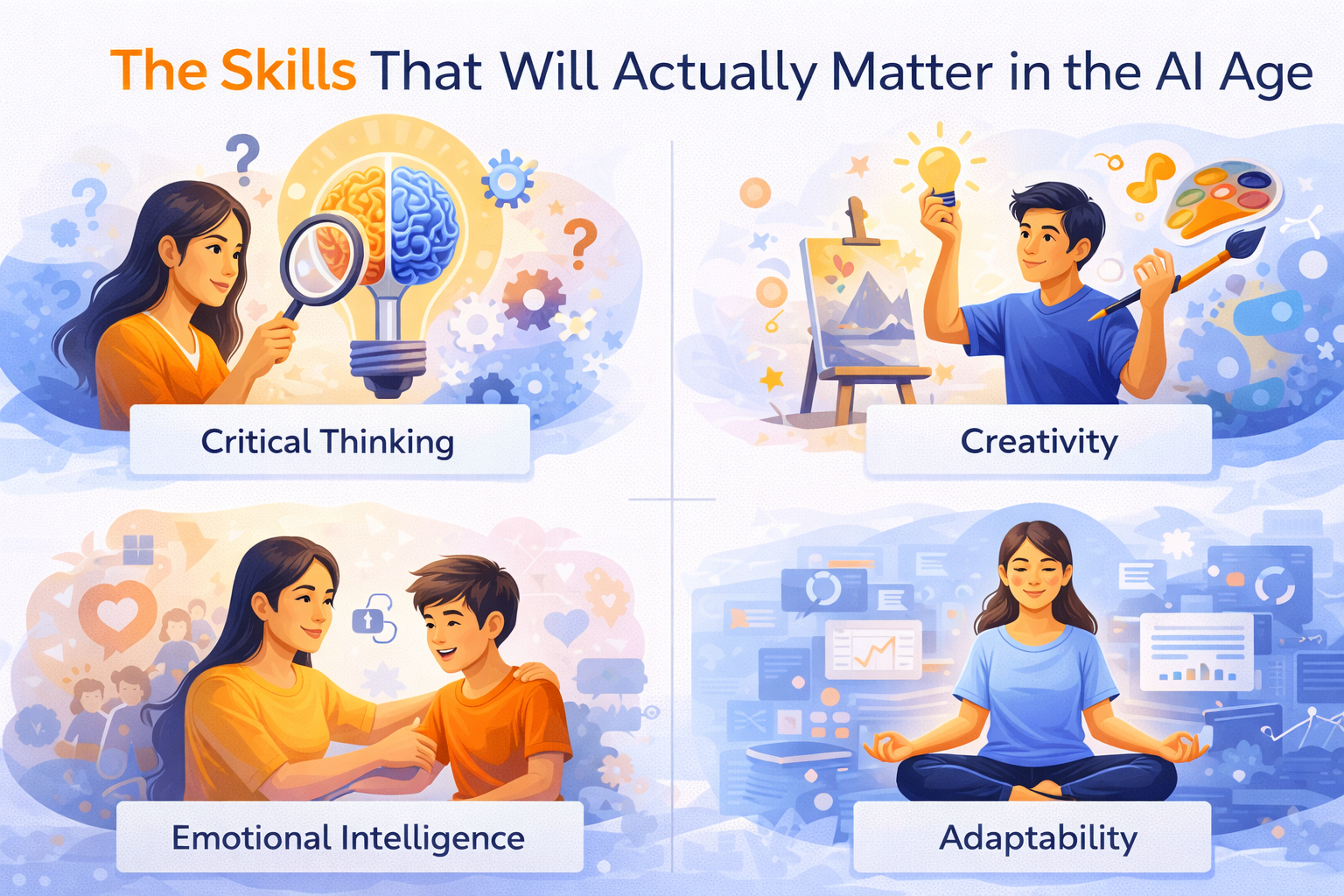
The most successful students will not be the ones who score the highest marks.
They will be the ones who can:
- Think independently
- Ask good questions
- Learn without being taught
- Use AI as a collaborator
- Build things, not just answer questions
- Adapt when the rules change
Ironically, none of these are tested in exams.
These are meta-skills, developed through:
Will Teachers Become Irrelevant?
Absolutely not.
But their role must evolve.
Teachers should stop being:
- Content deliverers
- Syllabus finishers
- Exam drill masters
And start becoming:
- Learning coaches
- Mentors
- Curiosity catalysts
- Guides who help students think
In an AI-powered world, the best teacher is not the one who knows the most, but the one who teaches students how to learn.
What Student Autonomy Really Means
Student autonomy doesn’t mean chaos.
It means ownership.
It means allowing students to:
- Choose what they want to learn
- Learn at their own pace
- Follow their interests
- Use AI responsibly
- Build portfolios instead of chasing marks
When students own their learning:
- Motivation becomes intrinsic
- Fear disappears
- Learning becomes real
No forcing.
No spoon-feeding.
No artificial pressure.
“But What If Students Misuse AI?”
This fear is understandable but misguided.
It’s the same argument people made about:
- Calculators
- The internet
- Smartphones
AI misuse happens when students are:
- Not taught how AI works
- Not taught ethics
- Not trusted
- Not guided
The solution is AI literacy, not AI avoidance.
Students must learn:
- How to ask better prompts
- How to verify outputs
- How to think critically
- How to use AI as a tool not a shortcut
Avoiding AI today is like refusing to teach the internet in 2000.
What Education Should Look Like in the AI Era
Modern education must be:
- Personalized
- Project-based
- Skill-oriented
- Tech-enabled
- Curiosity-driven
Students should graduate with:
- A portfolio, not just a marksheet
- Confidence, not fear
- Learning agility, not rote memory
- The ability to teach themselves new skills
Education should prepare students for life, not just exams.
A New Vision for Education
The future of education is one where:
- Students are self-directed learners
- AI is a learning companion
- Teachers are mentors
- Curiosity is rewarded
- Failure is part of growth
- Learning never stops
We must stop asking:
“What should children study?”
And start asking:
“How can we help children learn anything they want?”
That shift changes everything.
Final Thought
AI is not the enemy of education.
It is the final wake-up call.
The future belongs to learners who are:
- Curious
- Independent
- Adaptable
- Courageous
Our job is not to control students
but to set them free to learn.
That is the real revolution in education.
2 Responses
This made me think how can we make sure AI helps every student succeed, not just the ones with resources?”
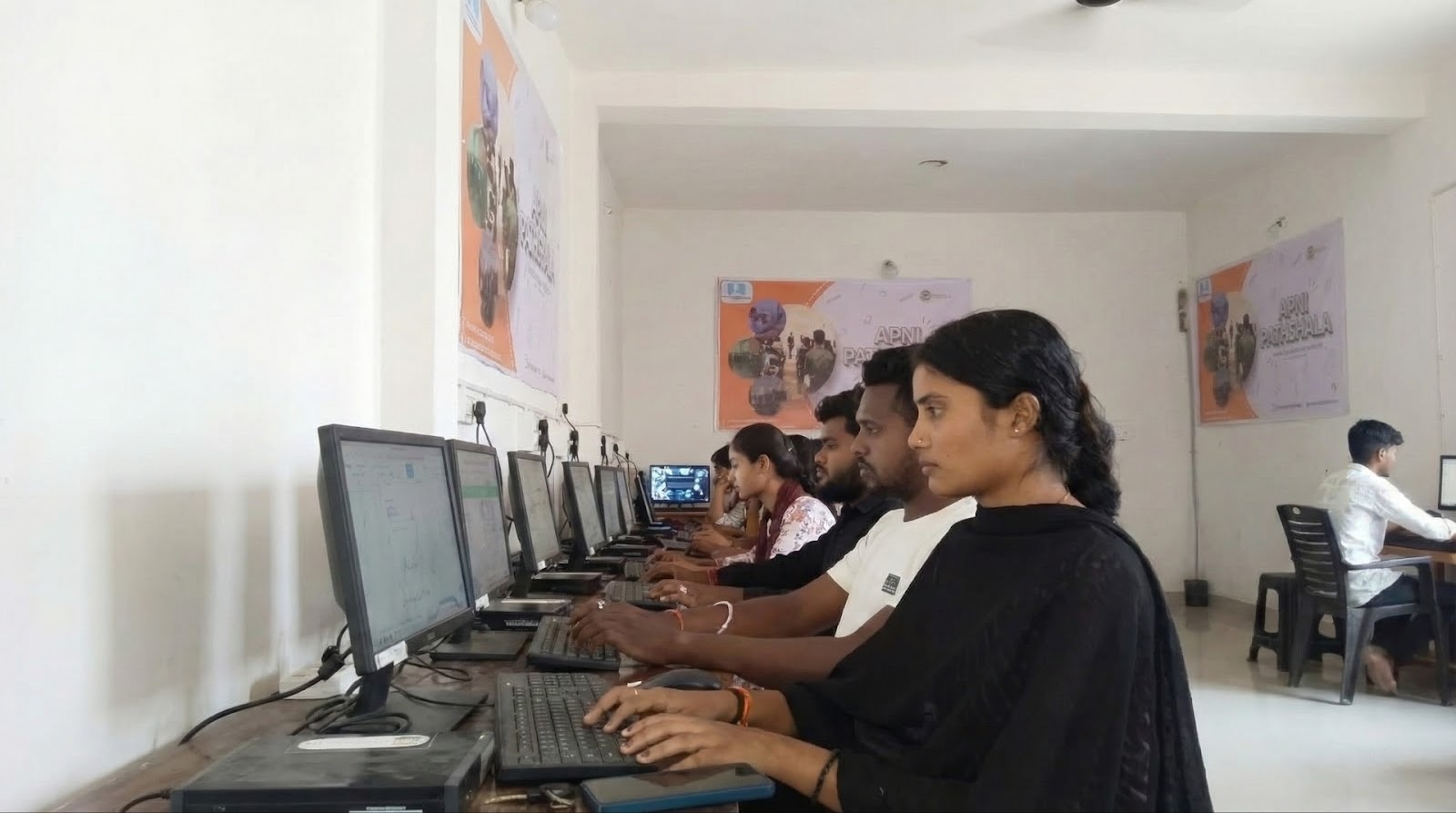
It’s exactly what we work on at Apni Pathshala. Through our PODs (Points of Digital Learning) across India, students get access to computers, internet, and AI learning at an affordable level.
To bridge the device gap at home, Apna PC provides full computer setups to students at a minimal cost, while Super 100 focuses on providing computers completely free to students in need. For exam-focused learning, Eklavya is our AI-powered guide for IIT-JEE and NEET aspirant , adapting to each student’s learning style with targeted practice and comprehensive study material.
Our aim is simple: remove the device barrier, combine it with AI-enabled learning, and make quality education accessible to every student — not just those with resources.