

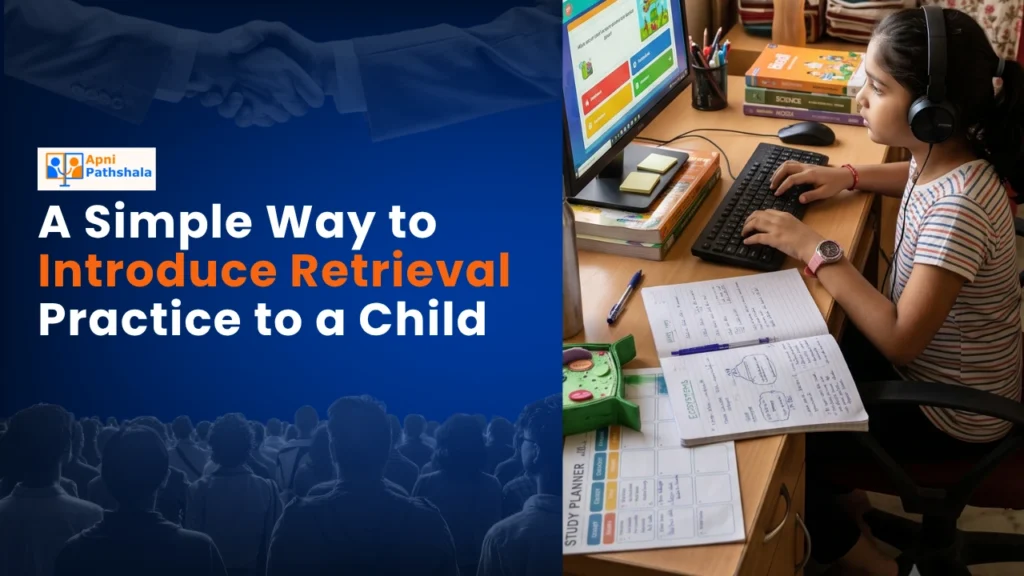
Meera sat at the kitchen table in her Bangalore apartment, watching her son Arjun stare blankly at his science notes for the third time that week. He’d been reading the same chapter on photosynthesis for twenty minutes, highlighter in hand, but when she asked him what he’d learned, he couldn’t answer. His board exams were four months away, and Meera felt the familiar panic rising. She knew he was studying hard, but something wasn’t working. That evening, she discovered something called retrieval practice, and everything changed.
If you’re a parent watching your child study without seeing results, you’re not alone. Many students in tier-2 and tier-3 cities across India struggle with the same problem Arjun faced: they confuse reading with learning. Retrieval practice is a study technique that flips this on its head. Instead of passively reading notes, retrieval practice means actively pulling information from your memory. It’s the difference between knowing something exists in your brain and actually being able to use it when you need it.
What Is Retrieval Practice and Why Does It Matter?
Retrieval practice is simple: you learn something, then you test yourself on it without looking at your notes. When you retrieve information from memory, your brain strengthens the neural pathways connected to that knowledge. This makes the information stick longer and become easier to recall during exams.
Think about how your child studies now. They probably read their textbook, highlight important points, and rewrite notes. This feels productive, but it’s mostly passive. Your brain doesn’t work hard when you’re just reading. Retrieval practice forces your brain to work. When you answer a question without checking the answer first, your brain has to search for the information. That struggle is where real learning happens.
Active recall is the core of retrieval practice. Active recall means you’re pulling answers from your memory without any hints or notes in front of you. This is completely different from recognition, where you see an answer and know it’s correct. Recognition feels easier, which is why so many students prefer it. But recognition doesn’t prepare you for exams. During an examination, you don’t get to see multiple-choice options or hints. You need to actively recall what you’ve learned.
Simple Ways to Start Retrieval Practice at Home
You don’t need expensive apps or complicated systems to introduce retrieval practice to your child. You can start today with things you already have at home.
- The Question Method: After your child finishes reading a chapter, ask them questions about it without letting them check their notes. Start with easy questions and move to harder ones. Write down the questions they can’t answer, and come back to those topics later.
- Flashcards: Have your child write questions on one side of a card and answers on the other. They should shuffle the cards and test themselves daily. This works especially well for subjects like history, geography, and biology where there are many facts to remember.
- Practice Tests: Your child’s textbook and online resources have practice questions. Don’t use these while studying. Save them for later when your child can take a full practice test under exam-like conditions. This is retrieval practice at its best.
- Teach-Back Method: Ask your child to explain what they’ve learned to you, a sibling, or even their pet. They can’t use notes. This forces them to retrieve information and organise it in their own words.
- Weekly Quizzes: Every Sunday, quiz your child on material from the previous week. Mix topics so they have to retrieve information from different areas of their learning.
The key is spacing these retrieval practice sessions out over time. Don’t test your child the same day they learn something new. Wait a few days or a week. This is called spaced repetition, and it’s even more powerful than retrieval practice alone. You can read our detailed spaced repetition guide to understand how to combine these two techniques for maximum learning.
Arjun’s mother started with flashcards for his science chapter. After reading the chapter once, he made flashcards with key terms and definitions. She tested him every evening for a week, then every few days after that. Within two weeks, Arjun could answer questions about photosynthesis without hesitation. More importantly, he felt confident. That confidence spread to other subjects.
Making Retrieval Practice Stick in Your Child’s Routine
Introducing a new study technique takes time. Your child might resist at first because retrieval practice feels harder than passive reading. That’s actually a good sign. The difficulty means their brain is working.
Start small. Don’t overhaul your child’s entire study routine overnight.
Track progress together. Keep a simple chart showing how many questions your child answered each week correctly. Seeing improvement is motivating. It also shows your child that retrieval practice actually works.
Check the study hours guide to make sure your child isn’t studying too much or too little. Retrieval practice is powerful, but it needs to fit into a balanced study schedule. According to CBSE official guidelines, students should balance study time with rest, physical activity, and other activities.
Technology can help too. An educational computer like Apna PC can make retrieval practice easier. With 8GB RAM and 128GB SSD, your child can access practice tests, create digital flashcards, and use learning apps smoothly. Apna PC comes preloaded with learning tools, and Apni Prerna helps you monitor your child’s progress. At Rs.30,000 (shipping and GST excluded), it’s an investment in your child’s education that pays dividends.
Retrieval practice isn’t complicated, but it is different from how most students study. By introducing this technique now, you’re giving your child a real advantage. Arjun’s exam results improved significantly because he switched from passive reading to active recall. Your child can experience the same transformation.
Start introducing retrieval practice to your child this week using the simple methods we’ve shared. Visit apnapc.com to learn more.